Vissersboot op het strand met gereefd zeil — History & Analysis
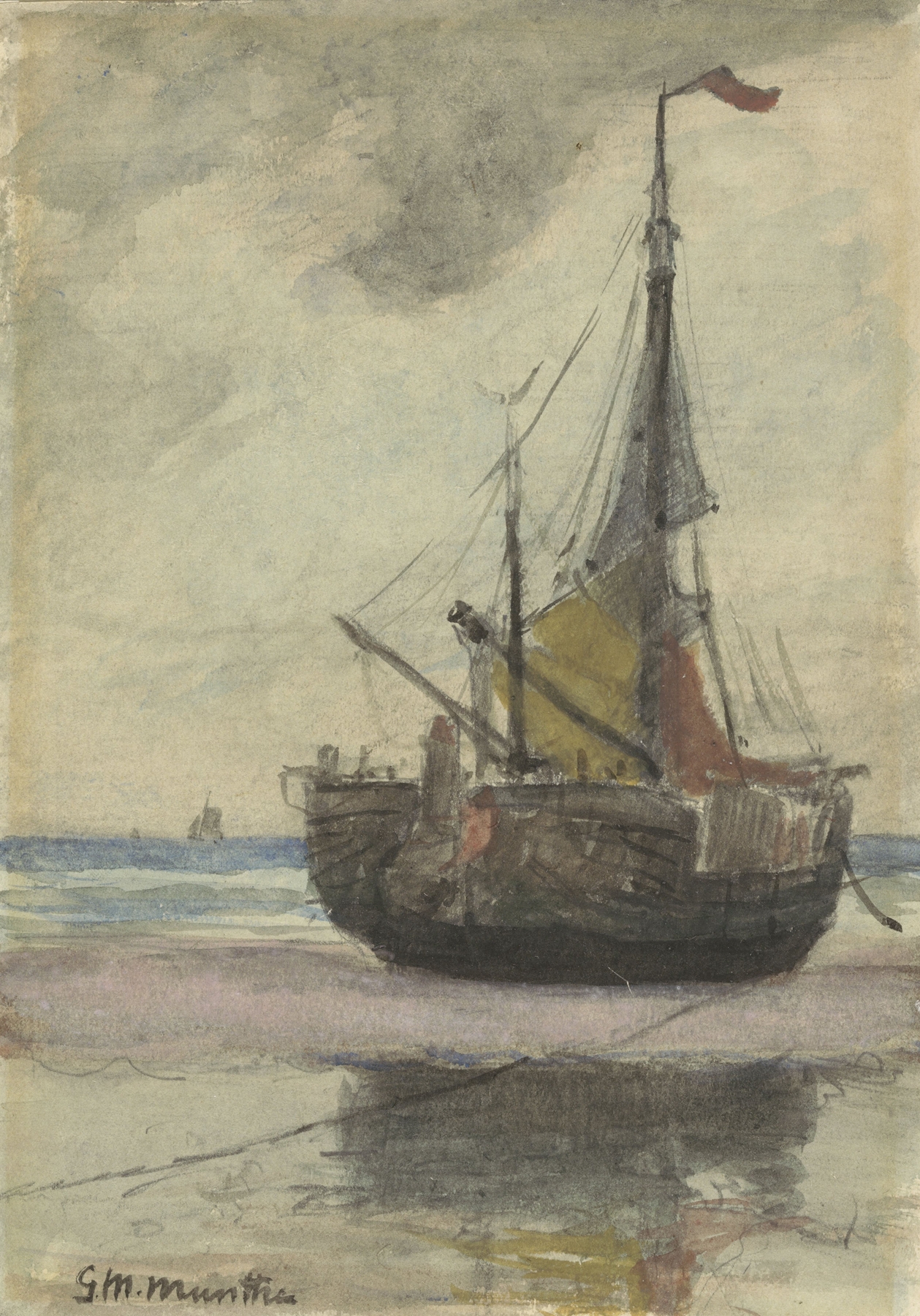
“Every silence here is a confession.” In the quiet expanse of a shoreline, the weight of solitude lingers, drawing the eye toward a solitary fishing boat, trapped in its own stillness. The canvas whispers a narrative of isolation, urging one to ponder the narratives hidden within the lonely vessel and its abandoned surroundings. Look towards the center of the canvas to find the weathered fishing boat, its sails furled tightly, suggesting a pause in its journey. Surrounding it, the muted palette of sandy browns and soft blues evokes an atmosphere of tranquility, yet hints at an underlying melancholy.
The brushstrokes are deliberate, capturing the texture of the boat's hull and the gentle ripples of the water, while the horizon line establishes a vast emptiness that mirrors the boat's isolation. In this painting, the contrast between the vibrant energy of the sea and the stillness of the boat communicates profound emotional tension. The absence of figures amplifies the sense of loneliness — one can almost hear the echoes of laughter or shouts of fishermen now silenced. Furthermore, the gentle play of light on the water serves as an ironic reminder of the life that once thrived here, now a distant memory, accentuating the passage of time and the inevitable solitude that follows.
Gerhard Munthe painted this work during a period marked by shifting artistic movements and personal introspection. Between 1885 and 1960, he experienced the transformations in Norwegian art, reflecting a growing interest in realism intertwined with symbolism. As he navigated his own artistic path, the themes of isolation and nature became central to his work, capturing both the beauty and desolation of the human experience.