The Watzmann — History & Analysis
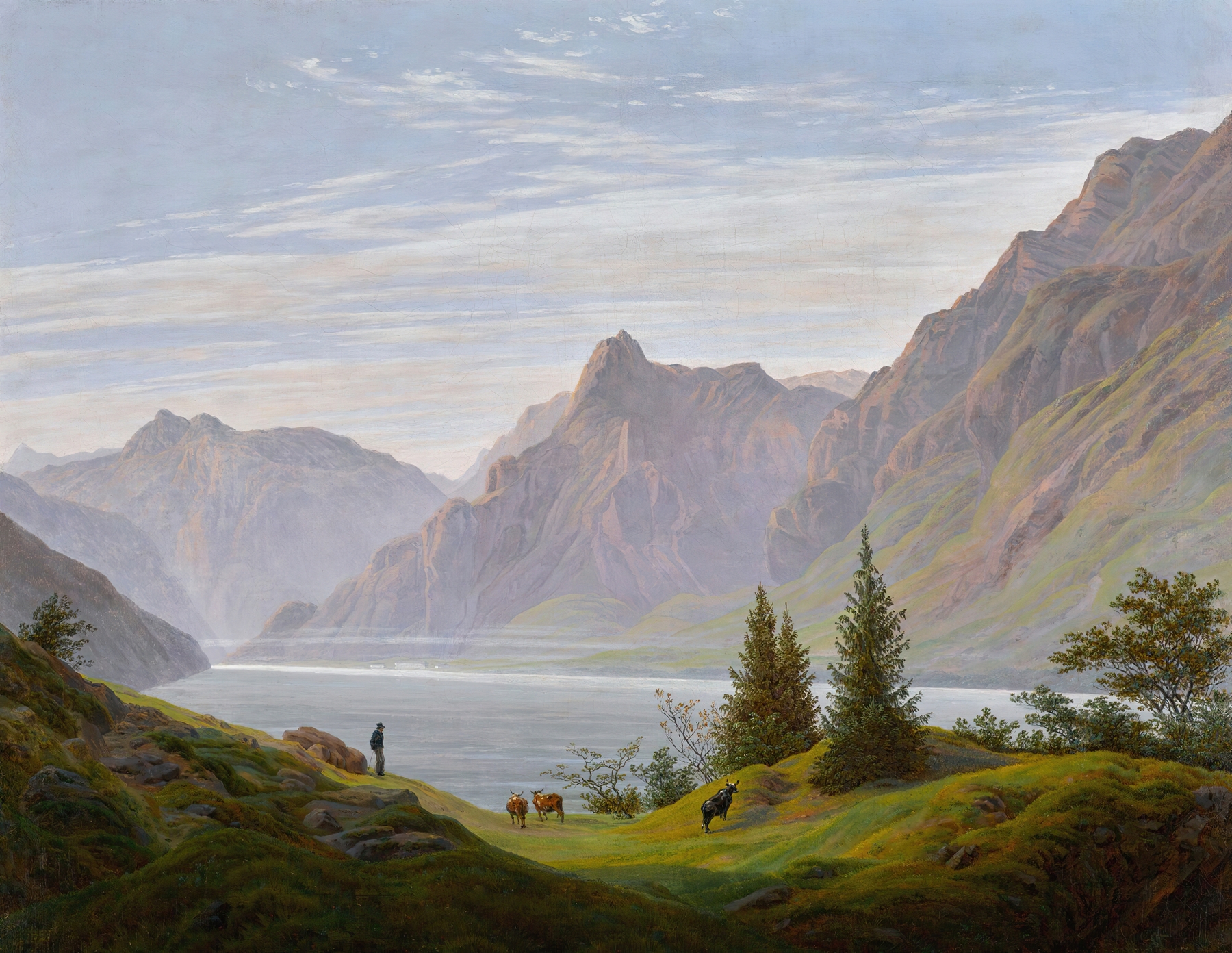
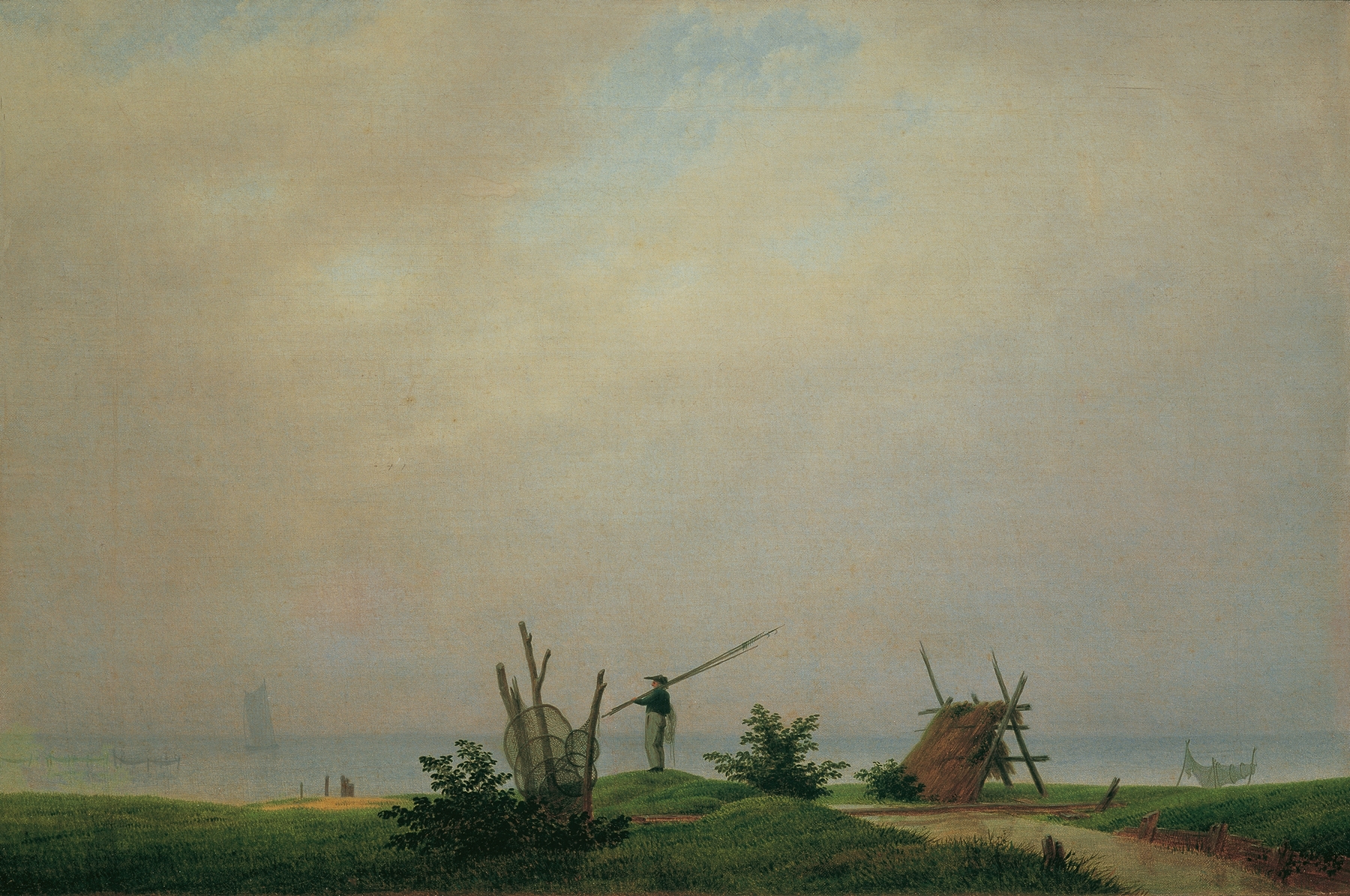
Did the painter know this moment would outlive them? In the rugged embrace of towering peaks, a stillness lingers, echoing the promise of rebirth and renewal woven intricately into the fabric of nature. Look to the center where the jagged silhouette of the Watzmann emerges against a muted sky. The artist masterfully captures the mountain range, draped in soft hues of gray and blue that shift subtly, invoking the transient nature of time. Notice how the light filters through the clouds, casting an ethereal glow that suggests both dawn and dusk — a liminal space filled with possibility.
The foreground reveals a tranquil lake, reflecting the majestic range in a mirror-like quality, drawing the viewer's gaze deeper into the composition. Beneath the surface, a juxtaposition unfolds. The serene waters symbolize tranquility, while the imposing mountains represent nature’s raw power and permanence. This contrast speaks to the human experience of vulnerability in the face of grandeur, evoking a sense of introspection.
The delicate brushwork suggests a fleeting moment, yet the mountain stands timeless, reminding us of cycles — the eternal dance of creation and decay, life and death, always recurring in nature. In 1824, Friedrich painted this piece during a time when Romanticism flourished, drawing attention to the sublime in nature. Living in Germany, he was influenced by the ideals of the era, which emphasized individual experience and emotion, particularly in relation to the natural world. This artwork reflects not only his personal philosophical journey but also a broader cultural movement that sought solace and inspiration in the majesty of untamed landscapes.