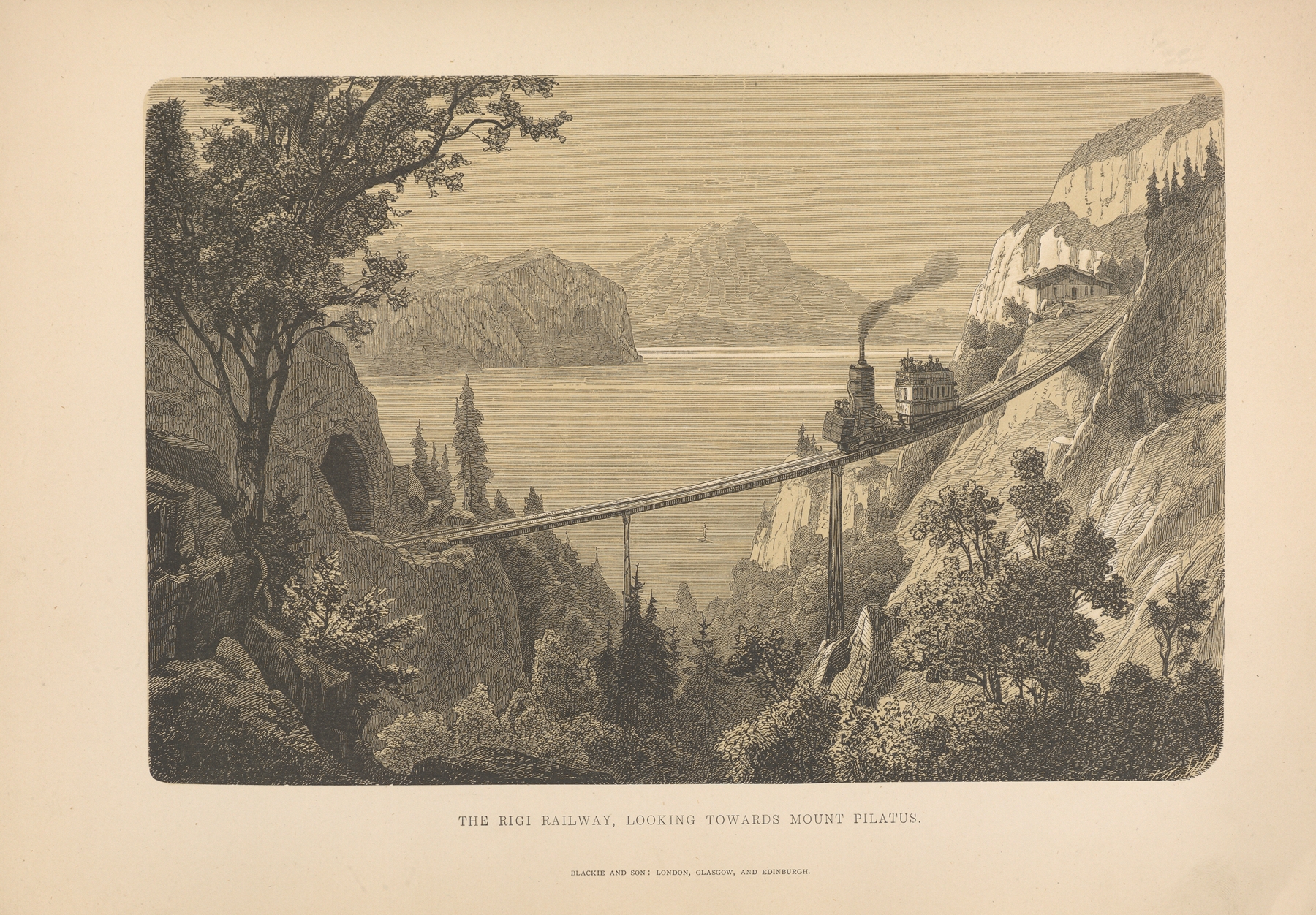
Toche – The Rigi Railway, looking towards Mount Pilatus — History & Analysis
Where does light end, and longing begin? In the delicate interplay of clarity and mystery, one might find a reflection of faith itself. Look to the horizon, where the gentle ascent of the railway track leads your gaze toward the majestic silhouette of Mount Pilatus. The soft, washed-out blues of the sky bleed into the golden hues of the sunlit peaks, creating a harmonious balance that invites contemplation. Notice how the railcar, a slender figure against the vast landscape, seems to promise adventure while simultaneously anchoring the viewer in an almost reverent stillness.
Each brushstroke is infused with a sense of purpose, drawing us into the heart of a moment suspended in time. The tension between the man-made and the natural is palpable. The railway, a symbol of human ambition, slithers gracefully through the rugged terrain, yet it is the awe-inspiring backdrop of the mountains that truly captivates. There is an unspoken dialogue between the steel and stone, as if the land itself offers its blessings to those who tread upon it.
This duality of existence—faith in progress against the timelessness of nature—creates a profound emotional resonance, echoing the yearning for connection both to the earth and to ourselves. Theodor Gsell Fels painted this scene in 1881 while residing in Switzerland, a period when the burgeoning tourism industry was transforming the landscape. As people flocked to the mountains, seeking both respite and inspiration, the artist was immersed in a vibrant community of fellow landscape painters. This work reflects not only his personal journey but also the excitement of an era embracing the beauty of nature interwoven with human innovation.