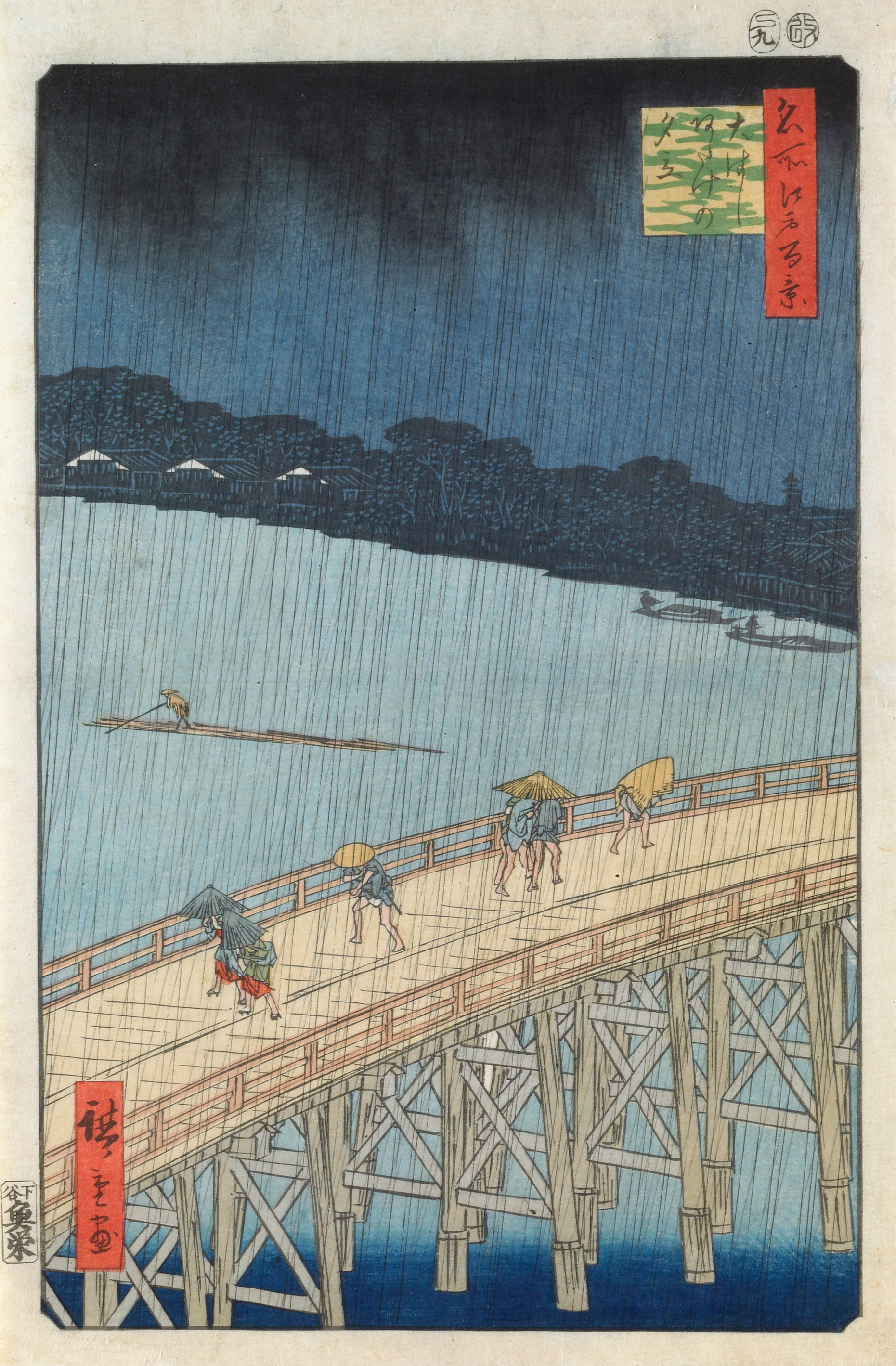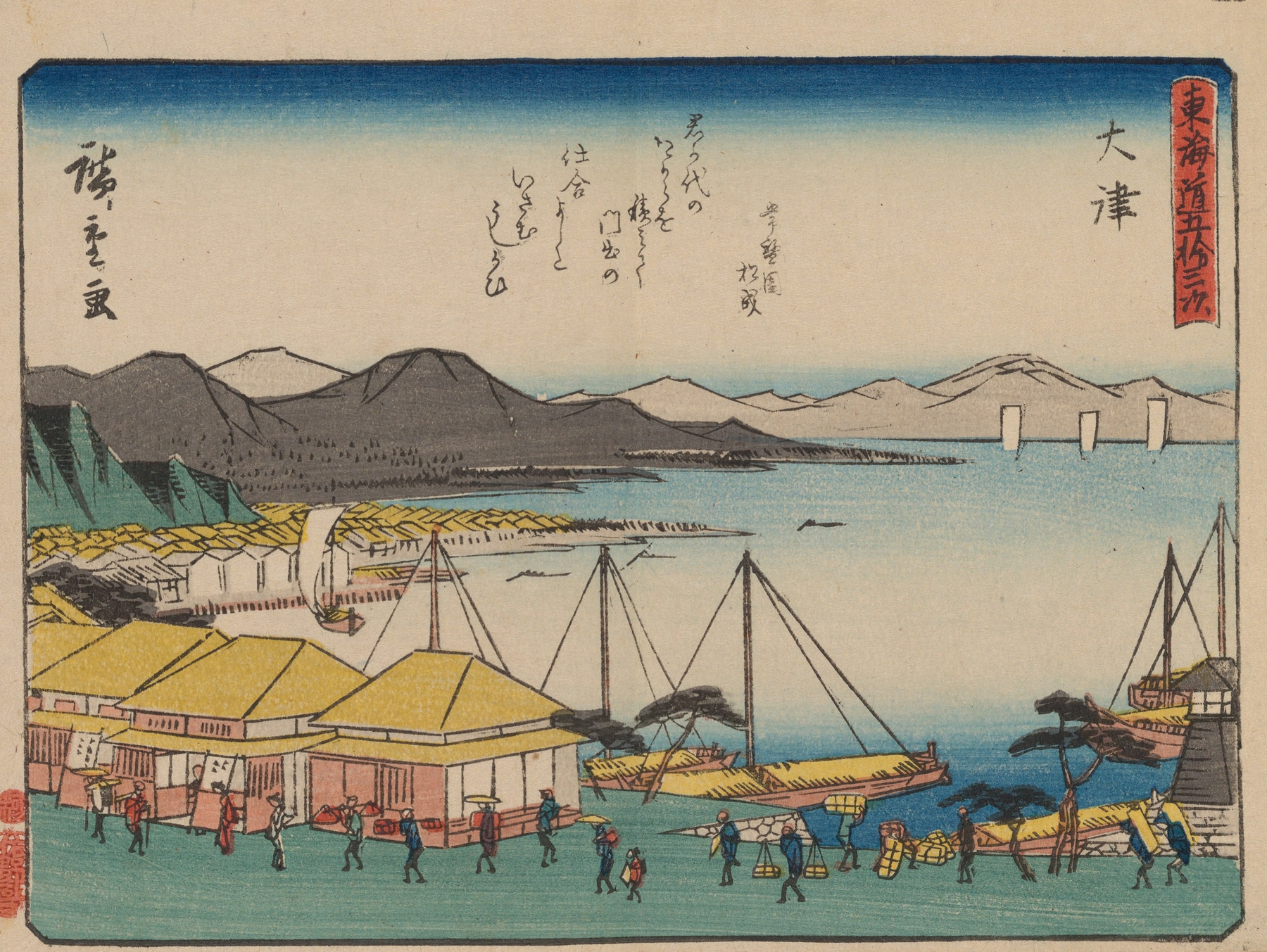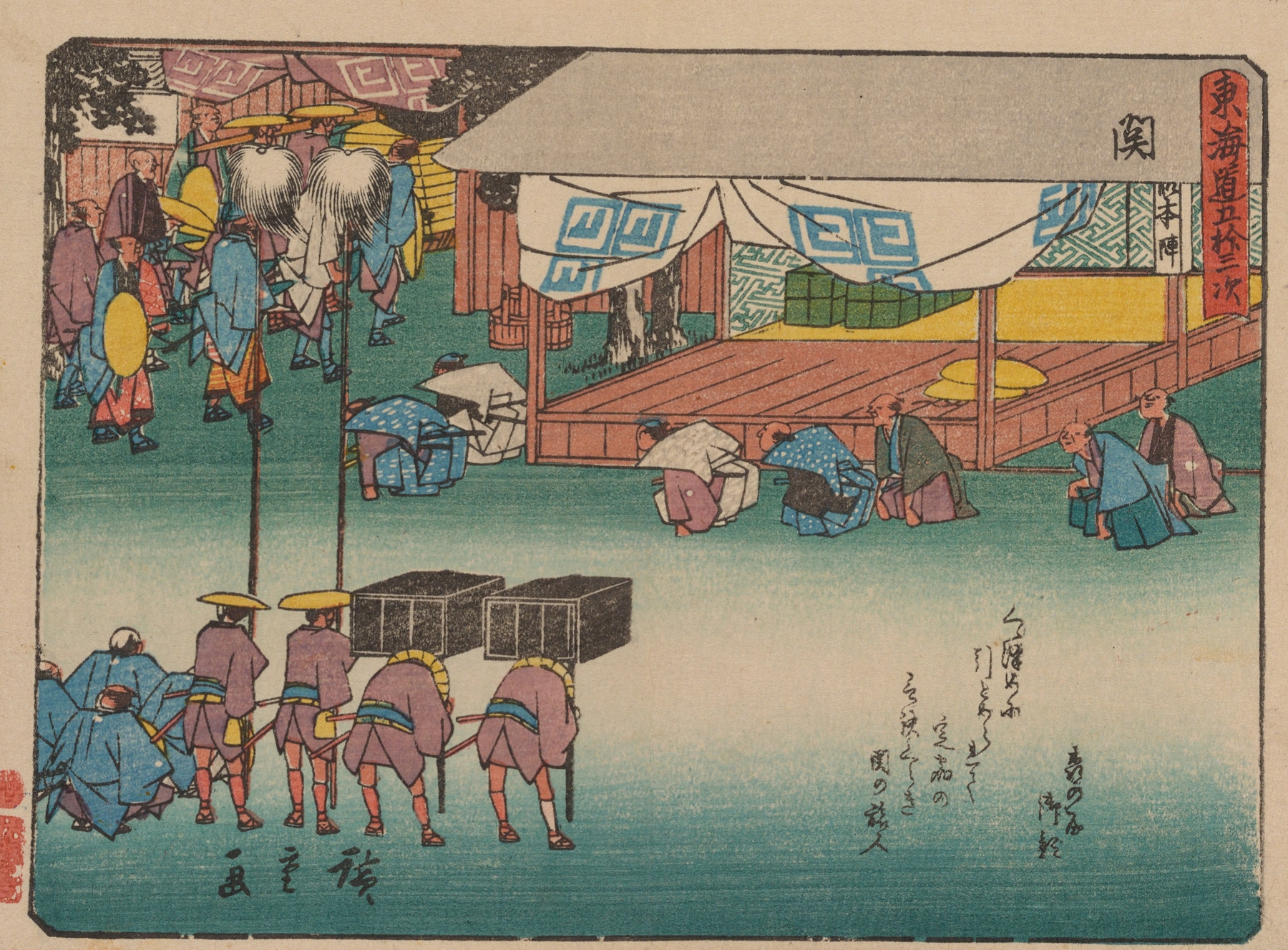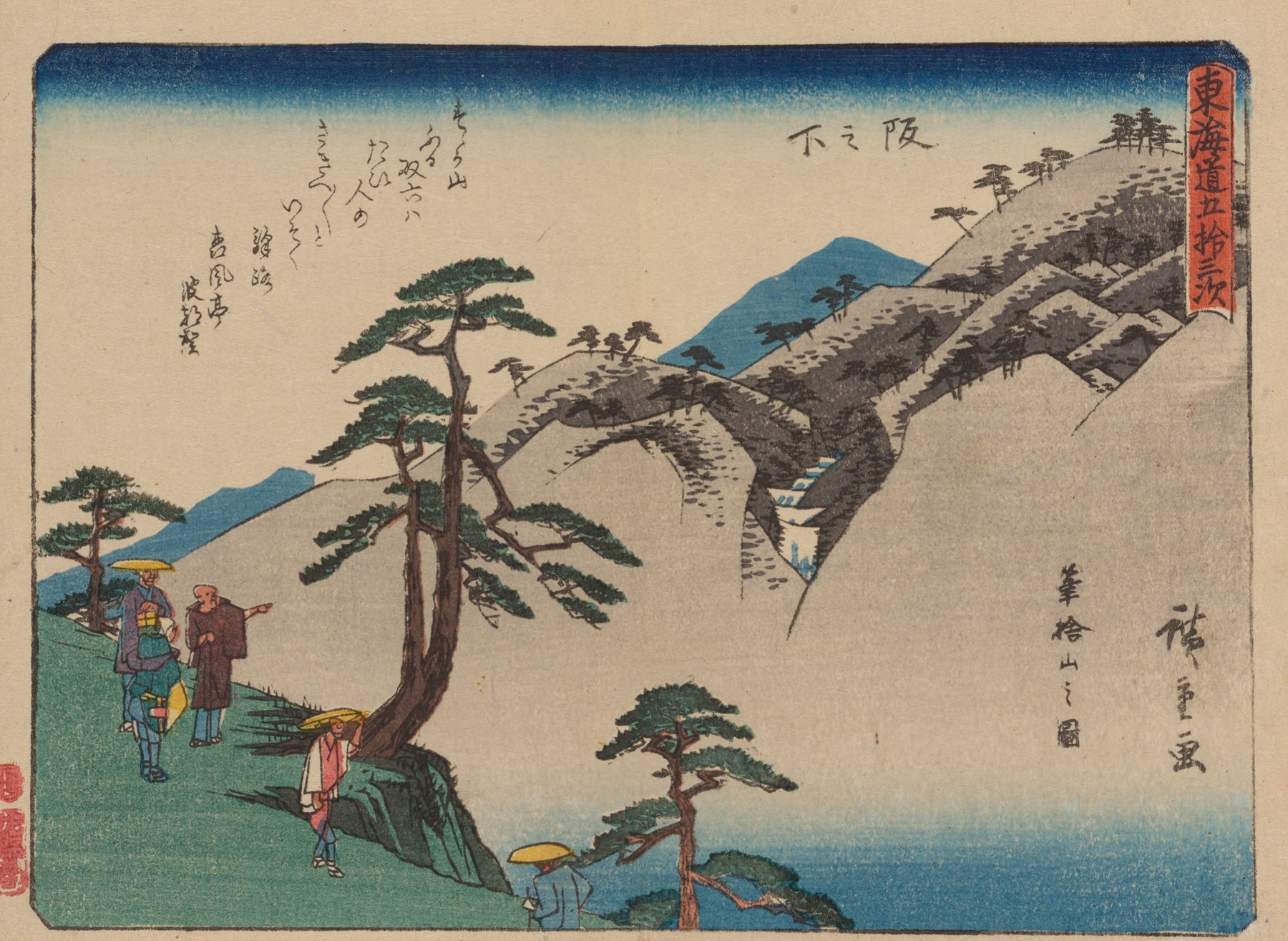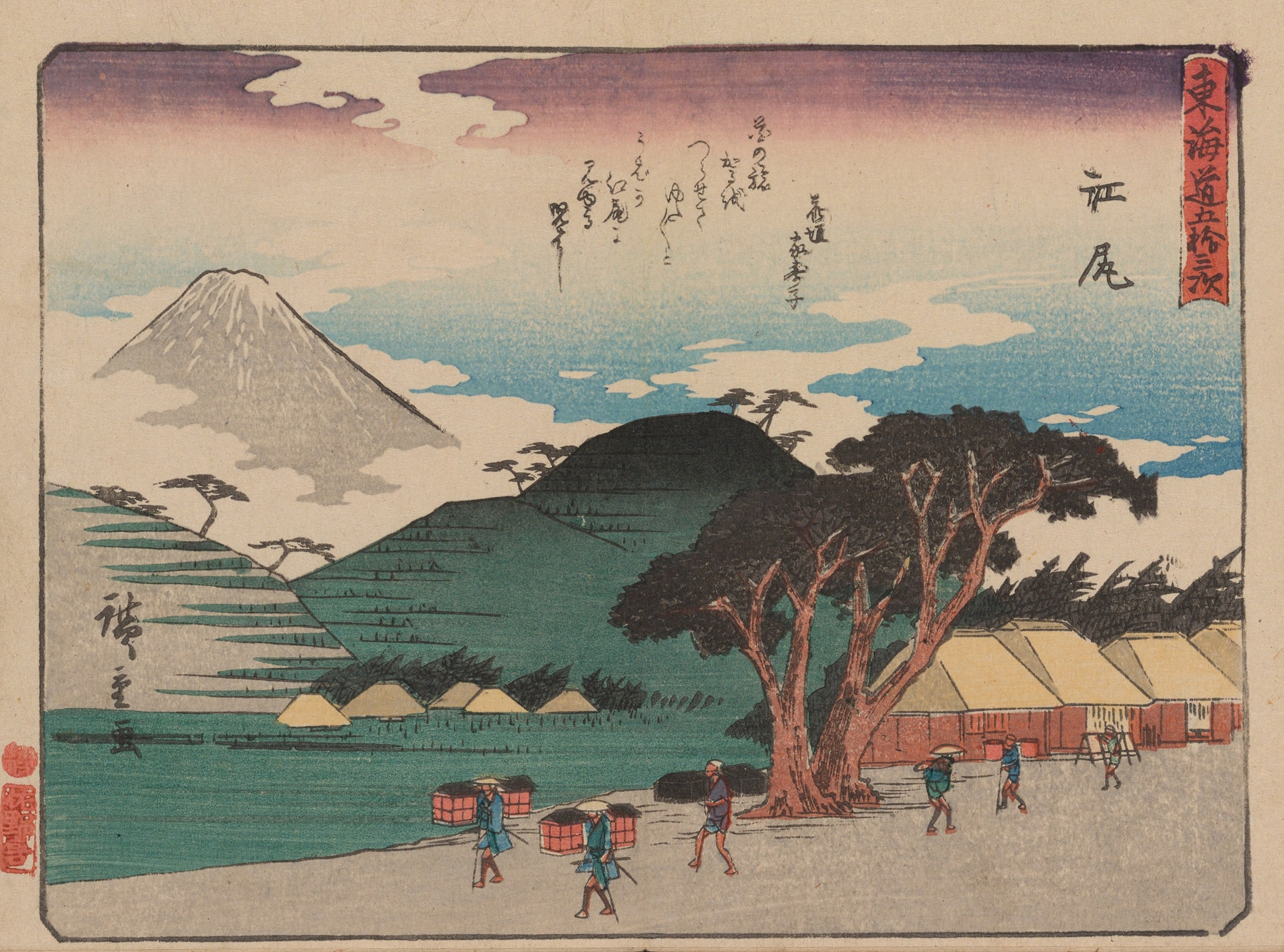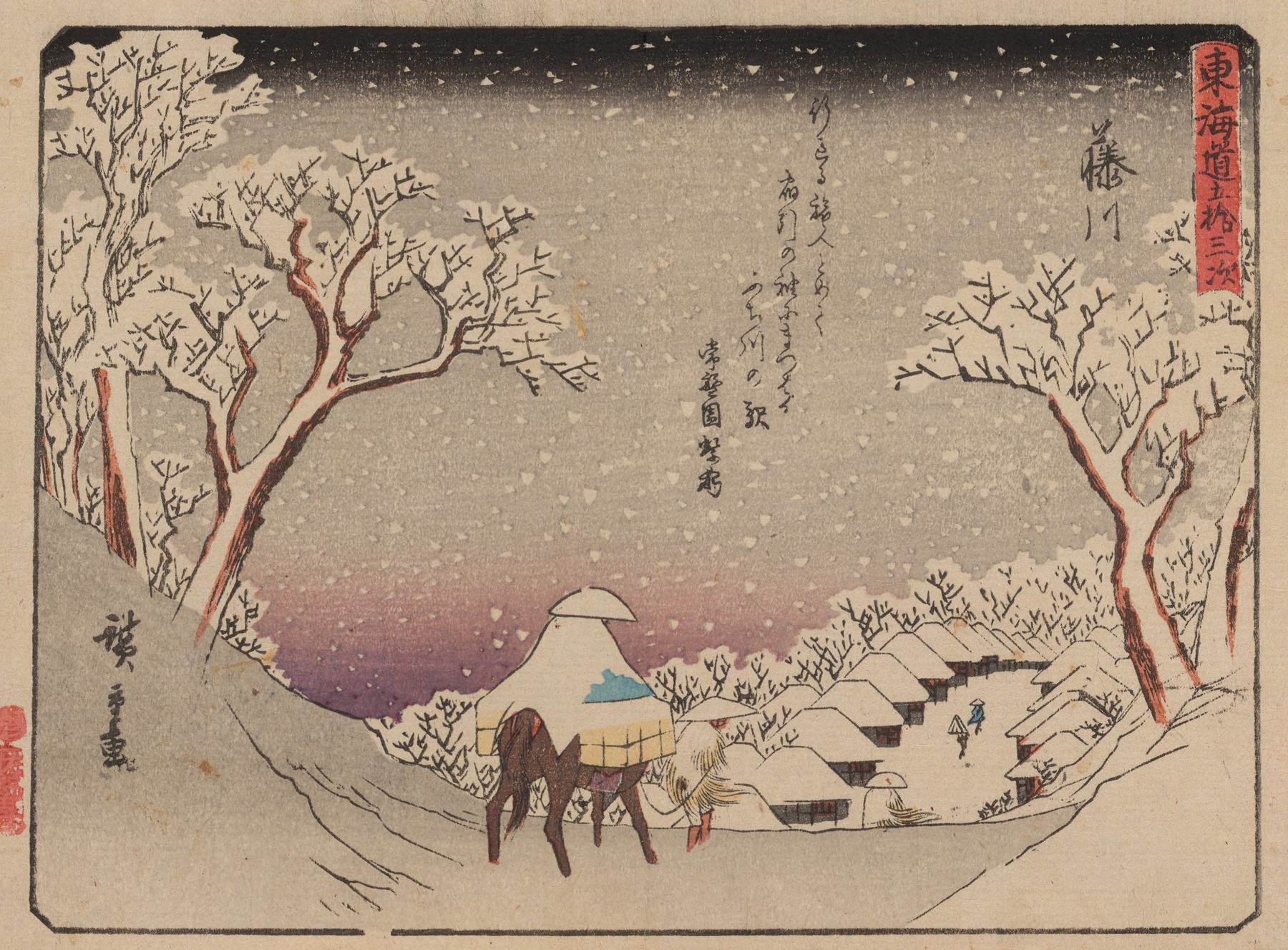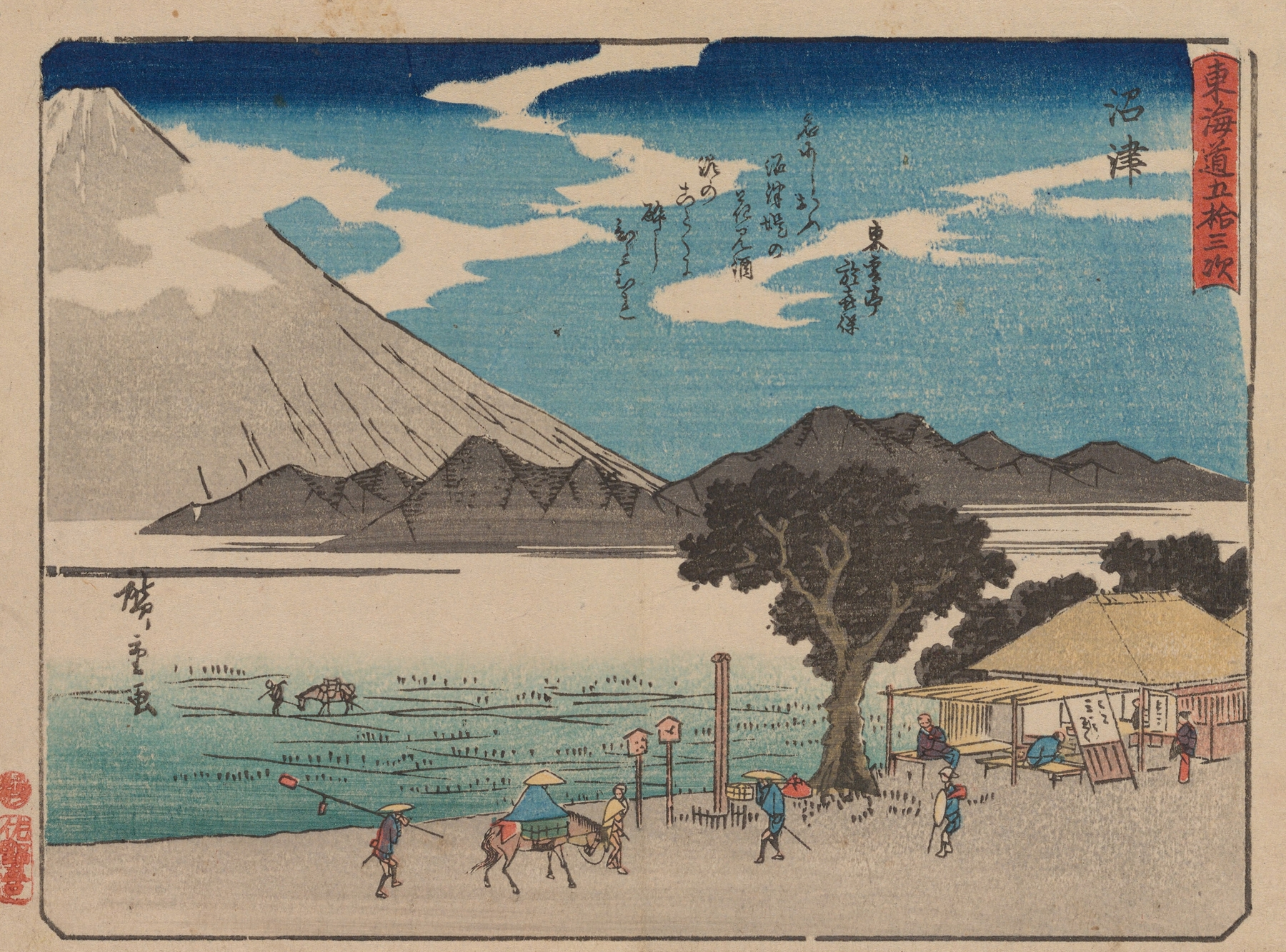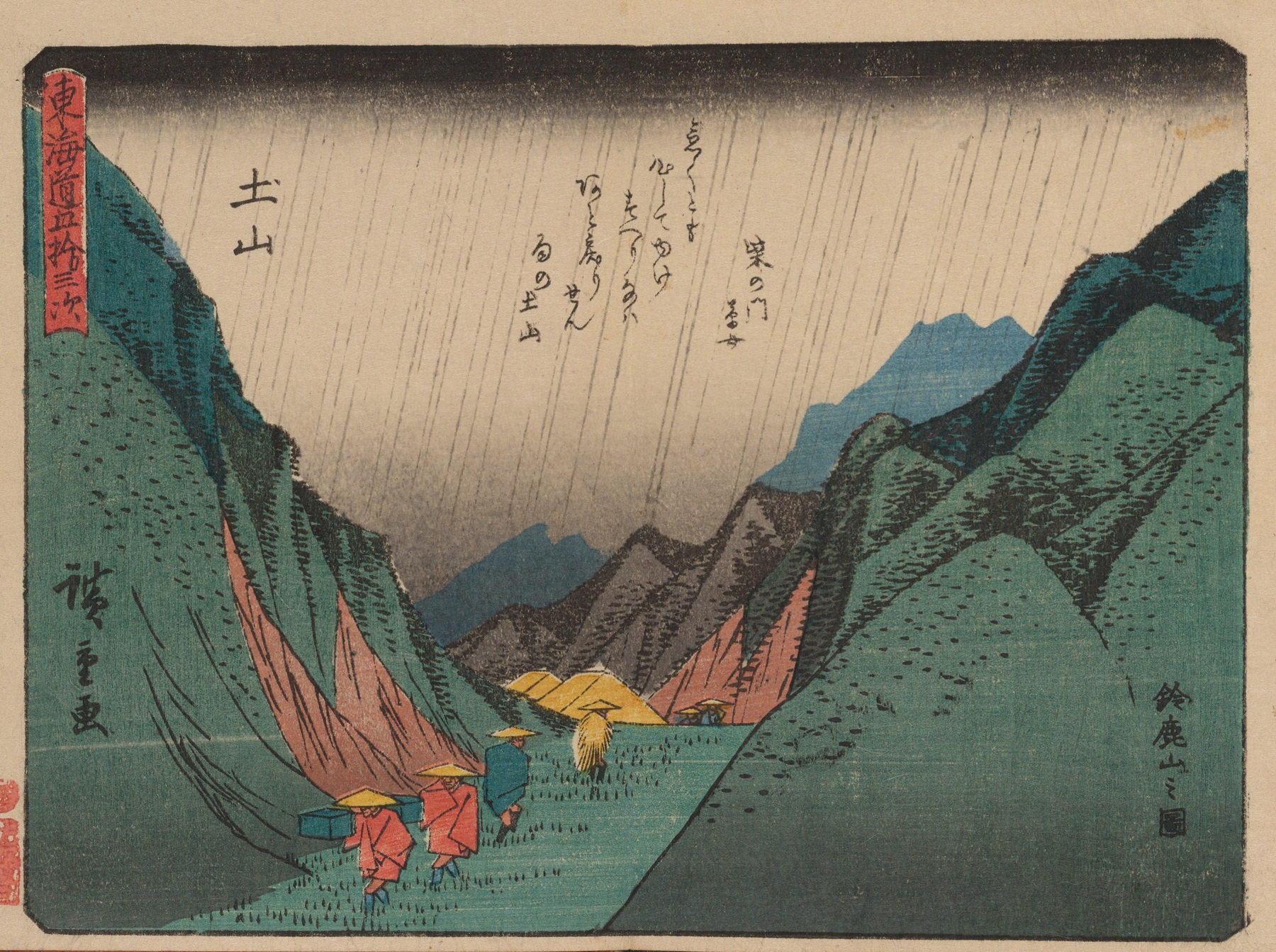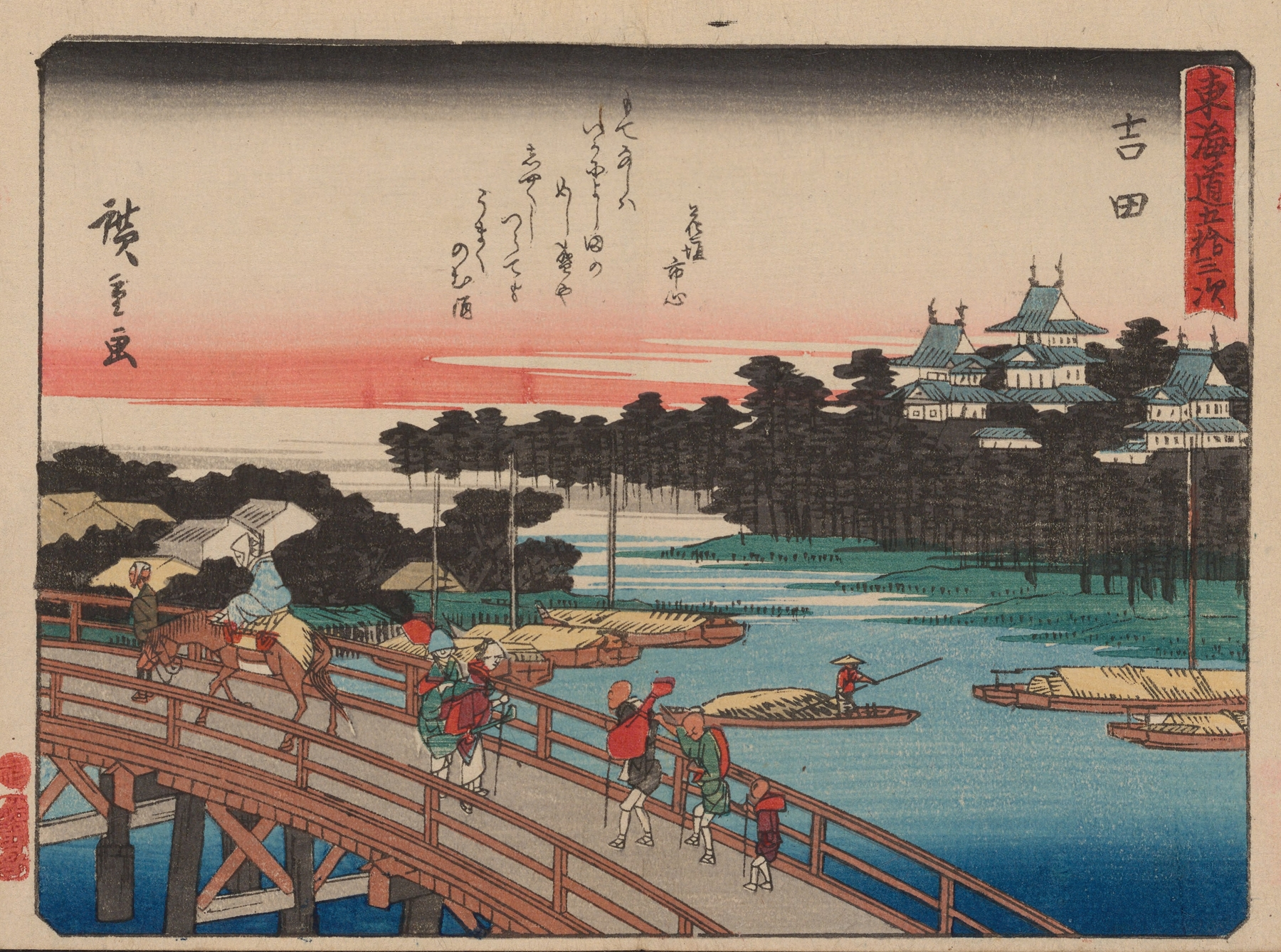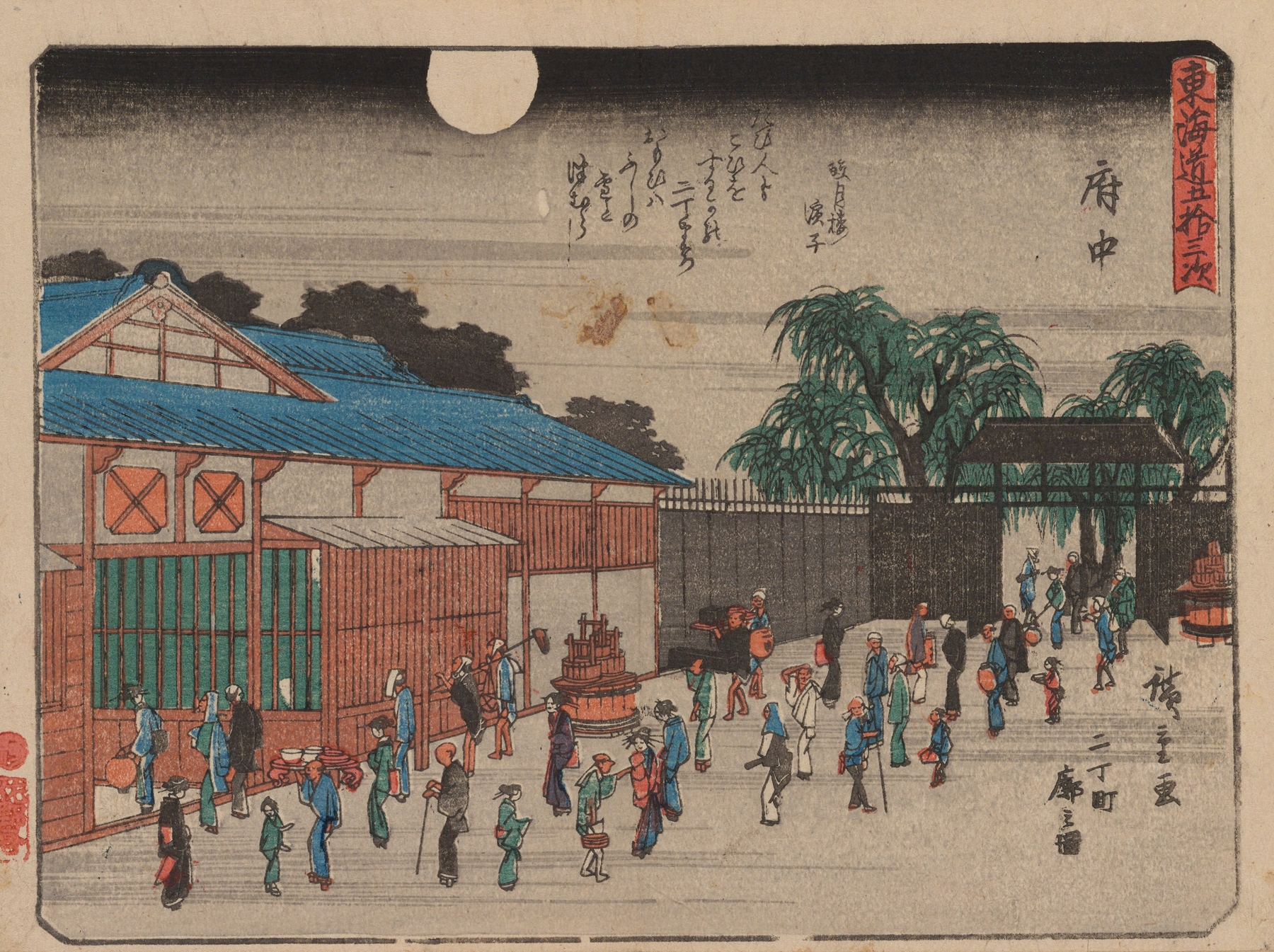

“Sometimes beauty is just pain, disguised in gold.” This resonates deeply in a world that often glosses over the tumultuous undercurrents of revolution. The allure of a scene can sometimes mask the struggle embedded within its beauty. Look closely at the delicate interplay of colors in *Tokaido gojusantsugi, Pl.20*. The soft blues and rich greens command attention, drawing your eyes along the serene riverbanks and snow-capped mountains. Notice how the gentle curves of the landscape lead the viewer’s gaze towards the distant horizon, where the sky meets the earth, creating an inviting escape. Hiroshige’s masterful woodblock technique renders each layer of color with precision, blending subtle gradients that breathe life into the composition. Yet beneath the idyllic exterior lies a narrative of transformation. The serene beauty belies the era's turmoil, a reflection of Japan’s shifting landscape during the late Edo period, on the cusp of profound change. Each brushstroke captures not merely the landscape but the sentiments of a society grappling with modernization and the fading of its traditions. Observe the figures along the path, quietly traversing this picturesque setting — they embody the tension between progress and preservation, journeying into an uncertain future. Hiroshige created this work during a pivotal moment in Japan between 1868 and 1912, a period marked by the Meiji Restoration, which reshaped the nation’s identity. Living in his native Edo, he was deeply influenced by the changing tides of culture and technology, and his prints reflect both a reverence for natural beauty and an awareness of the societal upheaval surrounding him. This artwork serves as a poignant reminder of the delicate balance between the allure of beauty and the complexities of human experience.