View Of St. Petersburg — History & Analysis
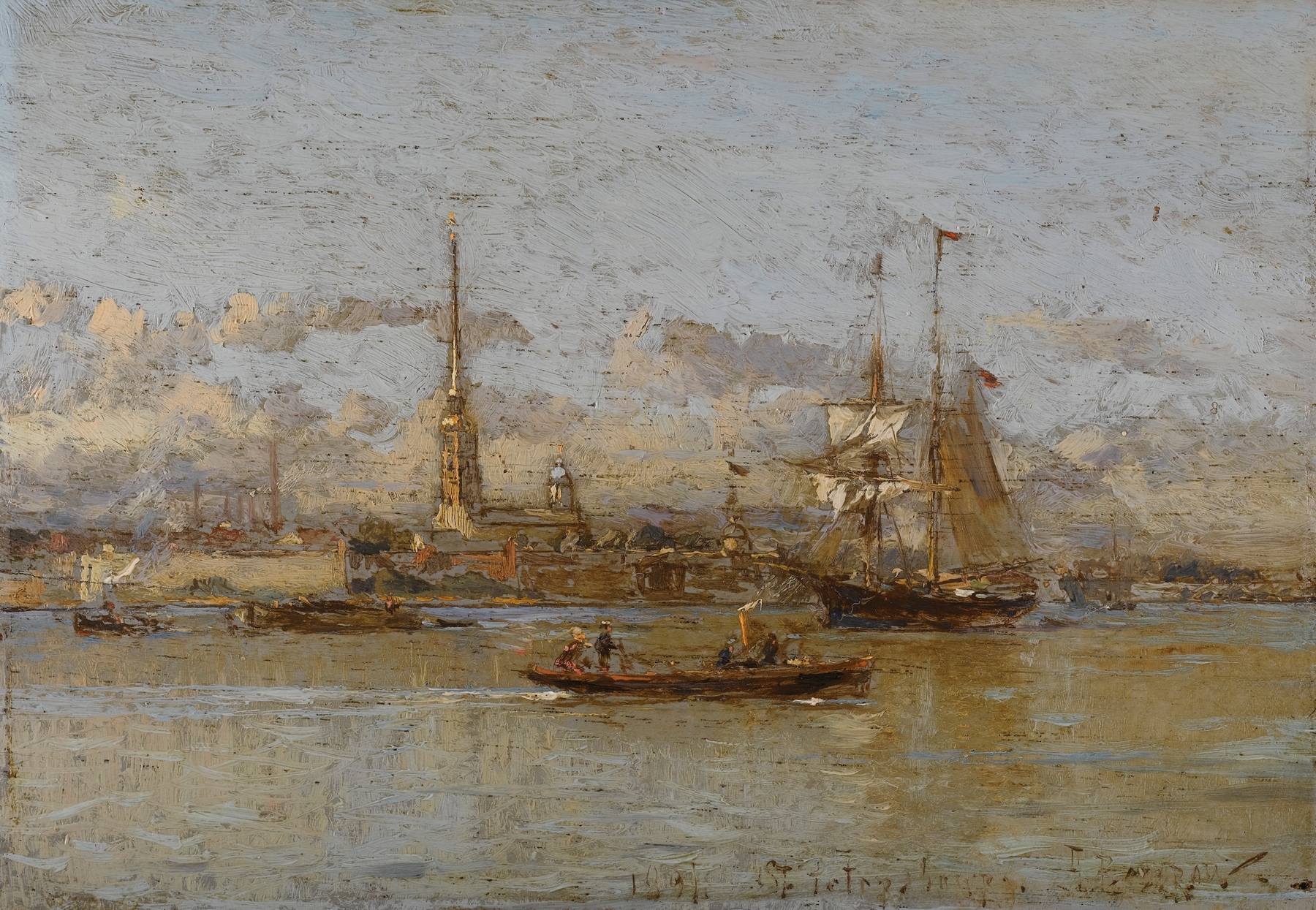
“Sometimes beauty is just pain, disguised in gold.” In the luminous glow of twilight, the serenity of St. Petersburg conceals stories of innocence lost and dreams deferred. The city’s architecture rises like an echo of a forgotten past, inviting us to explore its intricate façades while whispering the unspoken truths of its history. Look to the horizon where the Neva River meets the delicate brushstrokes of the sky. Notice how the warm hues of amber and rose intertwine with the cool blues, creating a haunting yet enchanting backdrop. The composition, balanced and methodical, draws the eye into the heart of the city, where each building stands as a testament to its architectural grandeur.
The artist employs a subtle interplay of light and shadow, evoking both nostalgia and a sense of longing. Yet, amid the beauty, there lies a tension. The rigid lines of the structures suggest stability, while the gentle ripples on the water hint at an ephemeral quality, like innocence drifting away. Each stroke conveys a duality; a celebration of artistry and a reminder of the fragility of life. This reflection of St.
Petersburg is not only a portrayal of its majesty but a poignant commentary on the passage of time, as if the city itself is caught in a bittersweet embrace of memory. In 1891, Beggrov found himself navigating the complexities of Russian art during a period of significant social and political change. Working from St. Petersburg, he was influenced by both the classical traditions of the past and the burgeoning movements that sought to redefine artistic expression. This moment in his career prompted a deeper introspection as he grappled with his own identity and the cultural shifts surrounding him, ultimately leading to the creation of this evocative piece.