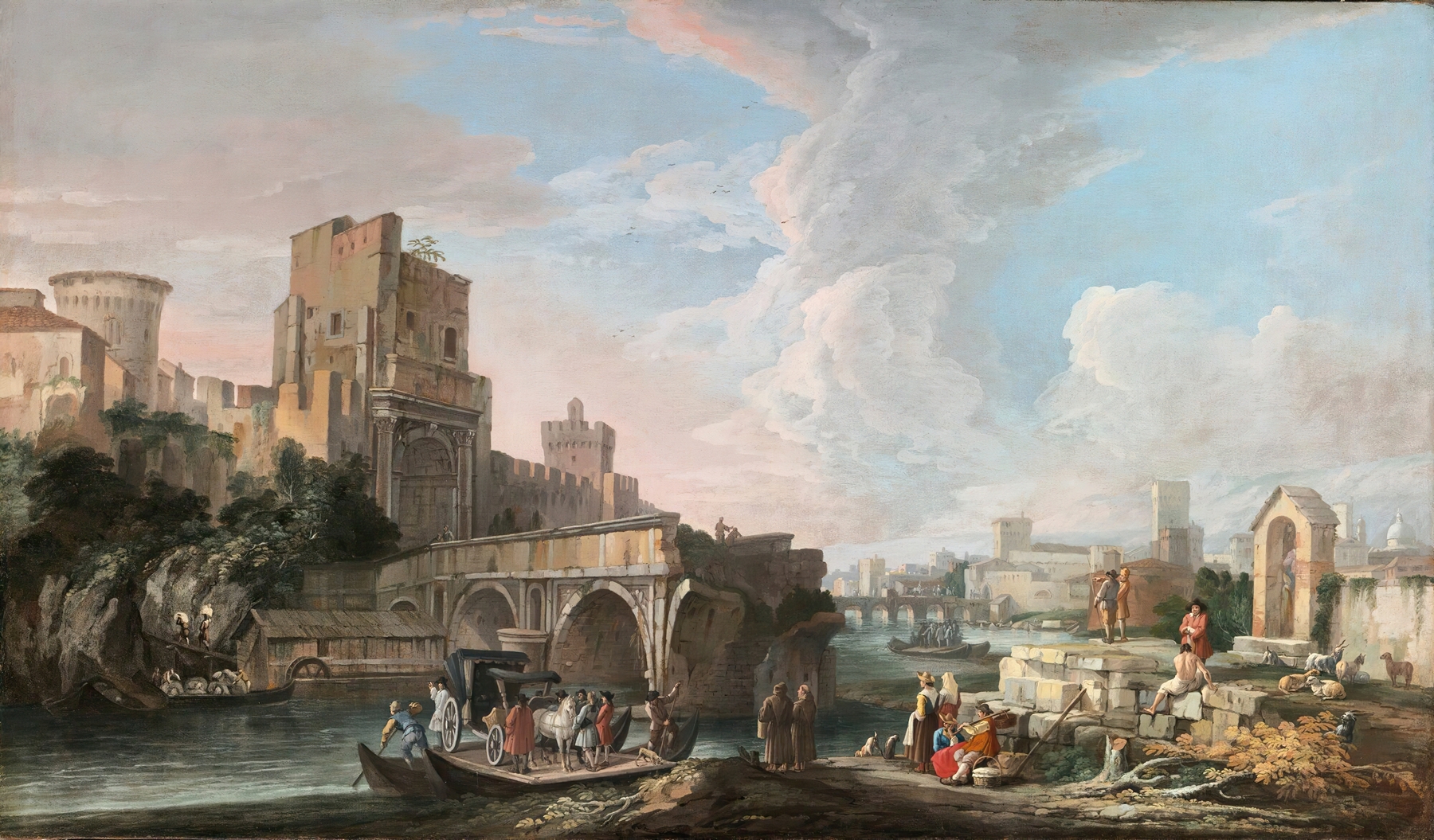
View of the Molo, Venice, looking West — History & Analysis
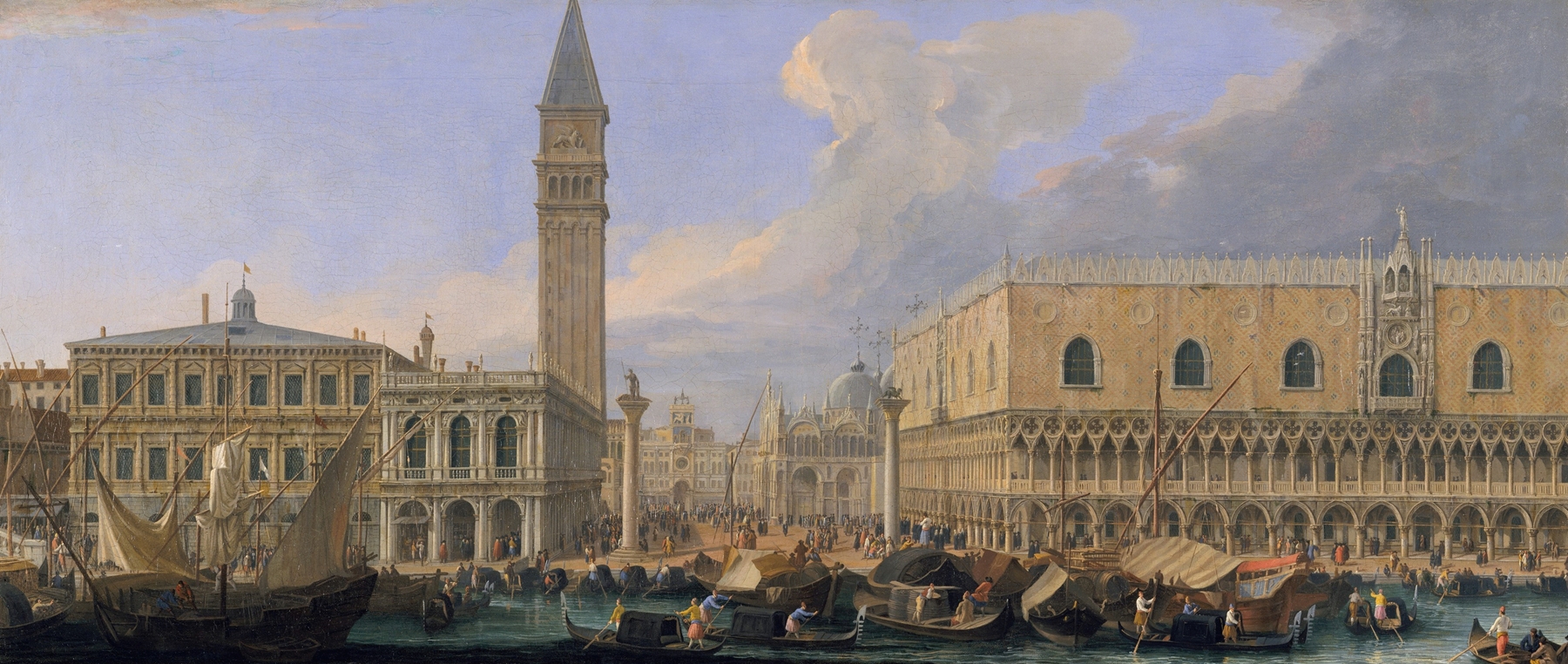
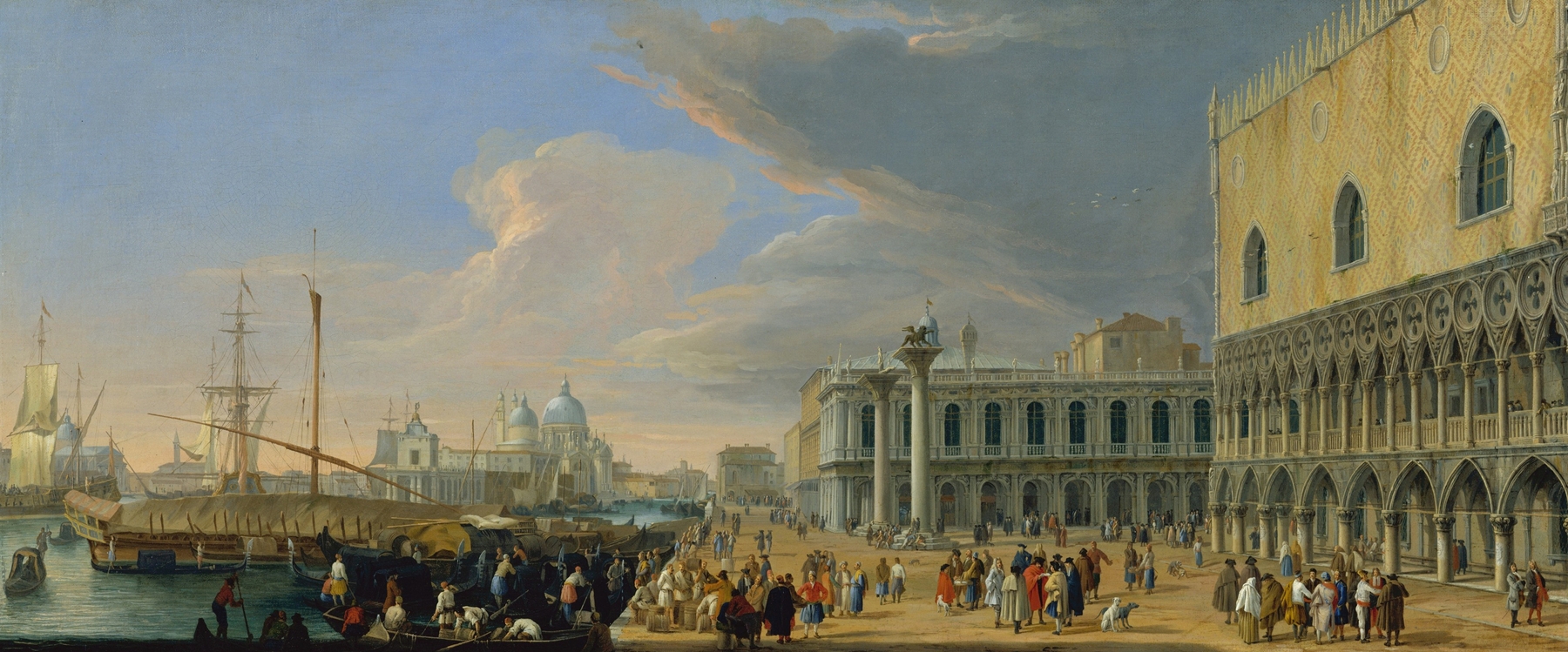
Could a single brushstroke hold eternity? In Luca Carlevarijs's View of the Molo, Venice, looking West, the delicate dance of light and shadow invites viewers to explore not only the beauty of the scene but also the underlying tensions that ripple beneath its serene surface. Look to the right at the majestic architecture framing the grand canal; the soft pastels of the buildings seem to shimmer in the fading sunlight. The artist employs a meticulous technique that combines sharp detail with an almost ethereal quality, allowing the viewer to feel the ambiance of this bustling Venetian port.
Notice how the light falls upon the water, creating a mirror-like surface that reflects the vibrancy of life—a moment captured in time yet teetering on the edge of chaos. Amidst the beauty, there is a subtle suggestion of violence; the tumultuous waves hint at the hidden struggles within the city’s daily life. The activity of ships coming and going, the figures engaged in commerce, and the sky’s shifting colors evoke a sense of urgency, contrasting the serene façade of the architecture. This juxtaposition of tranquility and underlying discord captures the essence of a city alive with stories, dreams, and the occasional conflict.
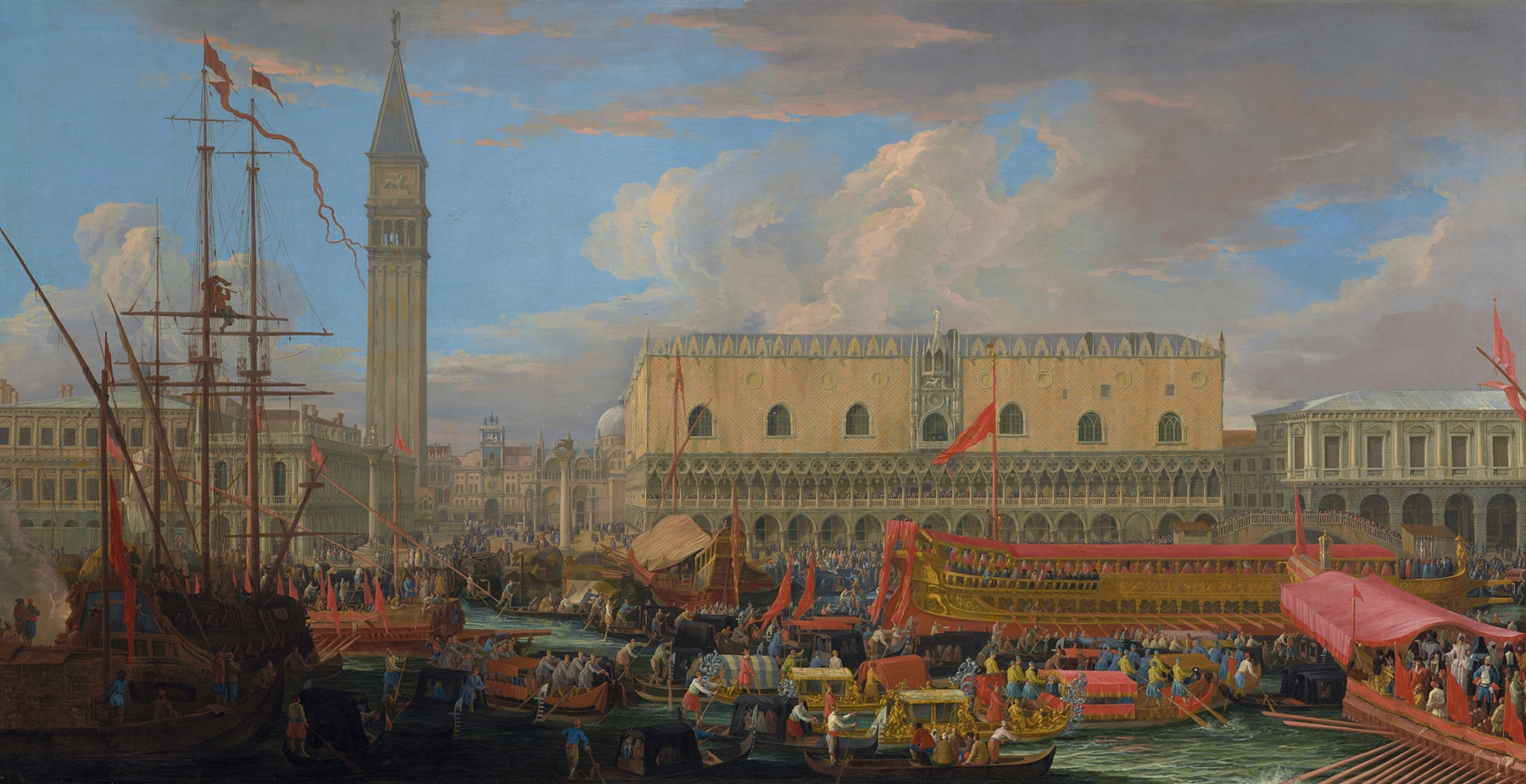
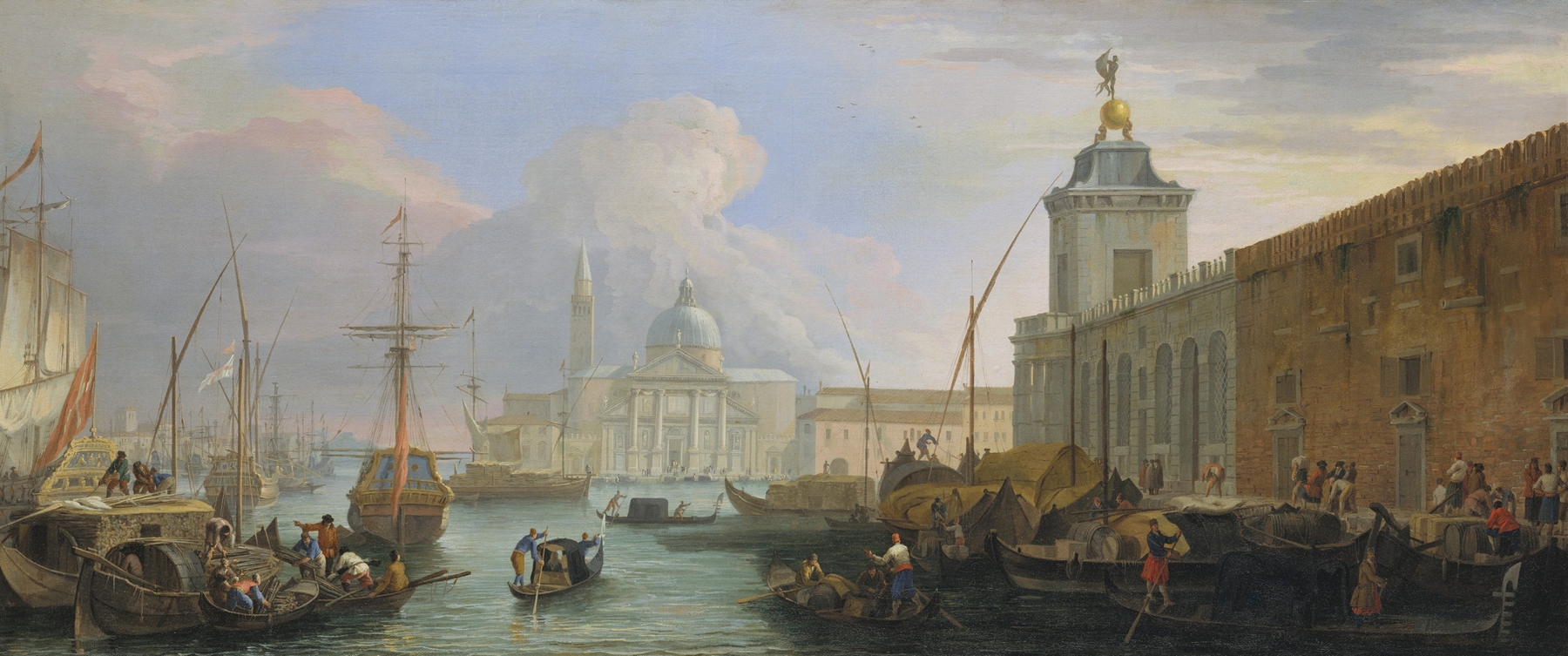
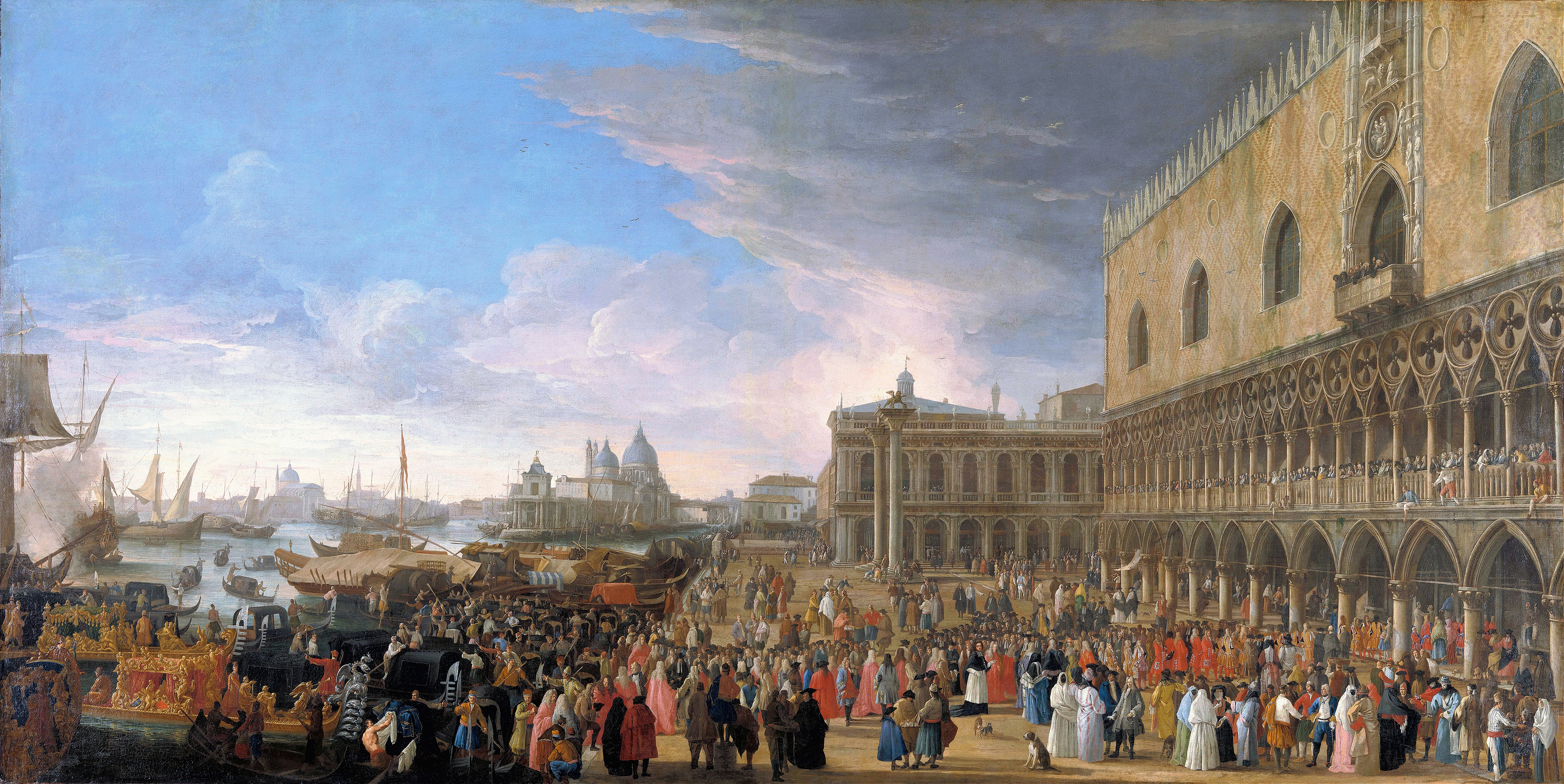
Luca Carlevarijs painted this piece during the late 17th to early 18th centuries, a time when Venice was transitioning from its apex of power to a more vulnerable state. As the Baroque style flourished, the artist immersed himself in the rich textures and colors of his surroundings, which profoundly influenced his work. This painting showcases the duality of Venice—its beauty and its underlying unrest—reflecting not only his personal experiences but also the larger narrative of a city straddling the line between glory and decay.