![Viewing Sunset over Ryôgoku Bridge from the Ommaya Embankment [Edo] (Ommayagashi yori Ryôgoku-bashi no sekiyô wo miru), 1829–1833, by Katsushika Hokusai, public domain](https://froigstrpvutwqtqikzt.supabase.co/storage/v1/object/public/art-images/artworks/befabb85318f24d46fc726c13b37291b76f9db55cc9d452d78dd26363ff08e55.jpg)
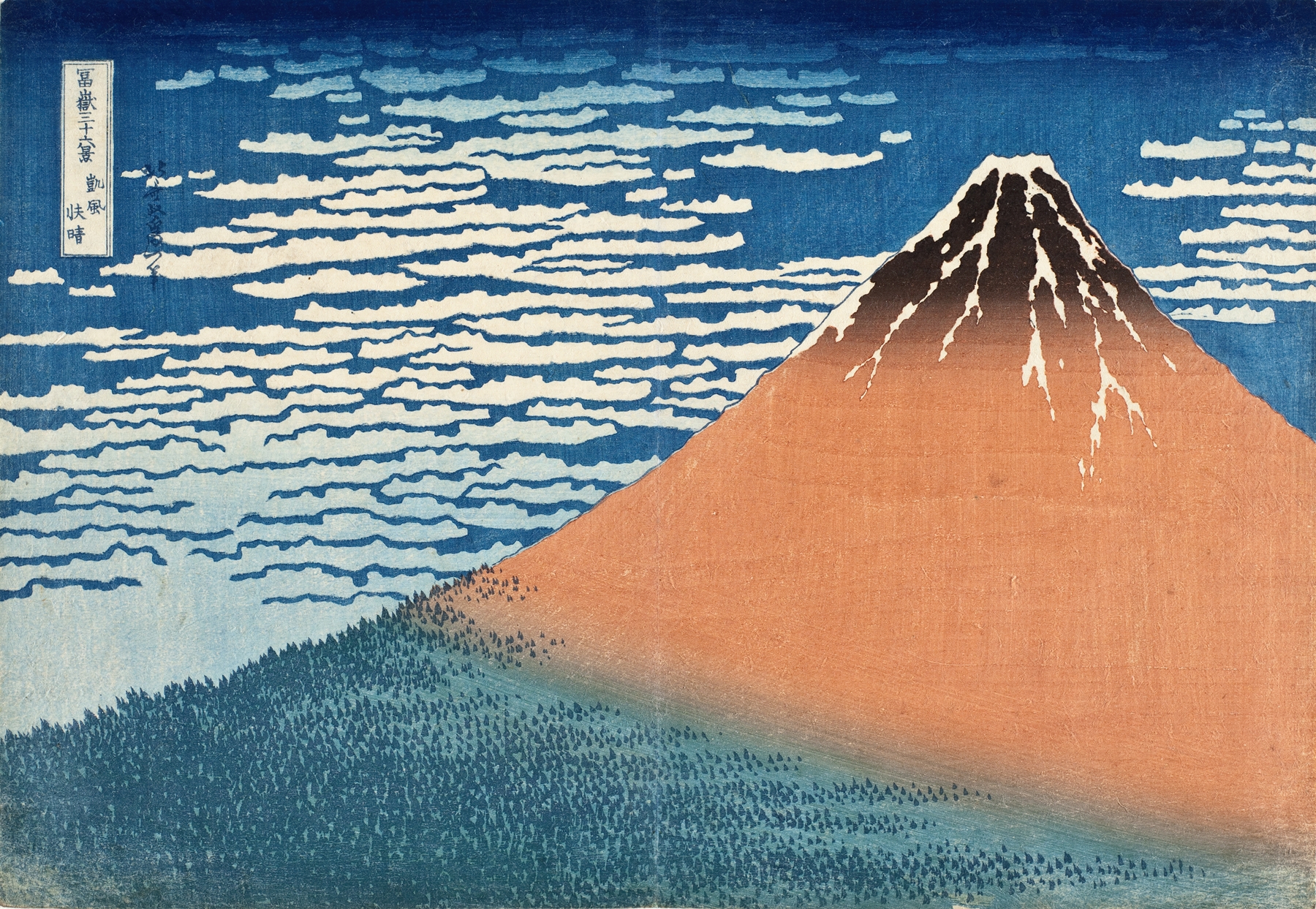
Could beauty survive in a century of chaos? In the tender embrace of twilight, the landscape becomes a soft dream, merging the transient with the eternal. Hokusai invites us to step into a moment suspended in time, where the sky bleeds with colors that whisper of change and nostalgia. Look to the left at the horizon where vibrant oranges and dusky purples play over the water, reflecting the warmth of the setting sun. Notice how the delicate silhouettes of the Ryôgoku Bridge and distant figures dot the embankment, rendered with fluid lines that guide the eye across the canvas. The harmonious composition captures the balance between serenity and movement, with each stroke echoing the artist’s mastery of color and form against a backdrop of dynamic natural beauty. Within this scene lies a poignant contrast: the tranquility of the sunset against the backdrop of the bustling world below, hinting at the complexities of human experience. The interplay of light and shadow suggests not only a physical transition from day to night but also the emotional shifts of life itself. The figures, small and nearly lost in the vastness of the landscape, symbolize the fleeting nature of existence, reminding us of our place within this grand tapestry. During the years 1829 to 1833, Hokusai was immersed in the vibrant artistic life of Edo, a city blooming with energy and creativity. This period was marked by the late Edo period's socio-political shifts and the growing popularity of ukiyo-e art. As he crafted *Viewing Sunset over Ryôgoku Bridge from the Ommaya Embankment*, Hokusai was not only exploring themes of beauty and transience but also engaging with the collective memory of a society caught between tradition and the inevitable changes of modernization.