Wooded River Landscape in the Alps — History & Analysis
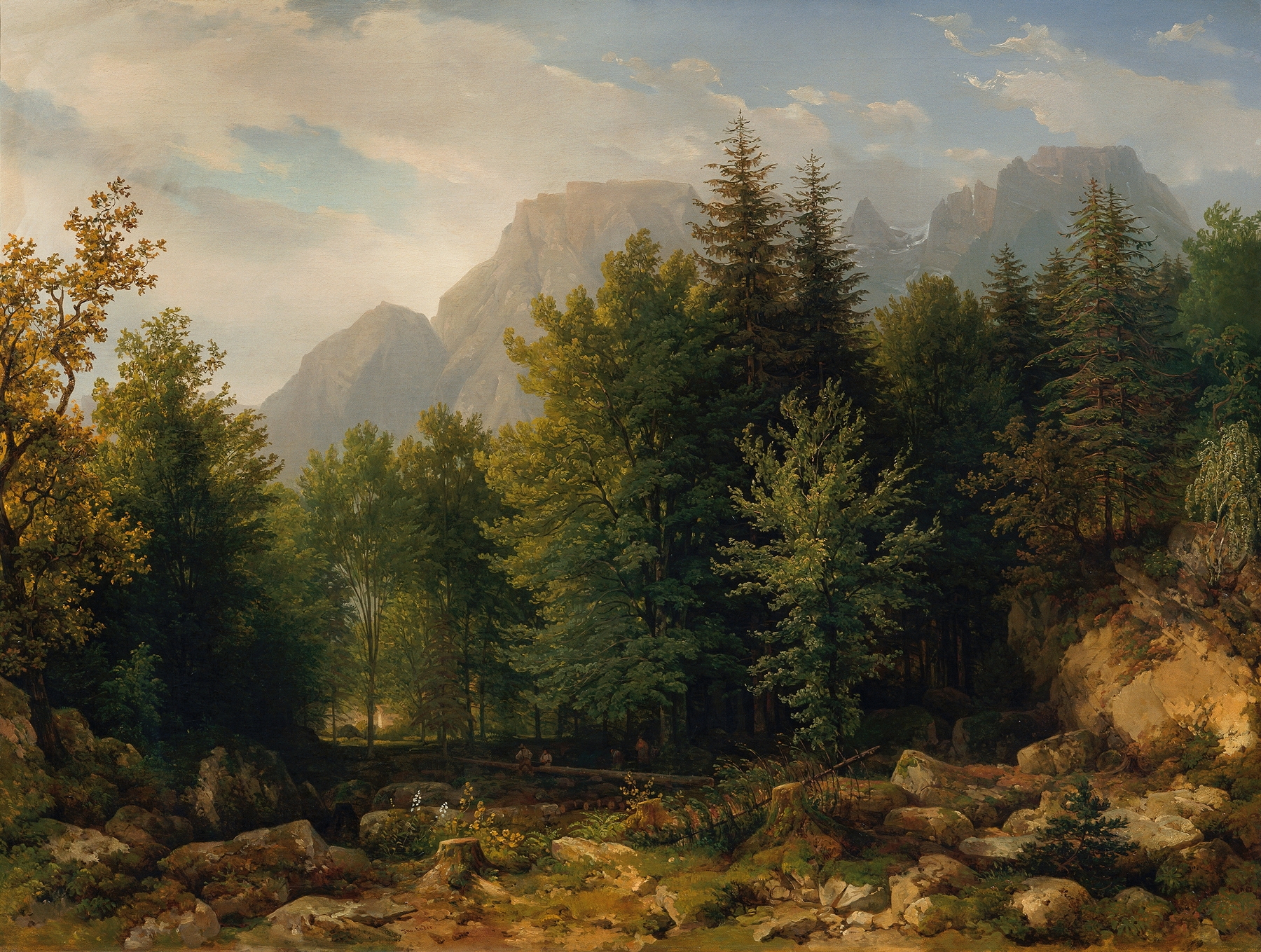
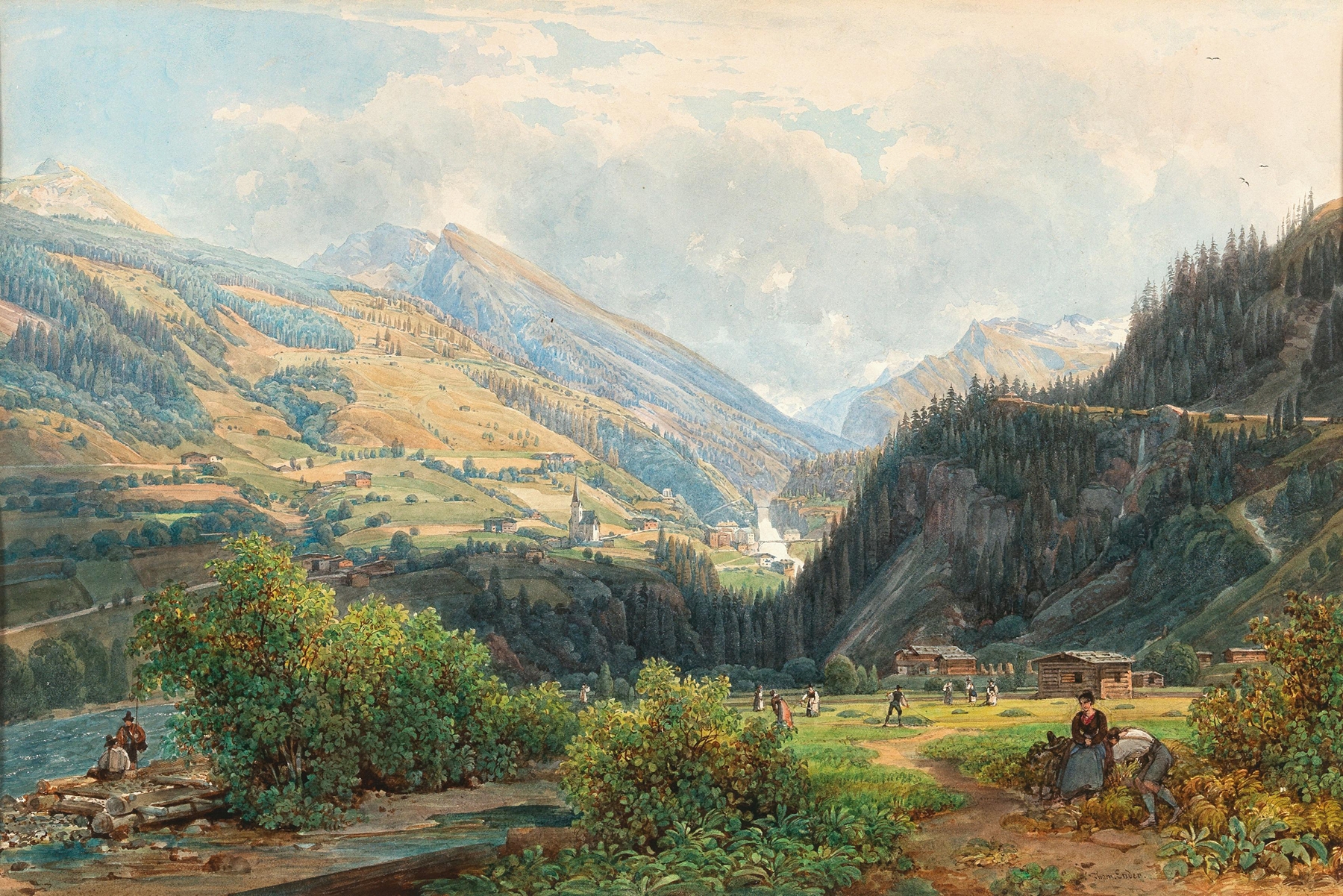
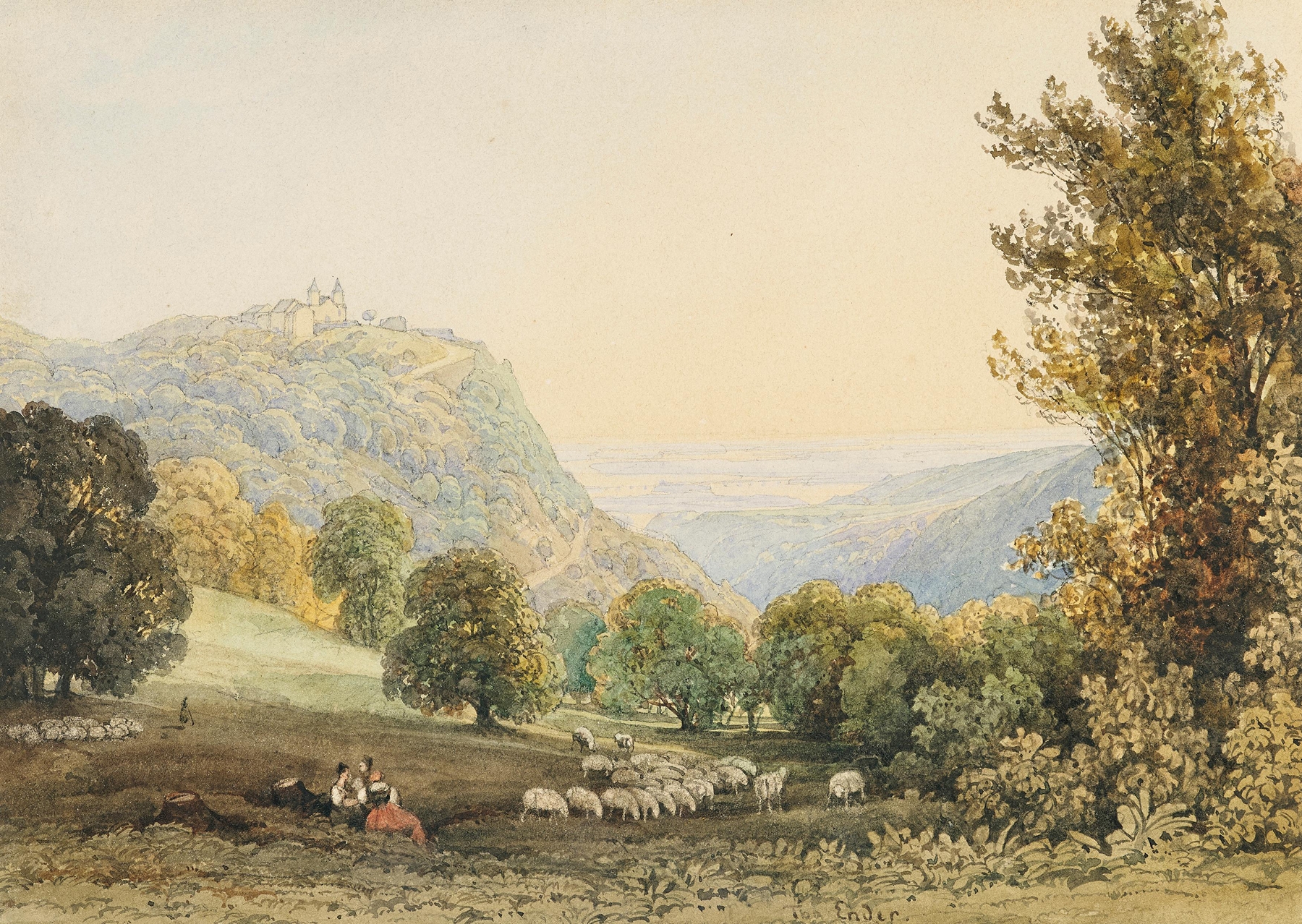
Can beauty exist without sorrow? In Wooded River Landscape in the Alps, we find ourselves grappling with that poignant question, as the landscape invites a complex yearning that echoes through its serene vistas. Look to the center where the river meanders, its crystalline surface reflecting the dappled sunlight filtering through a canopy of lush greenery. The bold strokes of the foliage contrast with the delicate blues and whites of the mountains in the distance, creating a balance of vibrant life and tranquil stillness.
Notice how the artist employs layering and perspective, drawing the eye into the depths of the scene, inviting viewers to explore each intricately painted element. Yet, beneath this idyllic surface lies a tension between the beauty of nature and the hint of isolation it conveys. The towering peaks loom like sentinels, suggesting both protection and separation, while the gentle flow of the river hints at the passage of time—a reminder that all beauty is transient. The dense thickets may symbolize desire, a longing for connection, yet they also enclose the viewer in a world that feels both inviting and remote.
Thomas Ender painted this work during his travels in the Alps, around the mid-19th century, a time of great exploration in both nature and artistic expression. The Romantic movement was in full swing, celebrating the sublime beauty of the natural world as a counterpoint to the industrial changes sweeping across Europe. Ender's deep affection for the landscapes he painted reflects his own journey—not just through the mountains, but also through the emotional landscapes of desire, solitude, and the search for beauty amid the chaos of modern life.