Zevenkattengang bij de Goudsbloemgracht (thans Willemstraat) te Amsterdam — History & Analysis
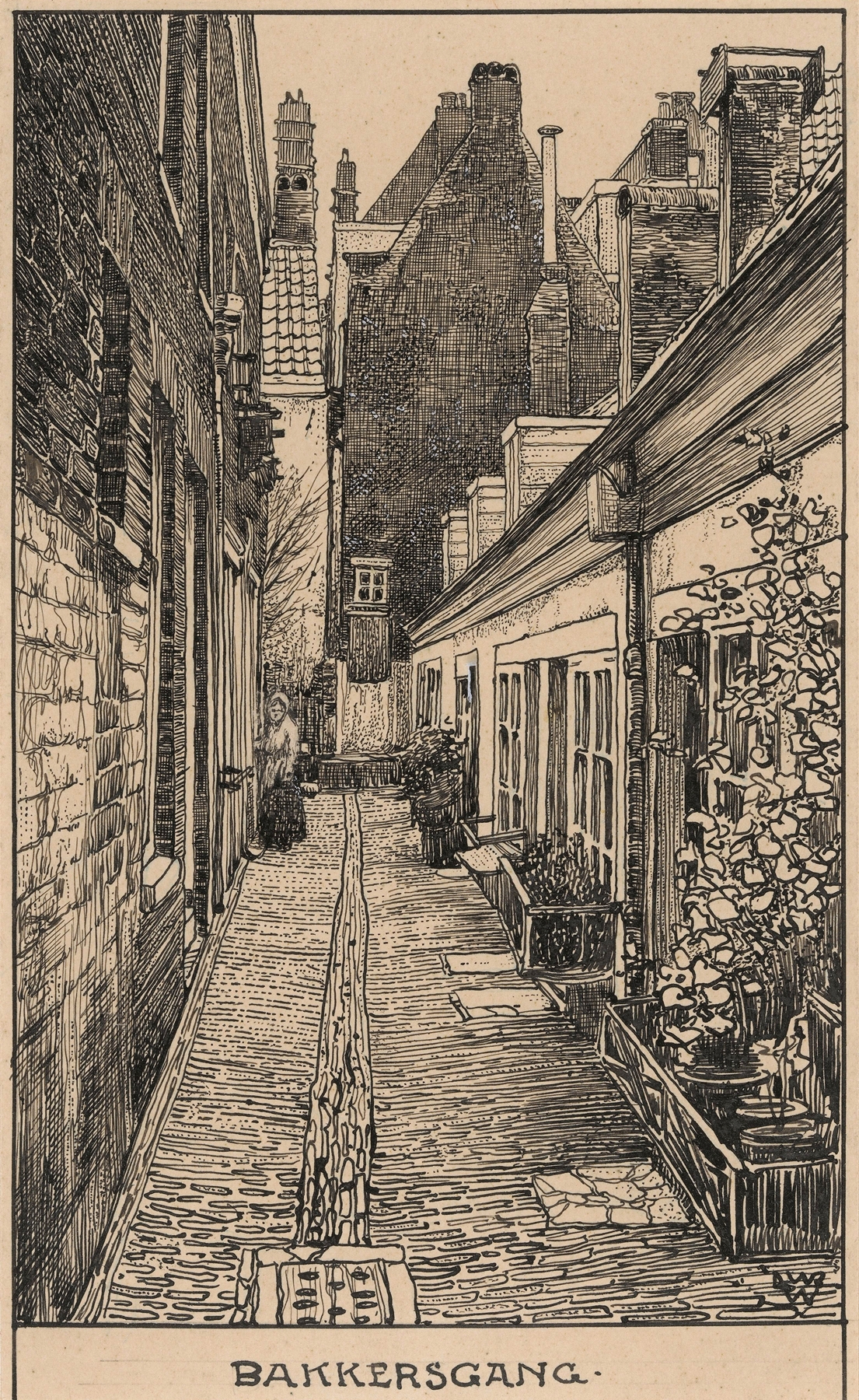
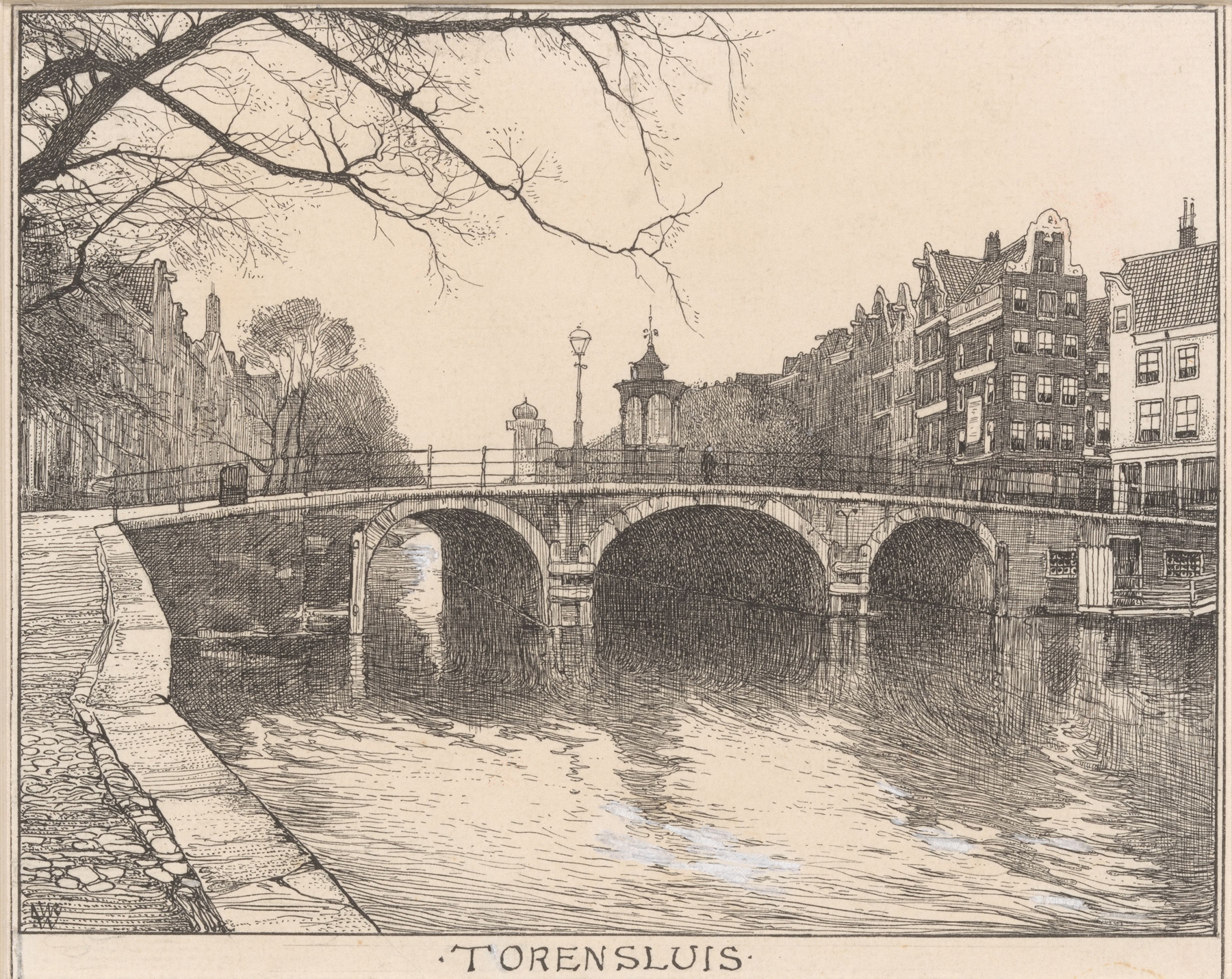
Can beauty exist without sorrow? This question resonates deeply within the quiet confines of Zevenkattengang bij de Goudsbloemgracht (thans Willemstraat) te Amsterdam, where the interplay of light and shadow whispers the fragility of existence. Look to the left where the meandering canal reflects the soft hues of twilight, drawing your eye into the still water that acts as a mirror not just of the landscape, but of time itself. The buildings, stoic and somewhat melancholic, project an air of silent witness to the passage of life.
Notice how the delicate brushstrokes create a sense of texture in the brick and stone, while the warm golds and cool blues blend organically, suggesting a harmony that belies the tension of mortality lurking beneath the surface. As you study the scene, consider the empty pathway that beckons yet remains untraveled, symbolizing the choices made and those left behind. The faint outline of a wilting plant in the foreground hints at inevitable decay, contrasting sharply with the vibrant life depicted in the canal’s reflection.
Each element is meticulously placed, speaking to the coexistence of beauty and sorrow — a reminder that every moment of joy carries an echo of loss. Wenckebach created this piece in the 20th century, a time when the art world was undergoing significant shifts through movements like modernism and expressionism. Living in Amsterdam, the artist found inspiration in his surroundings, capturing the essence of the city while grappling with themes of mortality that were becoming increasingly relevant in the face of societal changes and the aftermath of war.