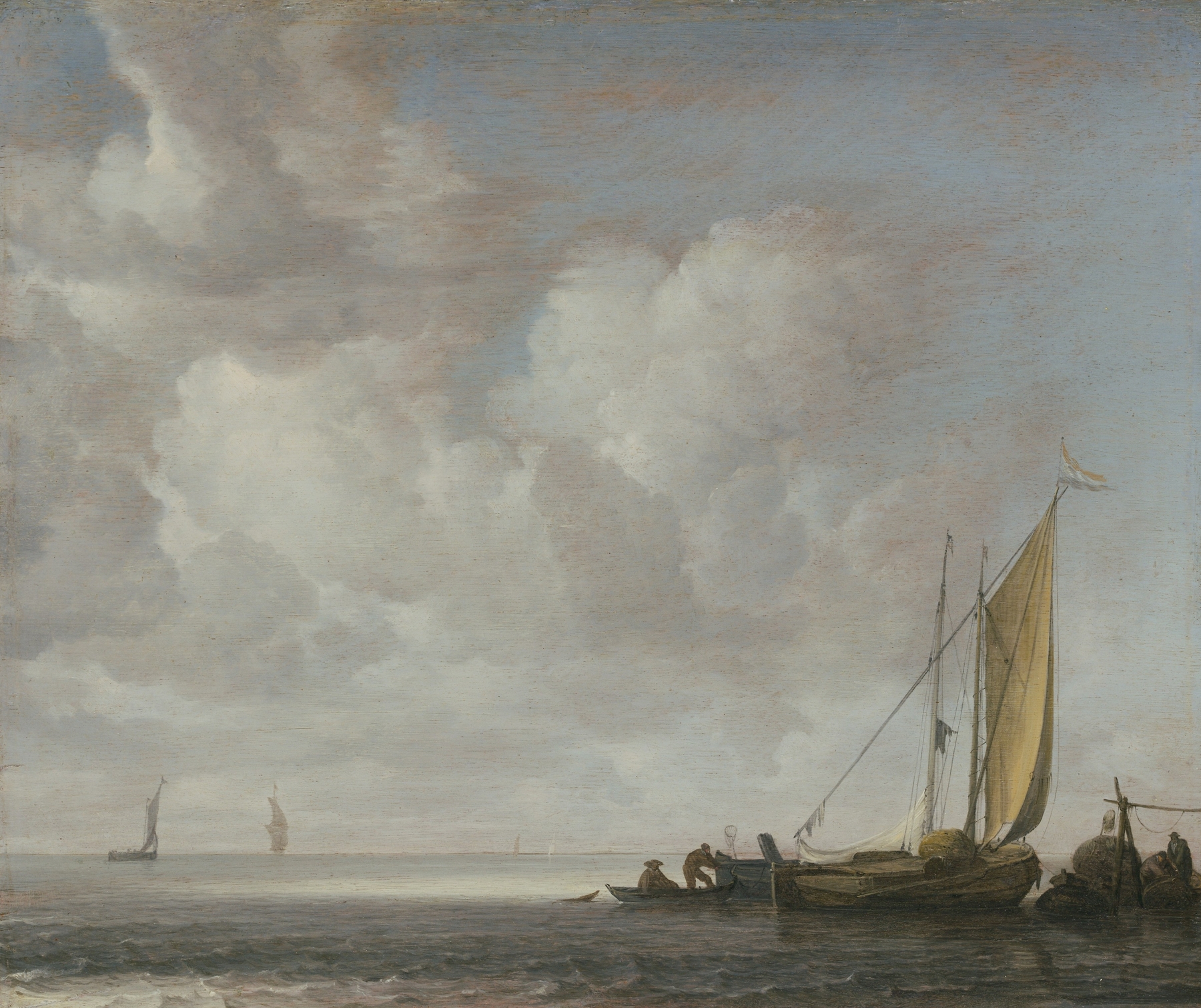
A Calm Sea — History & Analysis
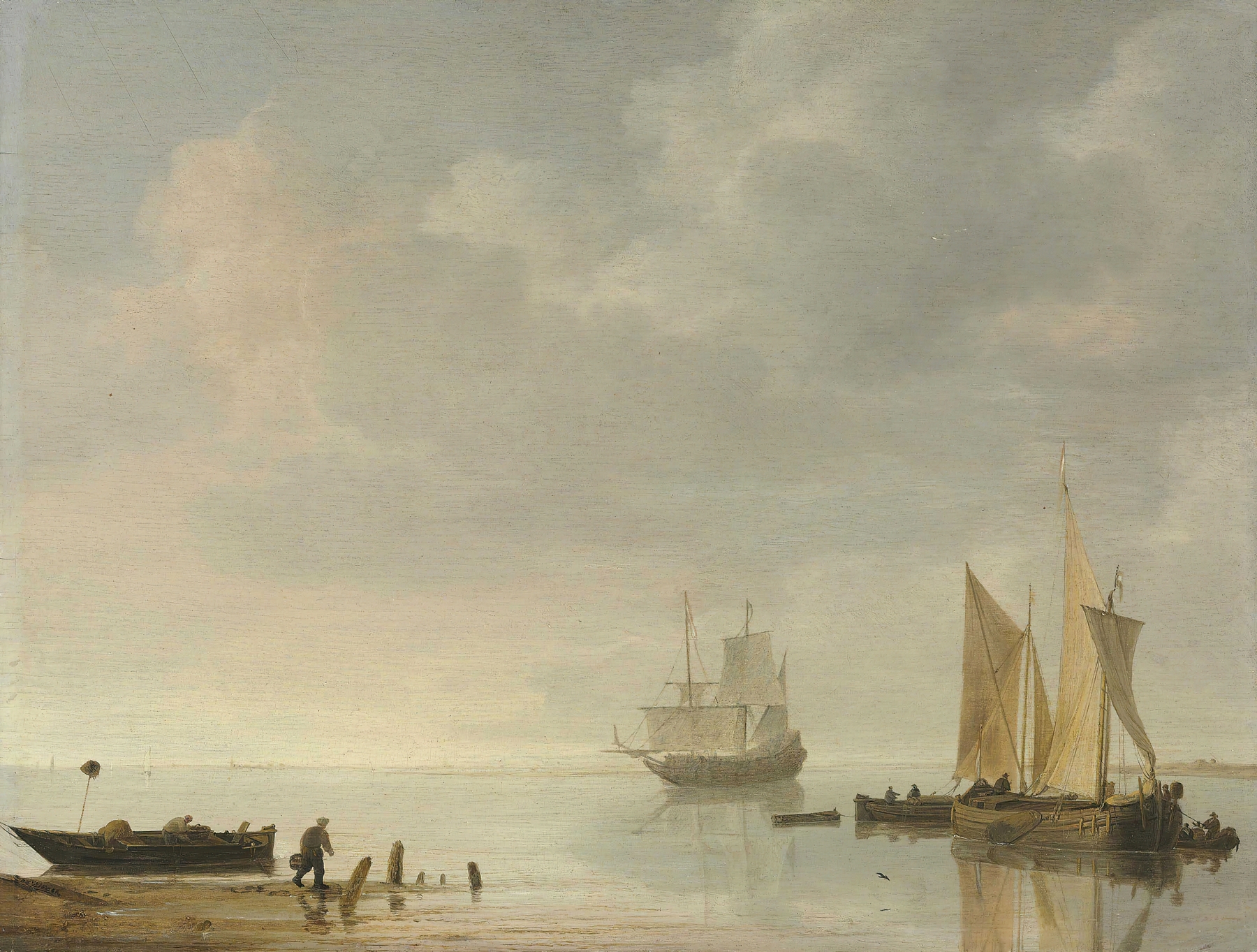
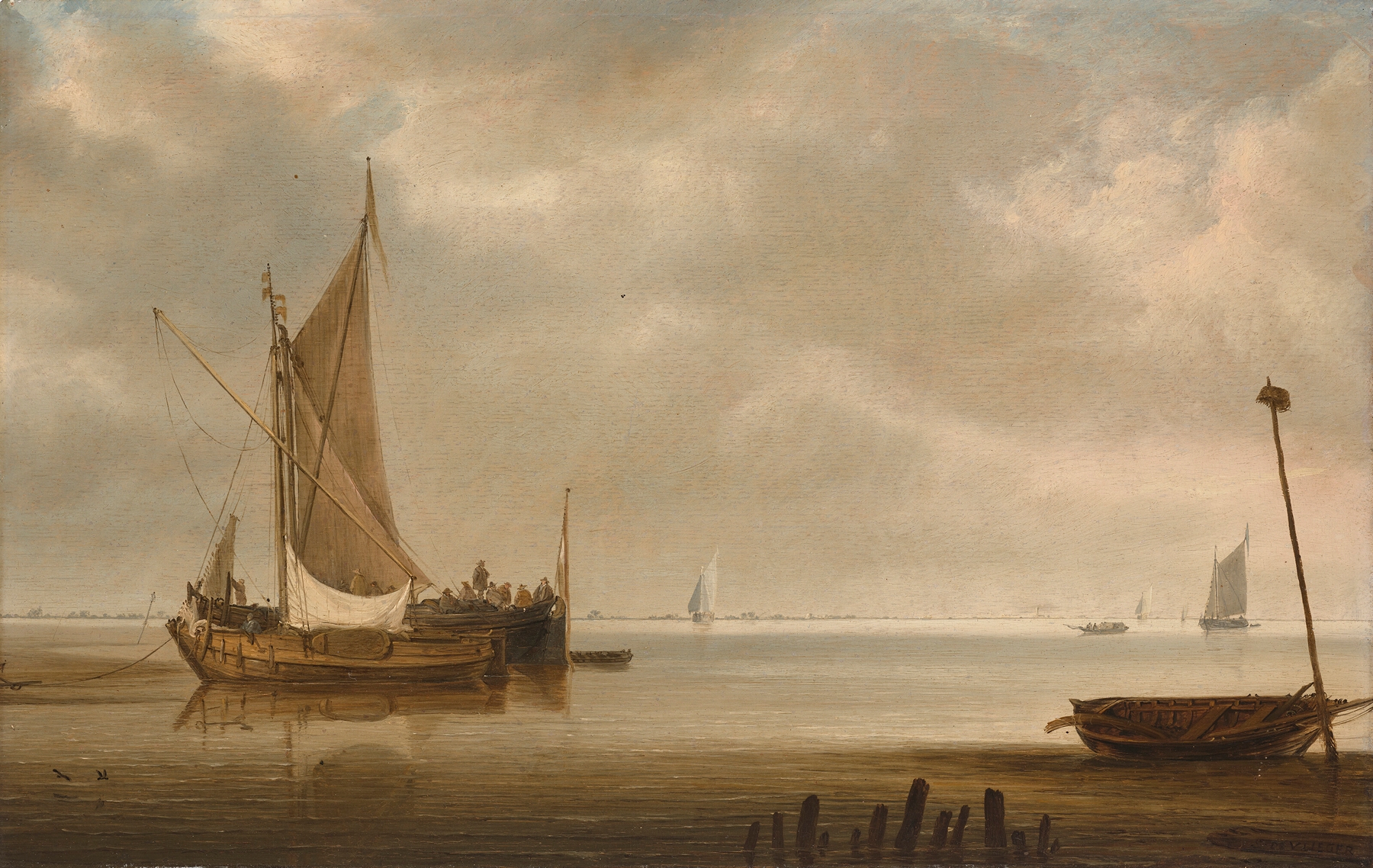
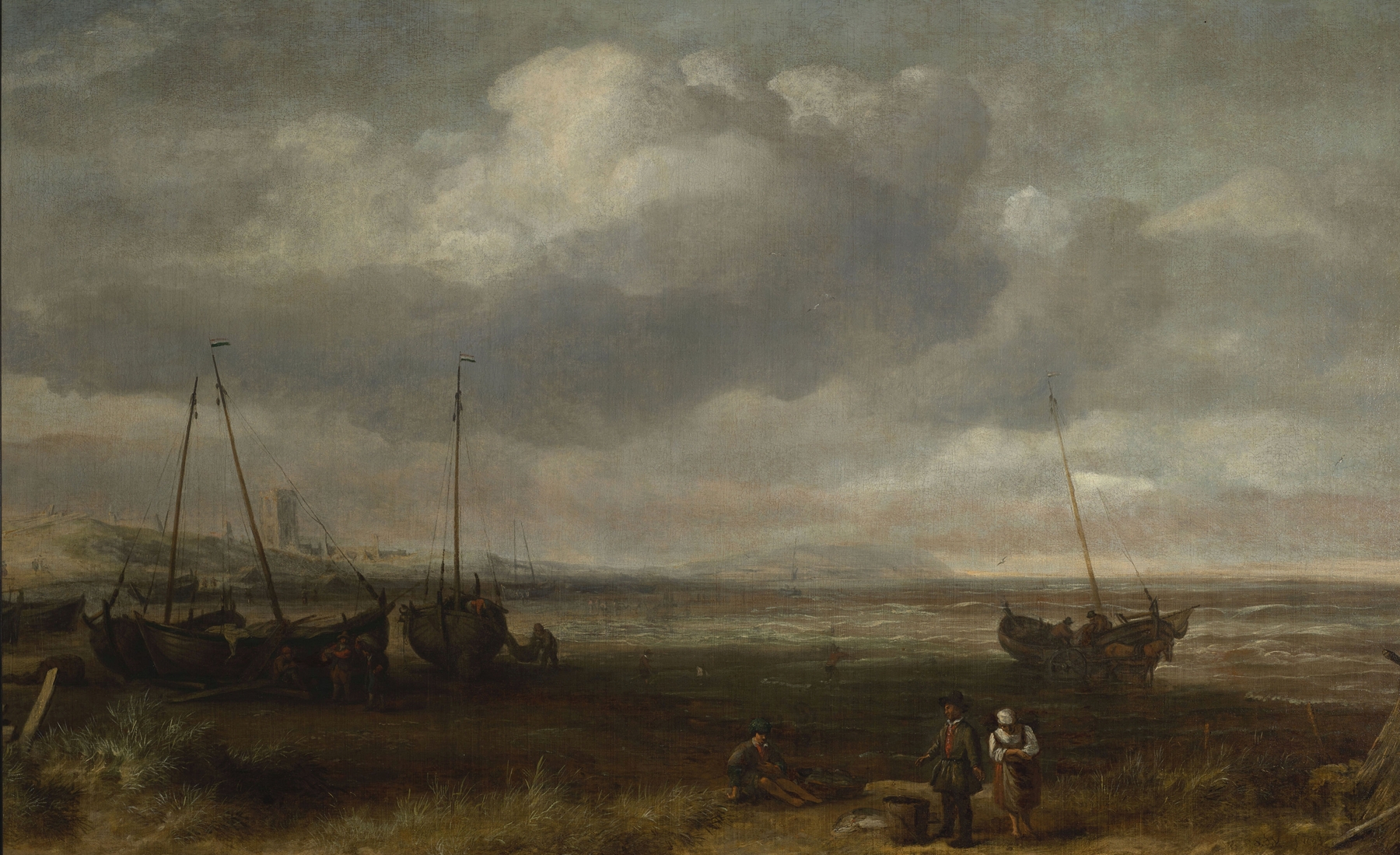
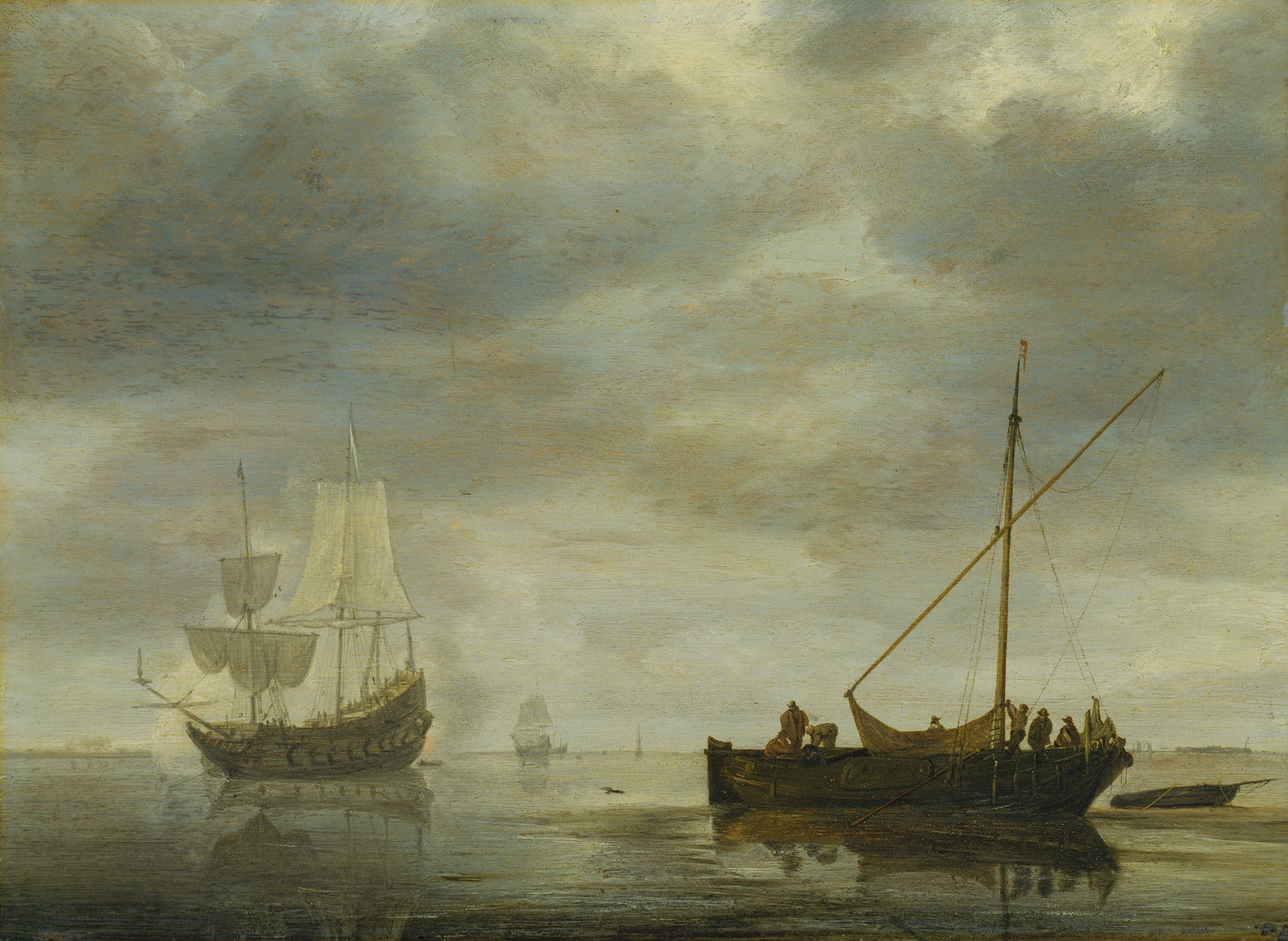
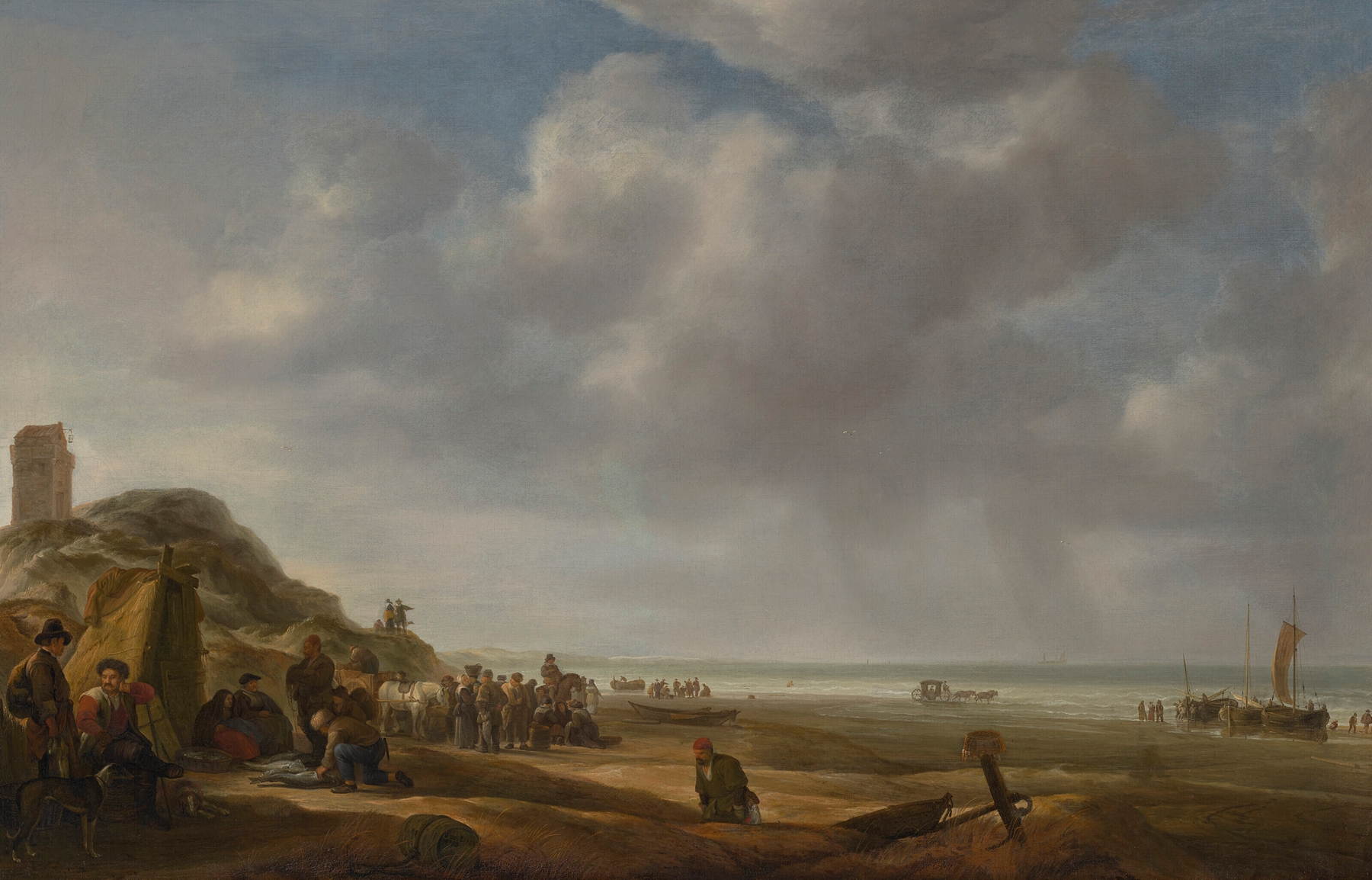
“To paint is to remember what time wants us to forget.” In the vast, ethereal expanse of A Calm Sea, Simon de Vlieger invites us to linger in the quiet melancholy of a serene moment, where tranquility masks the passage of time. Focus on the horizon, where the soft interplay of blues and greens merges seamlessly, creating a seamless gradient that draws the eye. Notice the subtle reflections on the water's surface, almost like a mirror capturing the fleeting clouds above. The delicate brushwork presents a gentle, undulating rhythm, while the distant sailboats—tiny against the vastness—convey a sense of both freedom and isolation.
Each element is harmonized by a muted palette, evoking an emotional depth that resonates beneath the surface calm. In this work, the juxtaposition of stillness and movement creates a poignant tension. The boats, caught in the still waters, symbolize a longing for adventure yet bound by nature's calm. The subtle ripples suggest the undercurrents of time and memory, intimating that even in quiet moments, life stirs in unseen ways.
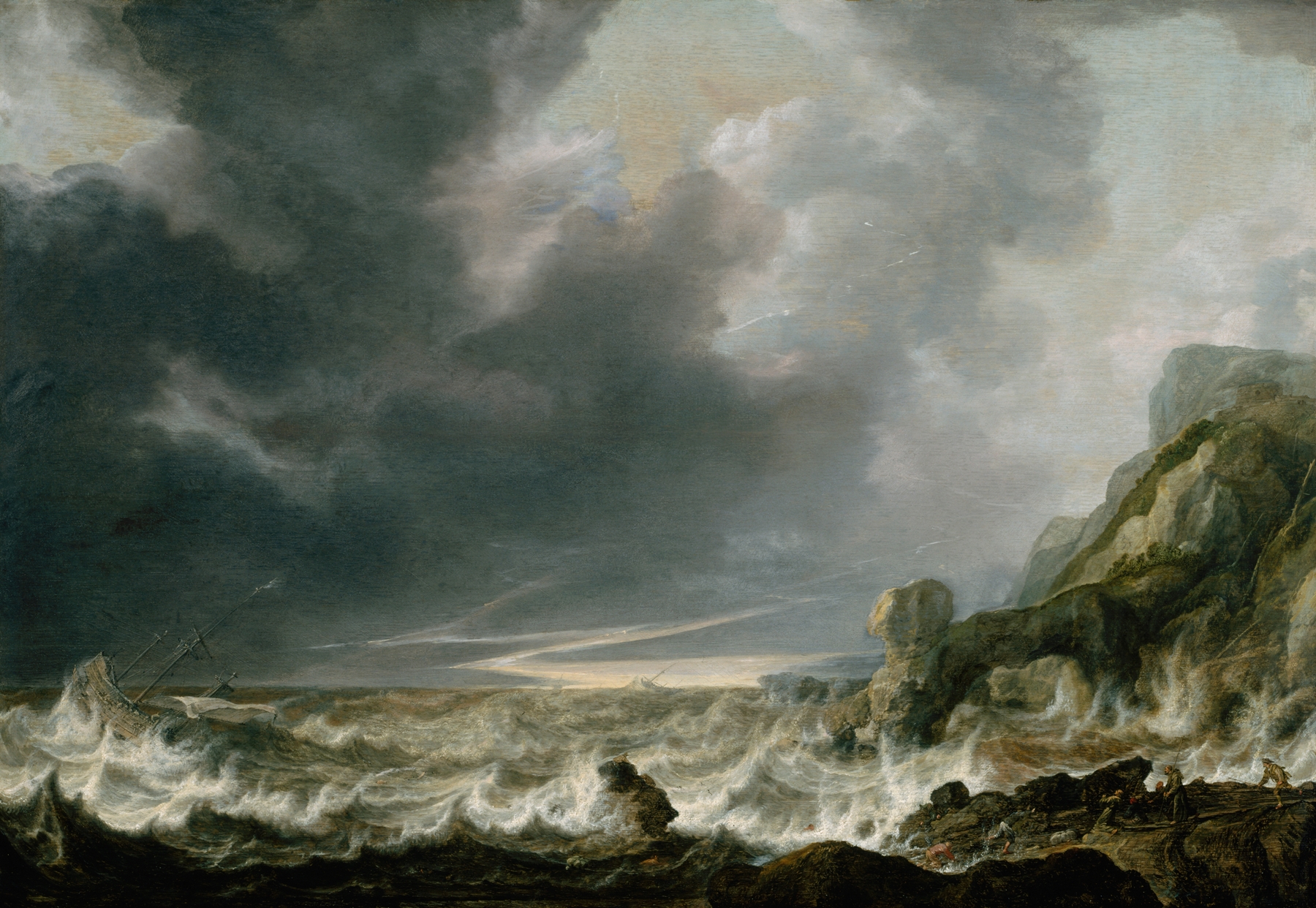
The emotional weight of the painting lies in this duality—the peace of the moment contrasted with the inevitable passage of time, echoing a collective human experience of nostalgia and reflection. Created in 1642, this piece emerged during a significant period for de Vlieger, who was navigating the competitive and evolving world of Dutch marine painting. Living in the Netherlands, he found himself amidst a flourishing art market that celebrated maritime themes, yet also felt the weight of personal loss, evident in the melancholic undertones of his work. This context imbues A Calm Sea not just with beauty, but also with a resonance that reflects the artist's own journey.