A Dancer — History & Analysis
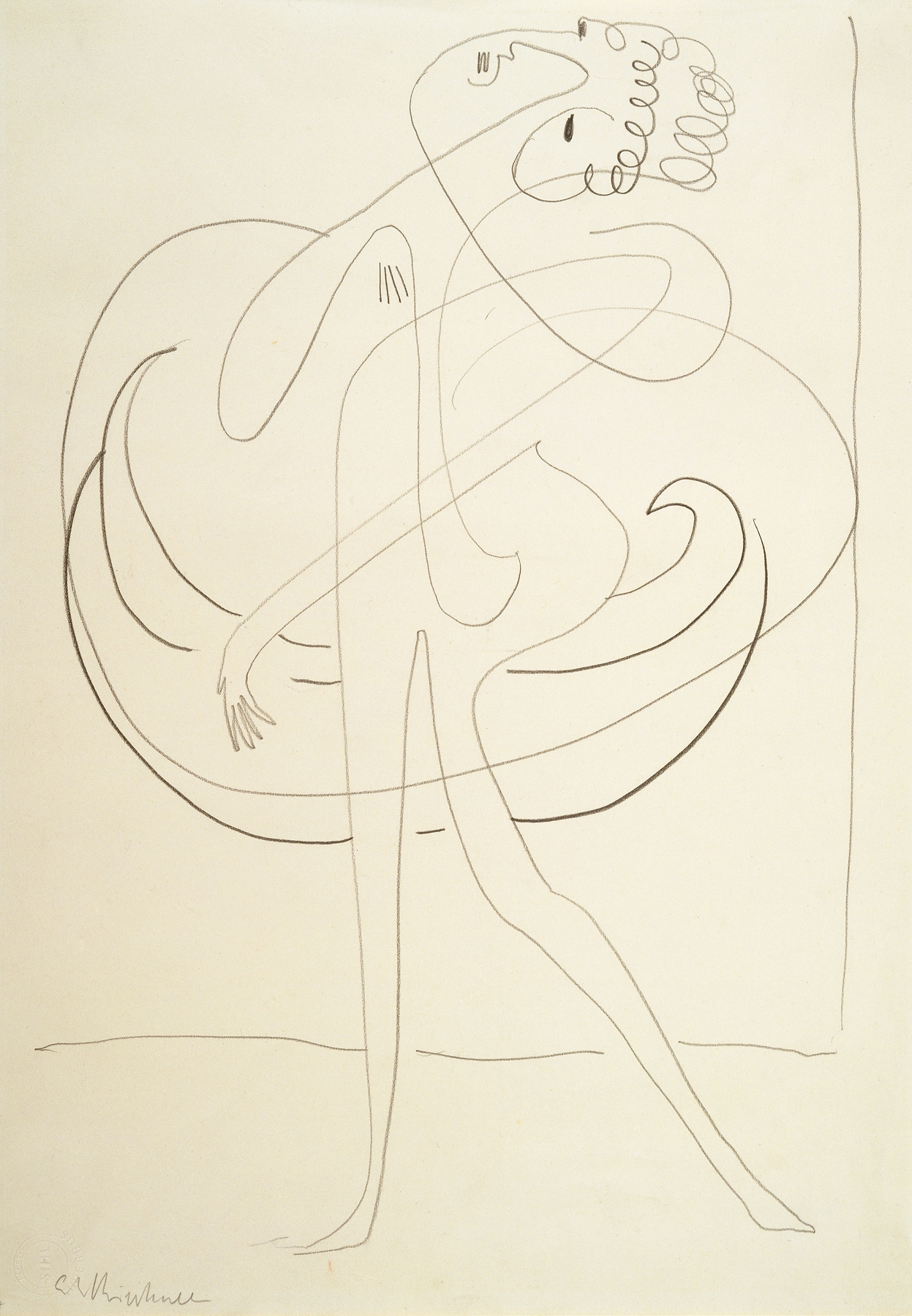
What secret hides in the quiet of the canvas? In a world brimming with noise and motion, the stillness of this artwork invites introspection about the emptiness that often lingers beneath vibrant surfaces. Look to the center of the composition, where the dancer strikes a poised yet solitary pose. The sinuous lines of her body, accentuated by bold strokes of color, draw the eye and evoke a sense of elegance intertwined with vulnerability. Notice how the stark contrast between the vivid reds and the muted greens not only emphasizes her movement but also conjures an emotional landscape that feels both alive and melancholic.
The background fades into obscurity, creating a profound void that heightens the focus on the dancer, as if she is both performer and observer in her own space. Delving deeper, the empty space surrounding her suggests a yearning — a longing for connection that is never fully realized. The dancer's gaze, though directed outward, appears vacant, hinting at an internal struggle with solitude amidst the exuberance of her art. This duality speaks to the viewer's own experiences of isolation, illuminating the tension between passion and abandonment, joy and sorrow.
The rhythmic brushstrokes encapsulate movement but also echo a silence that resonates long after the dance has ended. Created in 1933, this piece emerged during a tumultuous period in Ernst Ludwig Kirchner's life, marked by his struggles with mental health and the rise of Nazi oppression in Germany. Working in his studio in Switzerland, the artist grappled with the effects of war on both society and himself. This profound disquiet shaped his artistic expression, leading him to explore themes of existential emptiness, which are poignantly reflected in the mysterious aura of the dancer.