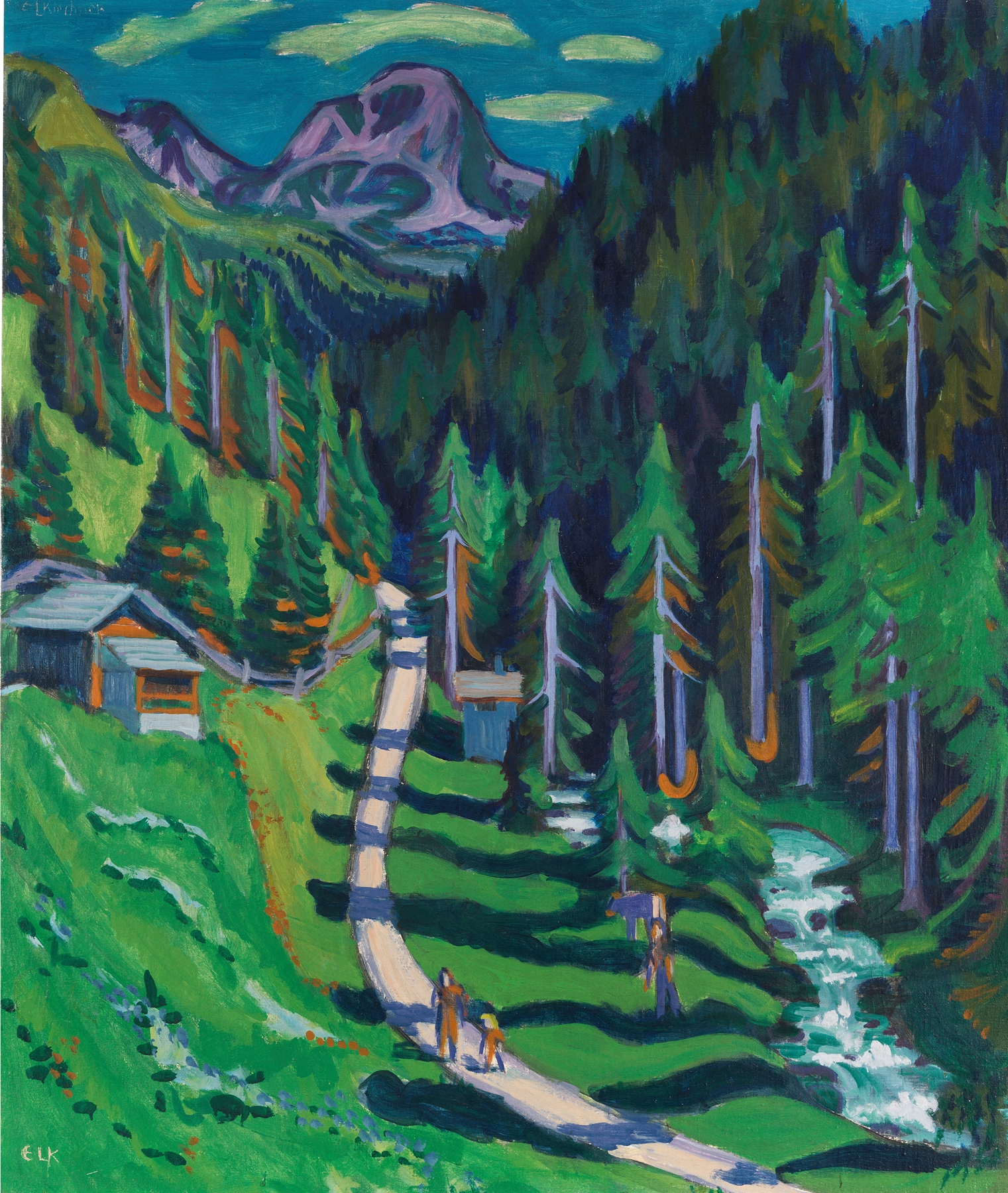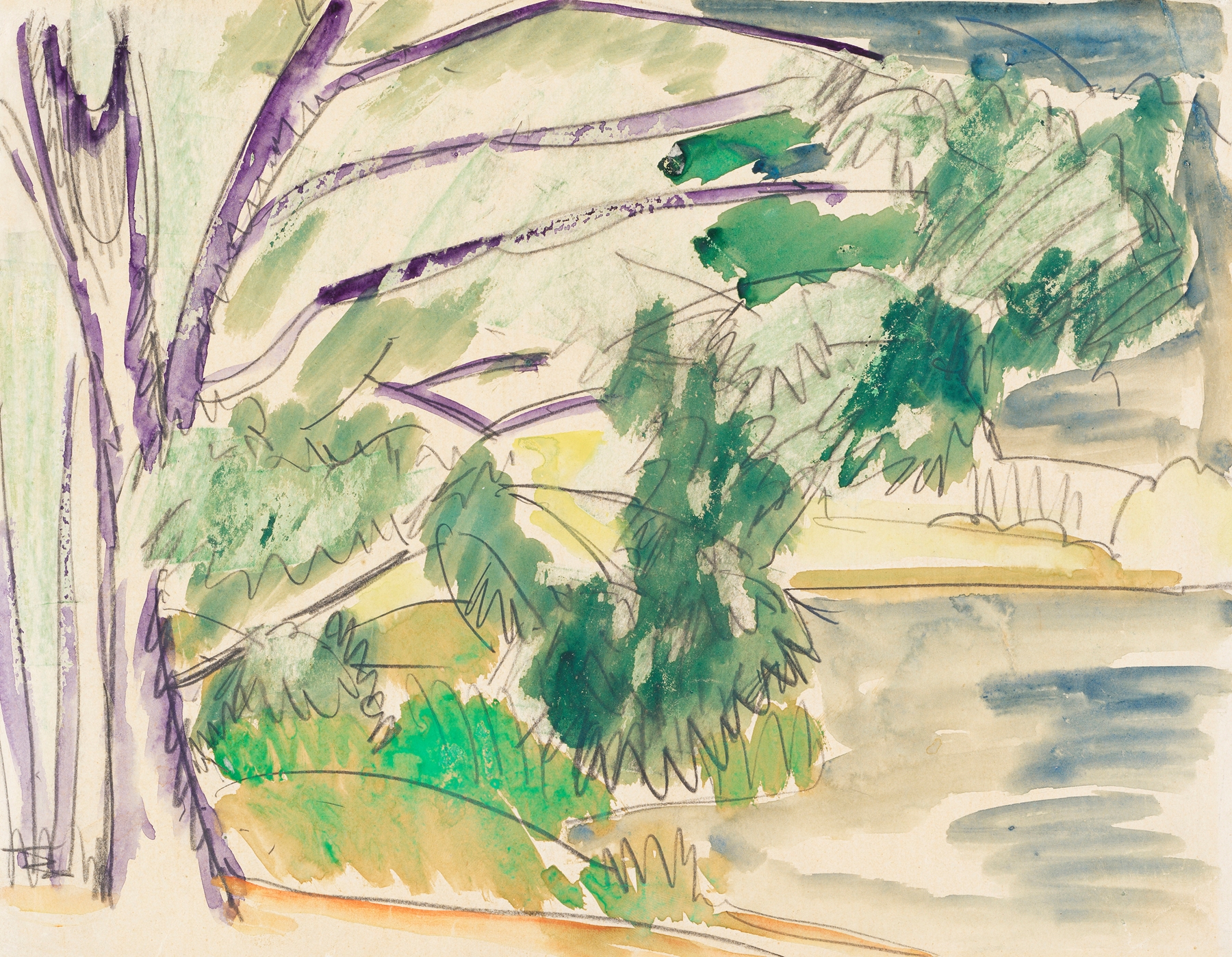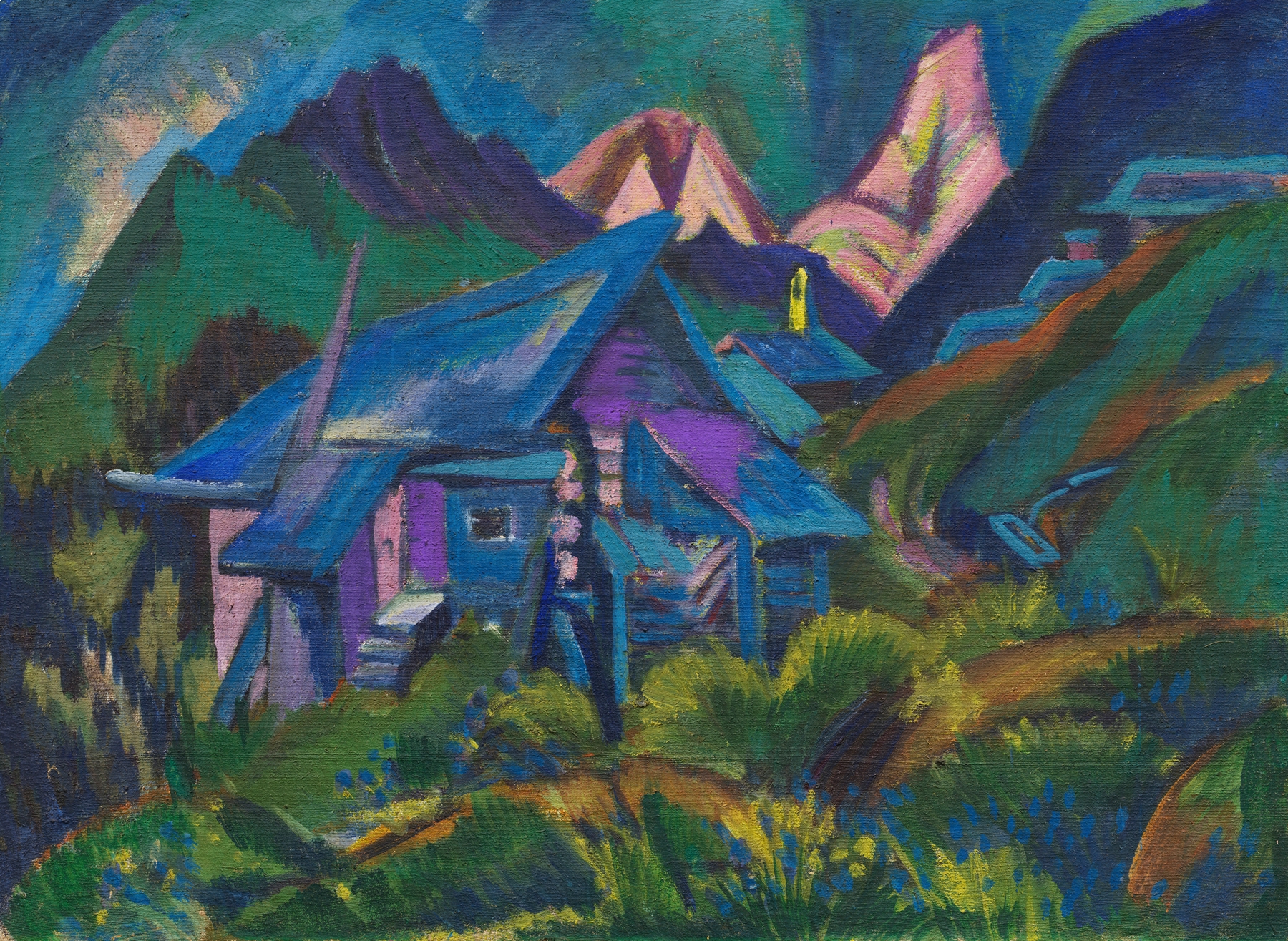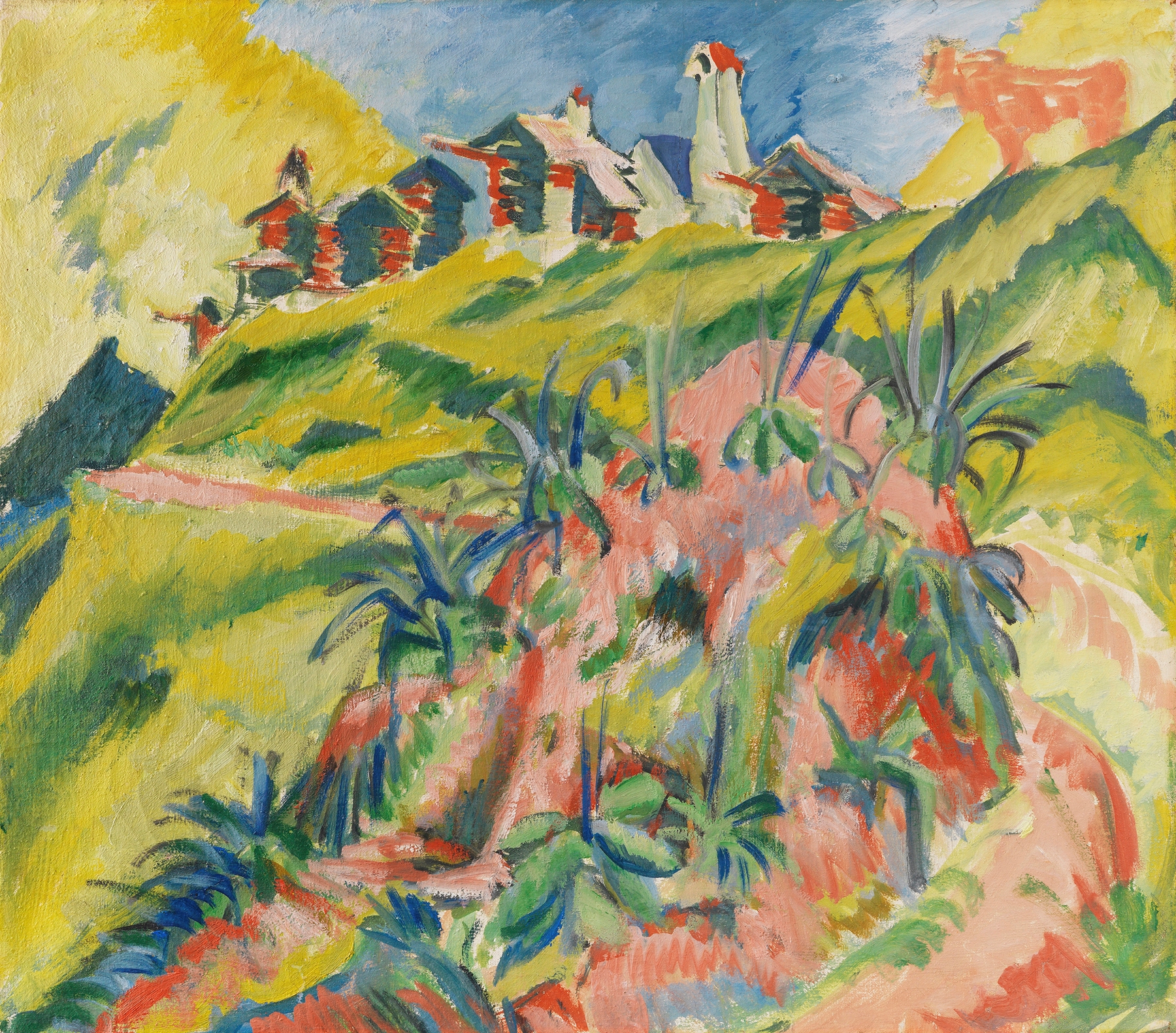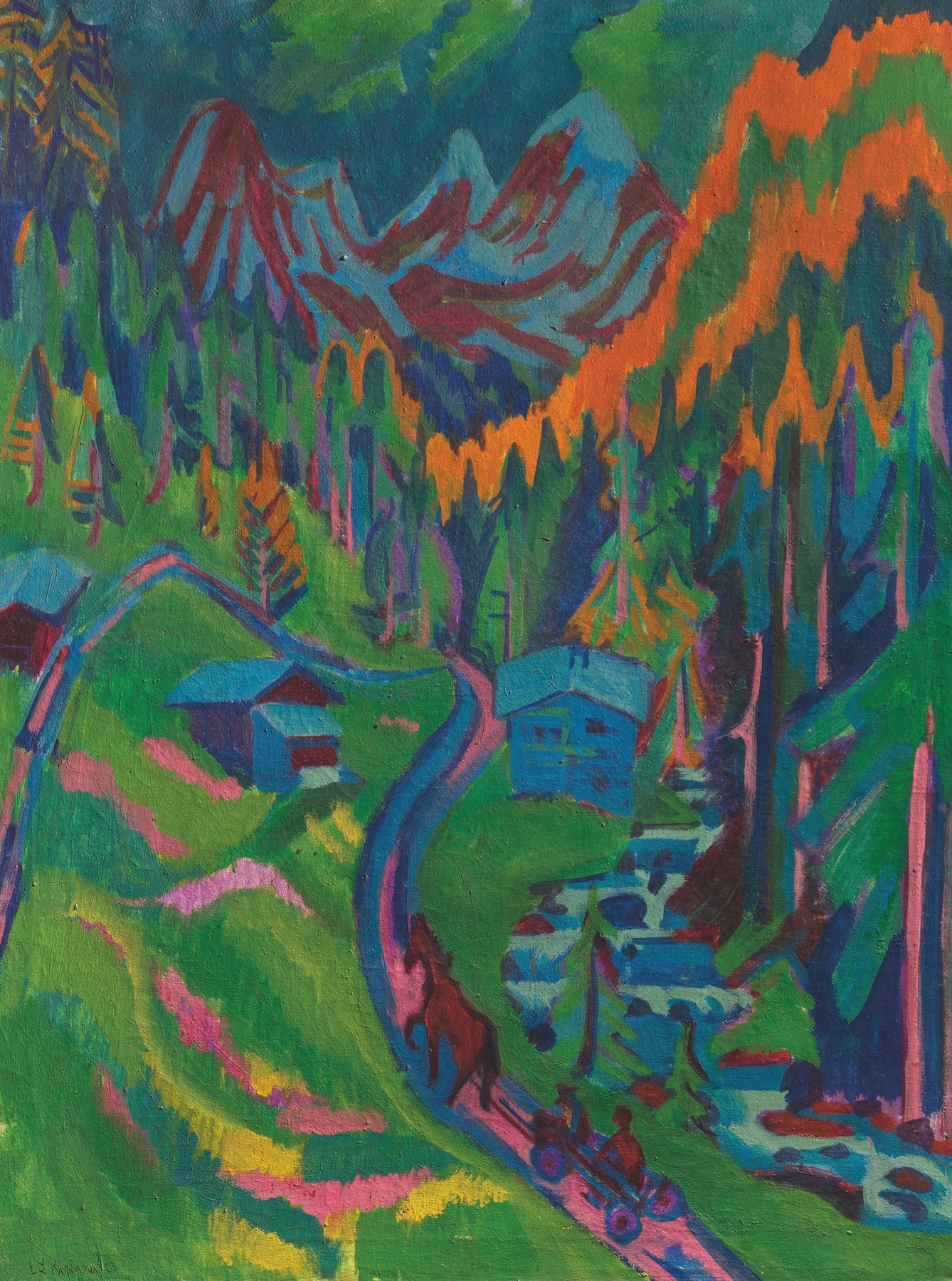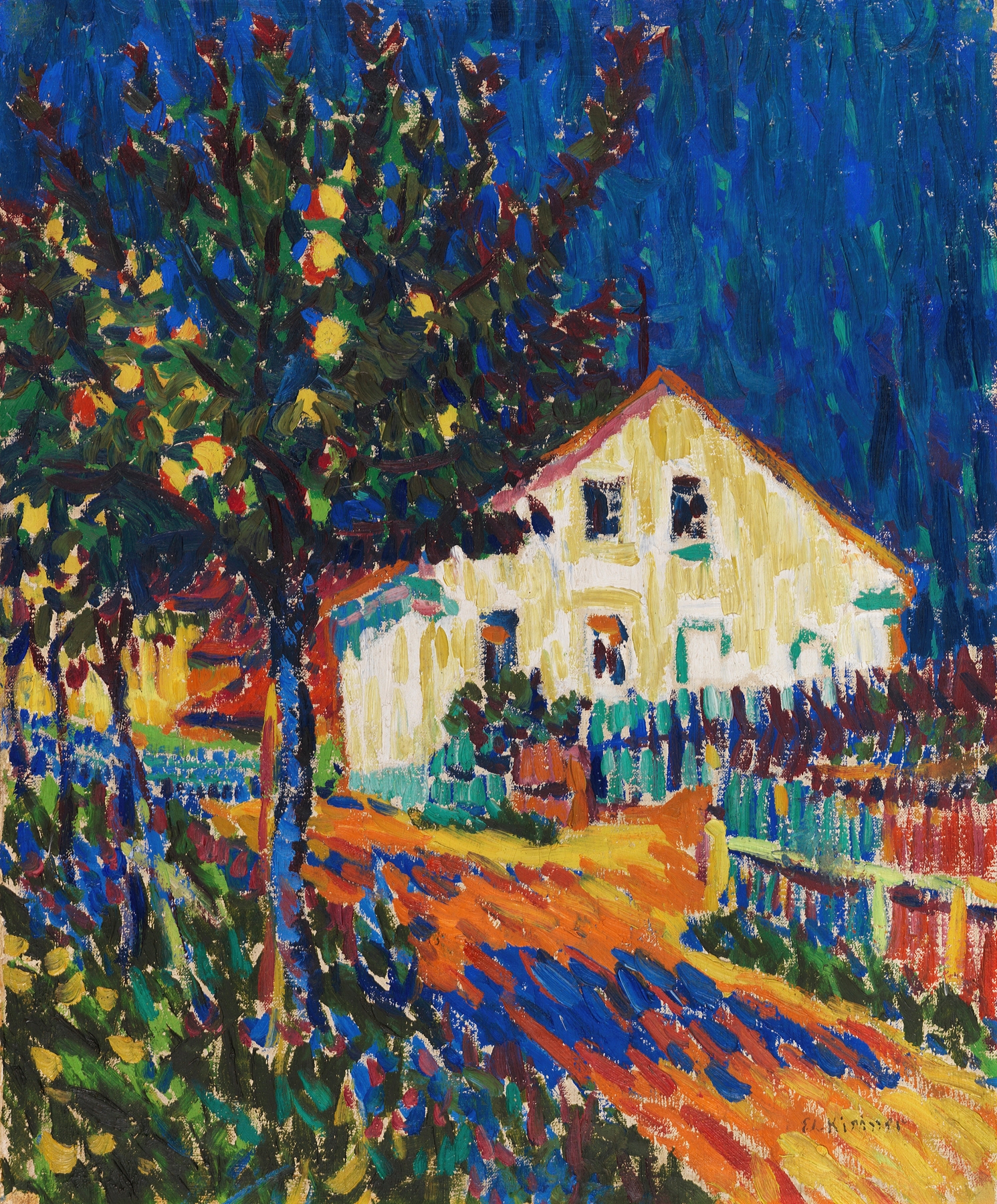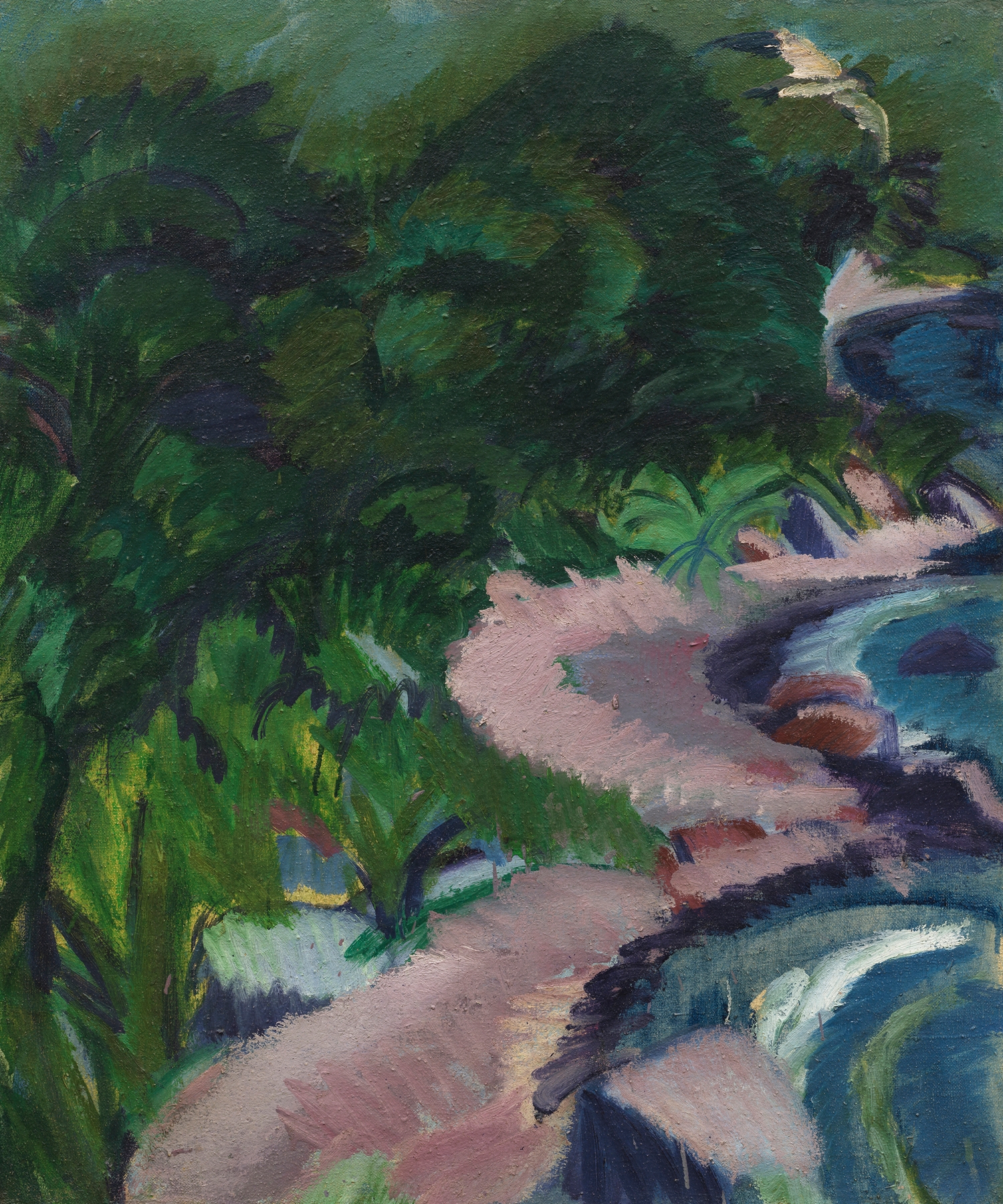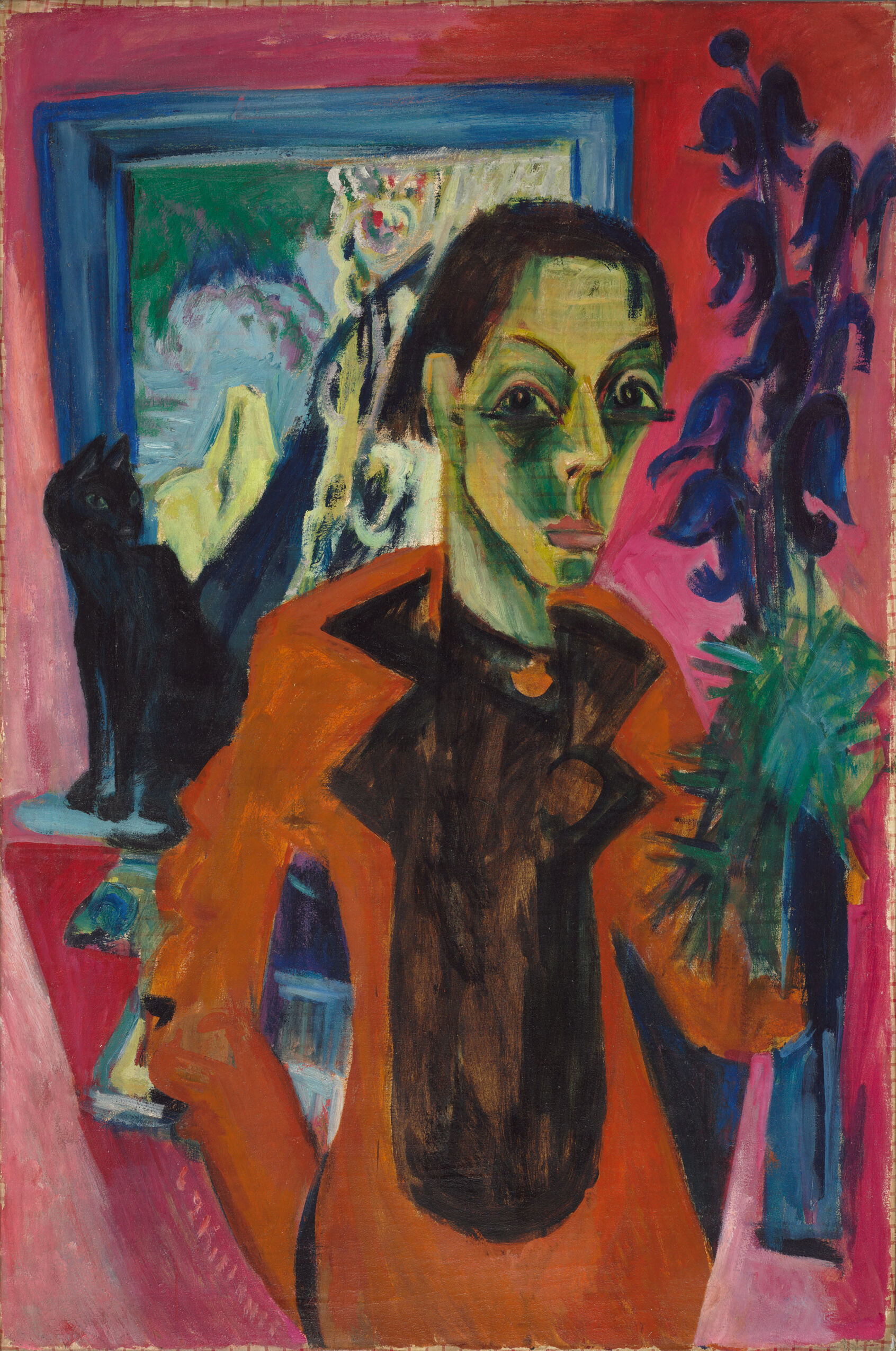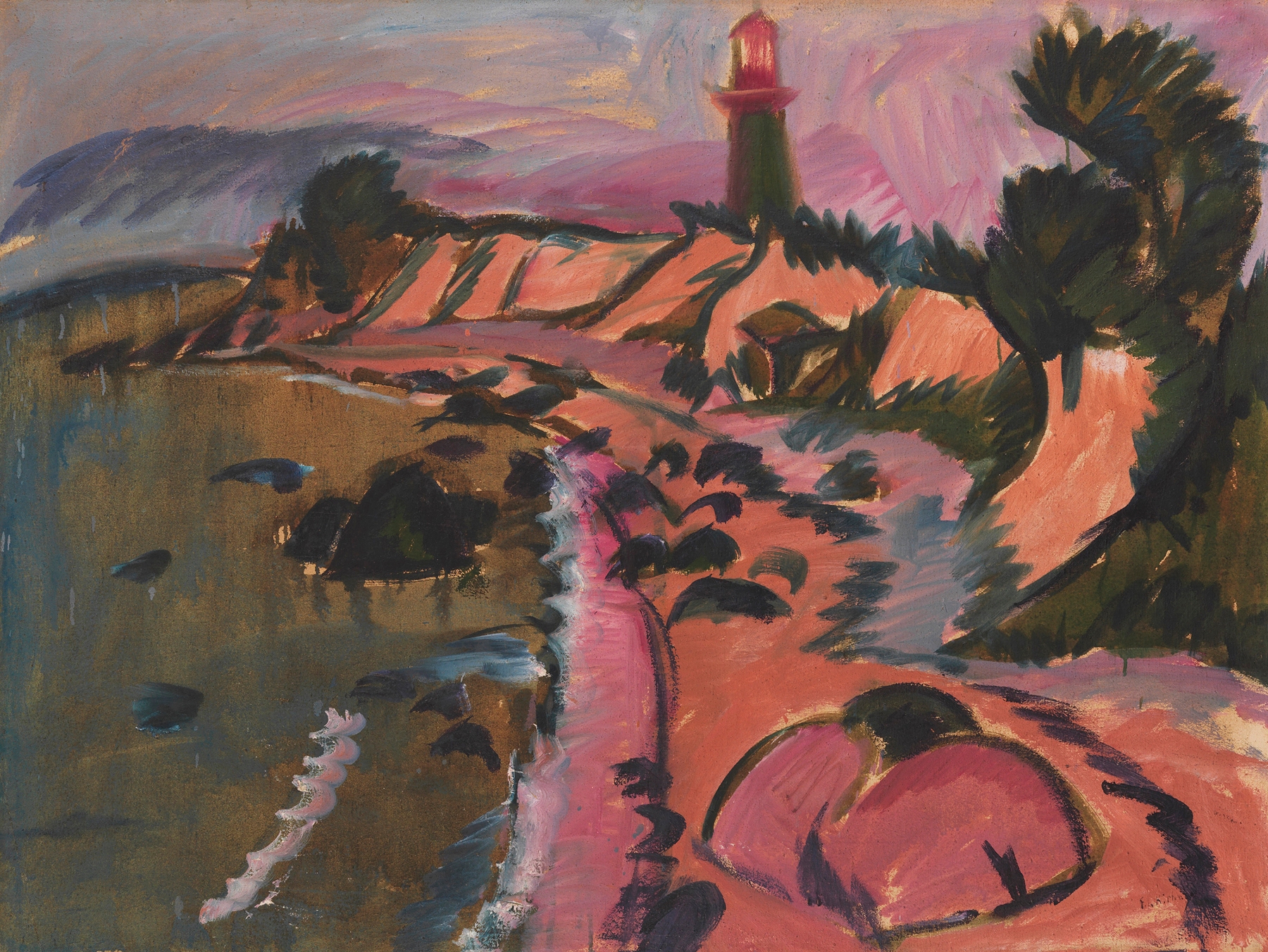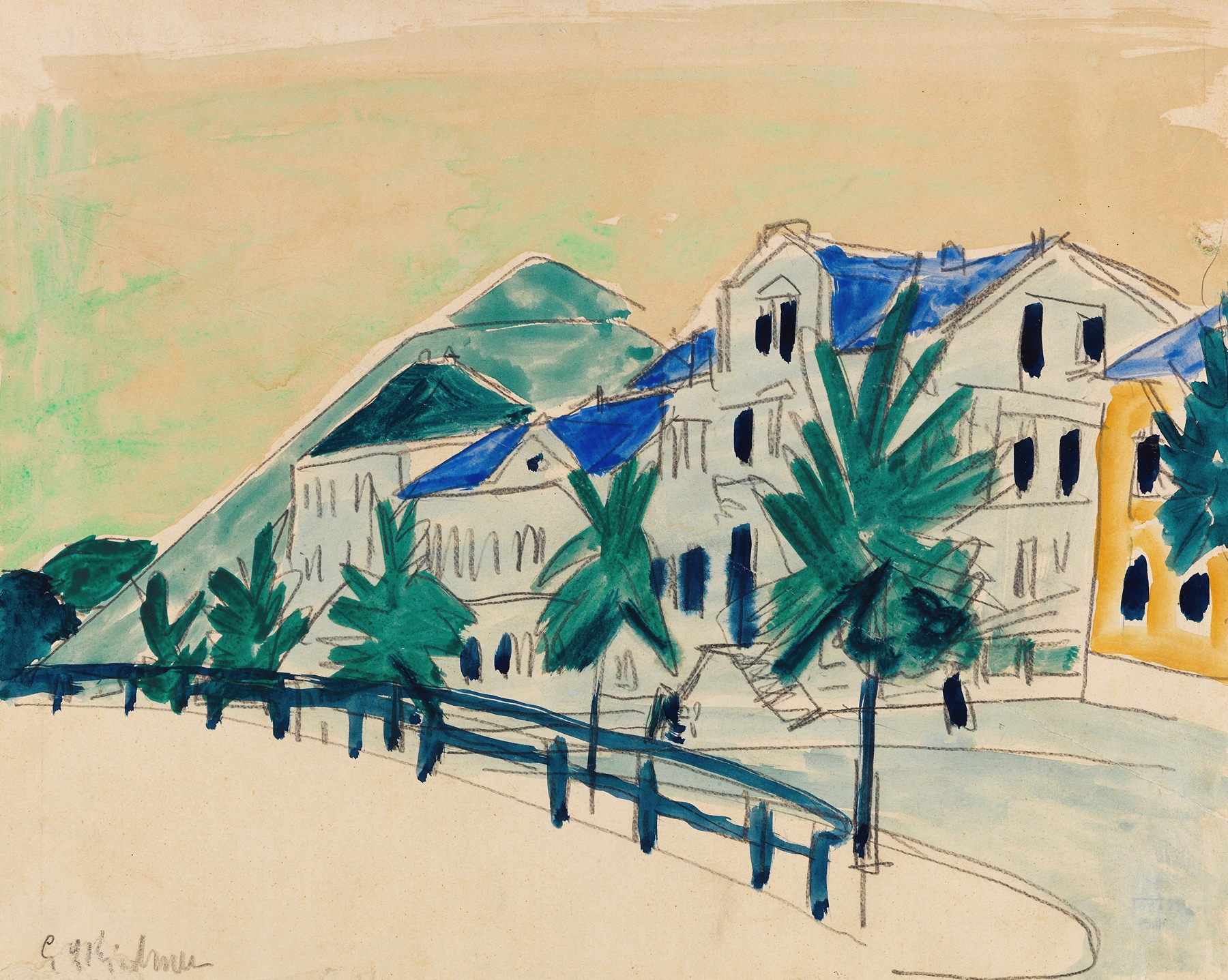
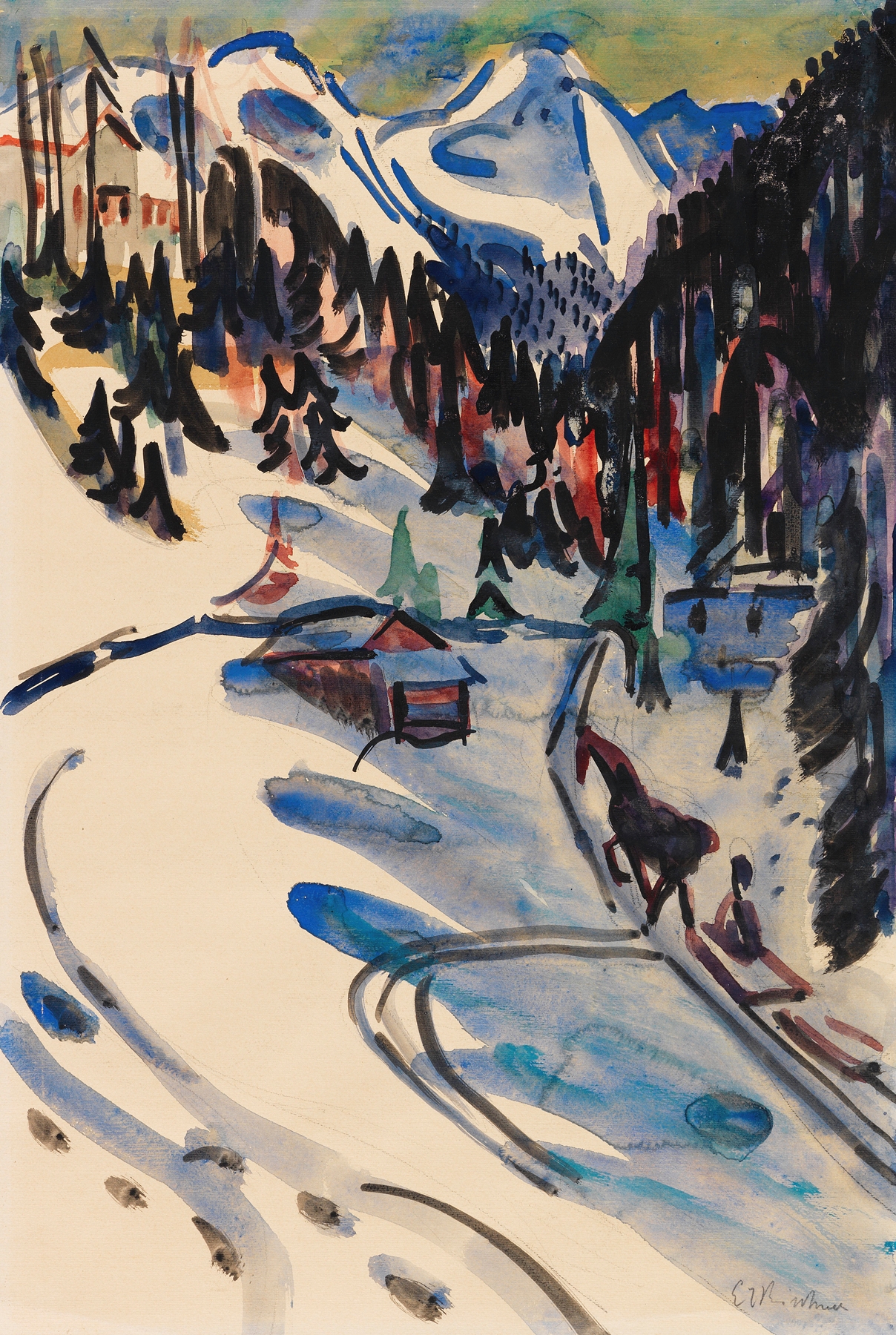
“Under the brush, chaos becomes grace.” Each stroke of paint reveals deeper truths, whispering secrets about life’s unpredictable nature. Focus on the bright colors that burst from the canvas—primary reds and greens dance alongside muted grays, suggesting a vibrant yet complex relationship between urban life and nature. Look to the left at the row of houses, their angular forms reflecting the rhythm of modernity, while the alley draws the eye deeper into the composition, inviting exploration. The interplay of light and shadow hints at the transitory nature of the scene, as if capturing a fleeting moment in time. Beyond its surface lies a tension between the rigid structures and the organic growth of the trees that line the path. The juxtaposition of the straight lines of the houses against the sinuous forms of the foliage embodies the struggle between the human-made and the natural world. Kirchner’s bold brushwork captures the vibrancy of city life, while simultaneously revealing a sense of isolation within that vibrancy, an emotional truth that resonates through the colors and forms. In 1910, Kirchner painted this piece during a pivotal moment in his career, residing in Dresden, Germany, amidst the flourishing expressionist movement. He was deeply influenced by his encounters with urban life, seeking to convey the emotional experiences of modern existence. This period marked a departure from traditional representation, as the artist embraced abstraction and vivid color, aiming to explore the psychological impacts of contemporary society.