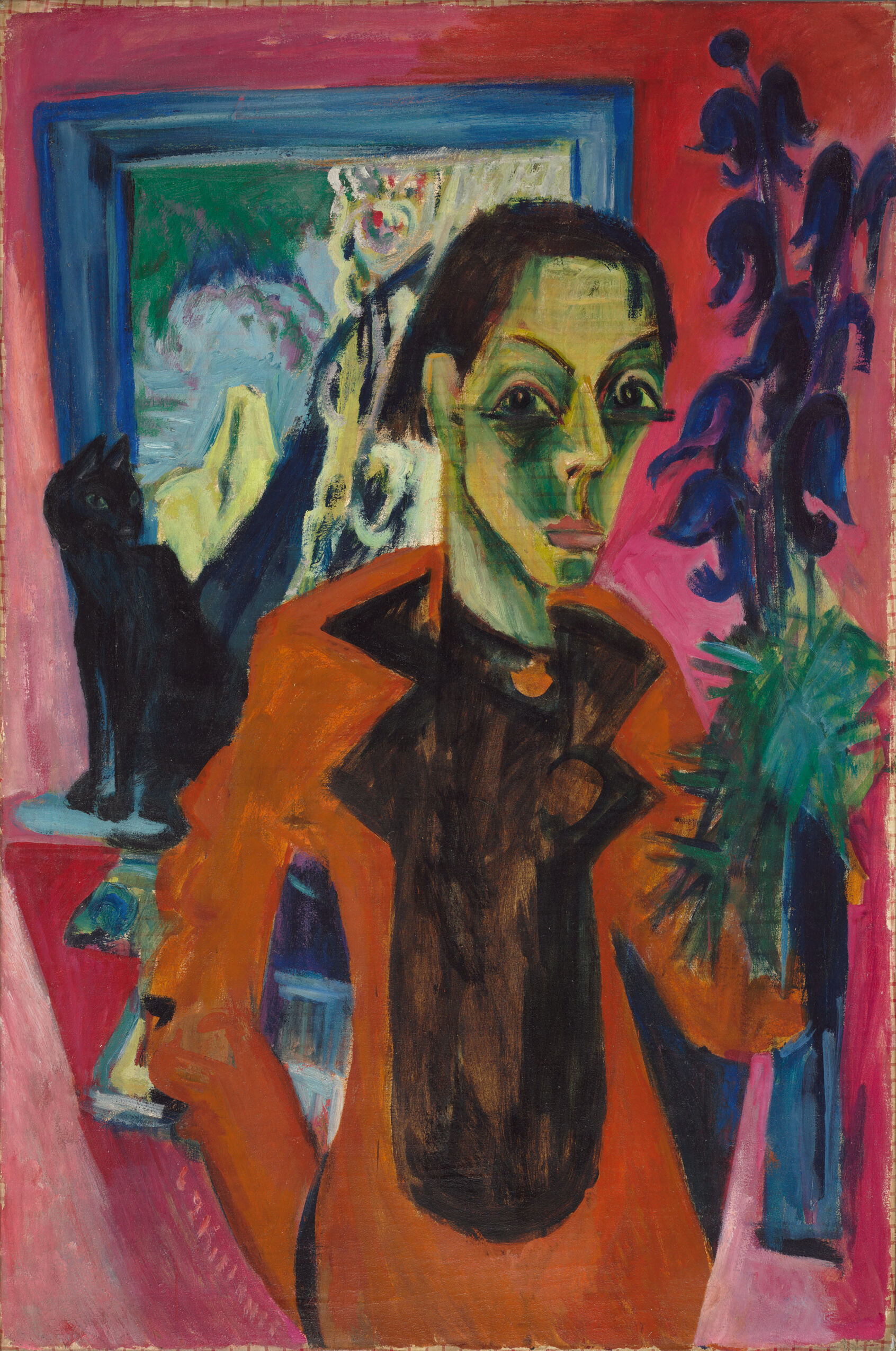
“Under the brush, chaos becomes grace.” In the uncluttered world of self-discovery, how does one capture the essence of awakening? Focus on the vibrant strokes and bold colors that flood the canvas, drawing your gaze first to the figure at the center. Kirchner’s expressive brushwork creates a vivid self-portrait, where the artist’s gaze meets yours with a penetrating intensity. Notice how the cat, a playful companion, curls languidly in his lap, the soft fur contrasting with the sharp lines and angular forms of the background. The interplay between the vibrant reds and deep greens evokes a sense of raw emotion, inviting a deeper exploration of their significance. The cat, often a symbol of independence, suggests a quiet confidence and comfort in solitude. This intimate moment captures not just the artist’s physical form, but also hints at an internal dialogue with his own psyche. The tension between the vibrant colors and the almost haunting quality of his gaze speaks to the fragility of mental health in a tumultuous post-war era. Here, the artist reframes chaos into a sanctuary, portraying the complexities of existence with an unfiltered lens. Created in 1920, this self-portrait emerged during a significant period for Kirchner, who was navigating the aftermath of World War I in Germany. At this time, he grappled with the impact of war on society and his own deteriorating mental health. Immersed in the expressionist movement, he sought to express deep emotional truths and foster a sense of awakening through his art, often using vivid colors and dynamic forms as a vehicle for his exploration.