A Dancer — History & Analysis
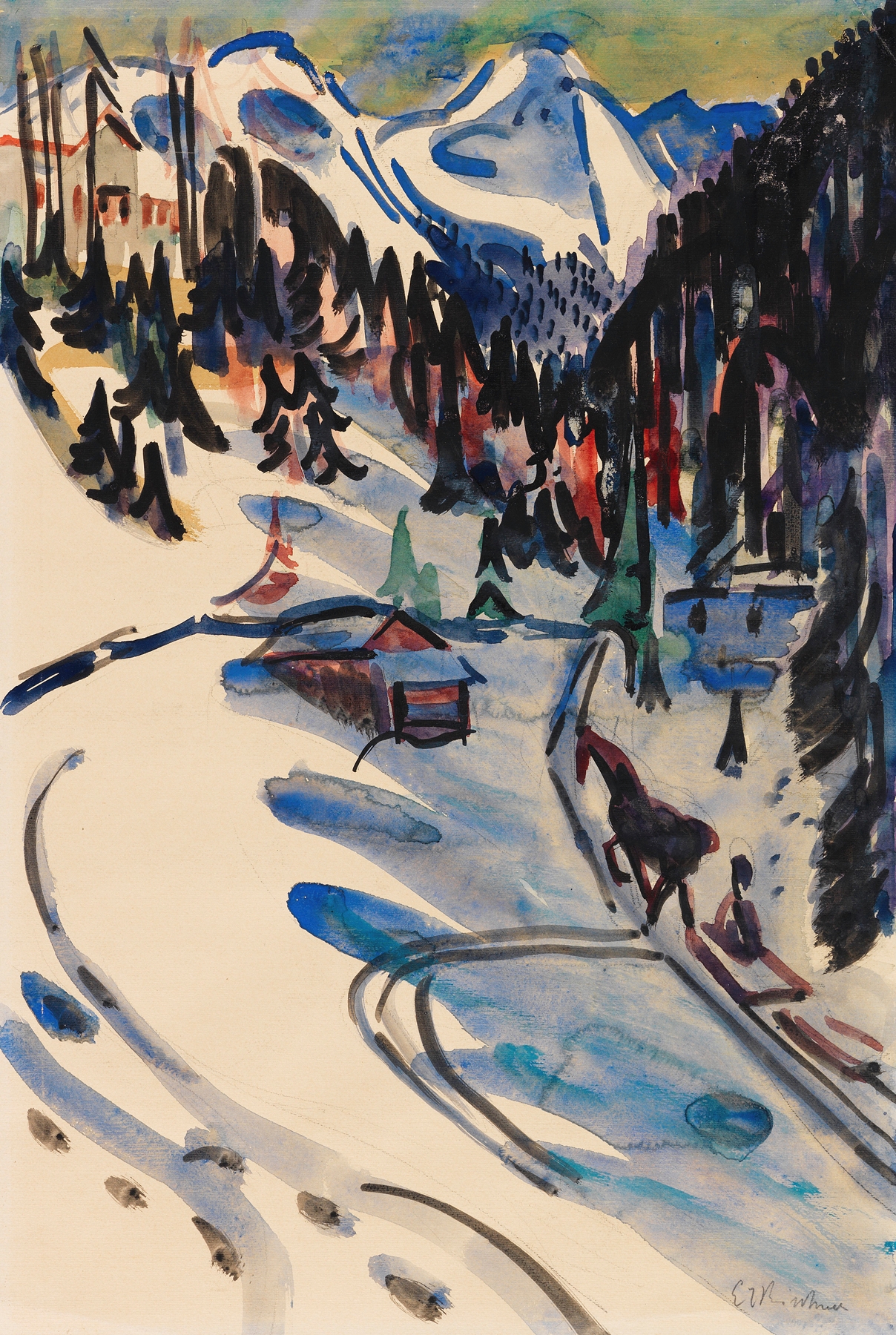
When did color learn to lie? In a world where vibrancy can mask vulnerability, the essence of fragility dances between the strokes of a brush. Look to the center of the canvas where the dancer's silhouette commands your gaze, gracefully poised yet hauntingly delicate. The vivid reds and greens swirl around her, contrasting sharply with her pale flesh tones, emphasizing her ephemeral beauty. Notice how Kirchner's bold brushwork creates an interplay of movement and stillness, capturing the essence of performance while hinting at the fragility that underlies it.
The background blurs into an abstract landscape, allowing the dancer’s form to pulsate with life against an otherwise chaotic backdrop. Delve deeper into this tension where strength meets vulnerability. The dancer's expression, while focused, emits an air of melancholic introspection—a reminder that the most vibrant displays can often conceal deep emotional currents. The jagged edges of the surrounding colors echo a world that feels both exhilarating and perilous, suggesting the fleeting nature of joy.
Each brushstroke seems to whisper of impermanence, drawing us into a silent dialogue about the weight of existence in the face of beauty. In 1933, Kirchner created this piece during a tumultuous time in Germany, marked by political unrest and the artist's own struggle with his mental health. Living in a period of intense personal and societal upheaval, he sought refuge in art, channeling his feelings of fragility and alienation into his work. This painting reflects both a personal confrontation with his own vulnerabilities and a broader commentary on the fragile nature of life itself amidst the chaos of the world around him.