A Dutch Street in Summer — History & Analysis
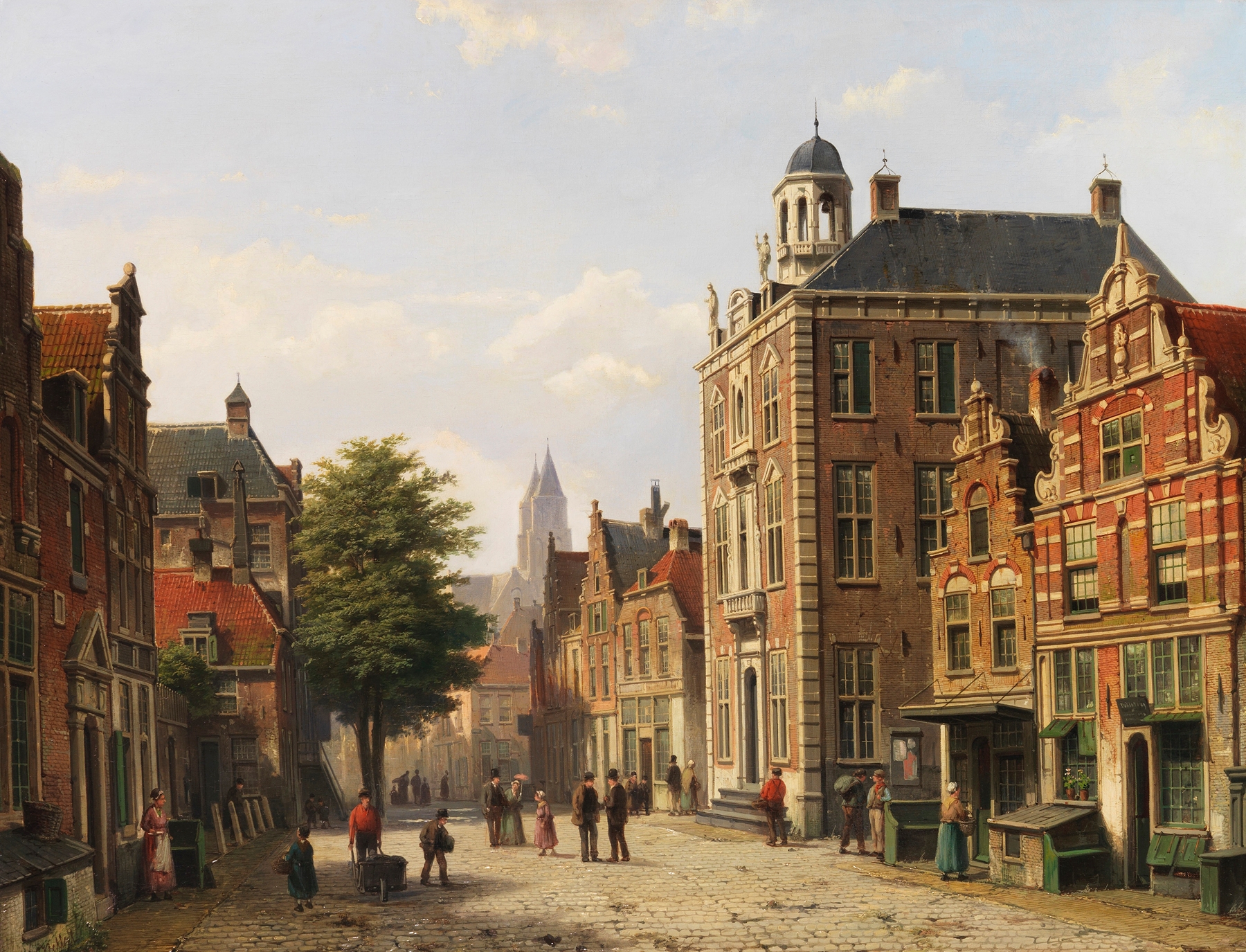
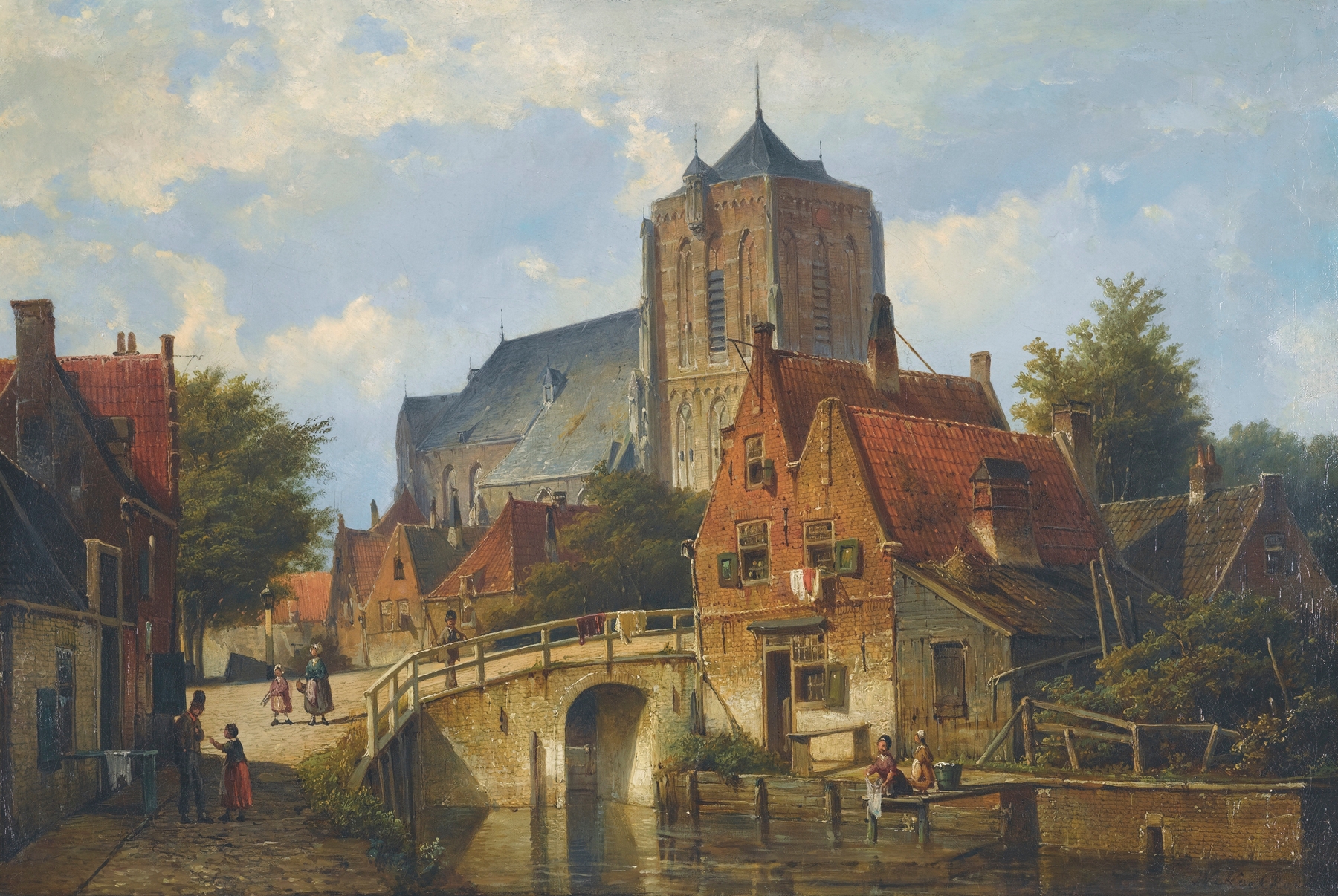
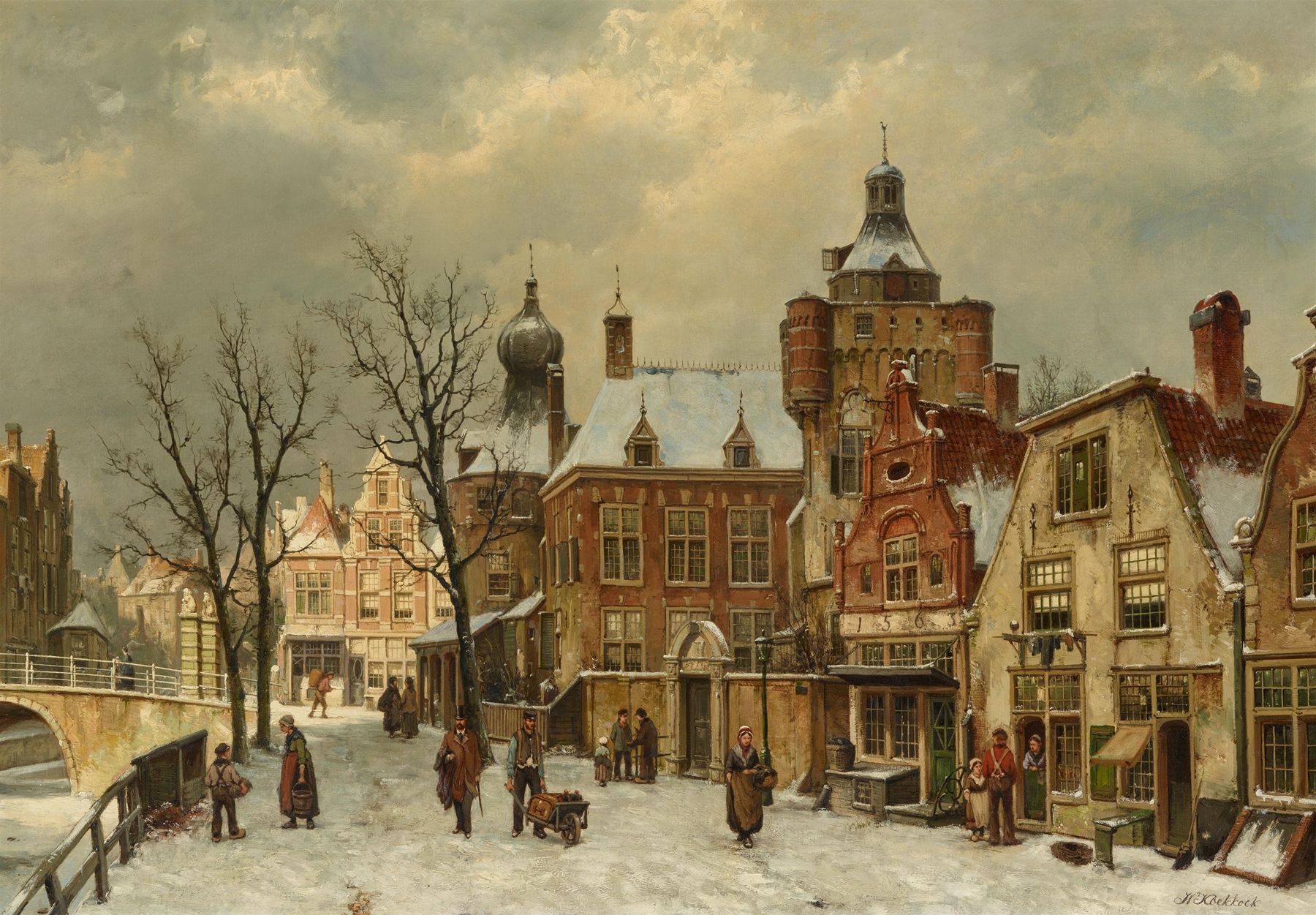
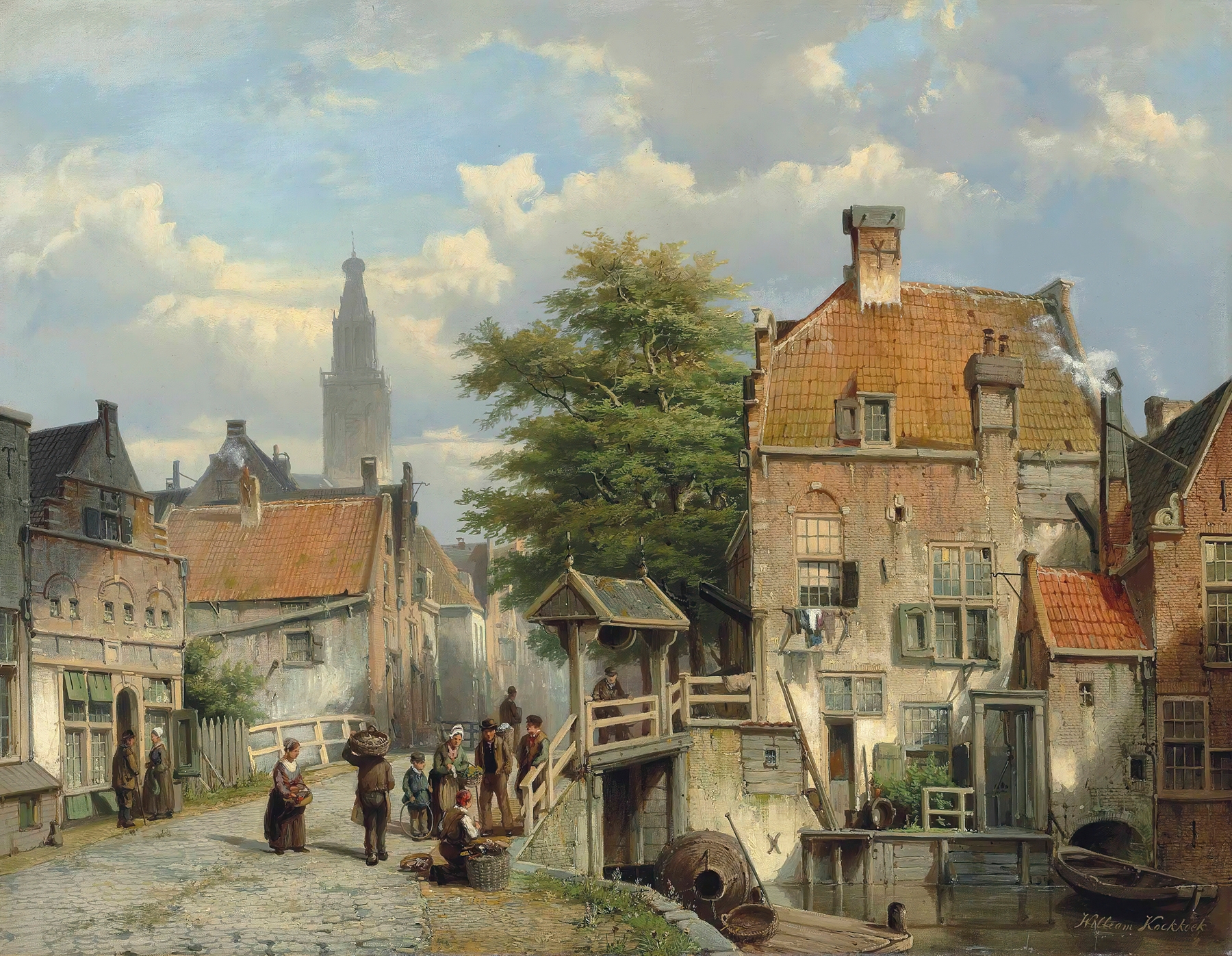
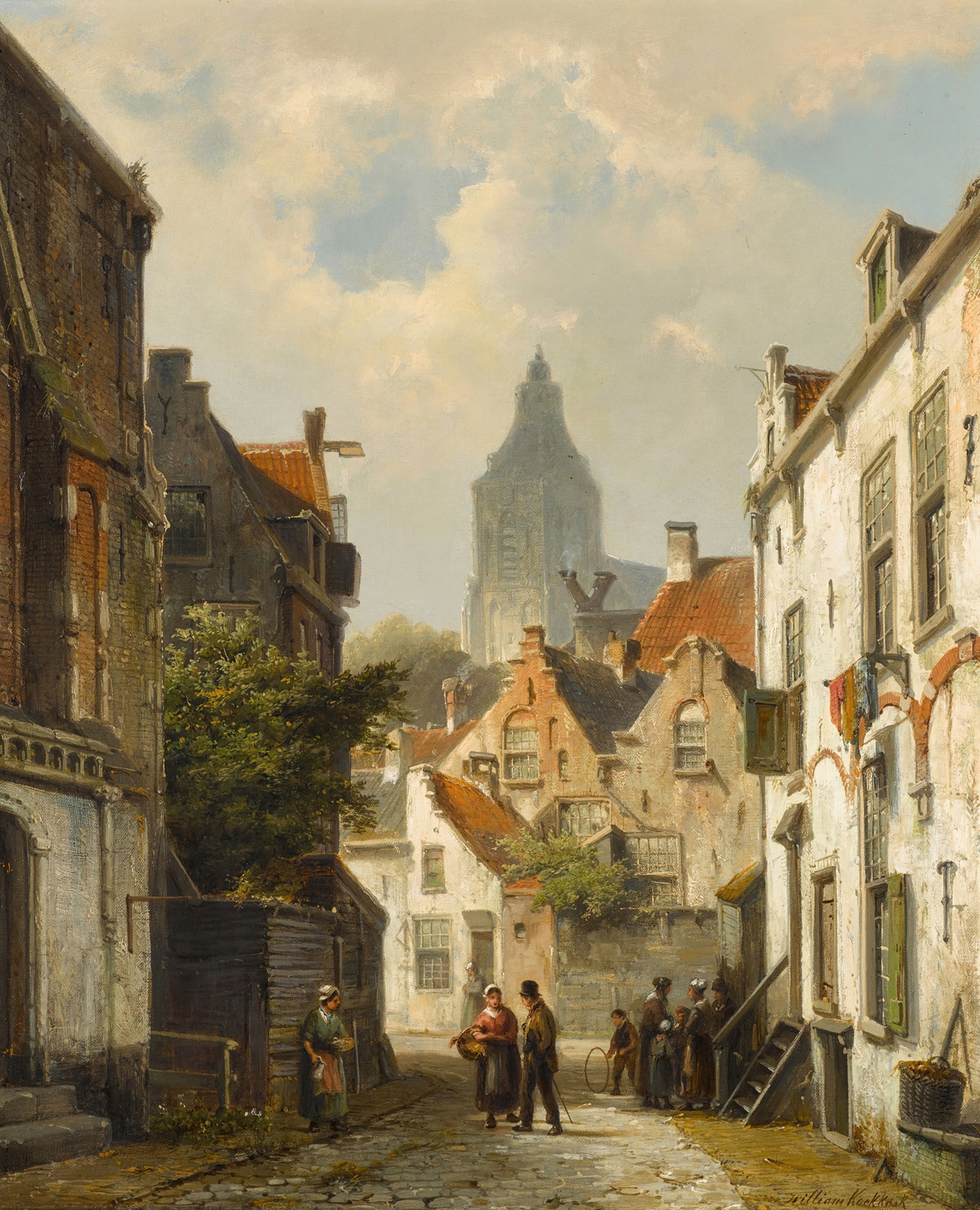
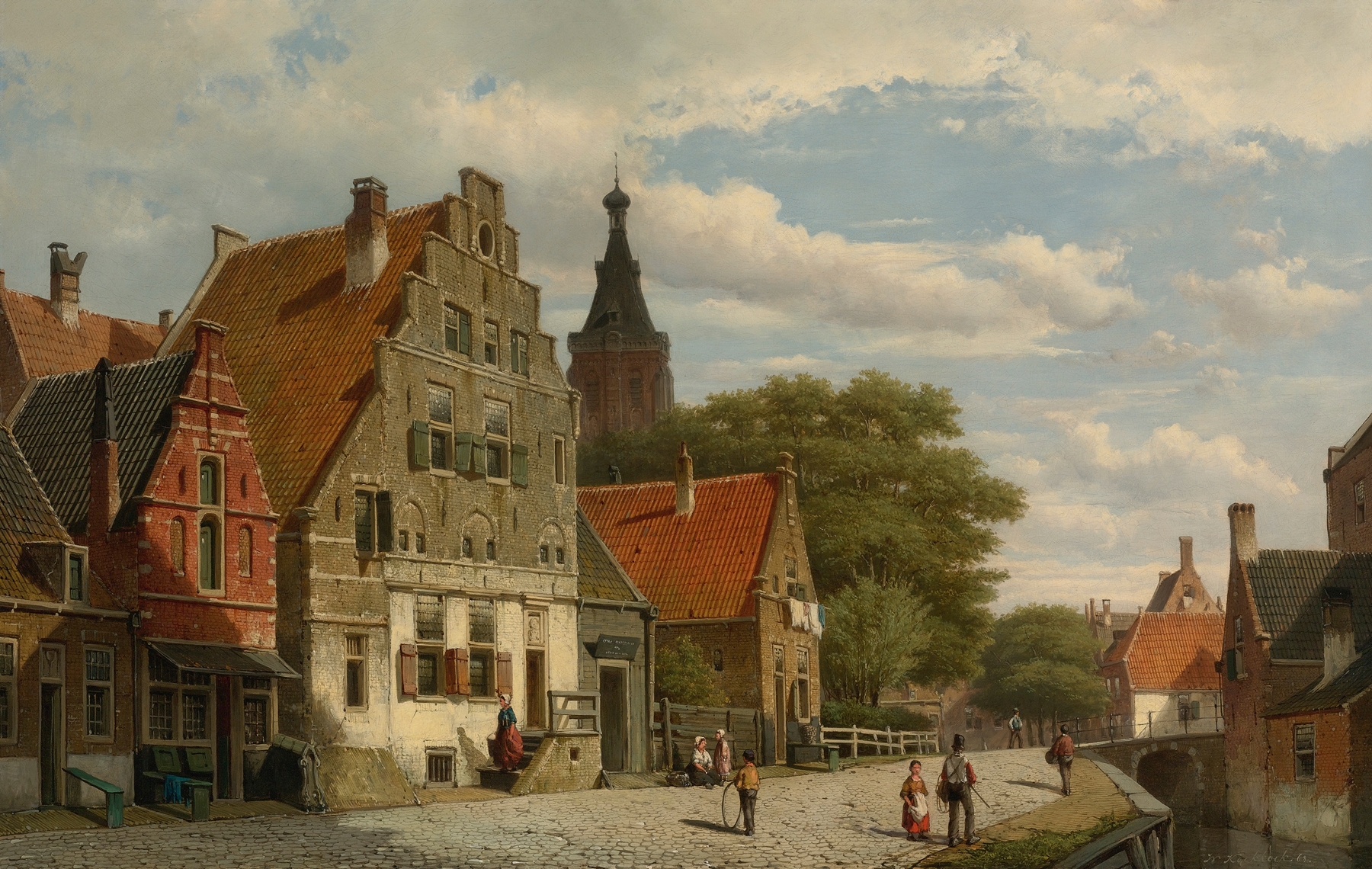
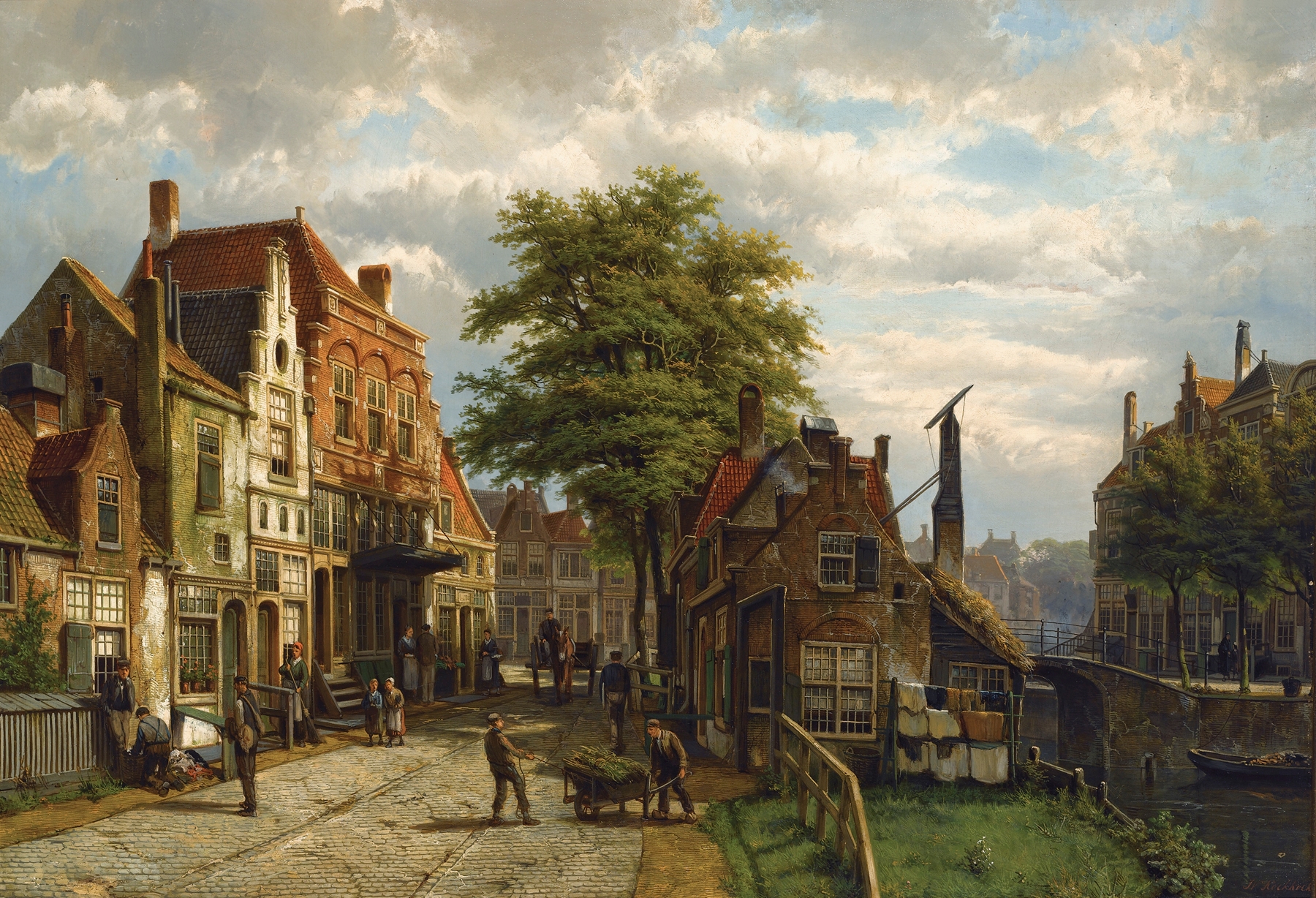
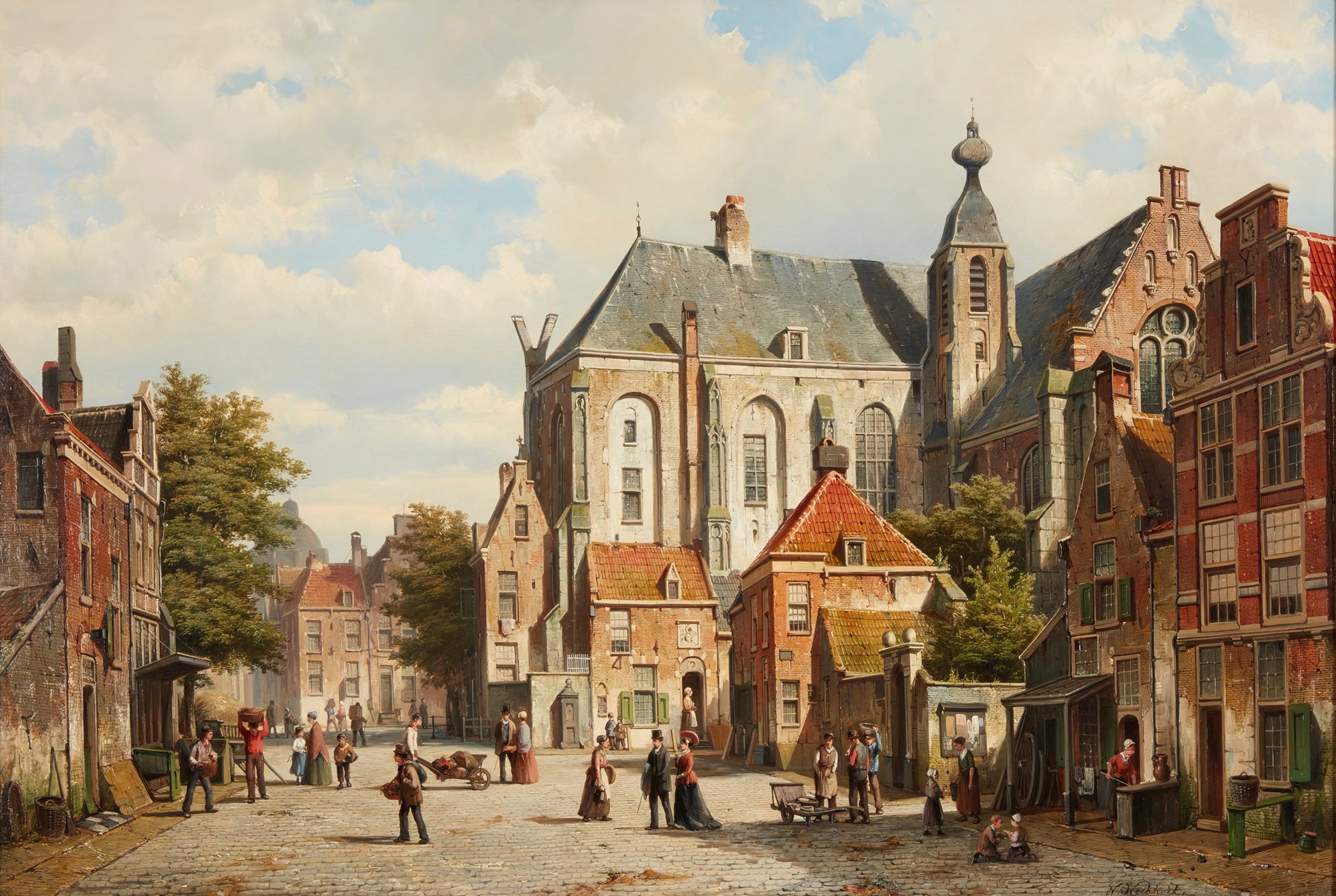
Is this a mirror — or a memory? In A Dutch Street in Summer, the vibrant colors and lively scenes evoke the sweetness of nostalgia, inviting viewers to step into a moment where the past and present intertwine seamlessly. Look to the left at the sunlit cobblestones, where a gentle play of light creates a warm glow. The meticulous detail reveals the texture of the buildings, adorned with flowering balconies and vivid awnings.
Notice how the sky, a wash of azure, contrasts beautifully with the earthy tones of the architecture, capturing the essence of a languid summer day. The bustling figures, caught mid-gesture, enhance the scene's dynamic quality, drawing the eye deeper into this bustling urban tapestry. The painting encapsulates the delicate balance between tranquility and activity, as people meander through the street, engaged in everyday life yet seemingly lost in thought. The juxtaposition of vibrant colors against the subdued hues of shaded corners hints at the impermanence of these fleeting moments, suggesting that each figure carries its own story, its own memory.
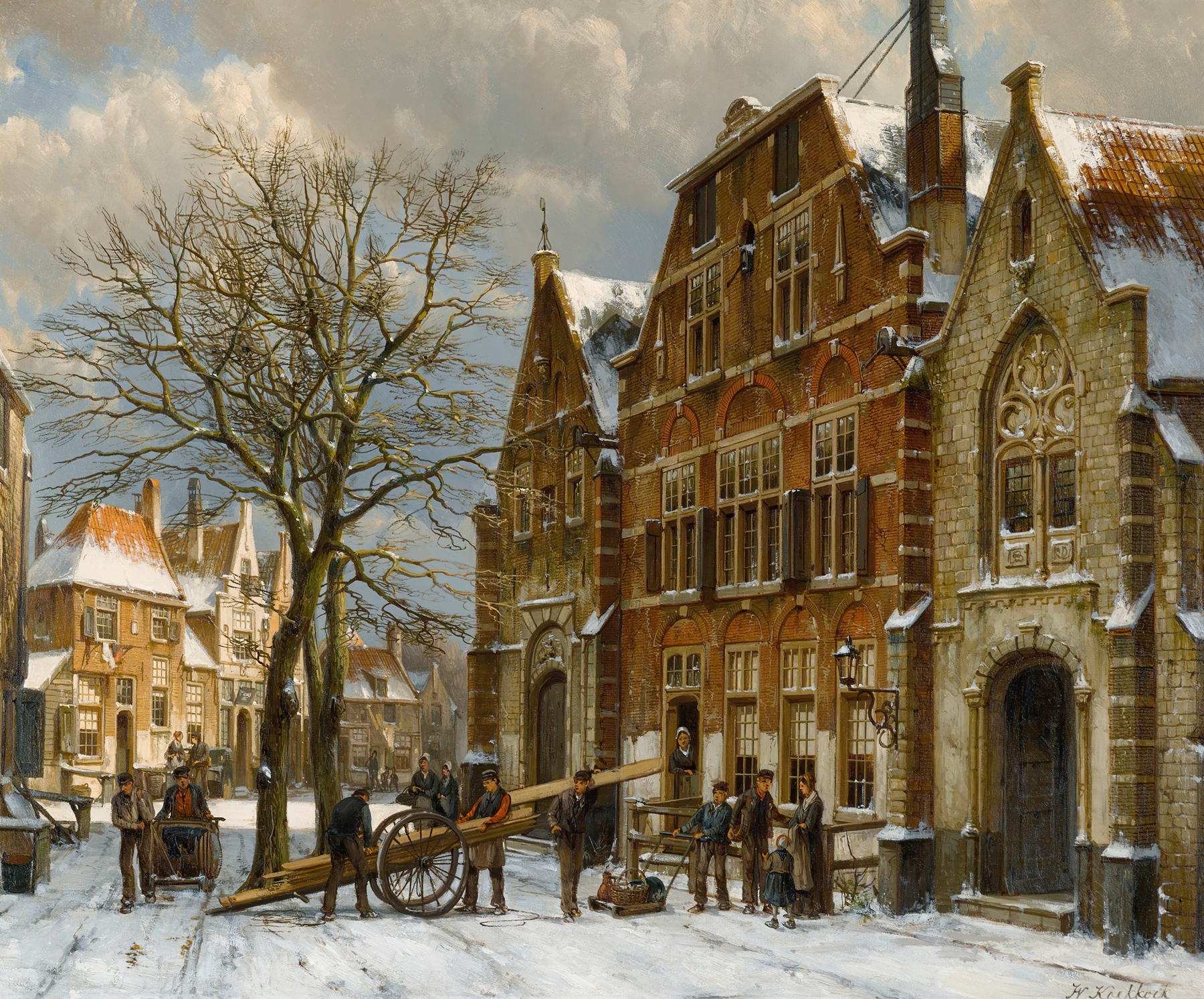
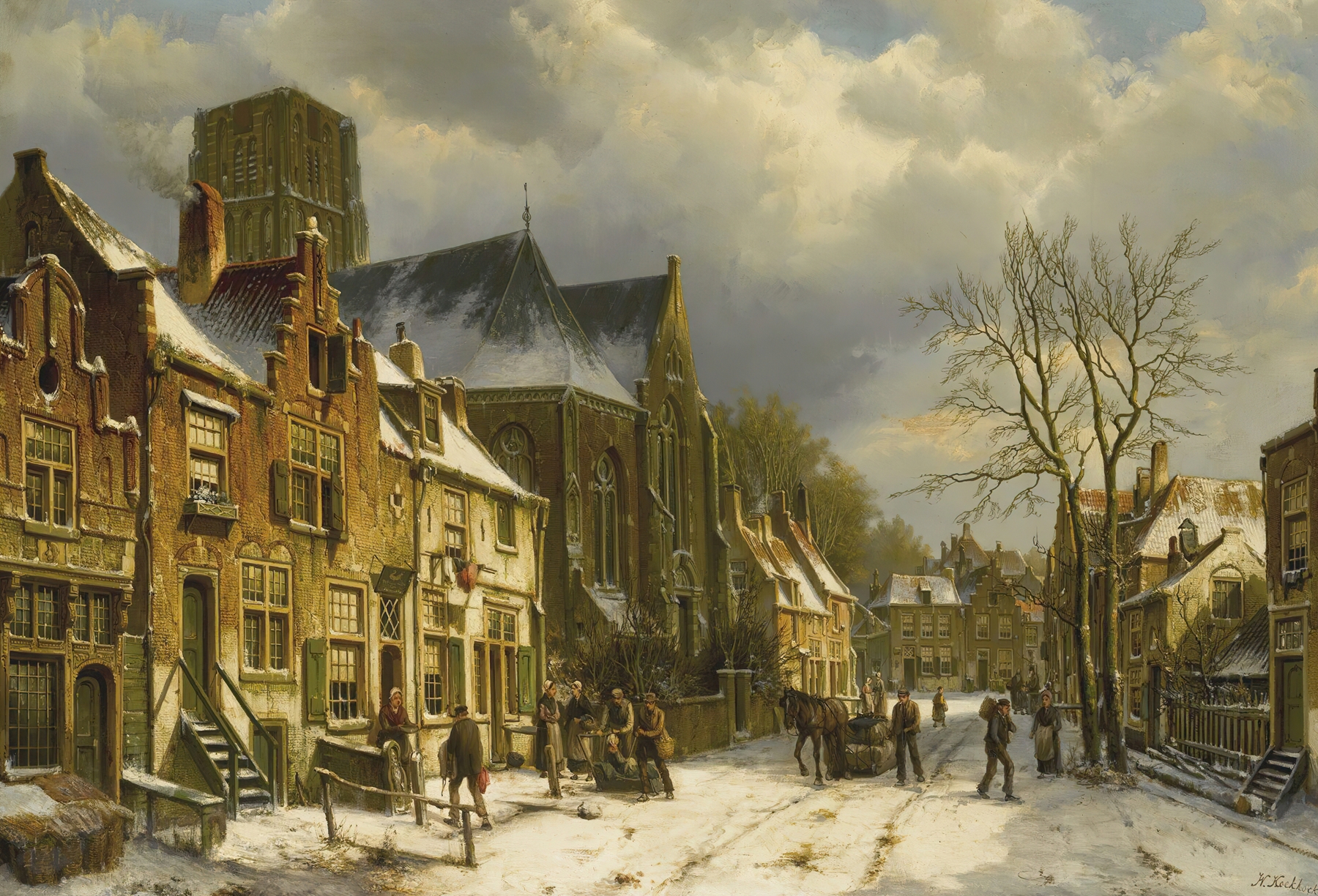
The harmonious blend of light and shadow serves as a metaphor for the interplay of joy and melancholy in retrospection. Willem Koekkoek painted this work during a time when the Dutch art scene was influenced by Romanticism and Realism, likely in the mid-19th century. Living in a period of rapid industrialization, he sought to capture the essence of daily life, contrasting the encroaching modernity with scenes that celebrated the beauty of simplicity and nature. This focus on genre scenes resonated with audiences yearning for a connection to the past amidst the changes sweeping across Europe.