A Busy Street in a Dutch Town — History & Analysis
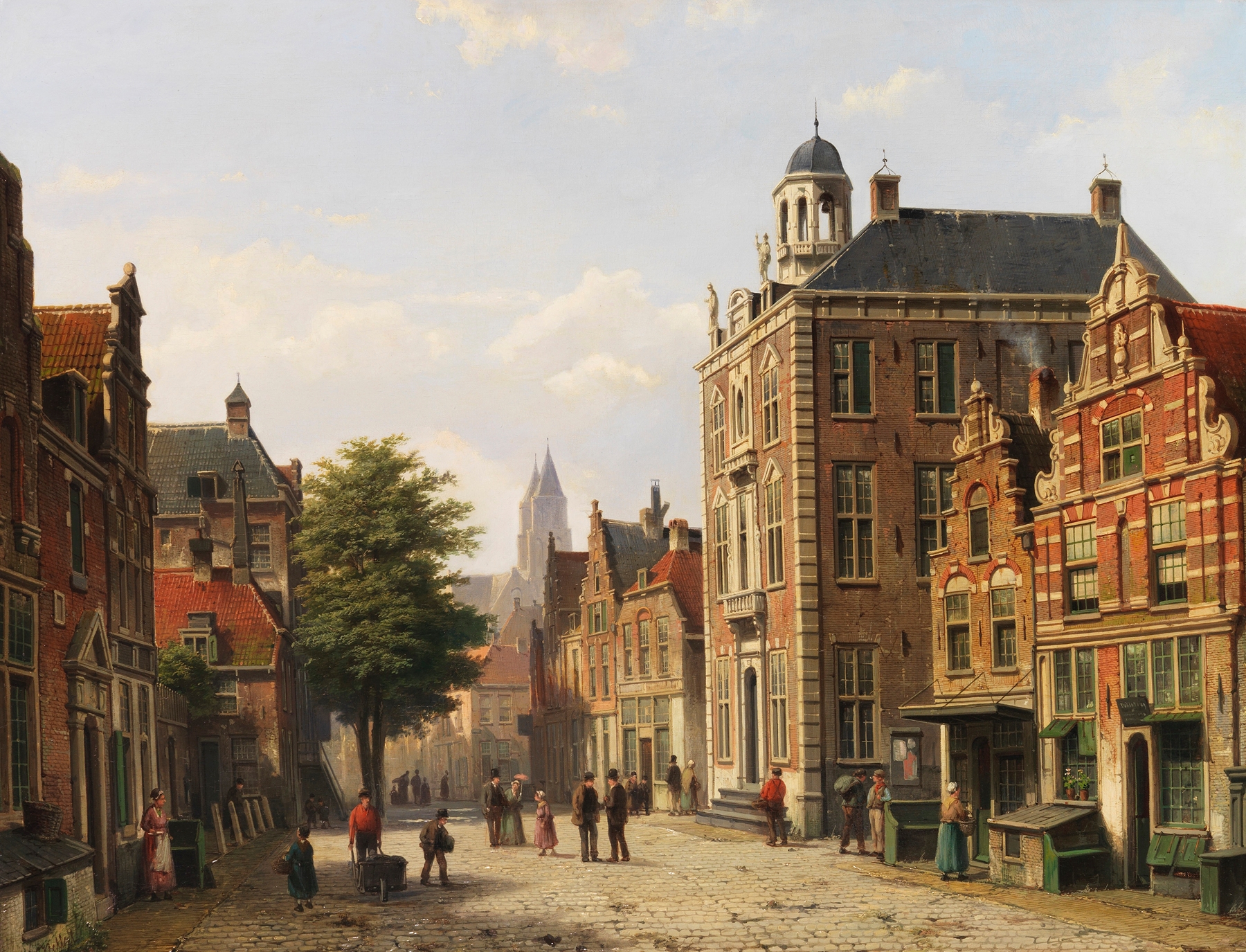
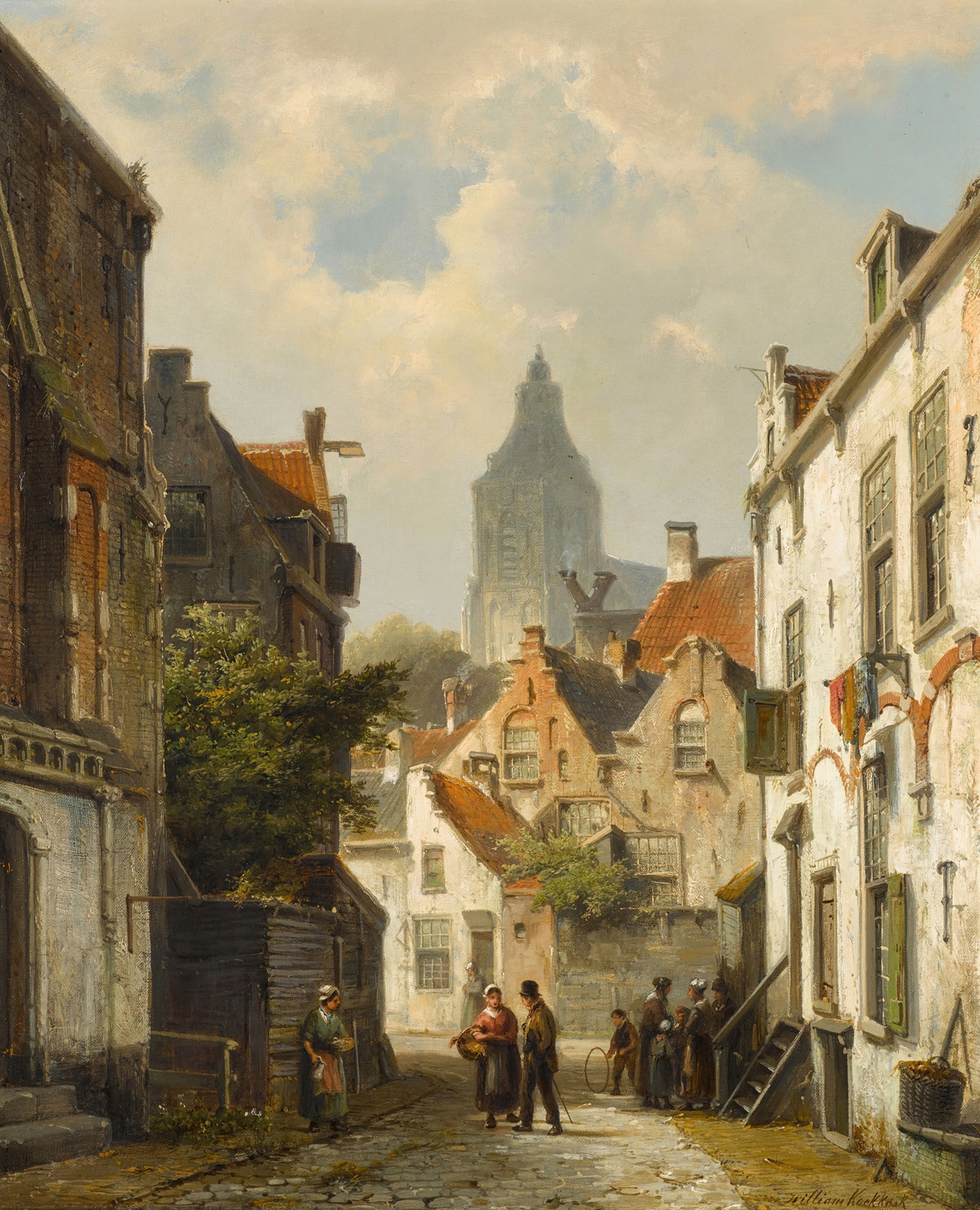
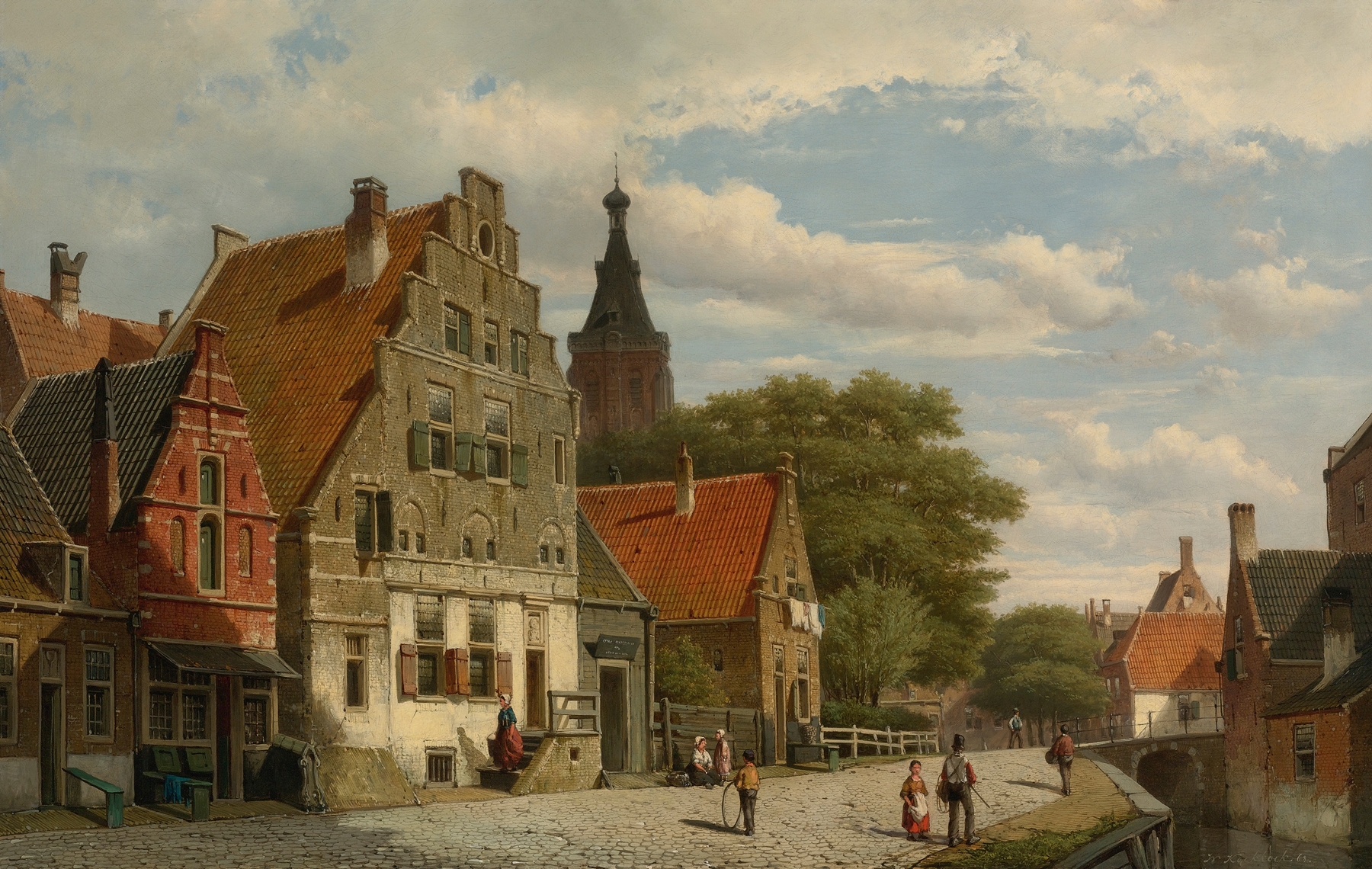
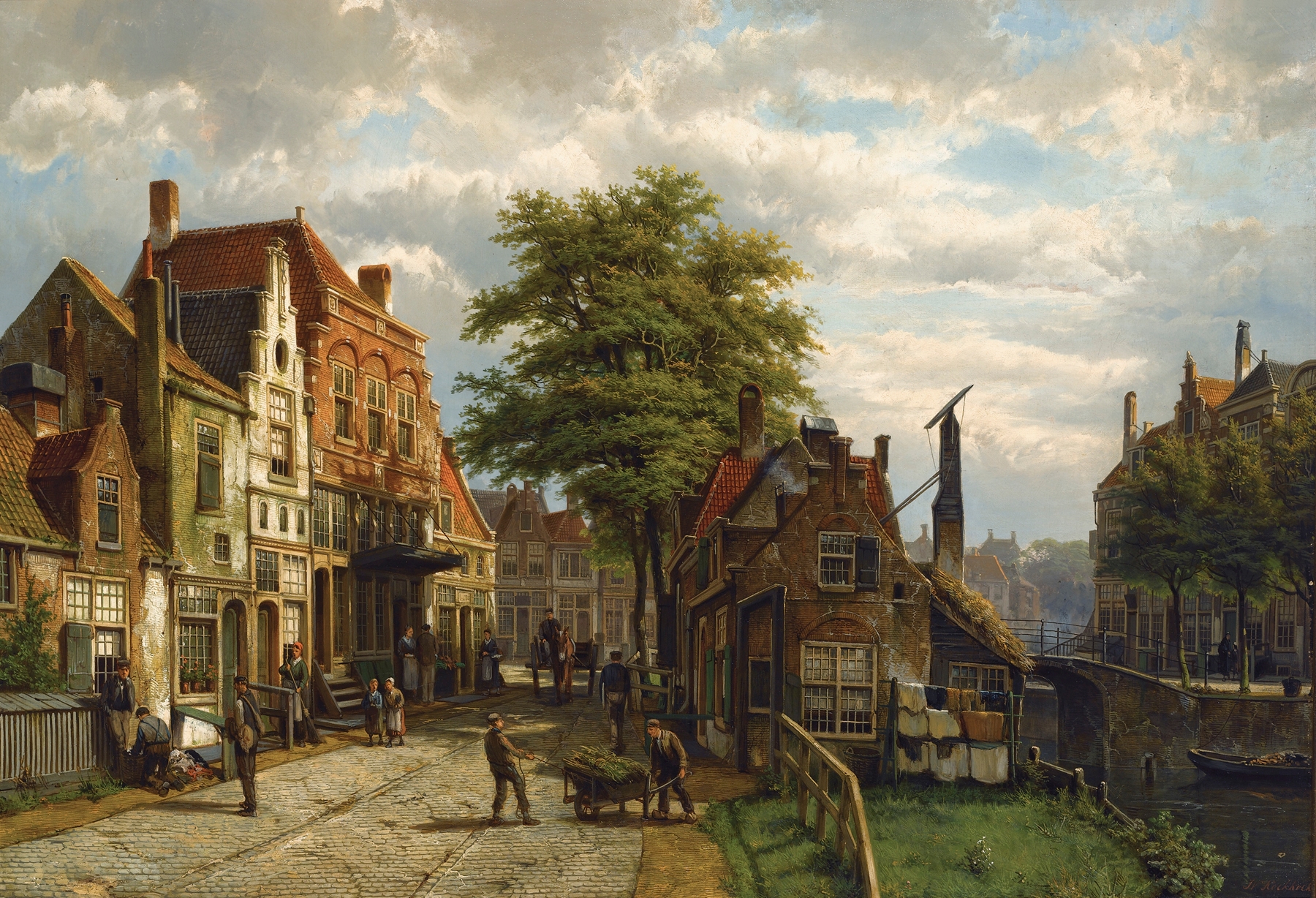
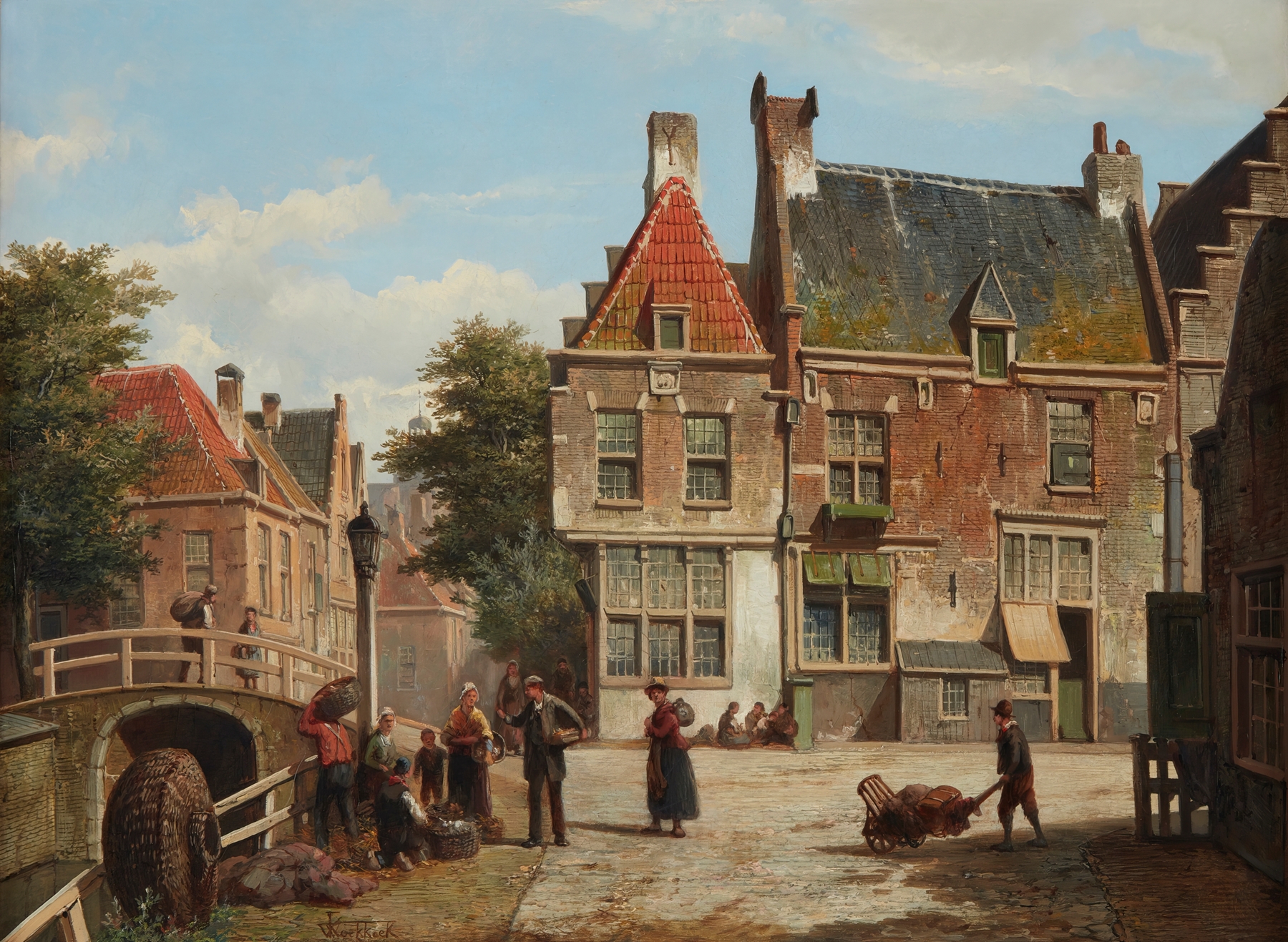
Did the painter know this moment would outlive them? In the bustle of a lively Dutch town, the heart of everyday life beats strong—yet an undercurrent of loneliness hums beneath the surface. Focus on the central square where figures, clad in muted colors, mingle amidst the vibrant facades of shops. Notice how the warm afternoon light dances across the cobblestones, casting soft shadows that elongate the figures, emphasizing their isolation even in numbers.
The lively chatter, invisible but palpable, contrasts the stillness in their expressions—a snapshot of connection underscored by unvoiced longing. The interplay of light and shadow creates a compelling tension, as if the sun itself is attempting to bridge the gap between these solitary souls. The quaint architecture, while charming, looms slightly over the scene, a reminder of how the structures of daily life can encapsulate and isolate. Each figure, though part of the thrumming street, appears caught in their own world—a poignant commentary on modern existence.
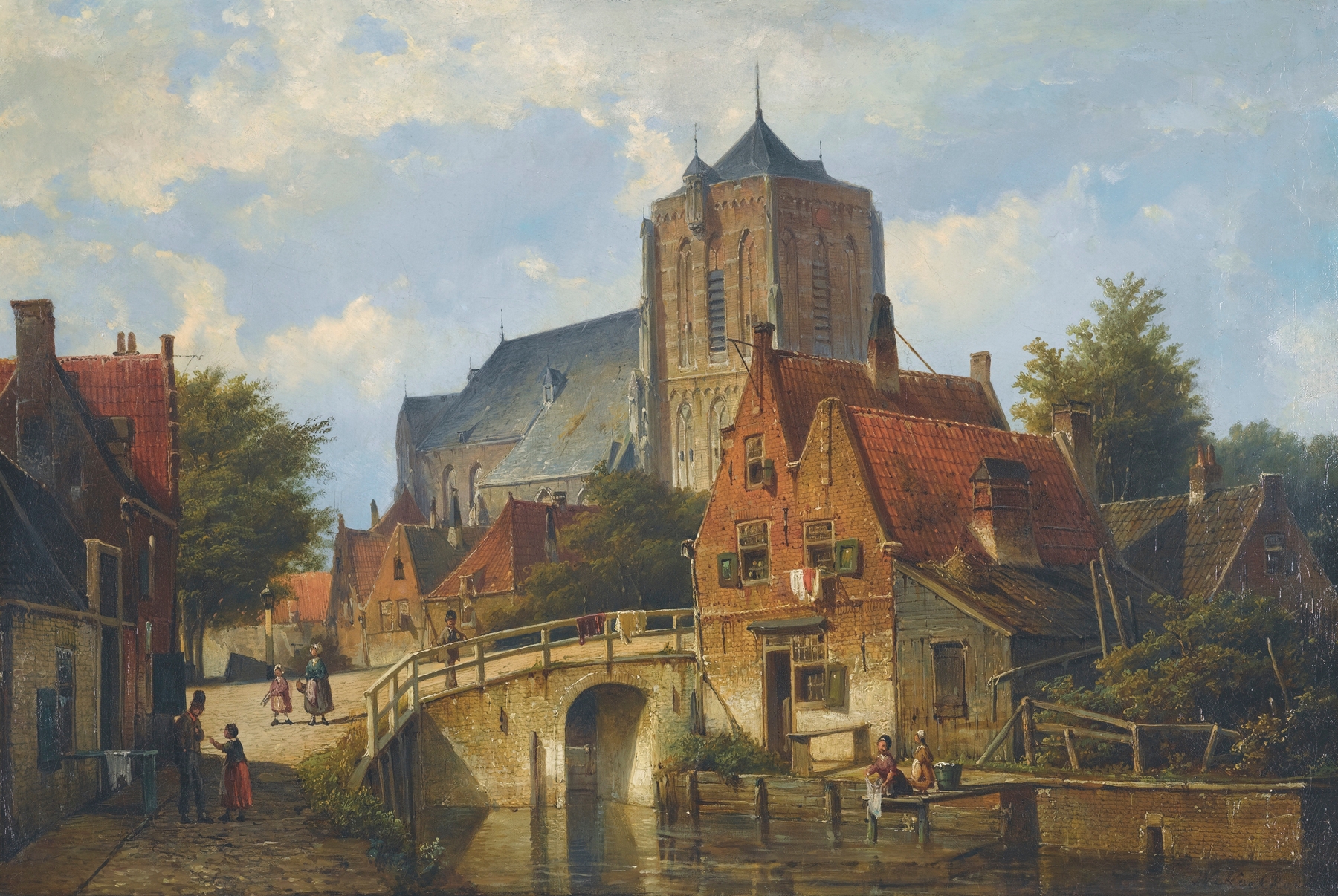
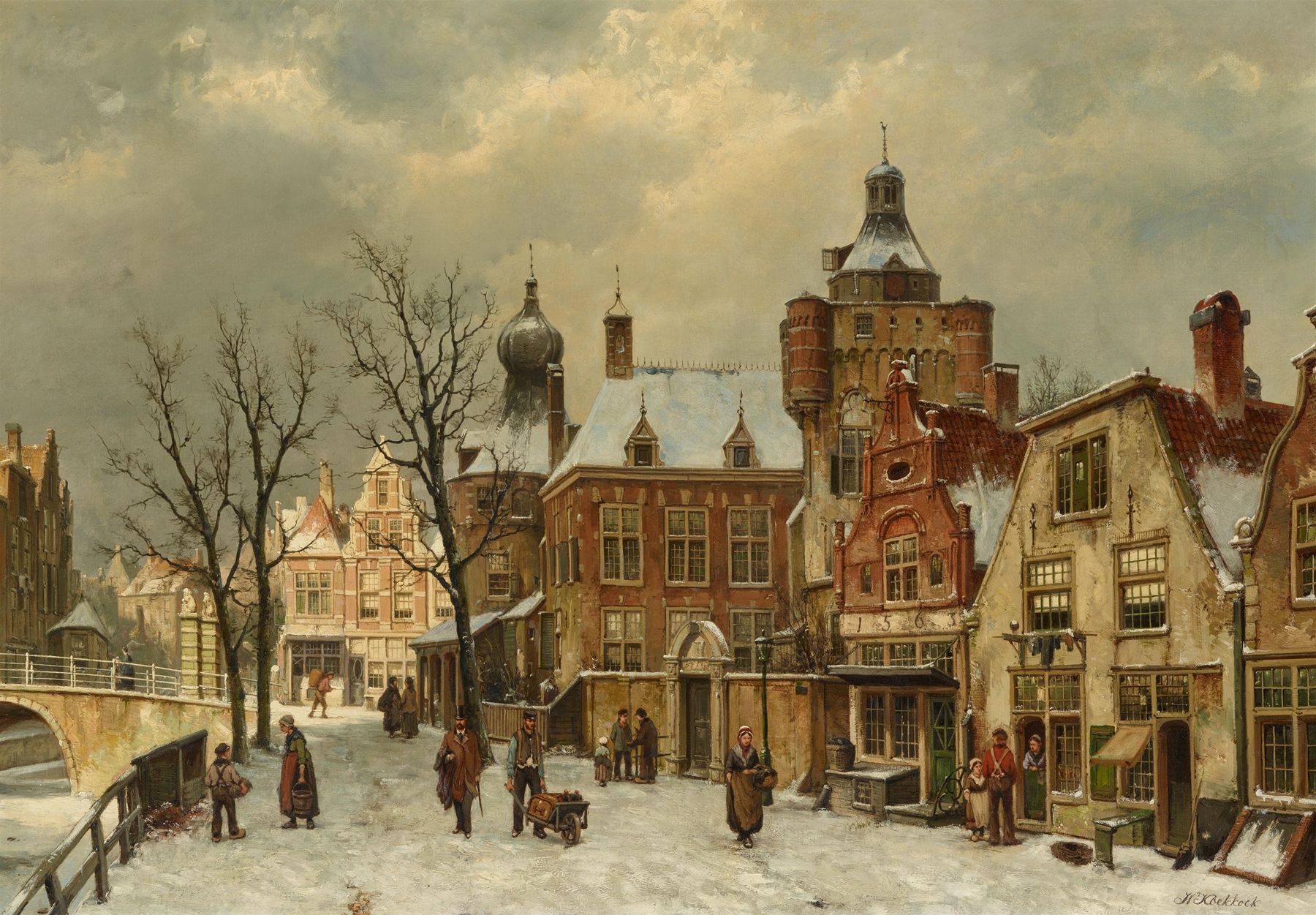
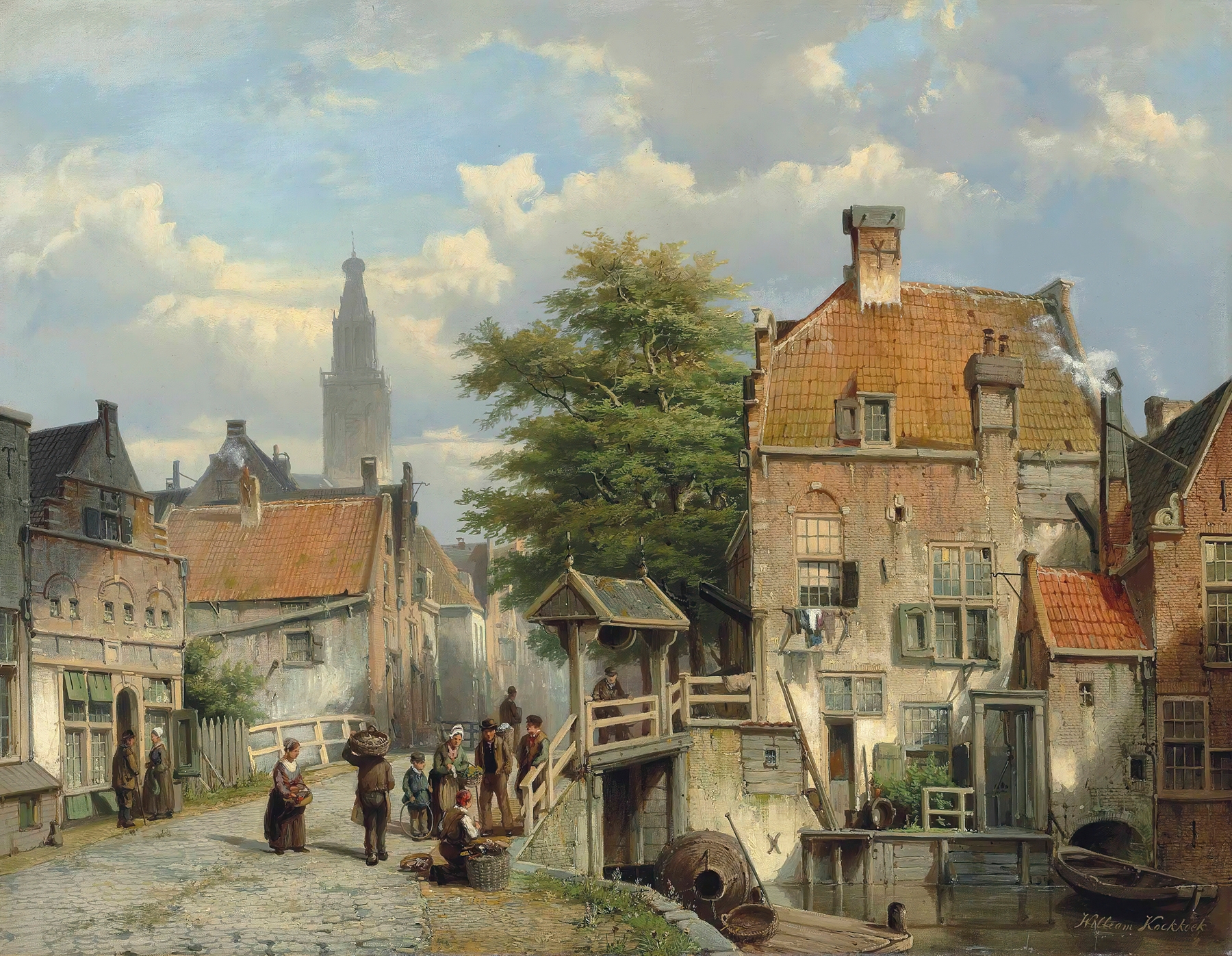
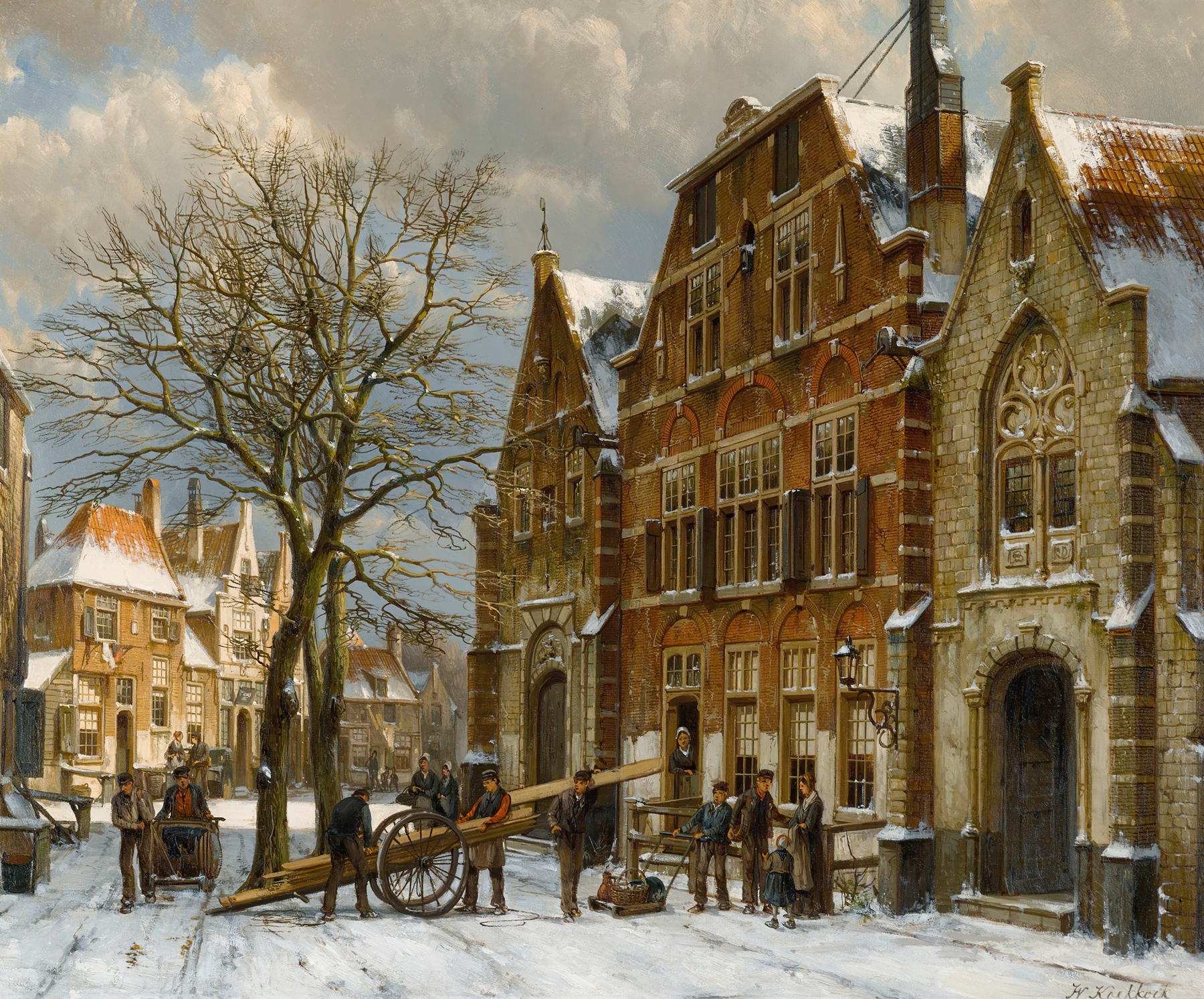
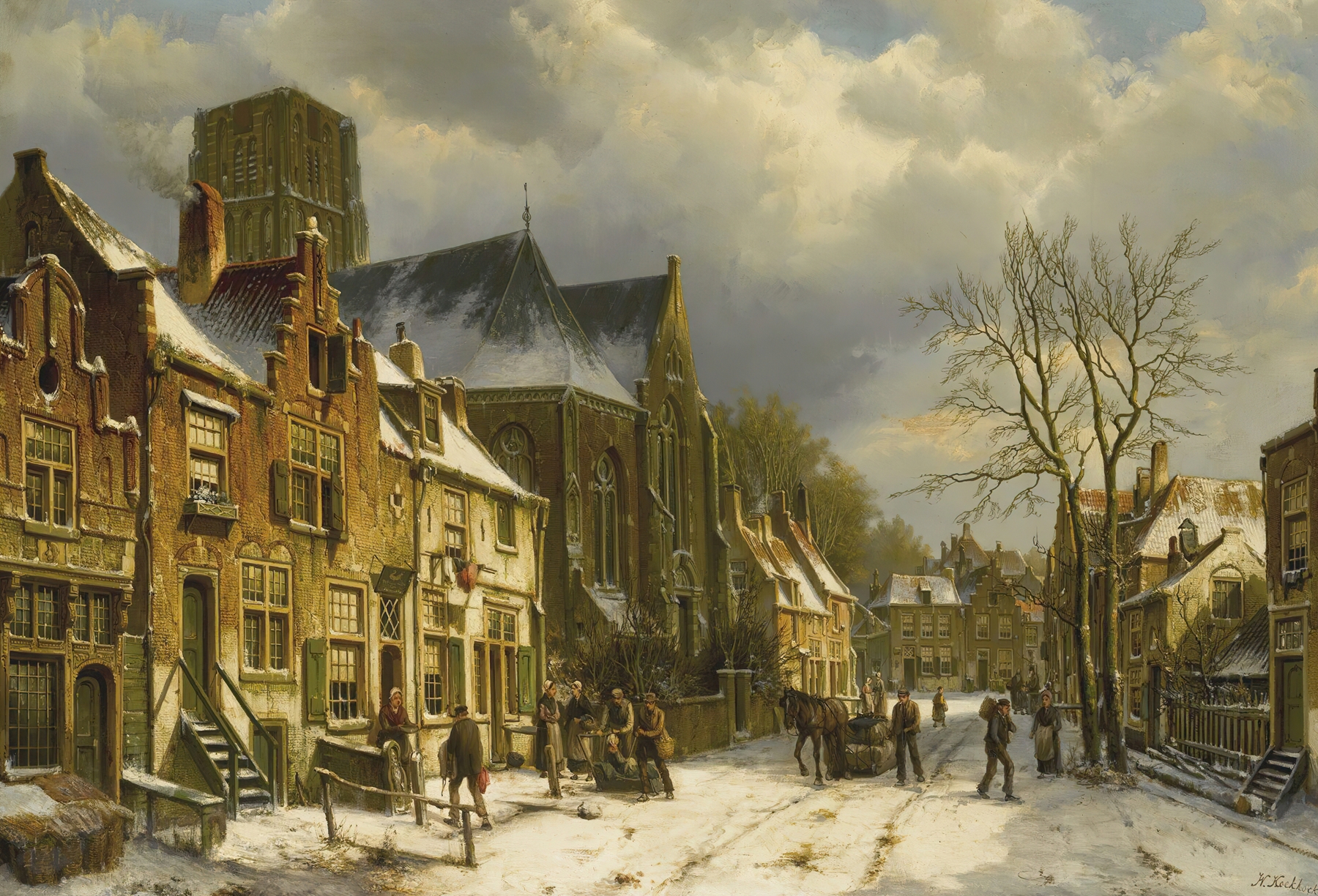
Willem Koekkoek painted this piece during a time when the Dutch art scene was flourishing, perhaps in the mid-19th century. He was known for his adeptness in portraying urban life infused with emotion. At this time, Europe was experiencing significant societal change, and his work reflects both the vibrancy and the isolation of urban living, encapsulating a moment that resonates far beyond his own lifetime.