Children And Travellers Along The Canal — History & Analysis
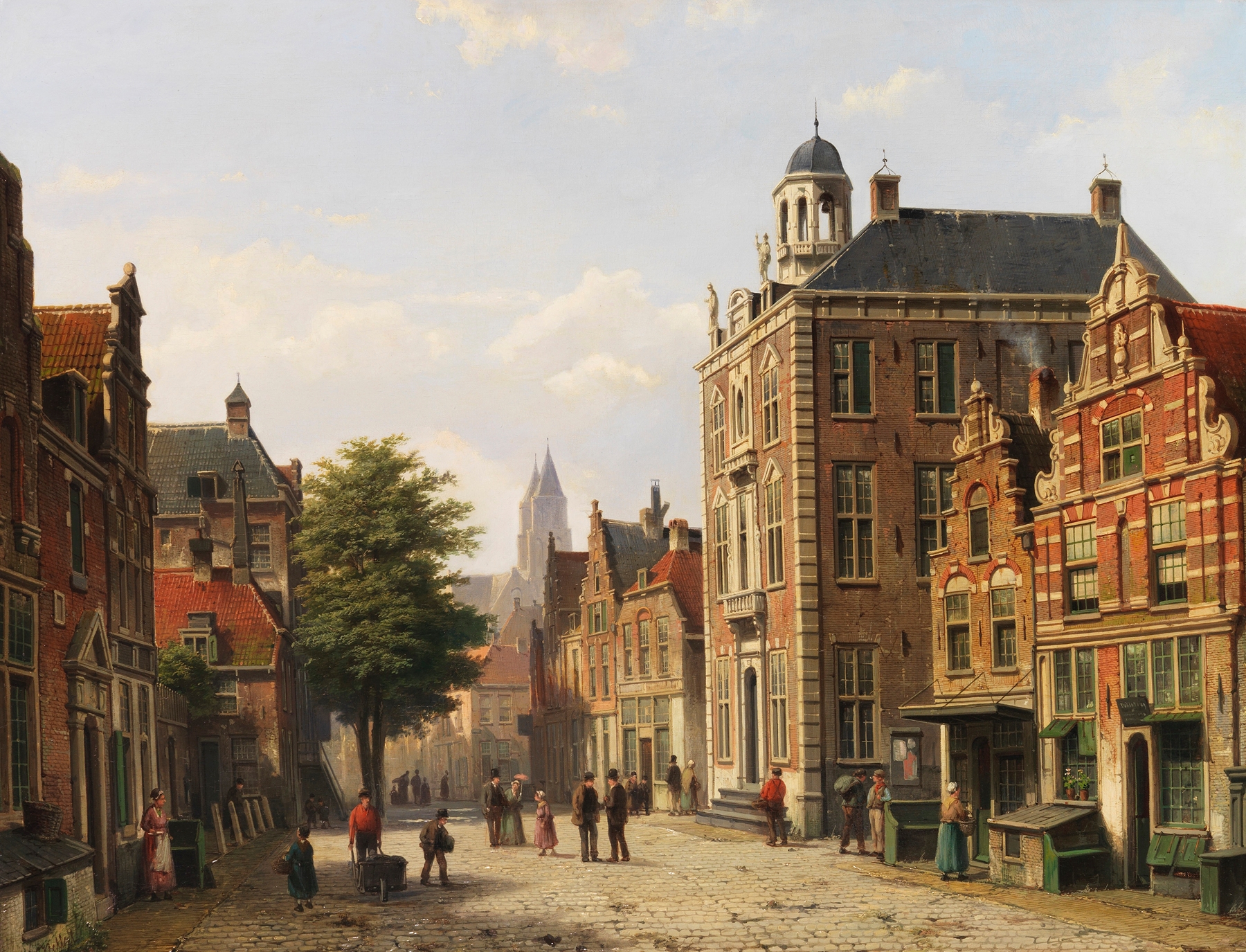
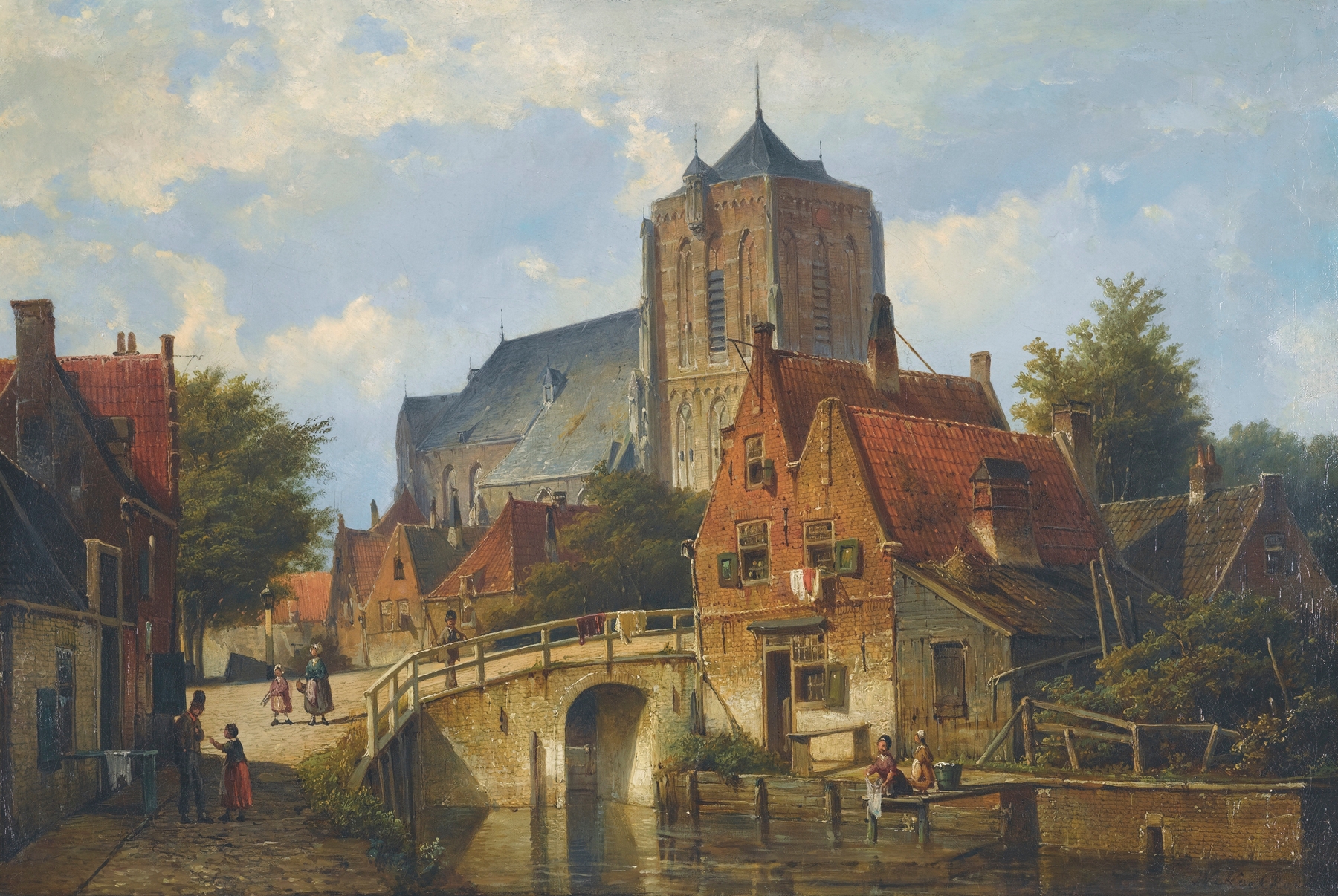
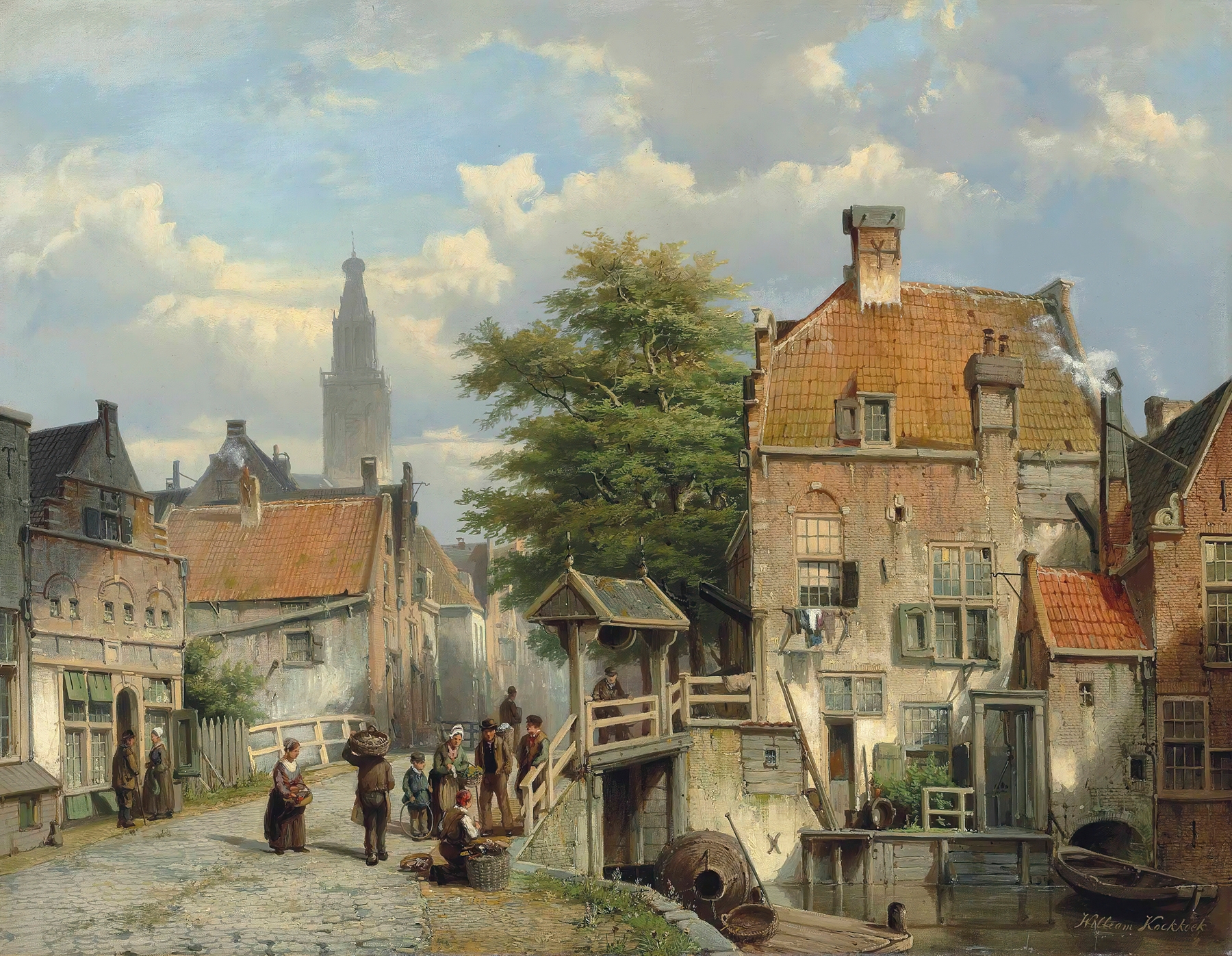
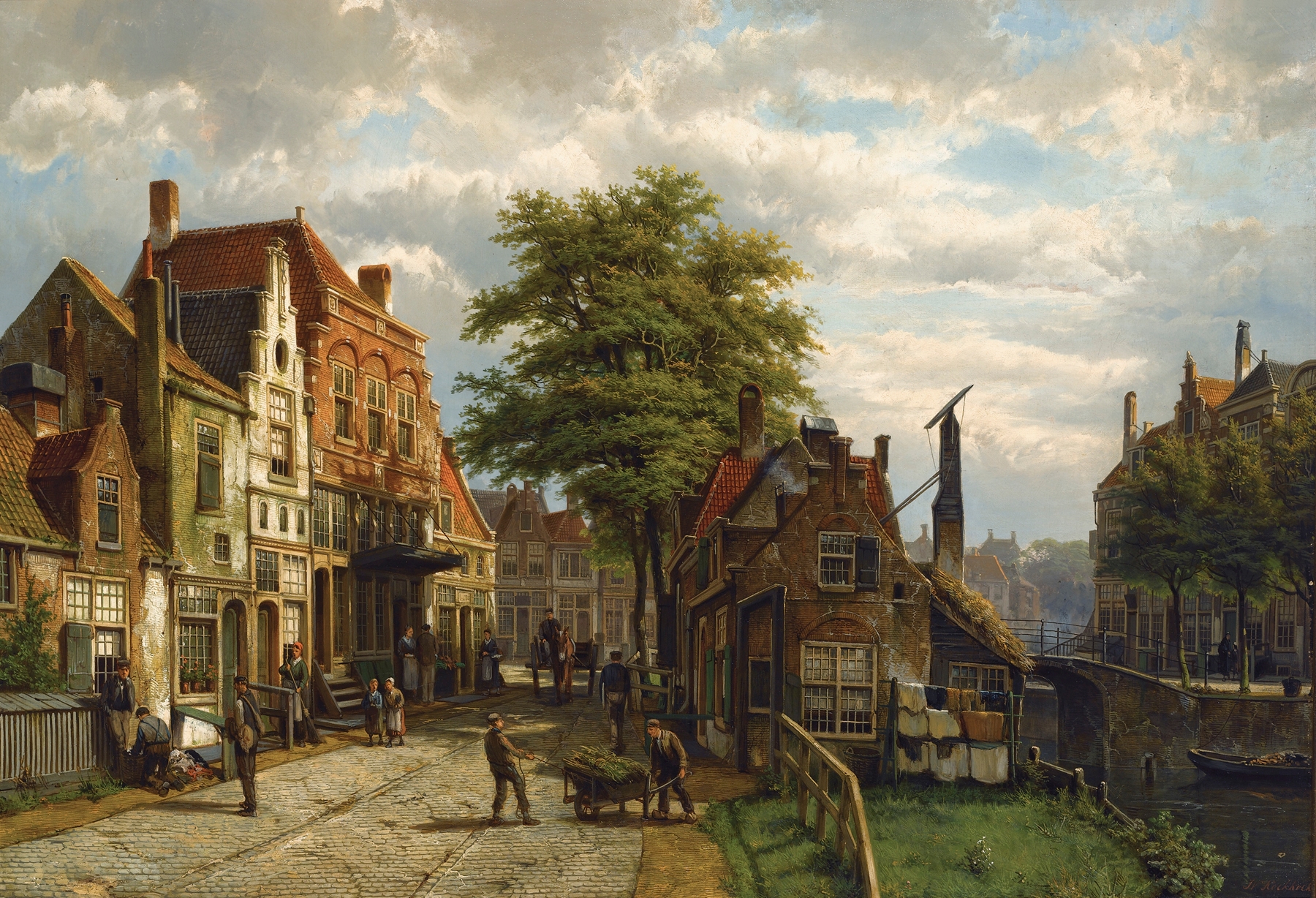
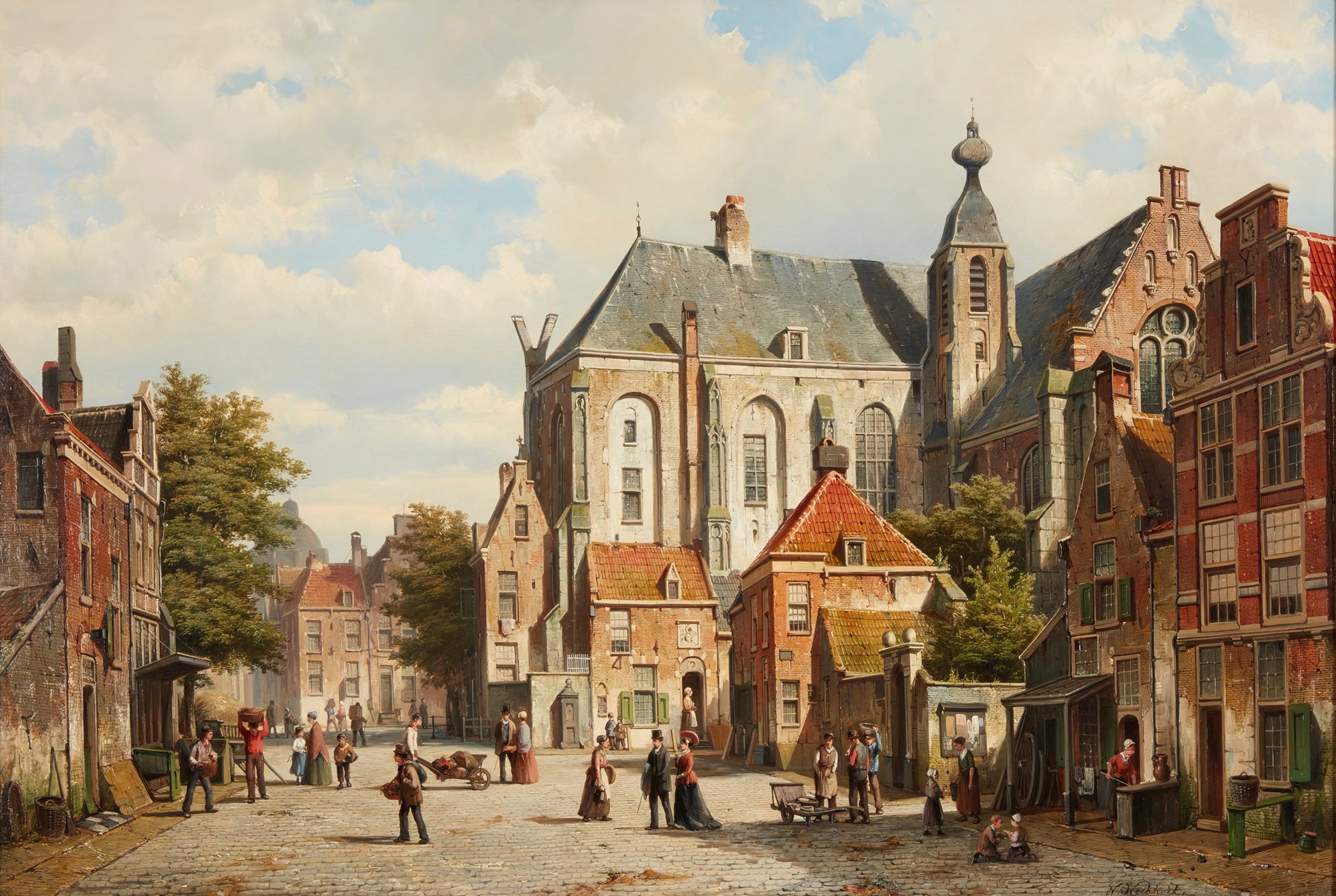
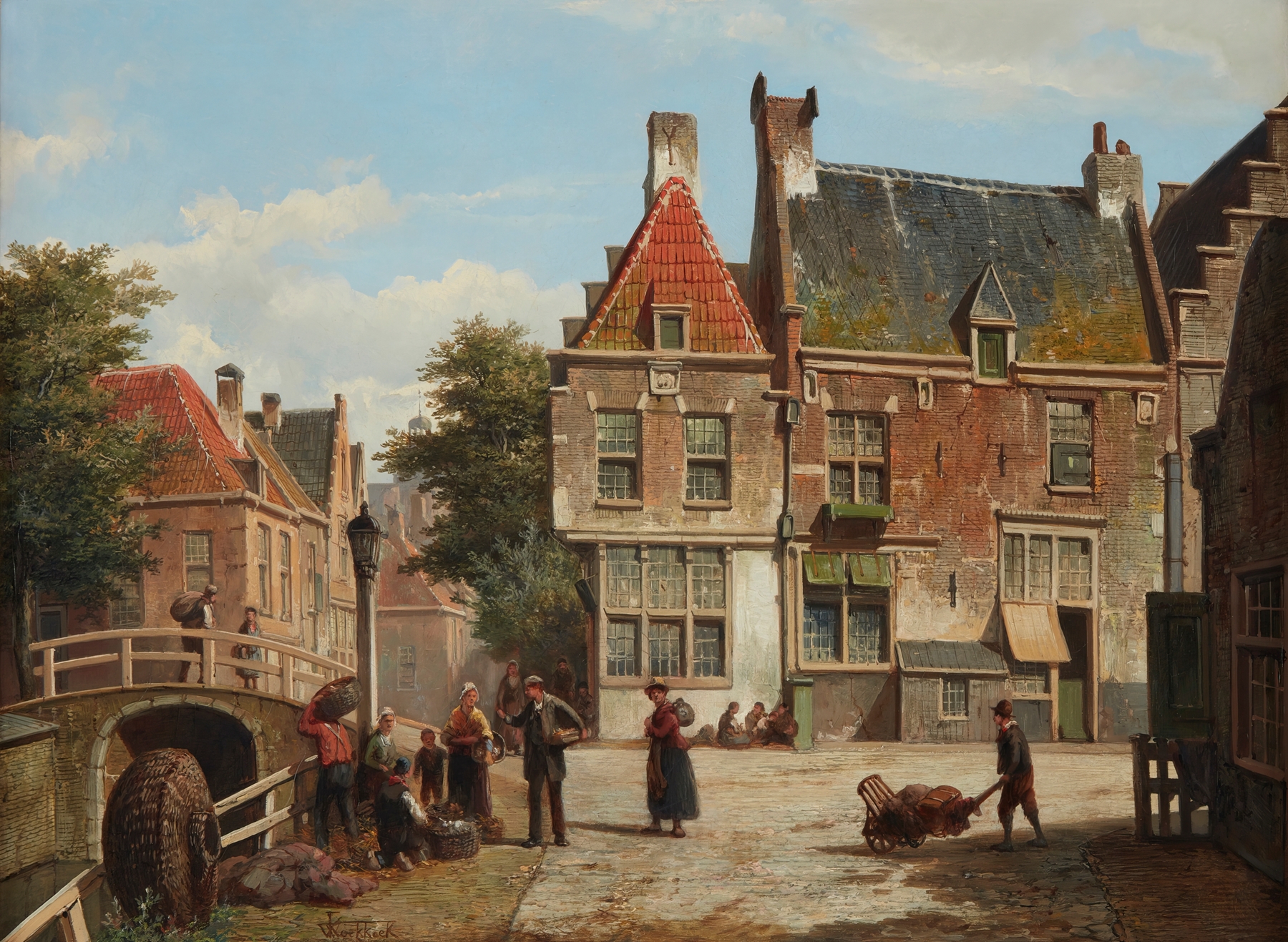
Who listens when art speaks of silence? In Children and Travellers Along the Canal, the stillness of a moment transcends time, capturing the essence of fleeting childhood and the passage of life along the water's edge. Look to the left at the gentle curve of the canal, where the water mirrors the cloud-streaked sky, creating a serene palette of blues and soft whites. The figures of children, scattered like petals on a breeze, are enshrined in light, their playful gestures contrasting with the stillness of the surrounding landscape.
Notice how the delicate brushstrokes articulate the texture of the trees, their verdant greens providing a lush backdrop that frames the scene, inviting the viewer to linger in quiet reflection. Beneath the surface, the interplay of light and shadow reveals a deeper narrative—a sense of innocence intertwined with the inexorable flow of time. The children’s laughter, though silent in the frame, echoes through the vibrant hues of their clothing, suggesting carefree joy amidst the transient nature of youth. The travelers, depicted with a sense of purpose, add a layer of contrast, embodying the passage of time and the inevitable journey everyone must undertake, further enriching the emotional depth of the piece.
Willem Koekkoek painted Children and Travellers Along the Canal in 1868, during a period marked by the burgeoning interest in realism and impressionism. Residing in the Netherlands, he was influenced by the natural scenery that surrounded him, reflecting the cultural shifts and artistic movements of his time. As he captured the essence of daily life, his work resonated with the social dynamics of the era, celebrating both the simplicity of childhood and the complexity of life's journey.