Winter Street Scene, Oudewater — History & Analysis
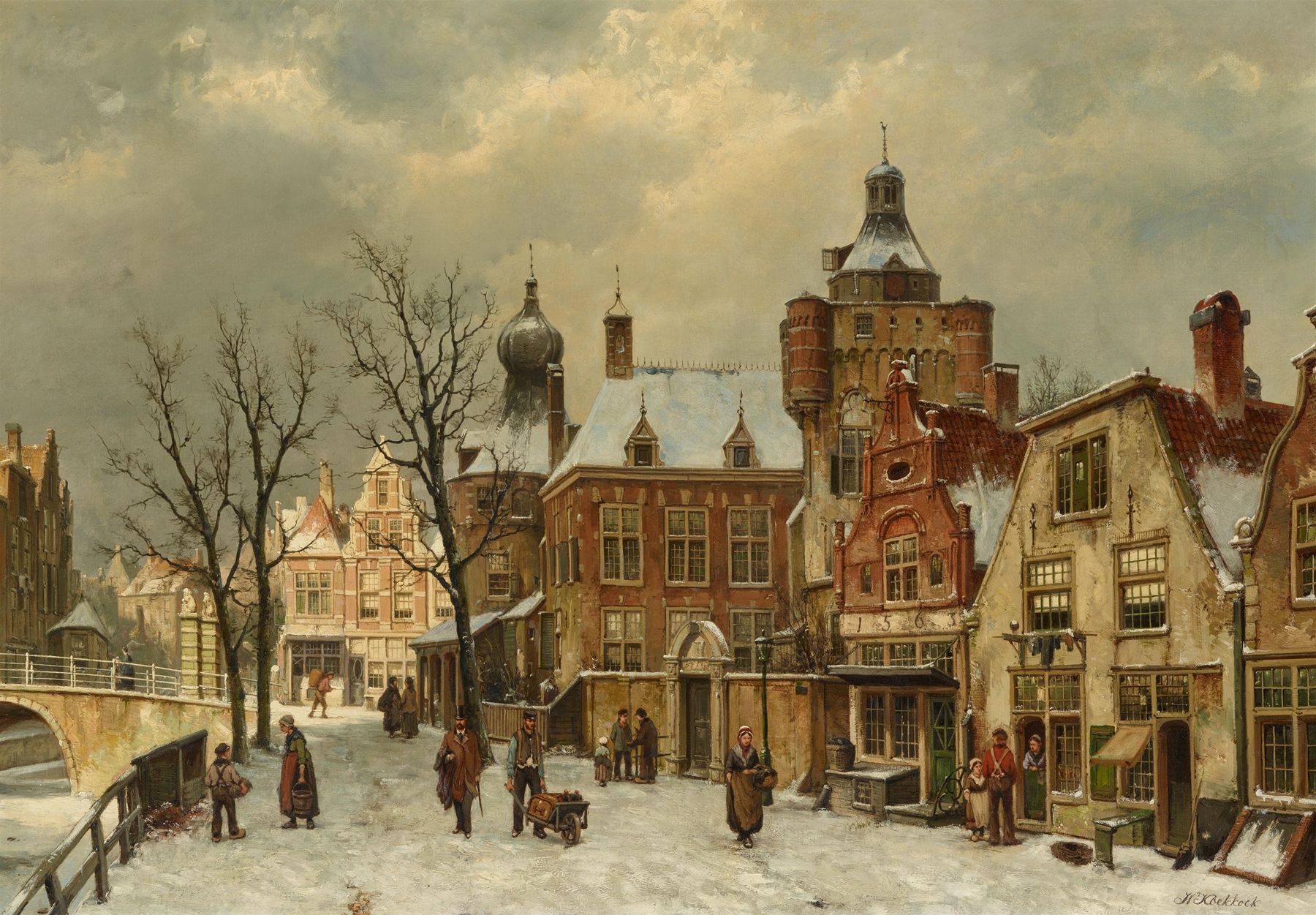
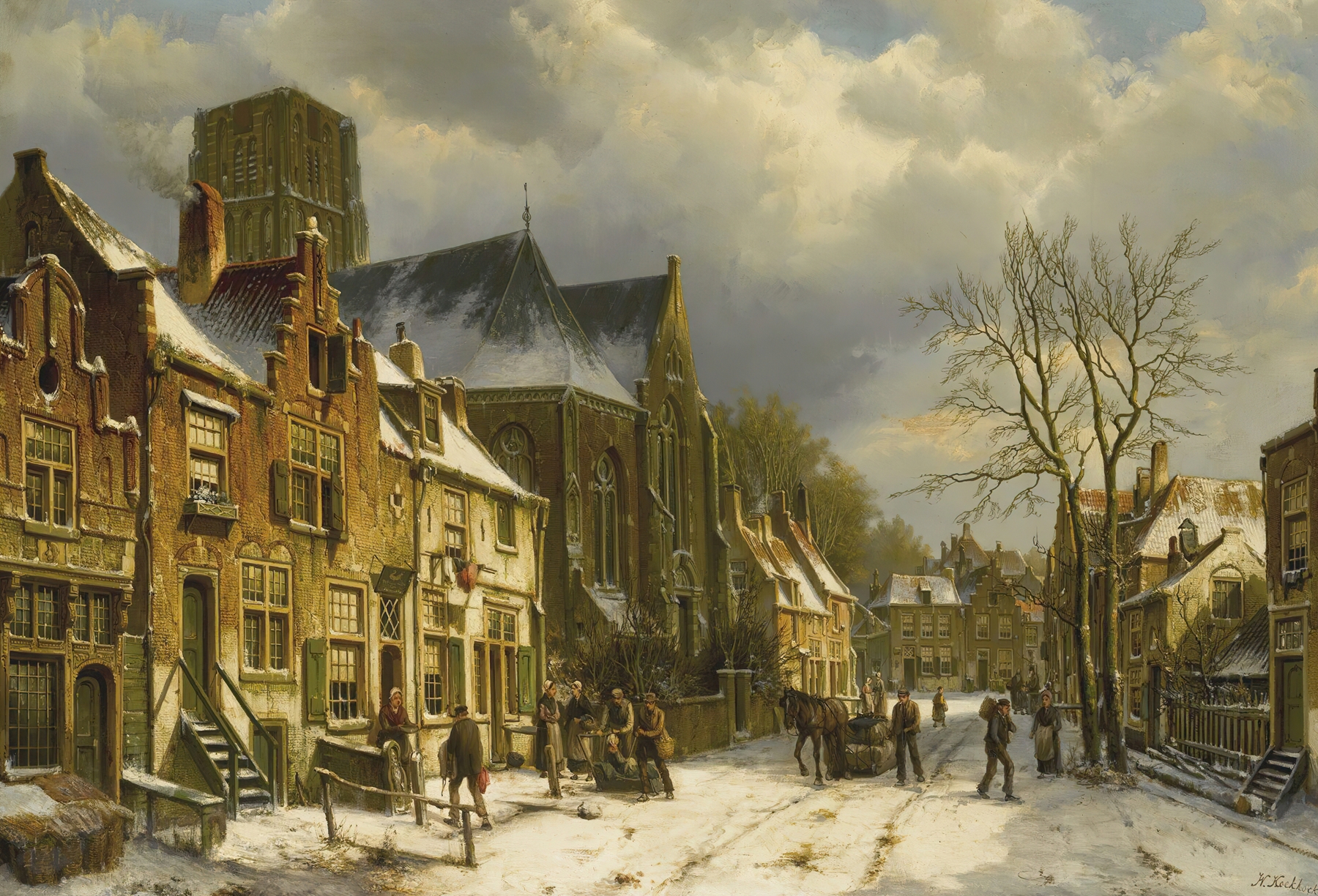
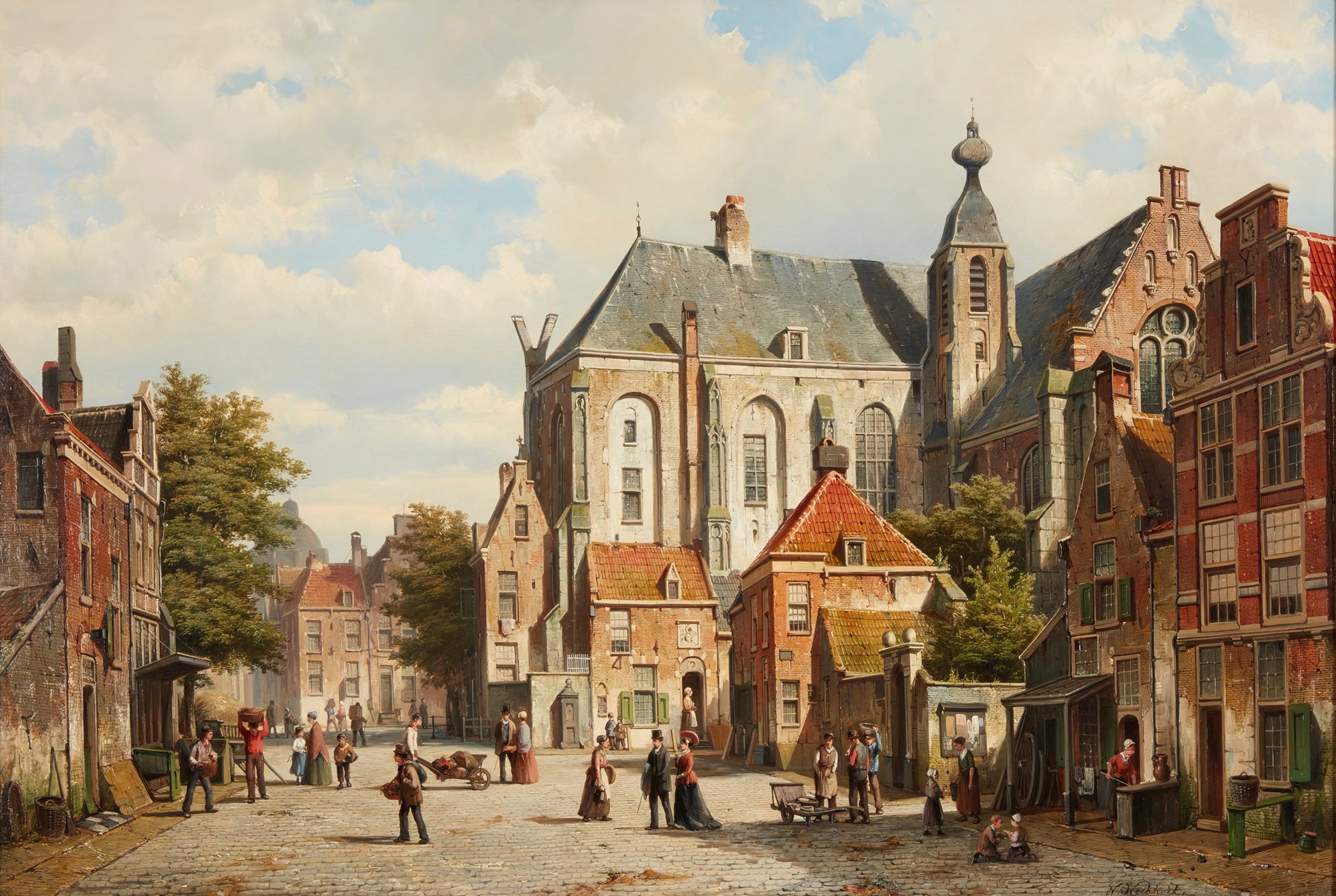
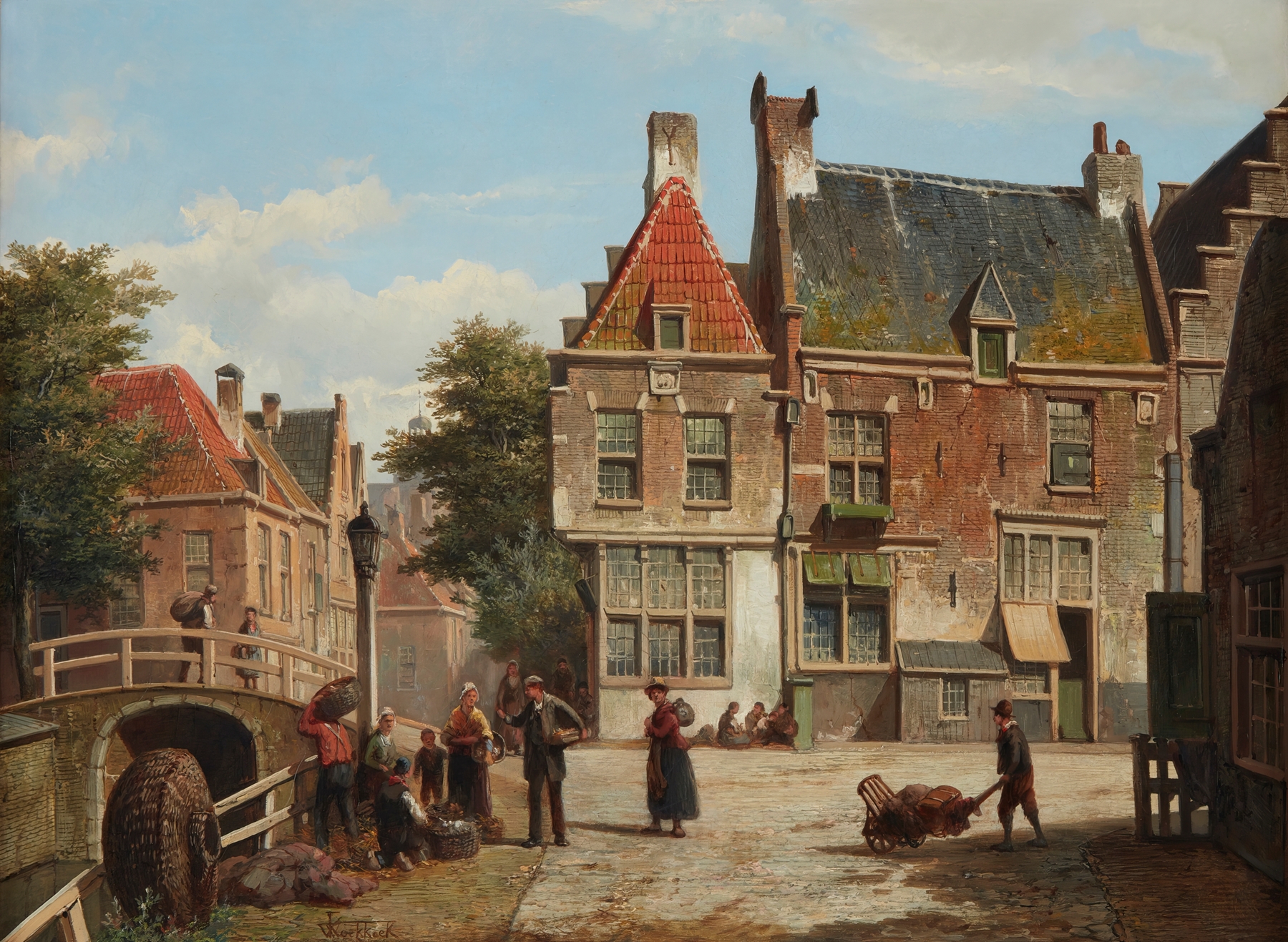
“The canvas doesn’t lie — it simply waits.” In the stillness of a winter’s day, how does movement breathe life into a frozen moment, urging us to look closer? Notice the delicate interplay of light and shadow throughout the scene. Focus on the figures braving the chill — clad in heavy coats, their breaths visible like whispers escaping into the air. The gentle curve of the street draws your eye toward the horizon, where a faint glow suggests the sun's reluctant emergence.
Each brushstroke seems to capture not just the landscape, but the palpable energy of life bustling amidst the quiet snow. As you explore further, consider the contrast between the vibrant hues of the figures and the subdued grays of the surroundings. The warm oranges and reds of their clothing seem to defy the cold, while the snow blankets the street, creating a sense of isolation. Look closely at the expressions of the pedestrians; they convey a blend of determination and serenity, embodying a shared resilience against the winter landscape.
This tension between warmth and chill, movement and stillness, reflects the perseverance of life in the harshest conditions. Willem Koekkoek painted this exquisite piece during a period marked by a fascination with realism and the everyday life of the Dutch. In the mid-19th century, while art movements were rapidly changing across Europe, he was deeply immersed in capturing the essence of the ordinary. Living in Oudewater, he drew inspiration from his surroundings, illustrating the beauty in transient moments, forever preserved in paint.