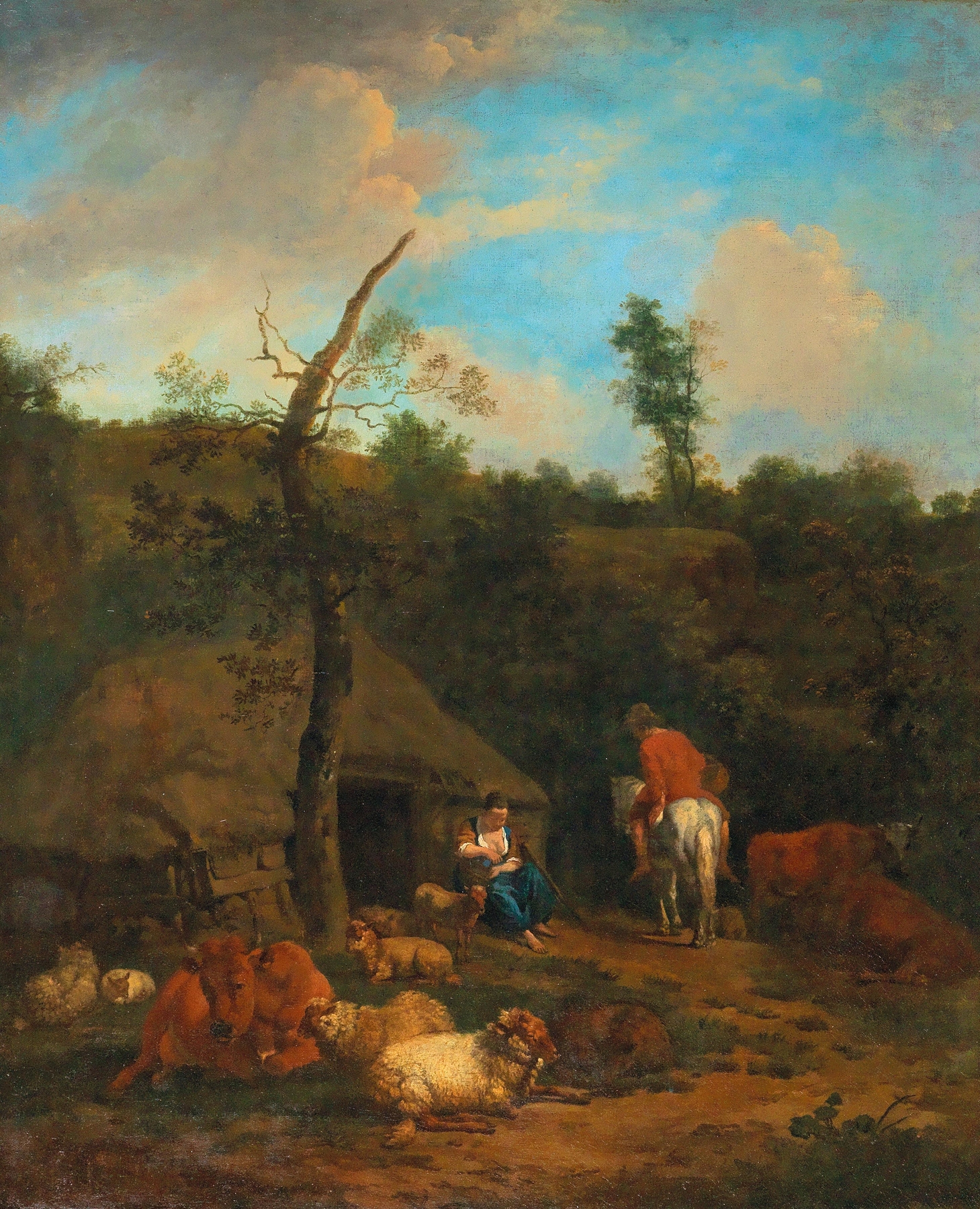
A herdsman and a shepherdess in front of a wooden farmhouse — History & Analysis
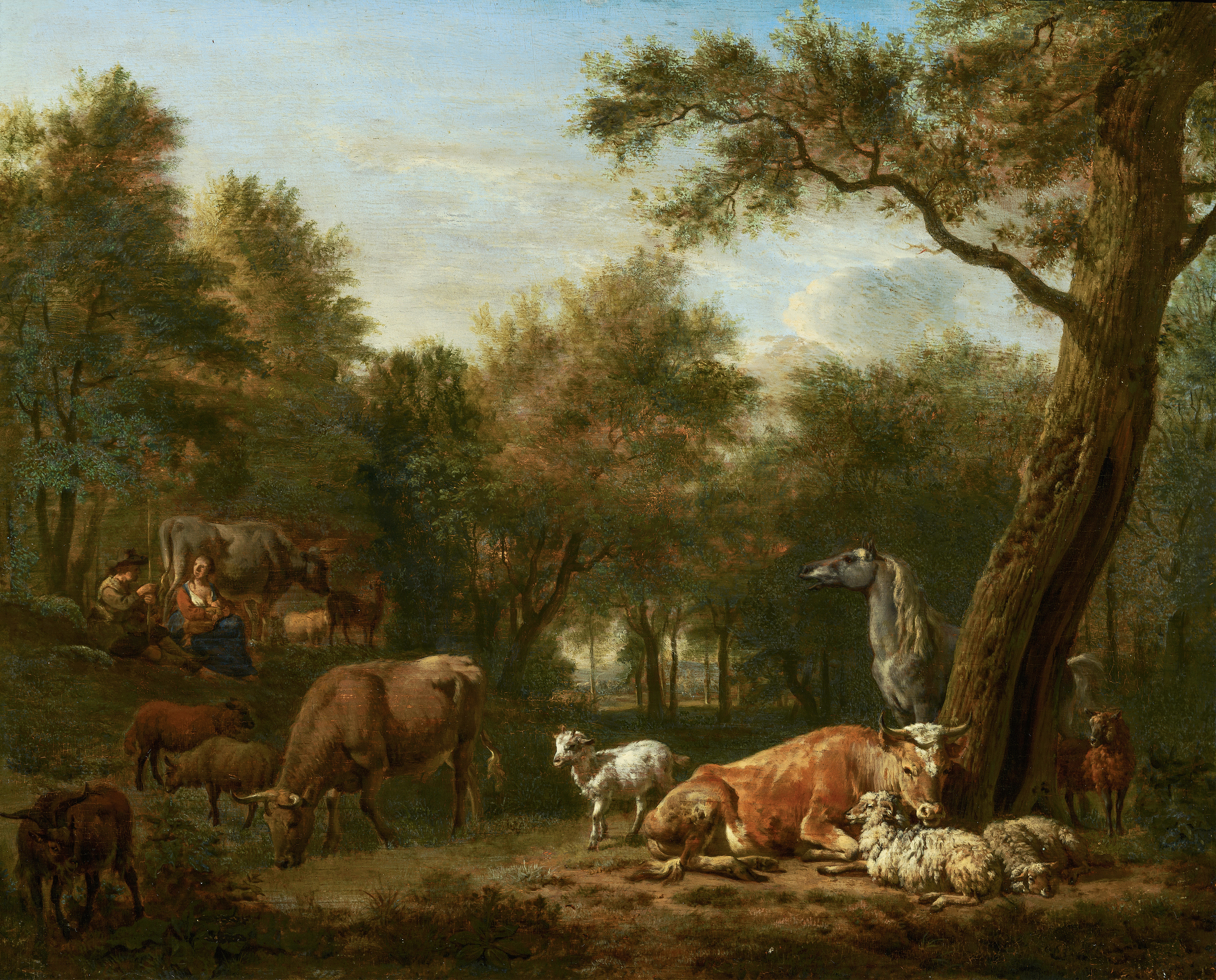
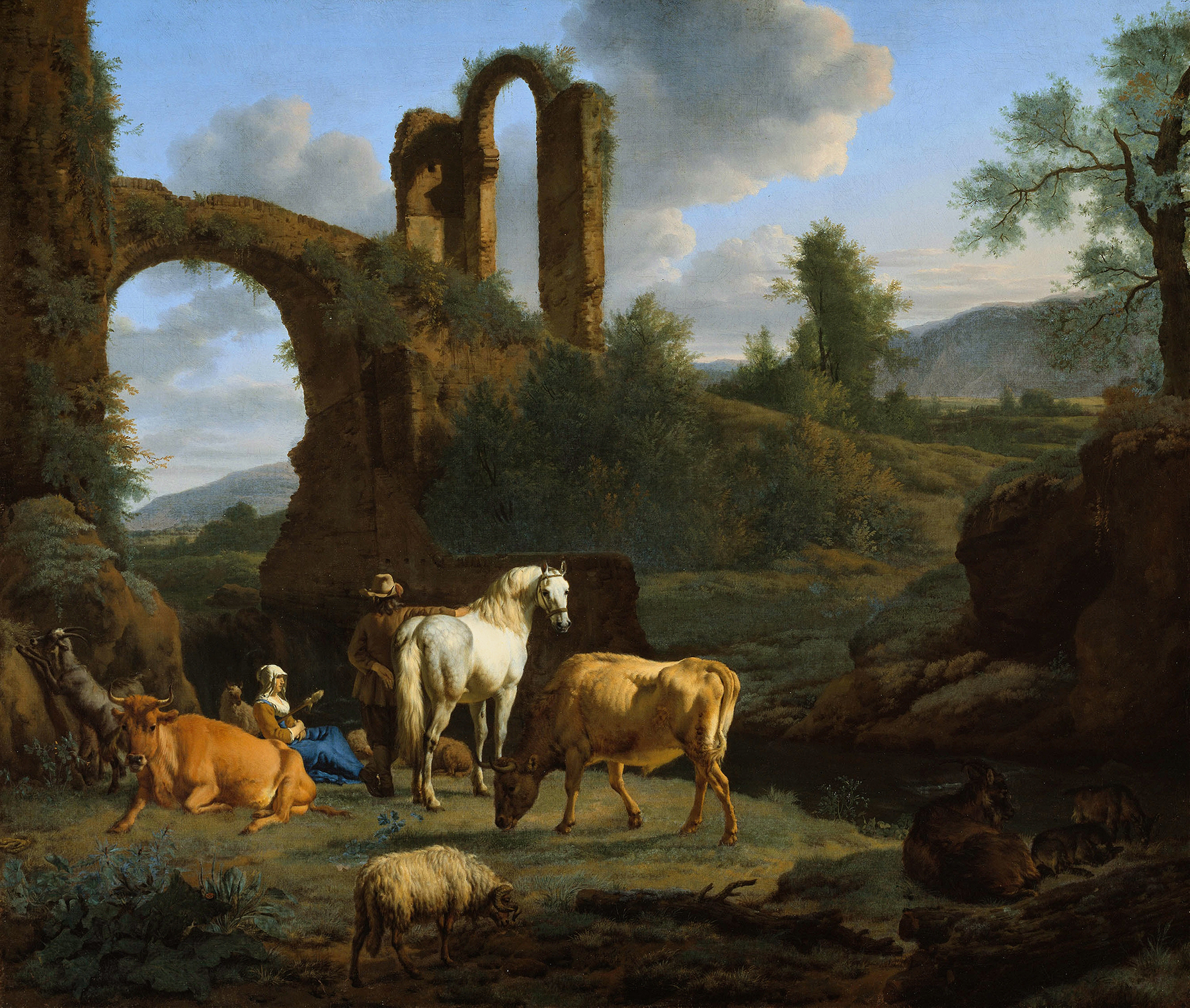
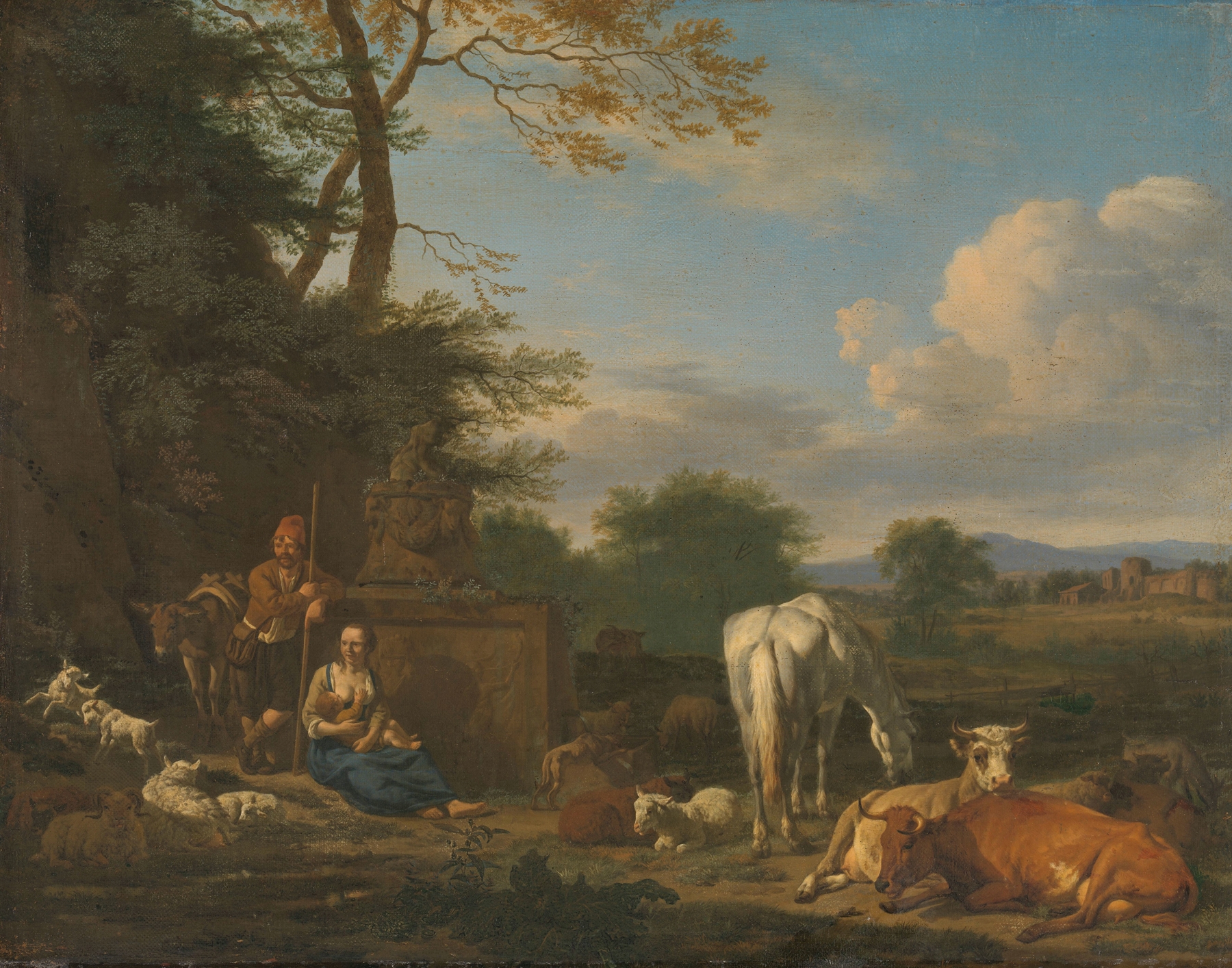
“Sometimes beauty is just pain, disguised in gold.” The quiet allure of pastoral life often conceals deeper longings that pulse beneath its serene surface. Look to the center of the canvas, where the herdsman and shepherdess stand poised before the sturdy wooden farmhouse. Their bodies are angled slightly toward one another, yet a subtle distance lingers in the air, made palpable by their expressions. The rich greens and browns of the landscape envelop them, while the golden rays of sunlight filter gently through the trees, illuminating their figures and casting a warm glow on their faces. Notice how the artist employs soft brush strokes to create texture in the grass, which sways in a gentle breeze, adding a sense of movement to this still moment. Within this idyllic scene lies a tension steeped in longing and desire. The sheep grazing nearby serve as a reminder of the simplicity of rural life, yet their quiet presence contrasts sharply with the unvoiced emotions between the two figures. The shepherdess, her gaze slightly averted, suggests an inner world of unfulfilled dreams, while the herdsman’s posture hints at an unspoken yearning, perhaps for connection or something beyond this pastoral existence. These elements weave together to create a narrative rich with emotional depth beneath the tranquil exterior. Adriaen van de Velde painted this work during the Dutch Golden Age, a period marked by significant artistic innovation and exploration of everyday life. Active in Amsterdam during the mid-17th century, he specialized in landscapes and genre scenes that celebrated rural themes while subtly reflecting the complexities of human relationships. The artist's ability to capture both beauty and underlying tension speaks to a broader artistic movement that sought to unveil the nuances of everyday existence amidst a changing world.