Grazend kalf — History & Analysis
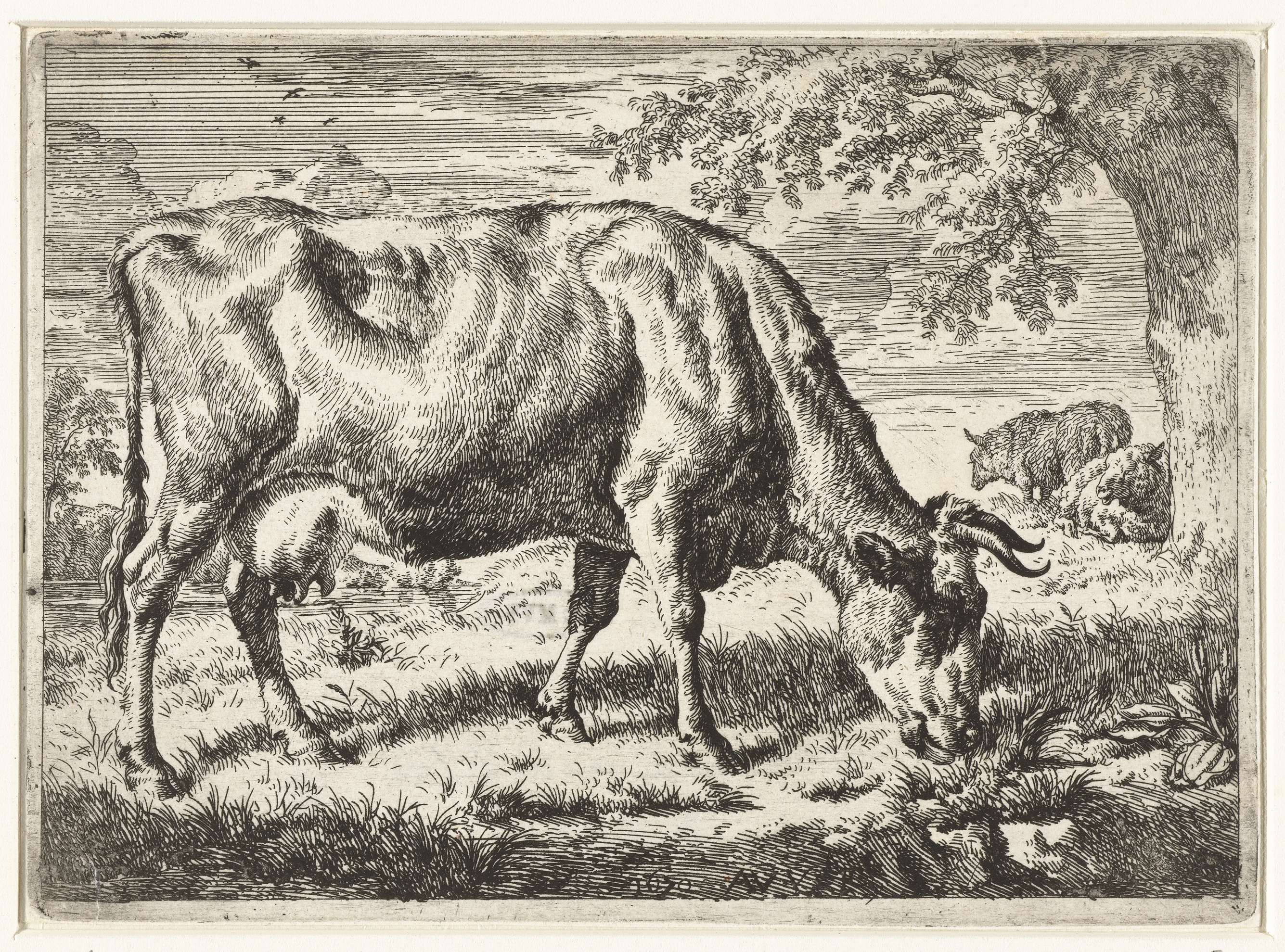
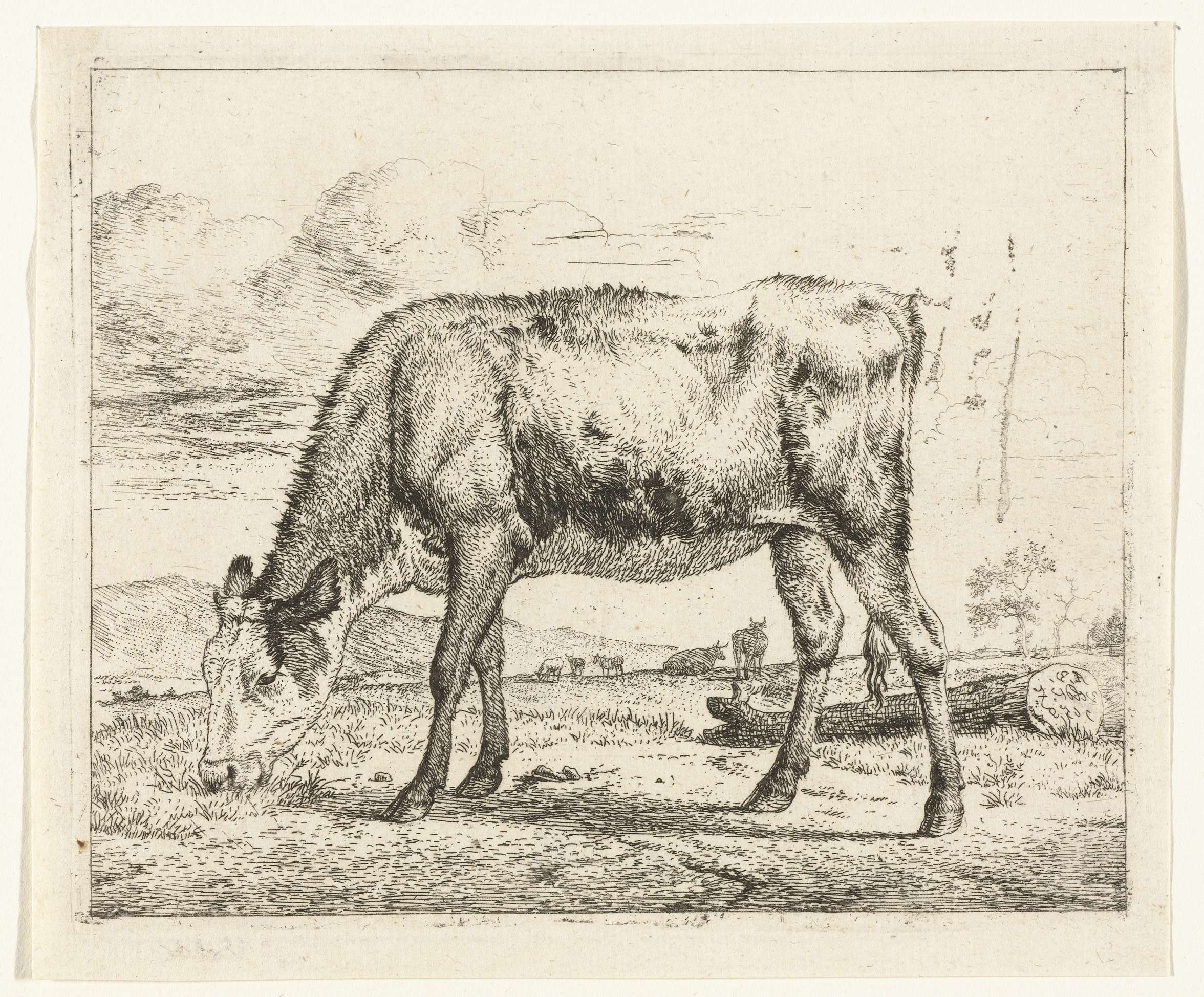
Did the painter know this moment would outlive them? In the tranquil embrace of *Grazend kalf*, silence wraps around a single calf, its delicate form a study in serenity and solitude, as if time itself had paused to observe. Focus on the calf in the foreground, the soft, dappled light highlighting its gentle fur, a warm beige against the cool greens of the pasture. Notice how the careful brushwork captures each strand of hair, creating a tactile sense of realism. The background fades into a whisper of muted colors, invoking a peaceful countryside where the stillness is palpable, inviting contemplation. Delve deeper into the layering of texture and light that suggests the warmth of the sun and the coolness of the shade, evoking the duality of nature’s embrace. The calf’s stance, both alert and relaxed, hints at a moment suspended in time, emphasizing the tension between youth and vulnerability. The absence of human presence underscores the theme of solitude, while the lush environment speaks to the beauty and simplicity of rural life. Adriaen van de Velde painted this pastoral scene in 1658 during a period marked by a burgeoning interest in landscape and animal studies within Dutch art. Living in Amsterdam, he found himself part of a vibrant artistic community that celebrated the everyday beauty of nature and its inhabitants. In the midst of a thriving economy, his work reflects the serene, idyllic moments that many sought to capture amid the complexities of 17th-century life.