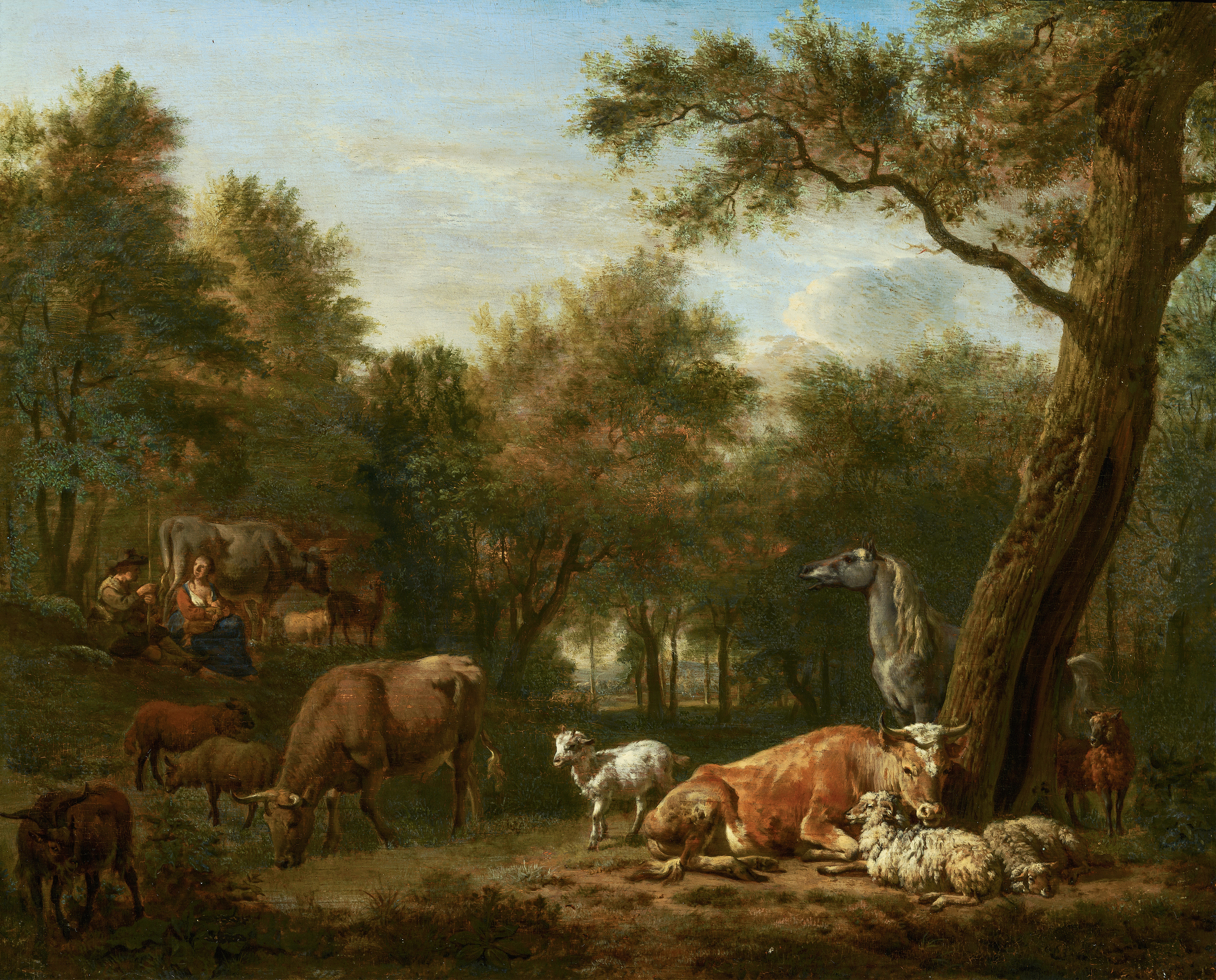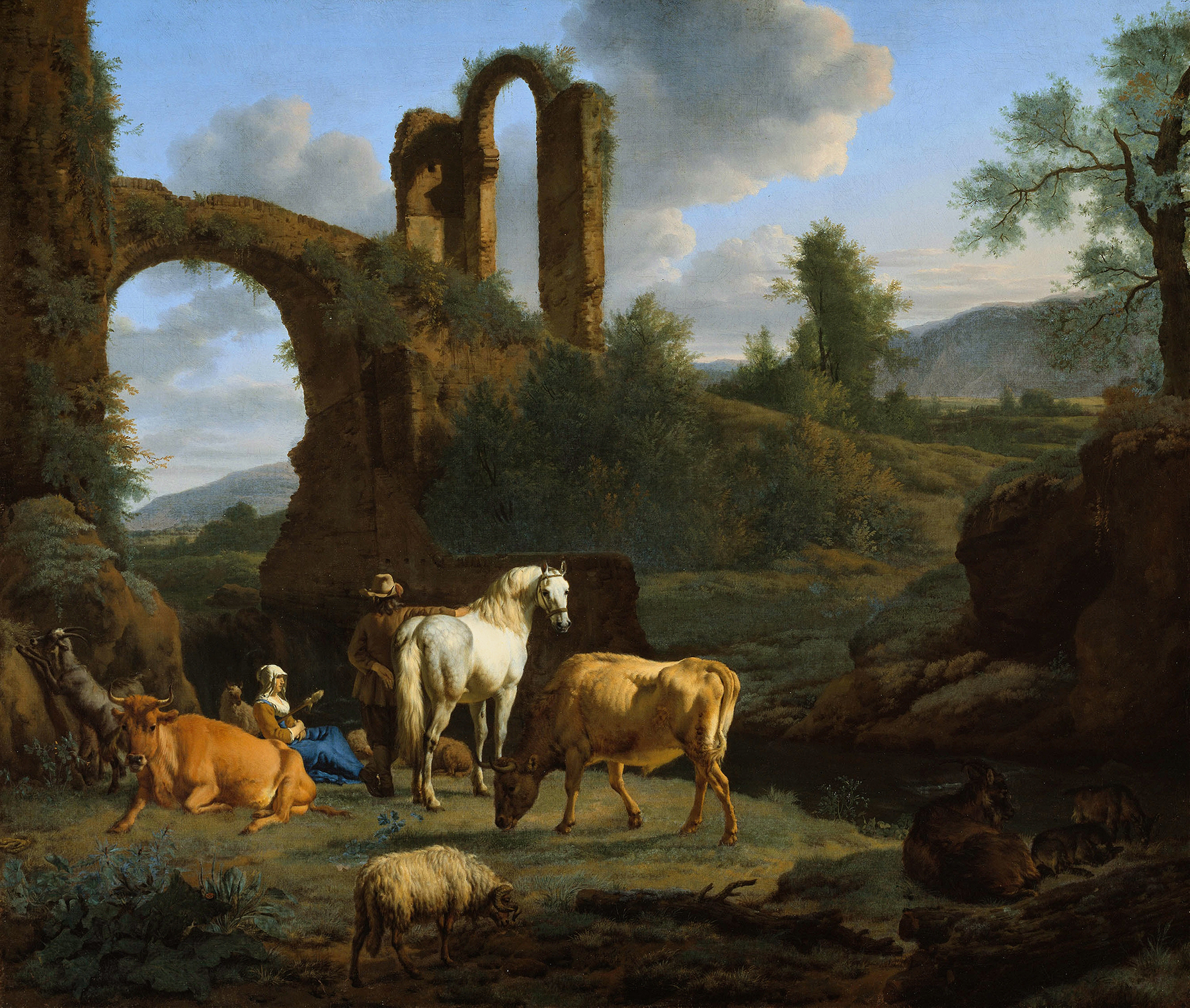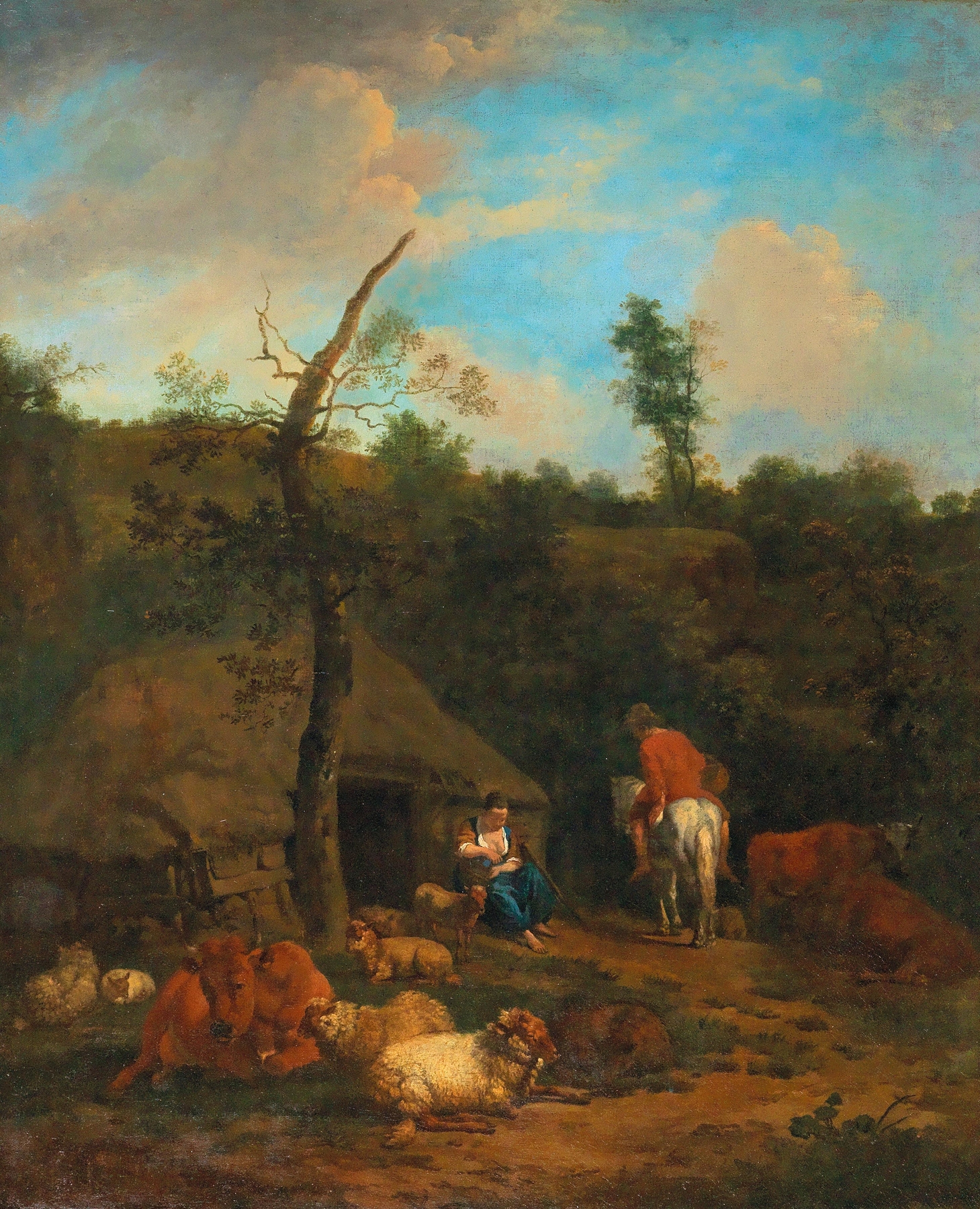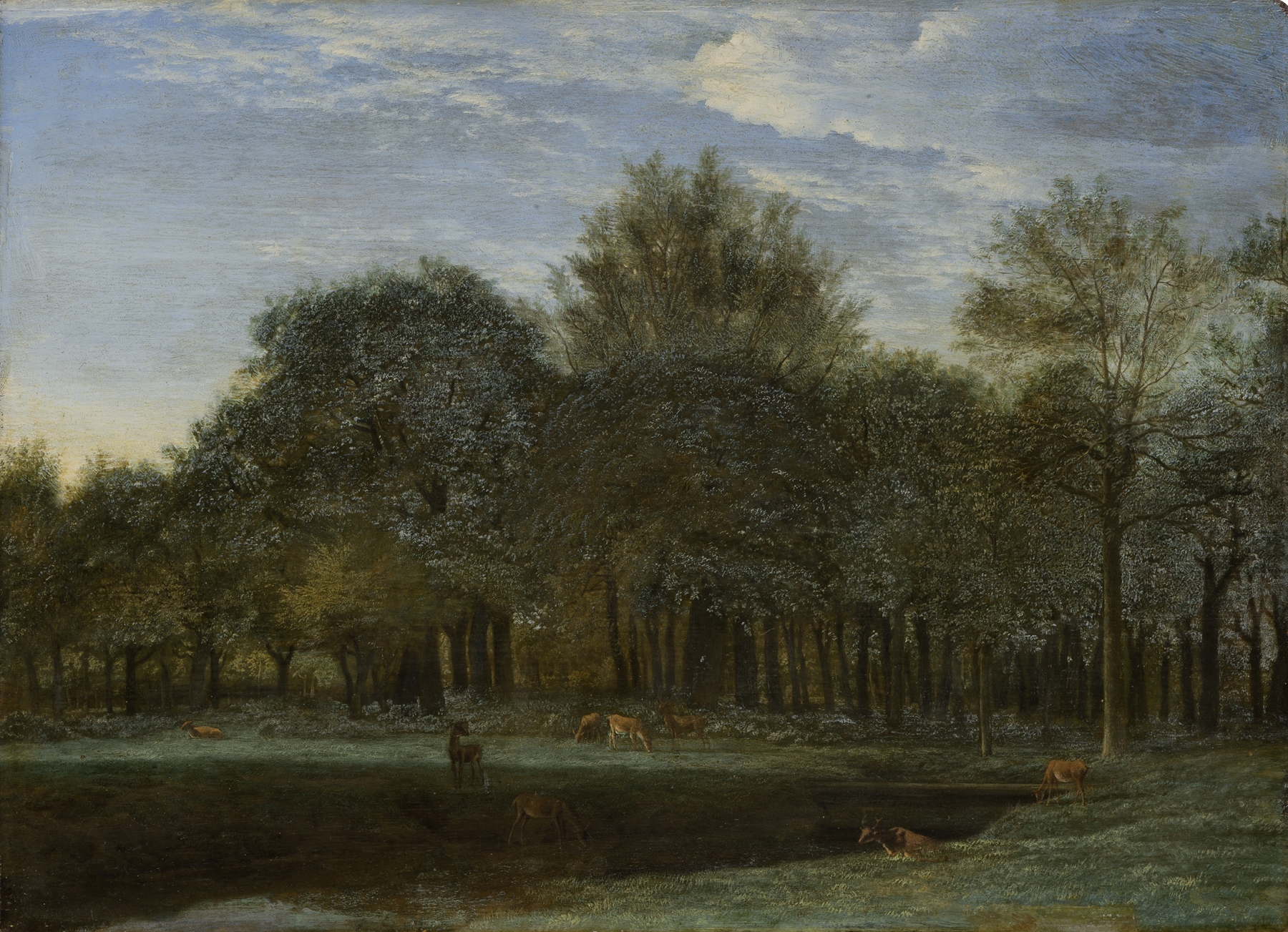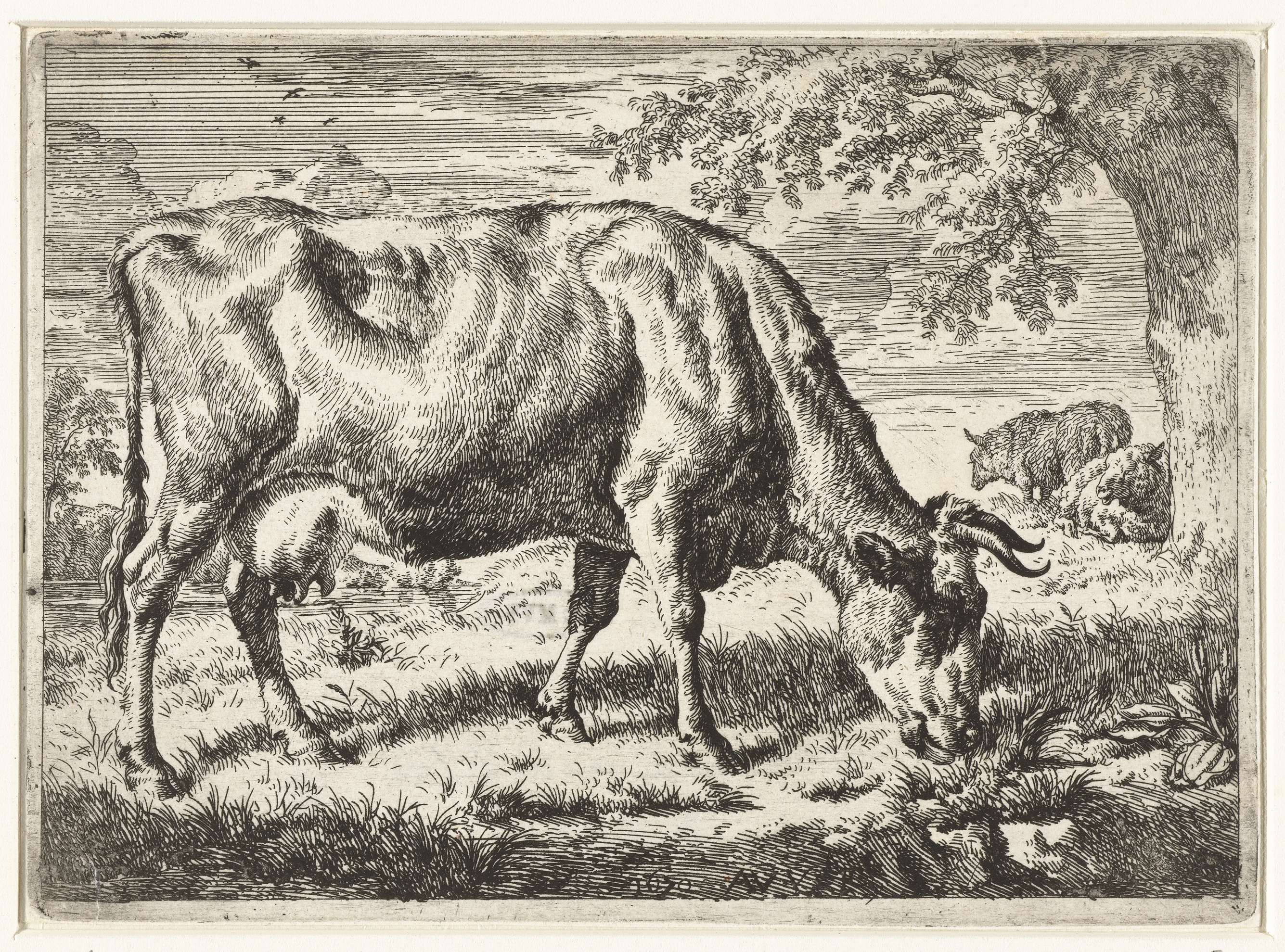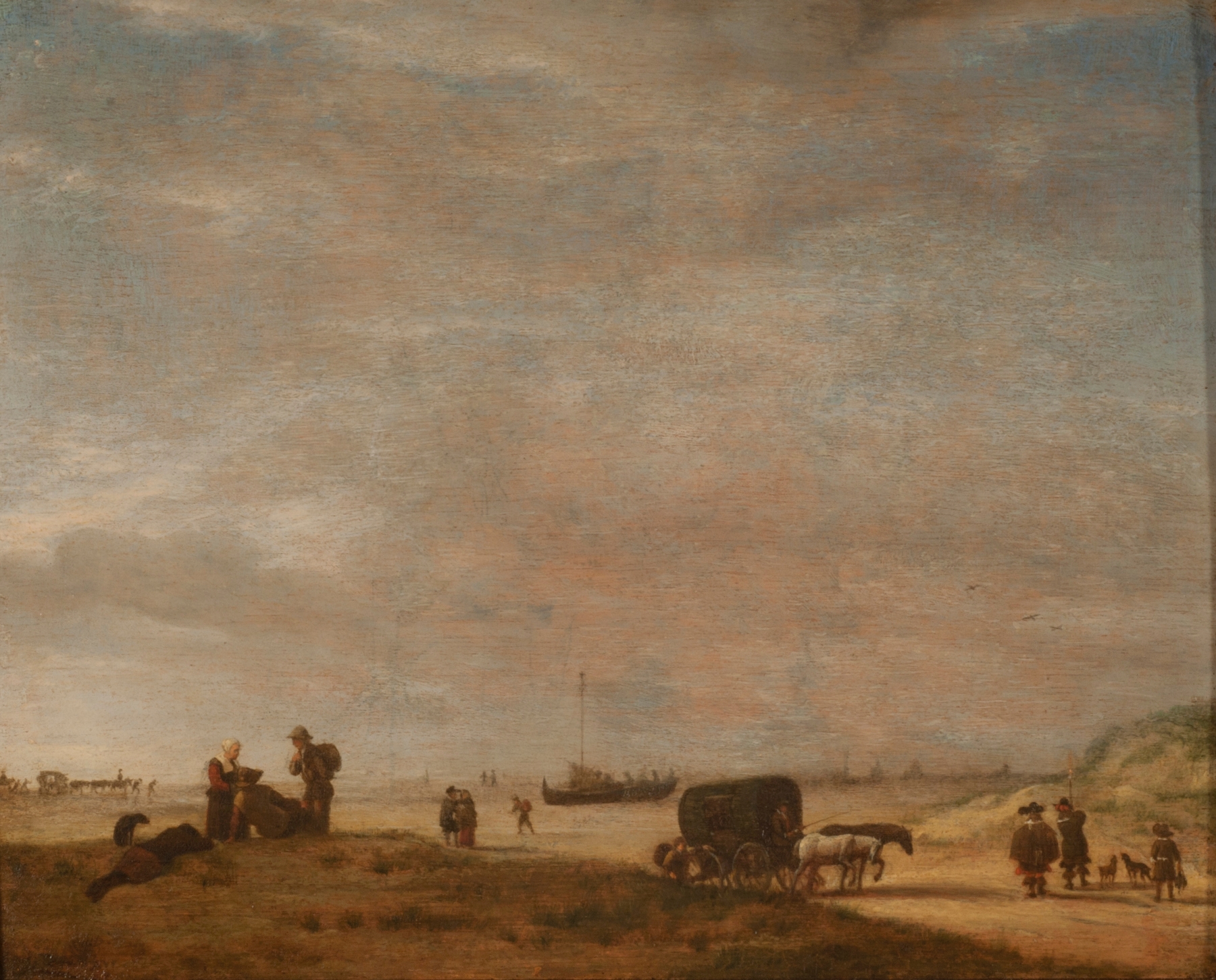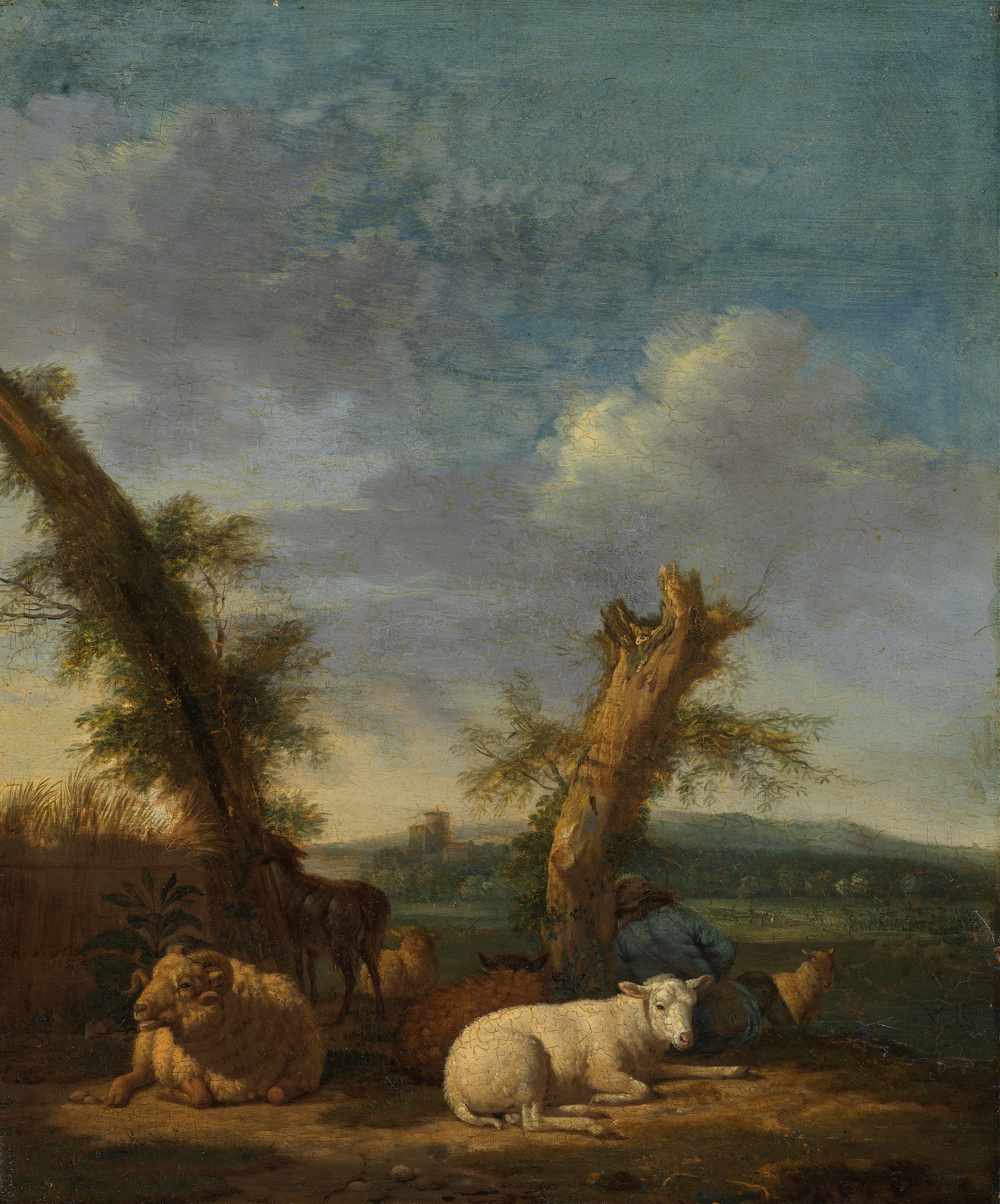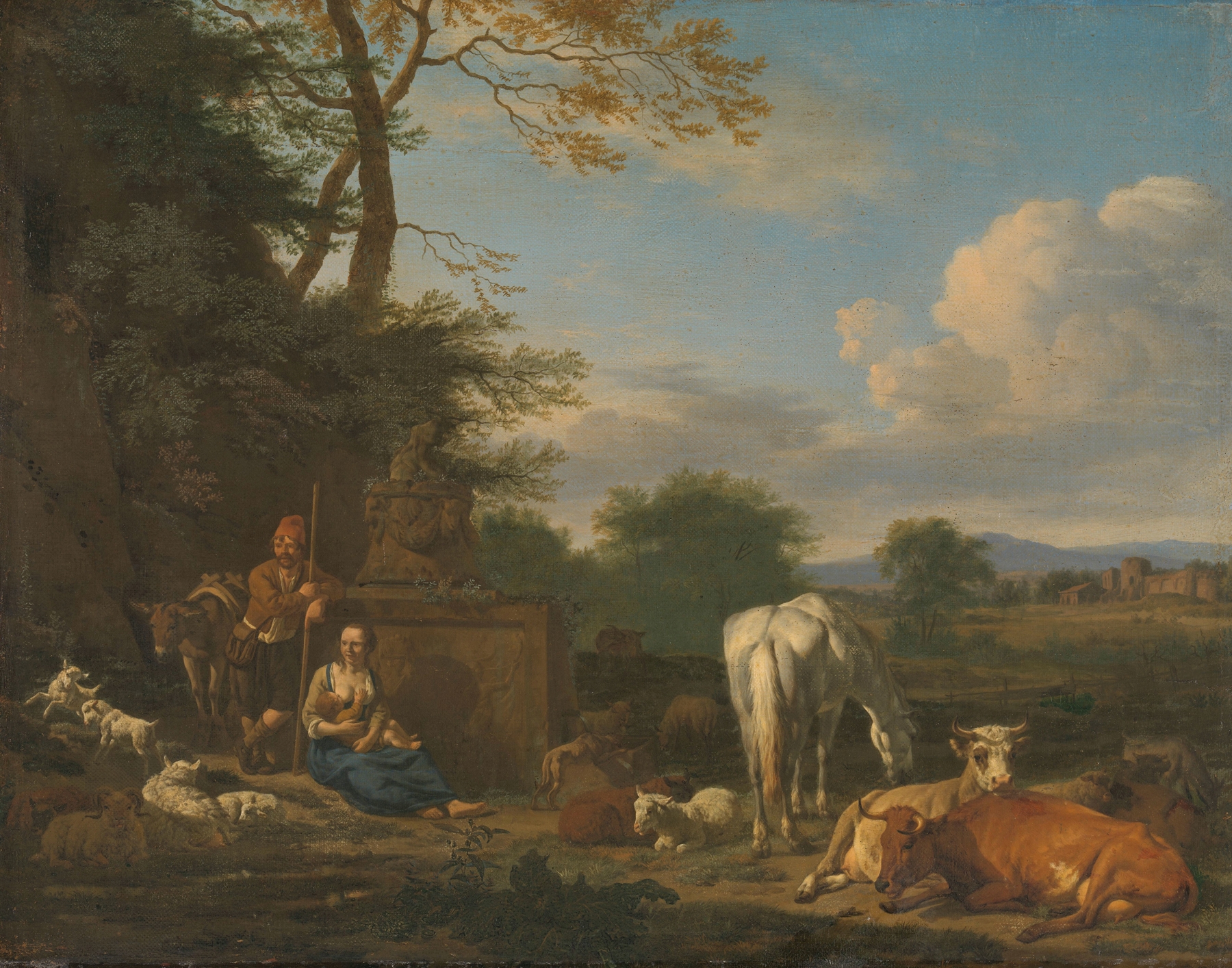
“To paint is to remember what time wants us to forget.” In the stillness of a pastoral landscape, silence weaves itself into every blade of grass, every crumbling stone. The echo of forgotten histories lingers in the air, inviting contemplation of what once was. Look to the center, where a dilapidated ruin stands amidst lush greenery. The deep greens and soft earth tones create a harmonious balance, while the gentle brushwork enhances the tranquil atmosphere. Notice how light filters through the branches, casting dappled shadows that dance on the ground, evoking a sense of serenity. The careful arrangement of figures—a shepherd and his flock—draws the eye, grounding the scene in pastoral simplicity while hinting at deeper connections to humanity and time. In the distance, the interplay between the decay of the ruins and the vibrant life surrounding them suggests a poignant contrast between transience and permanence. The shepherd’s quiet presence amid the grandeur of nature speaks to solitude and reflection, emphasizing the silence that envelops the landscape. Each detail, from the wisps of clouds in the sky to the texture of the stones, serves to amplify the overarching theme of remembrance—a reminder of both beauty and impermanence. Created in 1664, this work emerged during a significant period in the Dutch Golden Age, when landscape painting flourished. Adriaen van de Velde was deeply influenced by the natural world and the period’s growing appreciation for realism. At this time, artists sought to capture not just the visual essence but the emotional resonance of landscapes, marking a shift toward a more introspective approach in art.