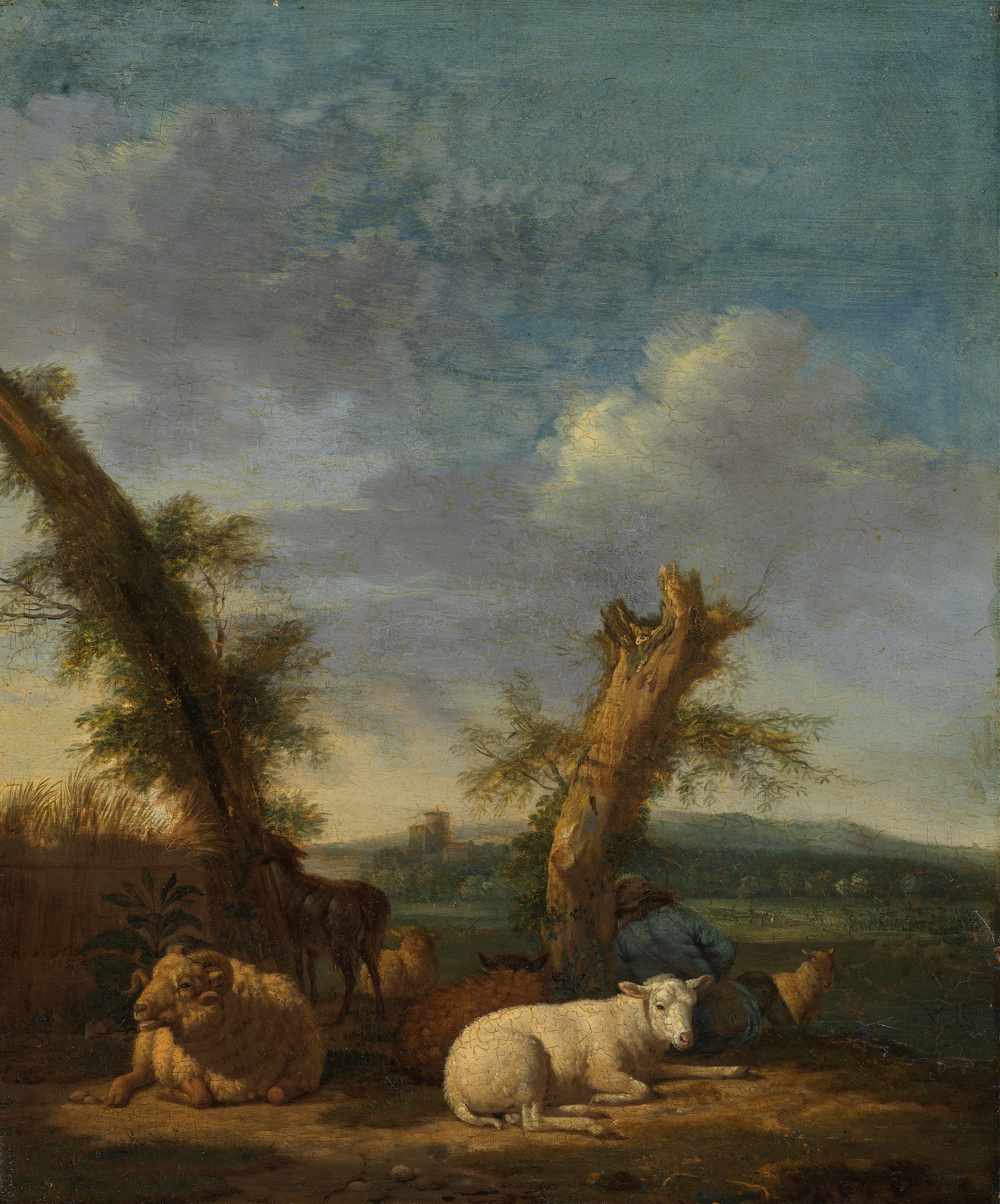
Landscape with Sheep and a Sleeping Shepherd — History & Analysis
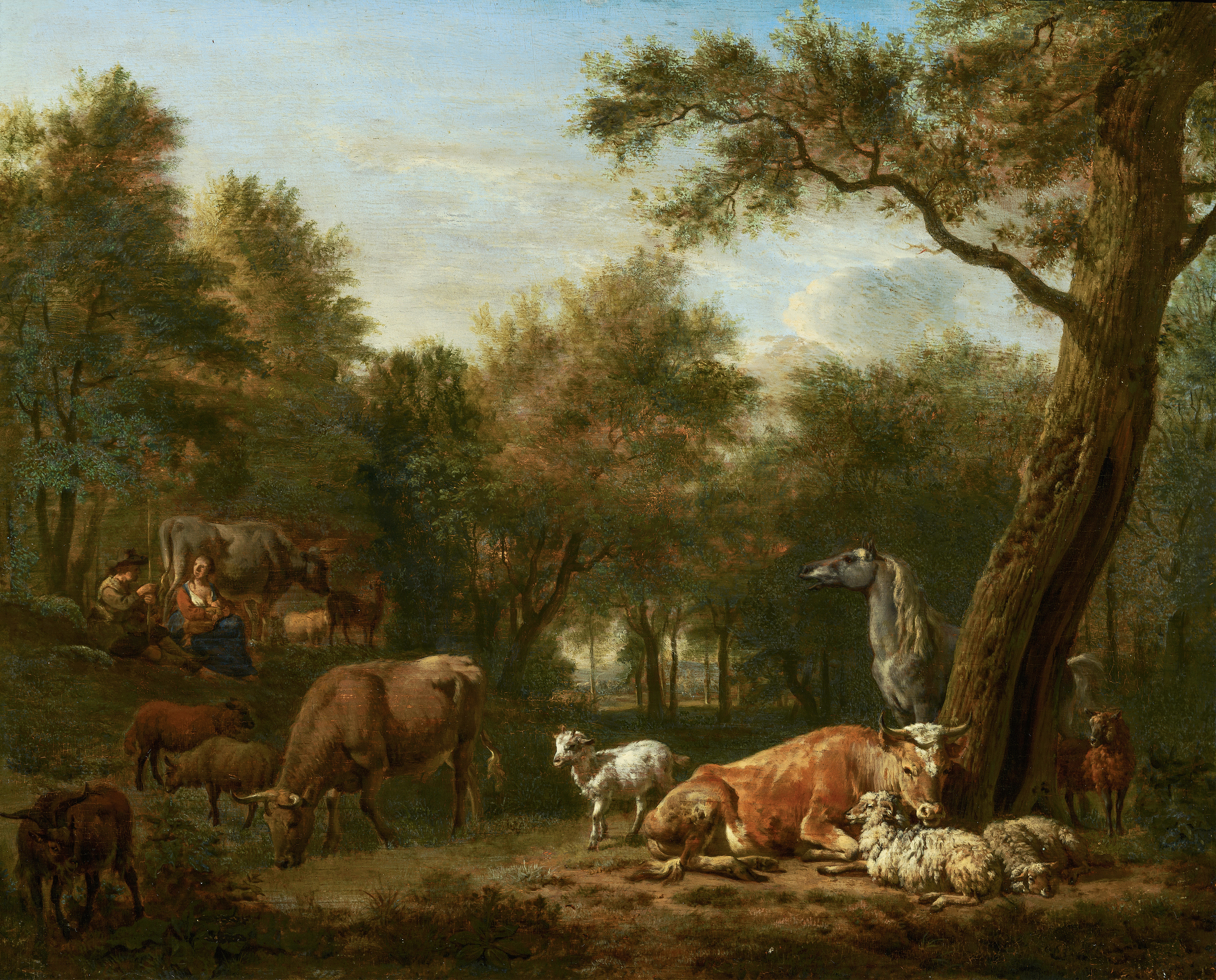
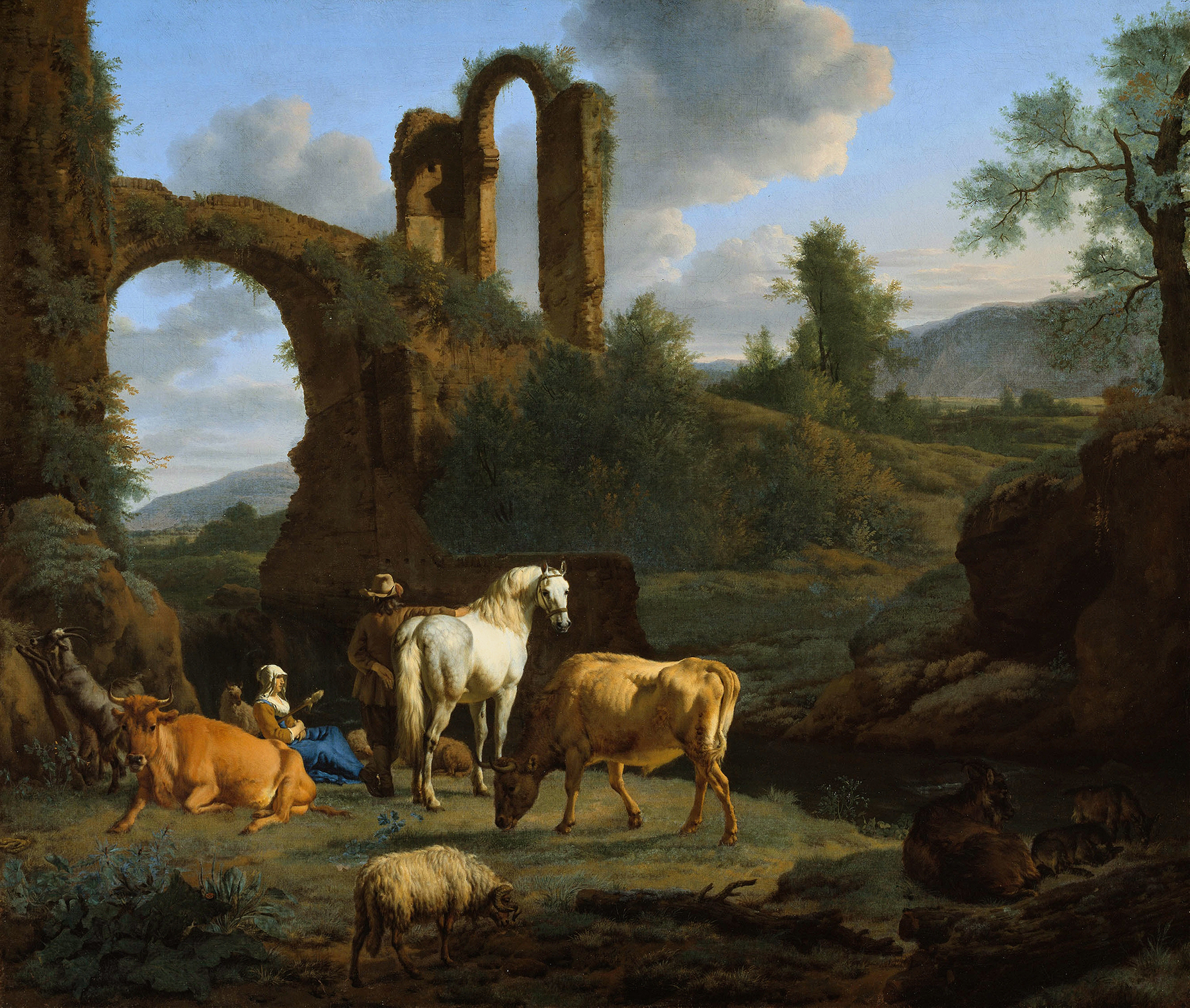
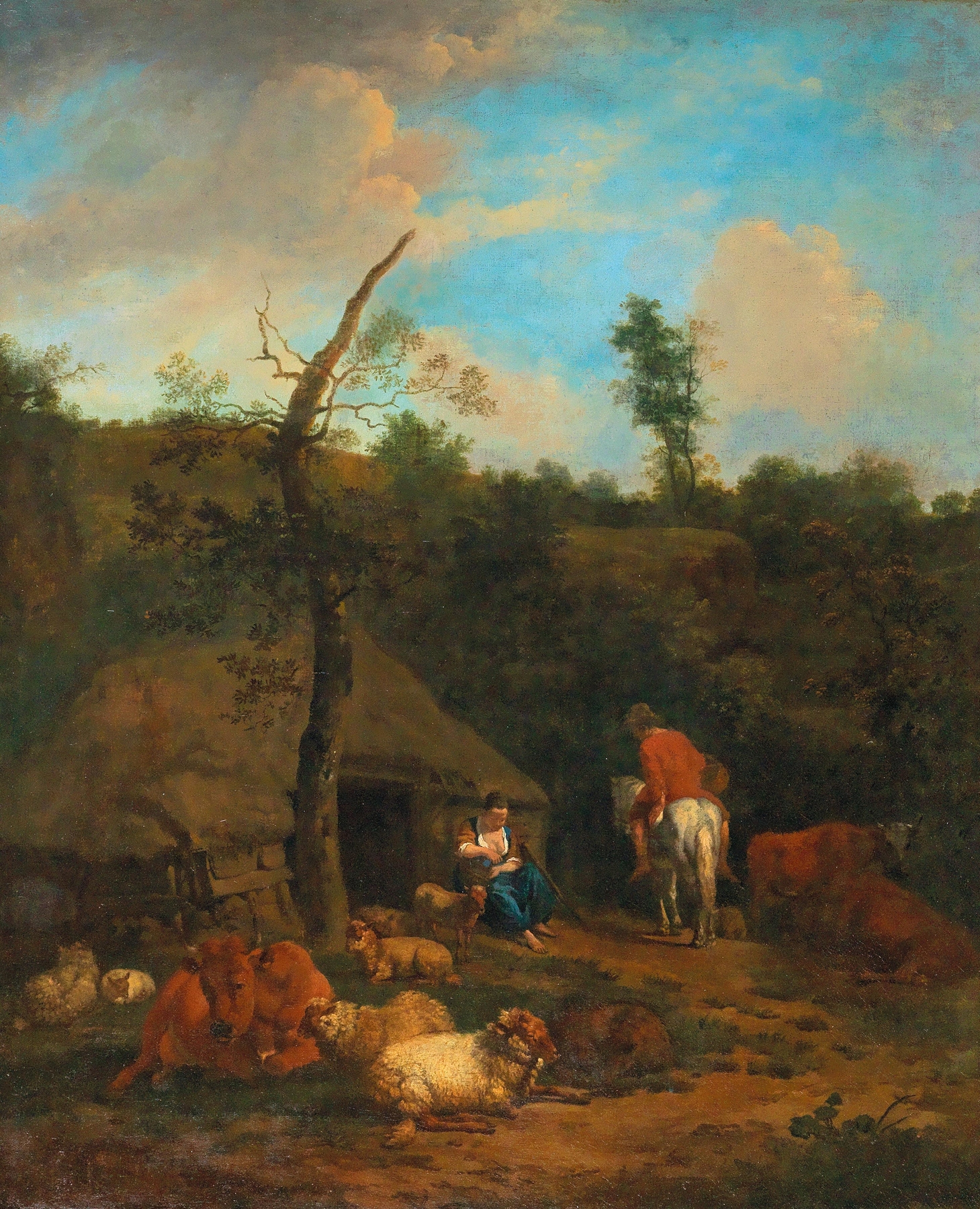
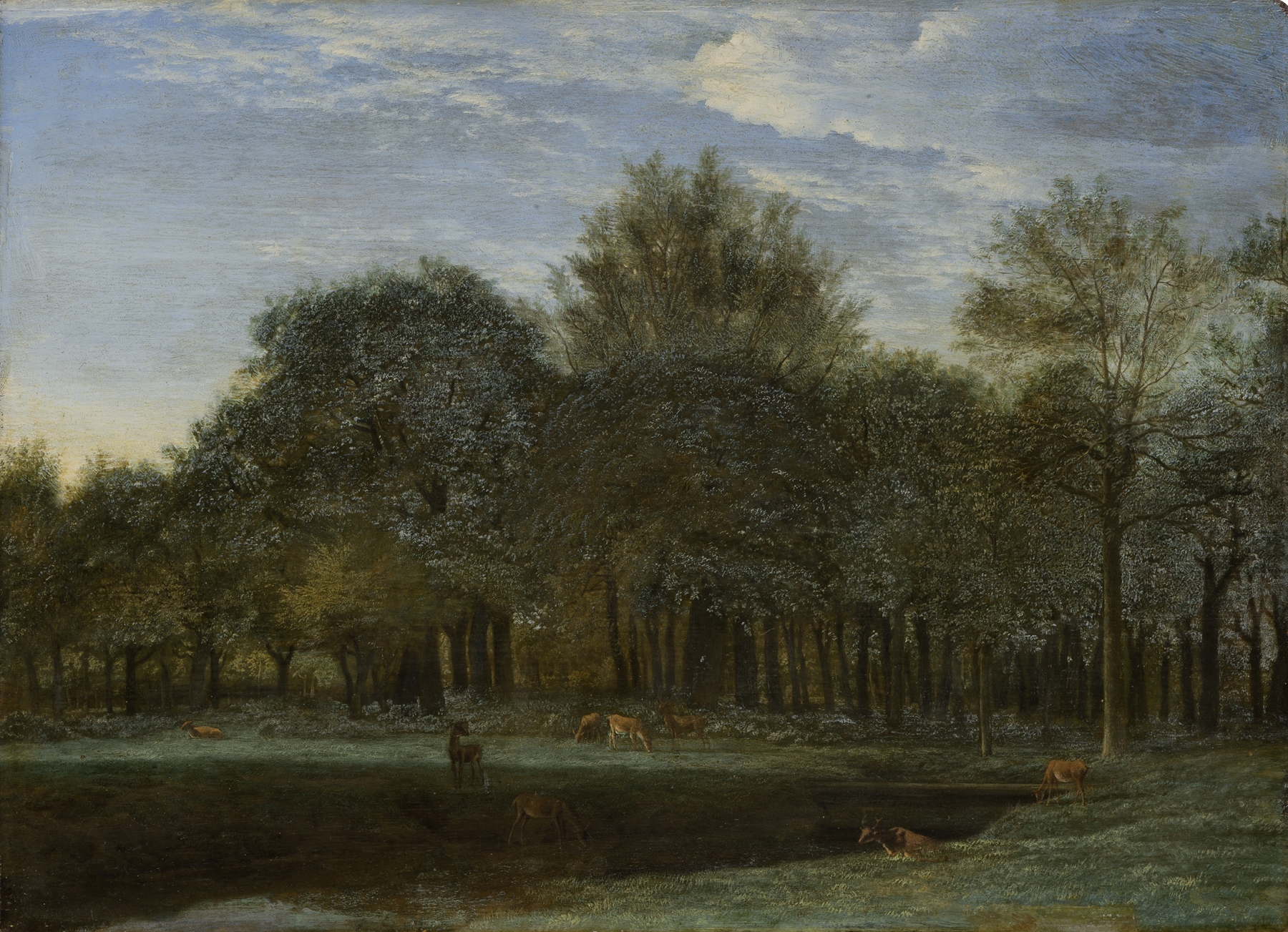
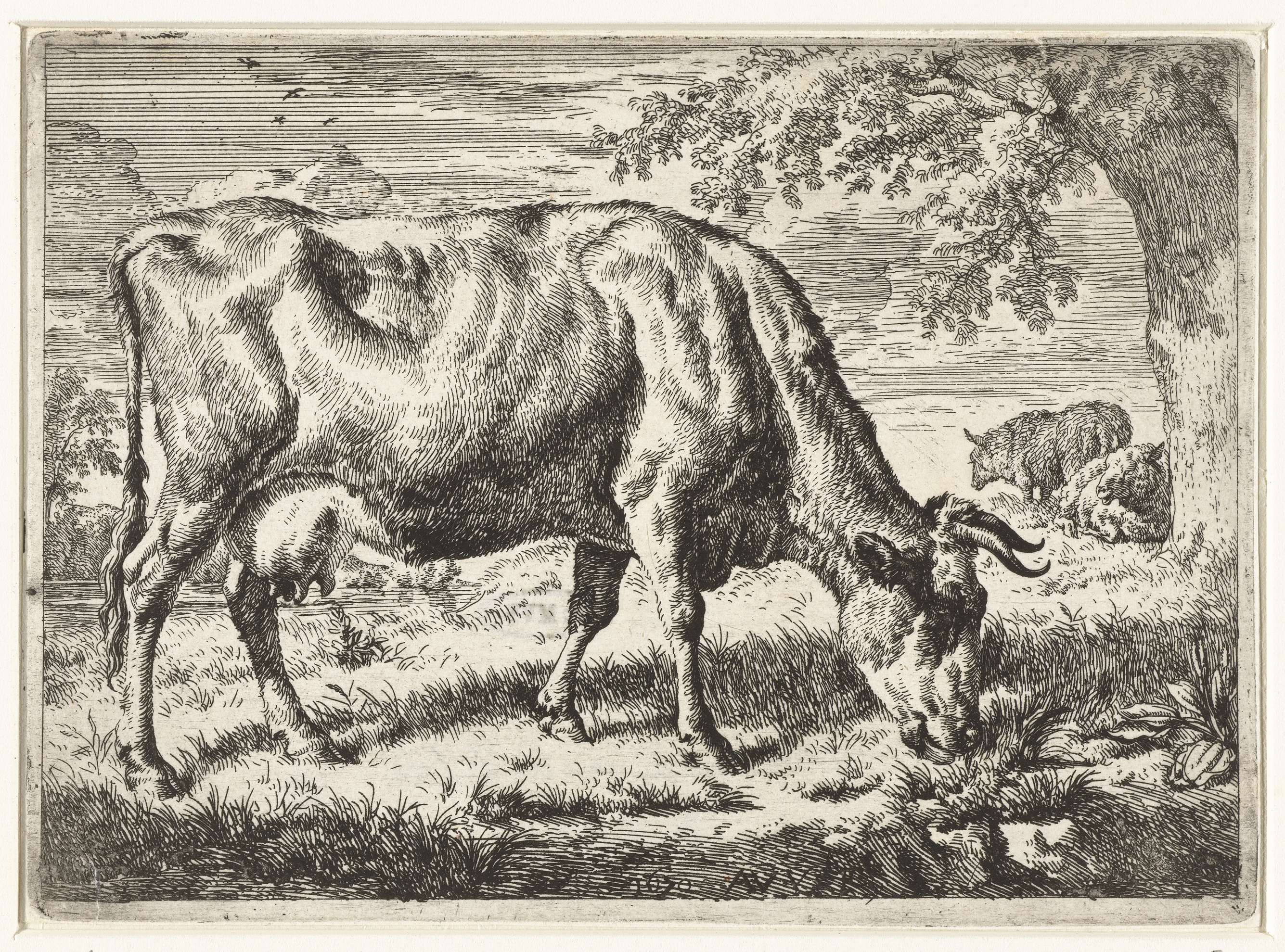
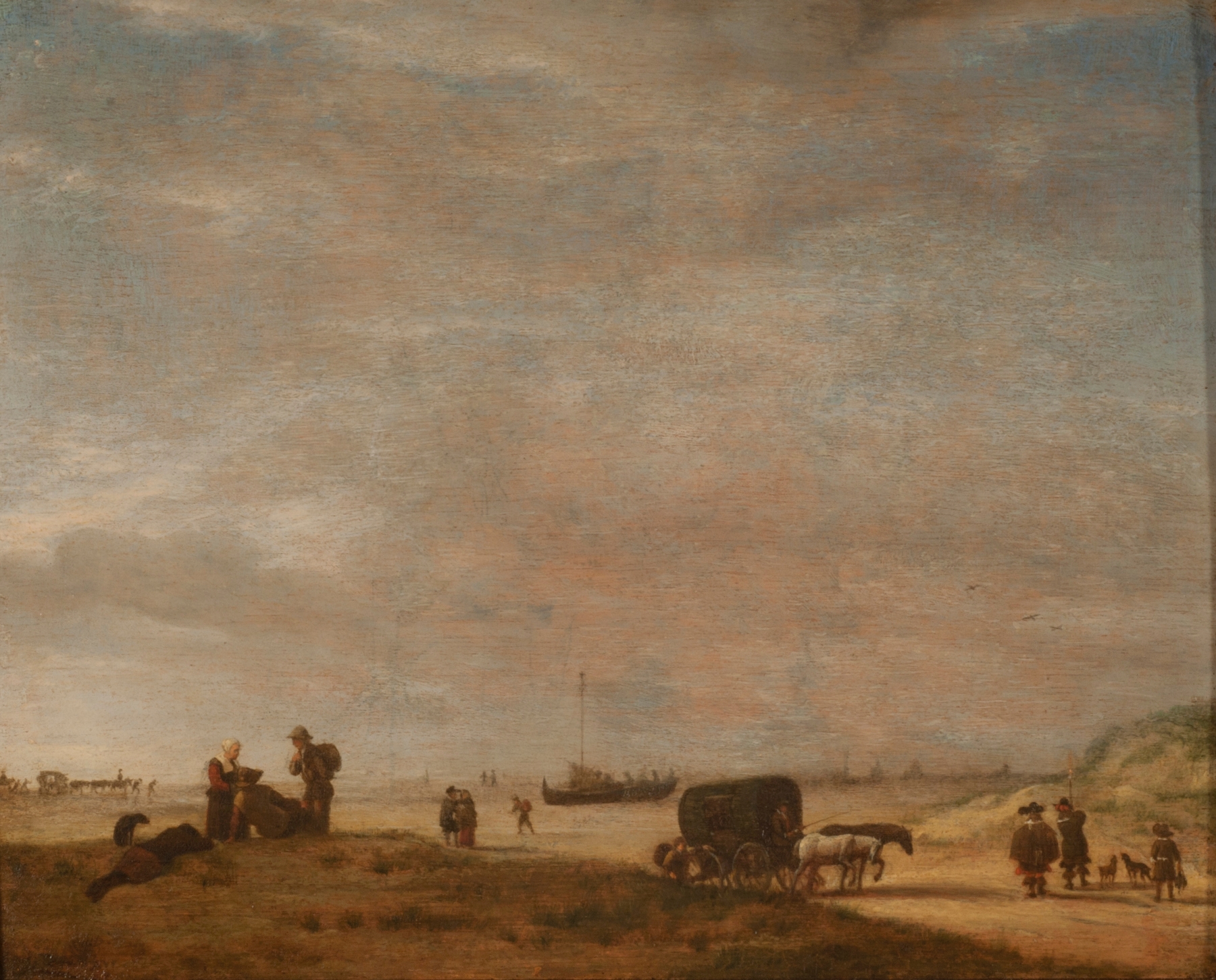
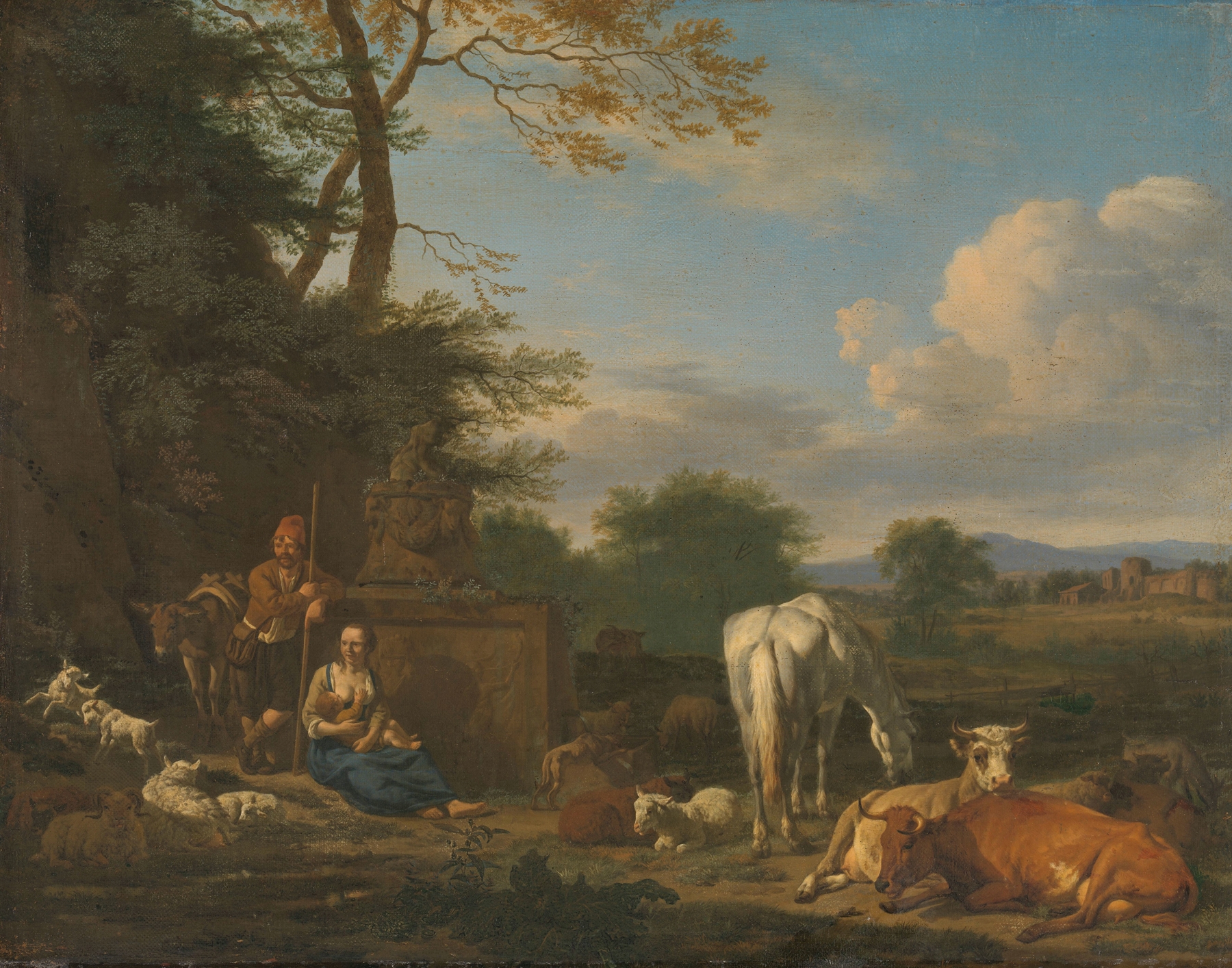
Where does light end, and longing begin? In the serene embrace of nature, we find a landscape that whispers secrets of solitude and stillness. Look to the left at the gentle undulation of hills, their soft greens and browns cradling the tranquil sheep that dot the scene. The shepherd, tucked beneath the shade of a tree, seems to blend into the earth itself, his slumbering figure a testament to contentment. Notice how the light pools around him, illuminating the woolly coats of the sheep while casting elongated shadows that stretch like the dreams of the man at rest. Each brushstroke reveals a deliberate harmony between nature and humanity, a balance that invites contemplation. Within this peaceful tableau lies a subtle tension between wakefulness and dreams, presence and absence. The sleeping figure, though at peace, evokes a sense of yearning for what lies beyond the horizon—perhaps a life unencumbered by toil. The sheep, symbols of innocence and domestication, wander freely, while the shepherd’s repose suggests a longing for simpler days, where the world outside is but a distant echo. This contrast highlights the interplay of solitude and connection, urging viewers to reflect on their own desires for escape and peace. Adriaen van de Velde created *Landscape with Sheep and a Sleeping Shepherd* in 1657 while residing in Amsterdam. At this time, the Dutch Golden Age was flourishing, marked by an emphasis on realism and the exploration of light and color in landscape painting. Velde was deeply influenced by the works of his contemporaries, yet he carved his own niche by capturing the tender relationship between man and nature, revealing the emotional undercurrents that lie within quiet moments.