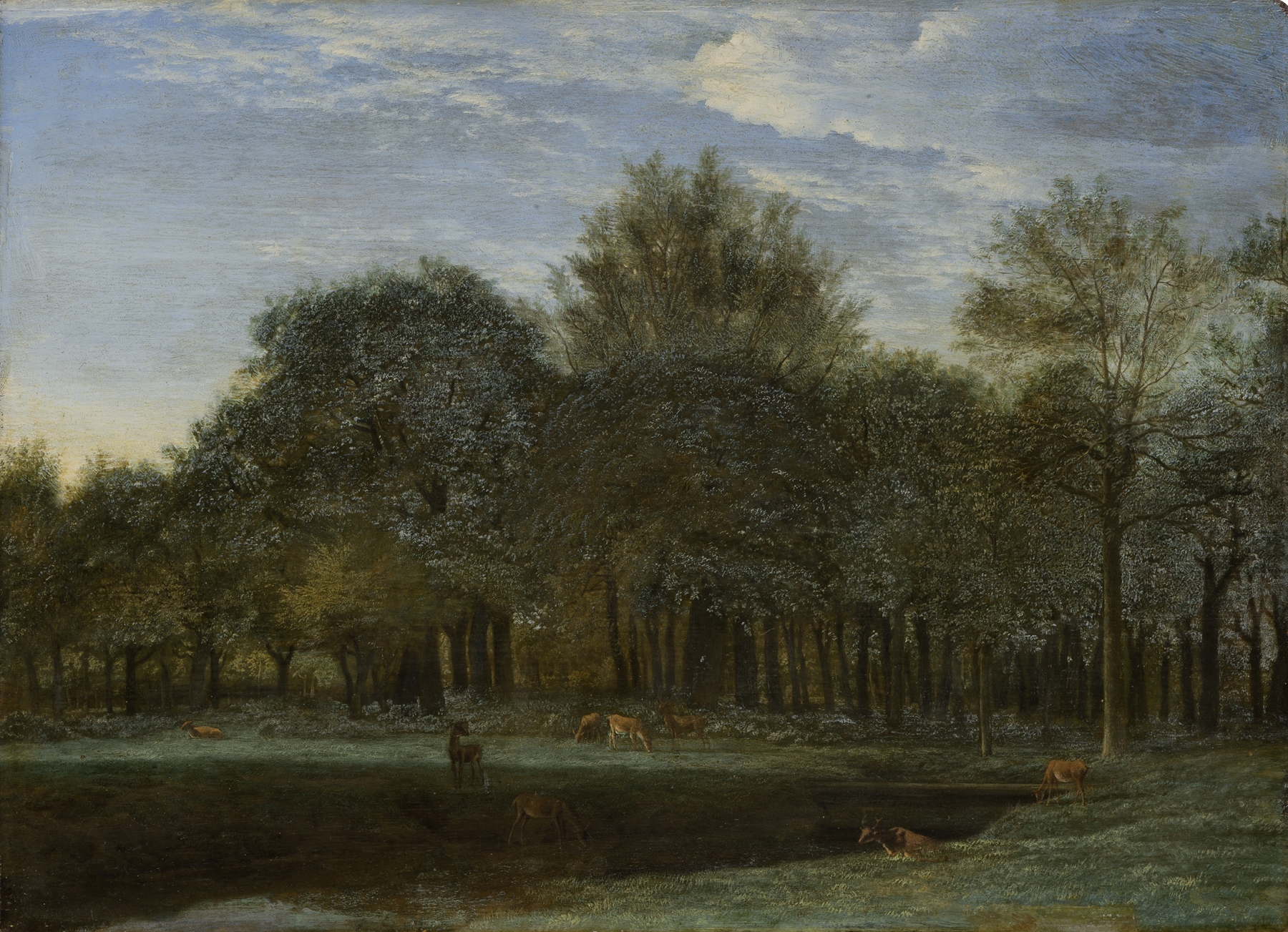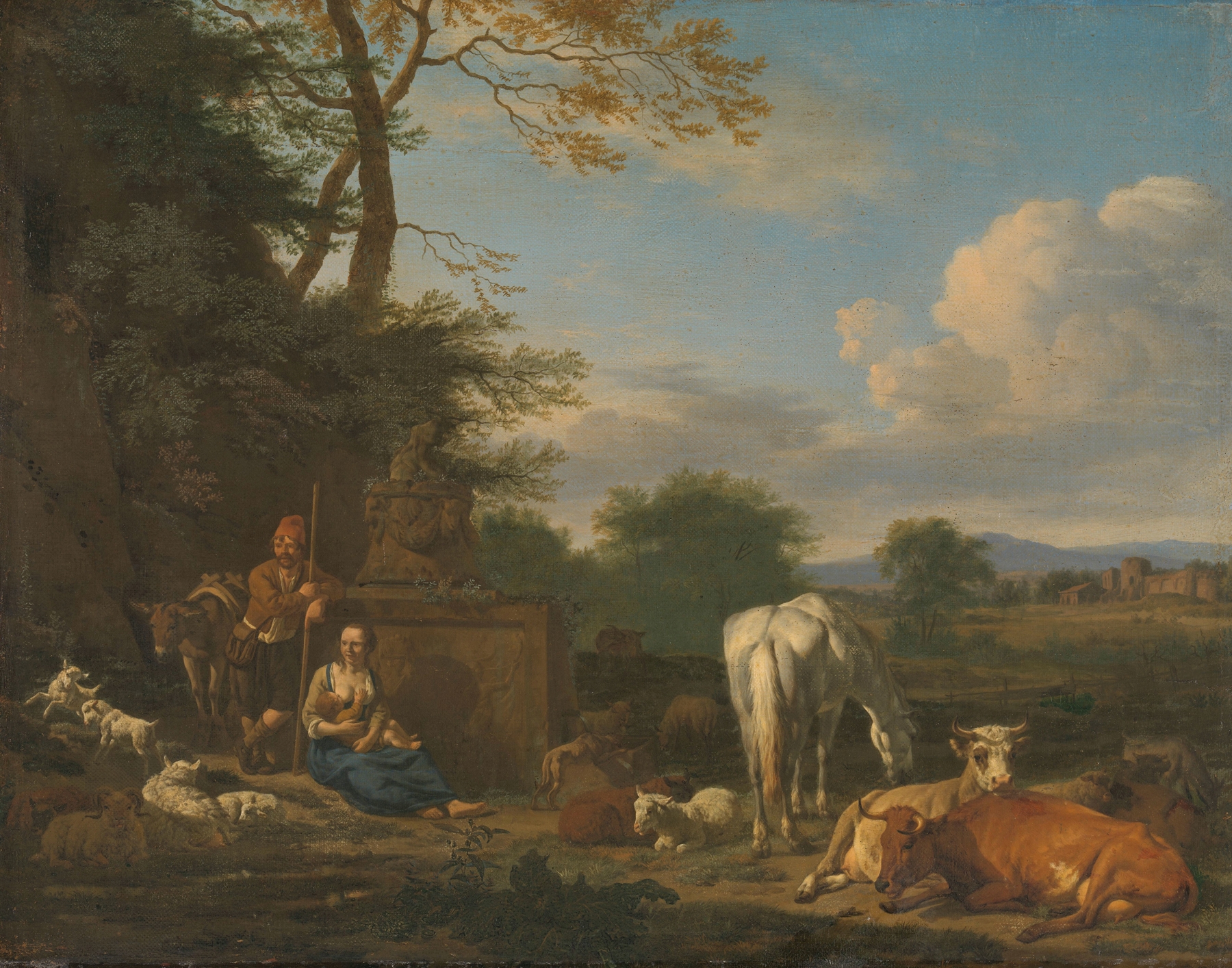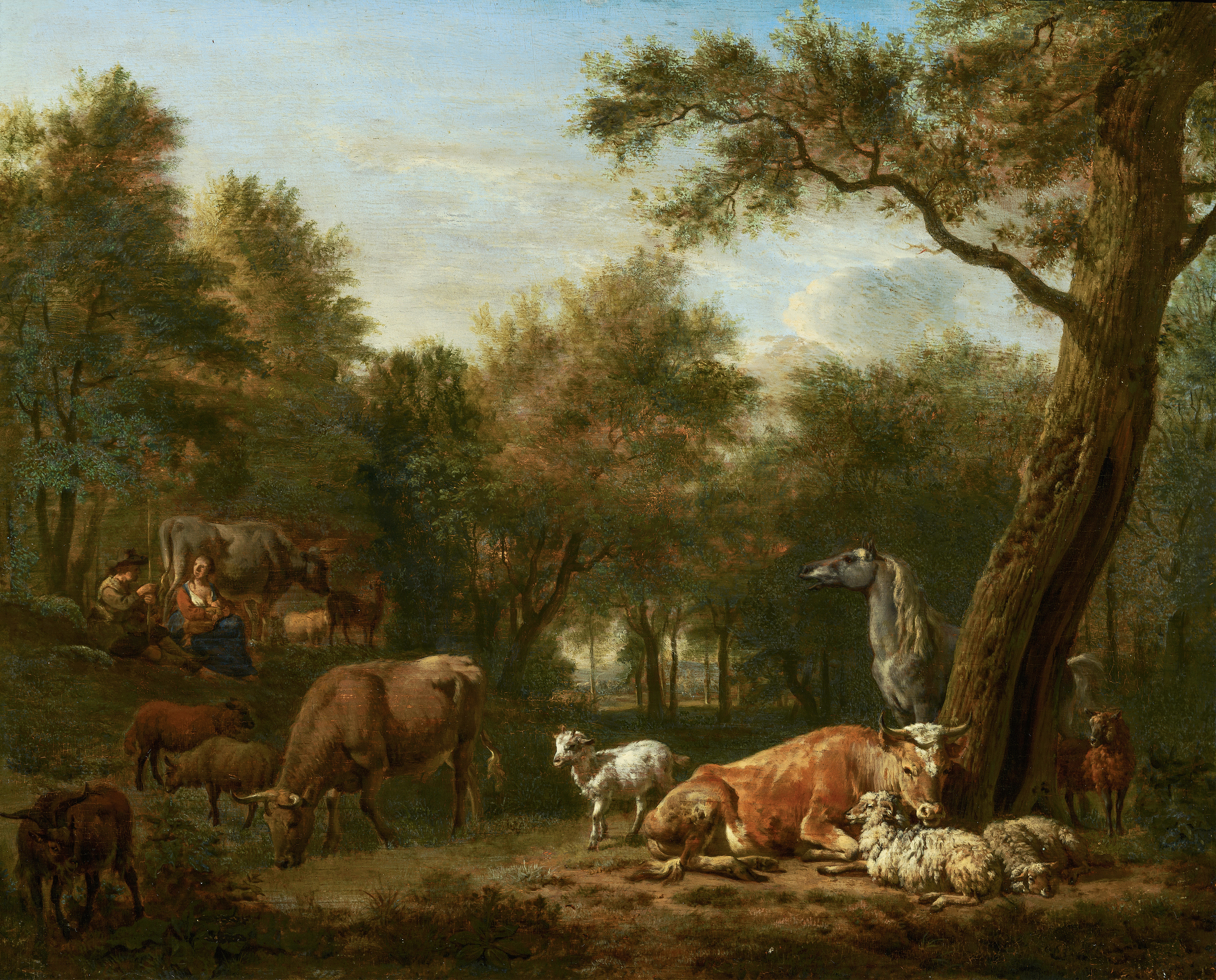
What if beauty was never meant to be finished? In *Wooded Landscape with Cattle*, the viewer is drawn into a serene yet haunting expanse of nature, where emptiness whispers alongside the gentle presence of life. Look to the left at the robust trees, their intricate branches reaching out like hands yearning for connection. The sunlight filters through the foliage, bathing the ground in dappled warmth and creating a contrast between light and shadow. Notice the soft hues of green and brown, seamlessly blended, which evoke a sense of tranquility and a careful balance between the pastoral and the wild. The cattle, subtly placed in the mid-ground, appear almost like a fleeting thought, grounding the scene while inviting contemplation. Amidst the idyllic portrayal of nature, one can sense an underlying tension between the thriving wildlife and the profound solitude of the landscape. The animals, though present, evoke a feeling of isolation, as if they are mere spectators in a grand, unfinished narrative. This emptiness is accentuated by the expansive sky overhead, which, while beautiful, feels limitless and profoundly empty, suggesting a universe beyond comprehension. Here, the absence of human presence invites the viewer to ponder their own place within nature's grandeur. In 1663, Adriaen van de Velde crafted this masterpiece during a period marked by a burgeoning interest in landscape painting in the Dutch Golden Age. At that time, he was immersed in the rich traditions of his predecessors while also exploring his unique vision of nature's tranquility. The emergence of realism in art was shaping his techniques, allowing him to marry meticulous detail with an intimate portrayal of the pastoral life around him, capturing both beauty and the quietude of existence.