A Marsh in a Forest at Dusk — History & Analysis
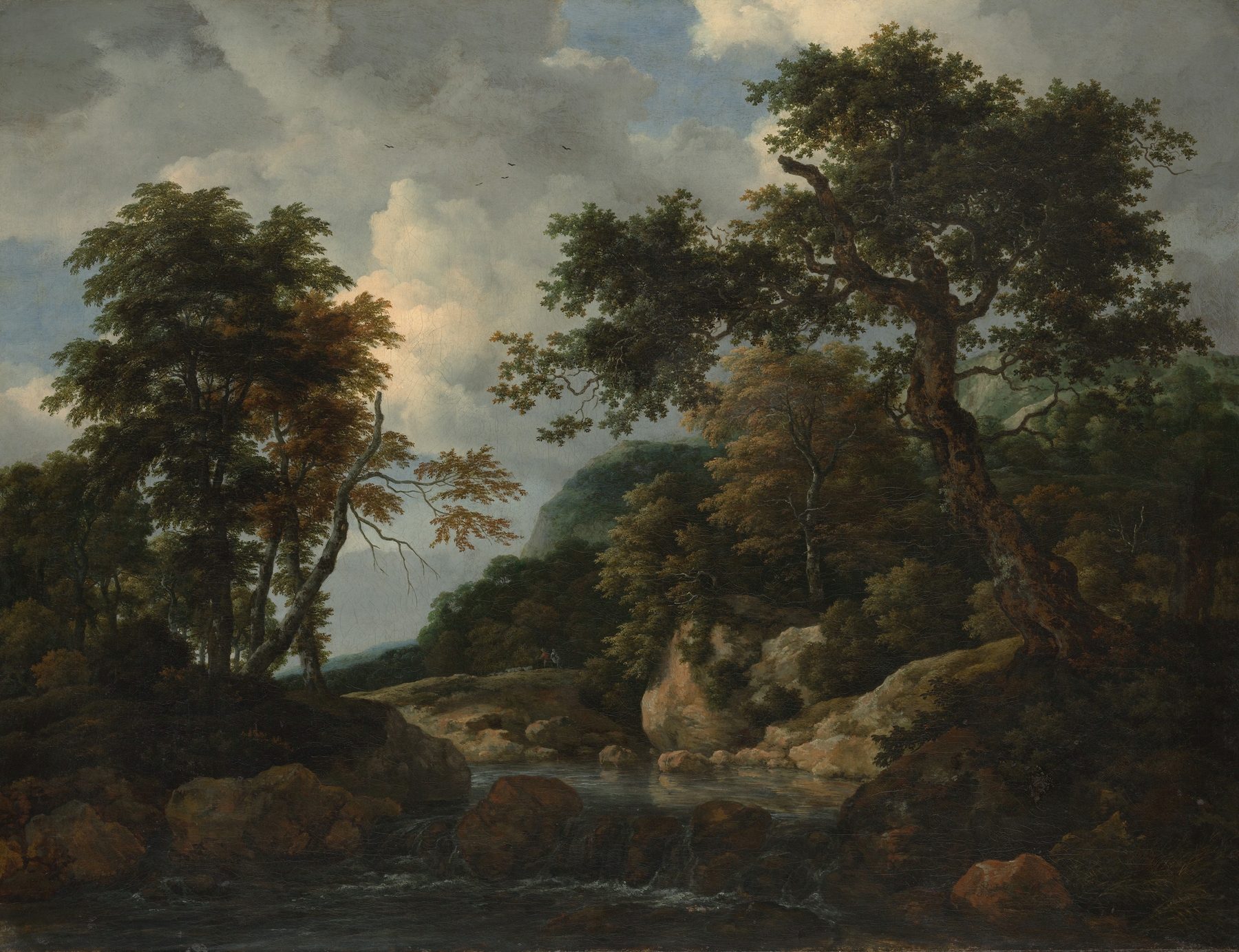
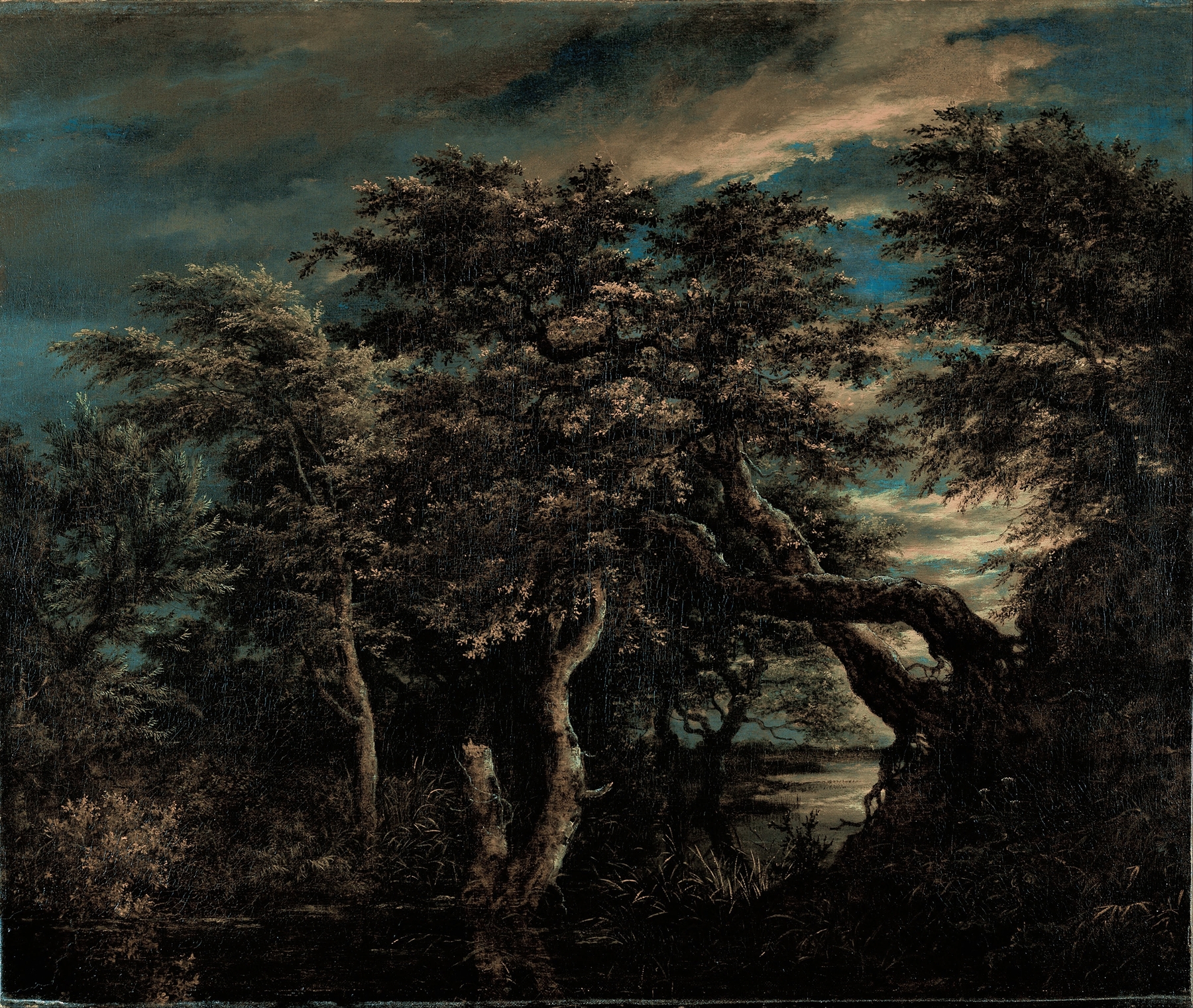
“Every silence here is a confession.” In the stillness of twilight, nature speaks to the heart of loss, evoking a bittersweet resonance that lingers long after one has looked away. Focus first on the marsh, a mirror to the waning light, reflecting the deep blues and grays of a somber sky. The gentle tranquility of the water contrasts sharply with the encroaching darkness of the looming trees that frame the scene, their jagged silhouettes suggesting both protection and isolation. Notice how Ruisdael employs delicate brushwork to capture the texture of the foliage, each stroke imbued with a life that is both vibrant and fading, echoing the transience of the moment.
Deeper meanings unfurl like the leaves of the trees themselves. The marsh serves as a poignant metaphor for stillness and introspection, inviting the viewer to ponder what is unseen beneath the surface. The interplay of light and shadow hints at the passage of time; dusk symbolizes the end of day, reflecting not just a natural cycle but a metaphor for the impermanence of existence and the inevitable sorrow that accompanies change. Each element in this scene, from the fragile reeds to the distant horizon, encapsulates a story of loss, memory, and the beauty inherent in absence.
Created in 1660, this work emerged during a period of profound change in the Netherlands, where the Golden Age of painting was reaching its zenith. Jacob van Ruisdael was engrossed in capturing the rich textures of nature while grappling with the nuances of human emotion. This painting exemplifies his mastery in landscape art and reflects the growing tension between the beauty of nature and the melancholia of human experience during a time of both artistic flourishing and societal transformation.