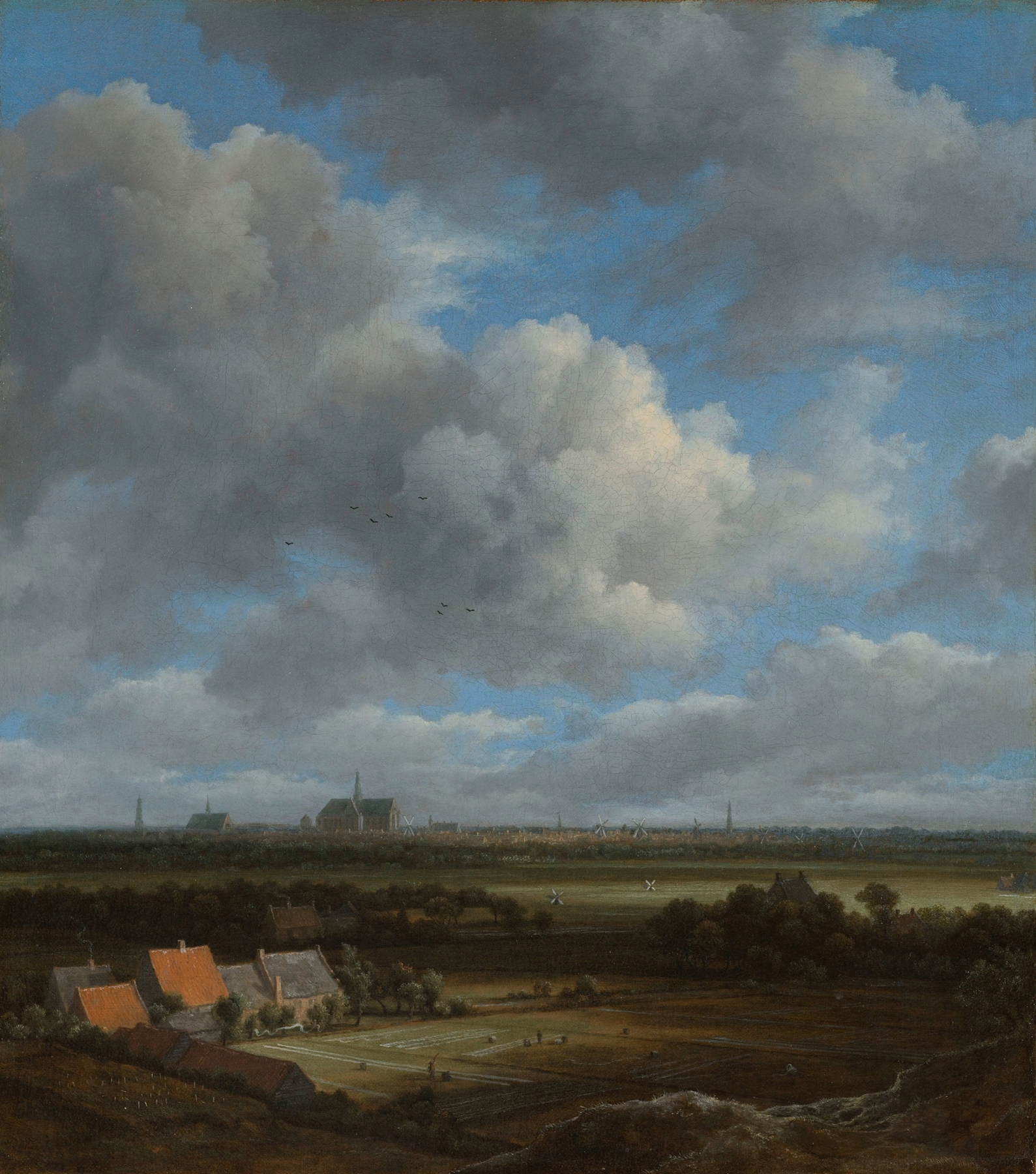
View of Haarlem from the Northwest, with the Bleaching Fields in the Foreground — History & Analysis
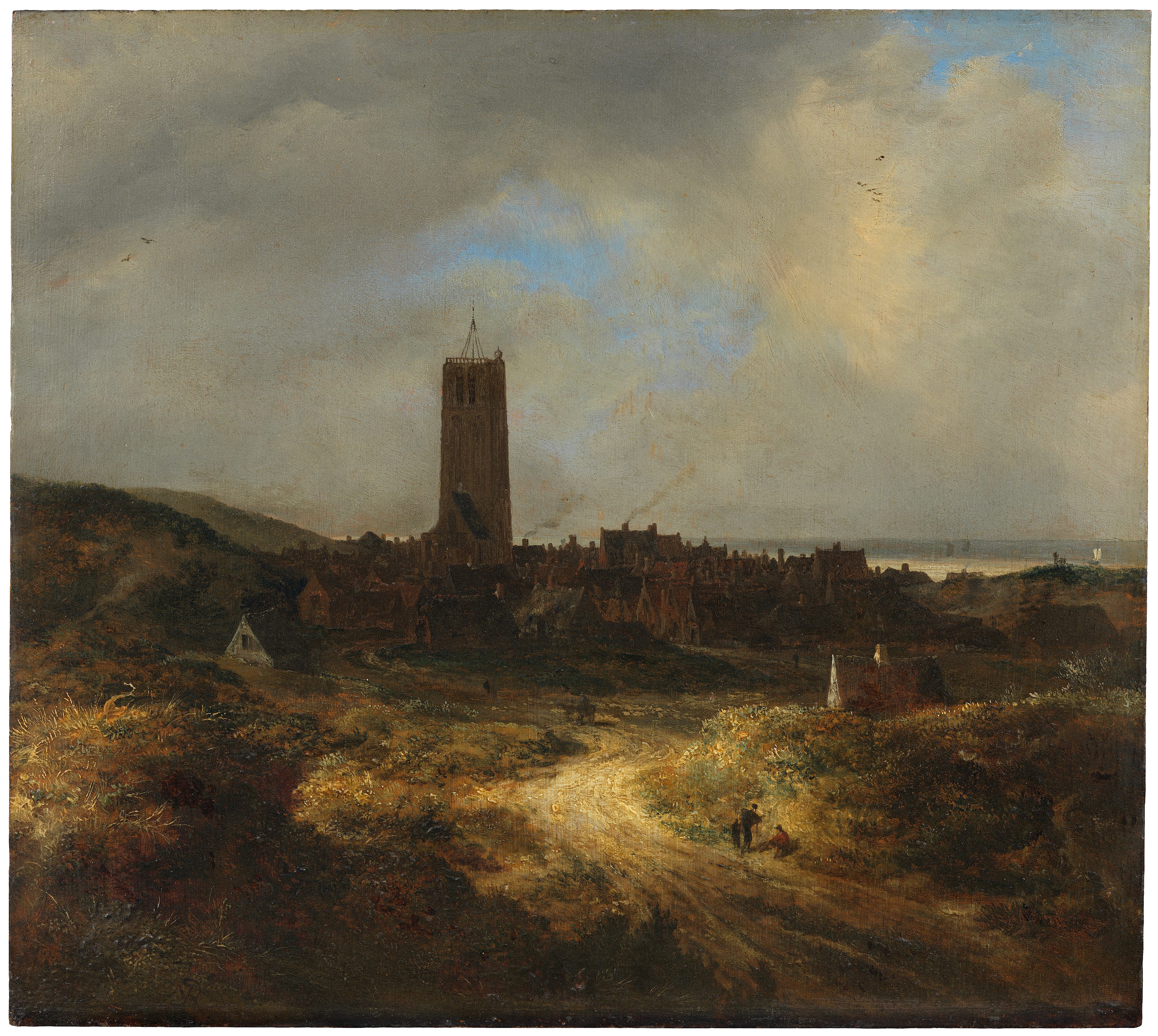
“Under the brush, chaos becomes grace.” How fragile is the line between innocence and reality, and how do landscapes reflect our inner worlds? Begin by directing your gaze to the vibrant foreground, where the bleaching fields stir with hints of white fabric unfurling like whispers on the wind. The meticulous detail invites you closer, revealing the interplay of light and shadow that dances across the landscape. Move your focus to the distant cityscape nestled against a vast sky, where individual structures seem to breathe within the brushstrokes, the clouds above quietly framing the serenity below.
The palette harmonizes earthy tones with bursts of azure, infusing the scene with a sense of calm yet palpable anticipation. Beneath this tranquil exterior lies a contrast that speaks volumes. The bleaching fields, symbols of labor and transformation, suggest the purity of innocence, but they also hint at the harsh realities of life’s demands. Meanwhile, the skyline of Haarlem, with its steeples and chimneys, evokes both human achievement and the encroaching complexities of urban existence.
This duality is further emphasized by the way the open sky looms over the scene, a vast expanse of possibility yet tinged with foreboding, mirroring the tension between aspiration and the weight of daily toil. Jacob van Ruisdael painted this work around 1650-1682 during a time marked by the Dutch Golden Age, an era characterized by burgeoning wealth and artistic innovation. As he created this piece in the Northern Netherlands, Ruisdael engaged with the rapidly evolving landscape of art and society, blending realism with a deep emotional resonance that would later influence generations of landscape artists. This era shaped his vision, allowing him to encapsulate both the beauty and the complexities of human life amidst the natural world.