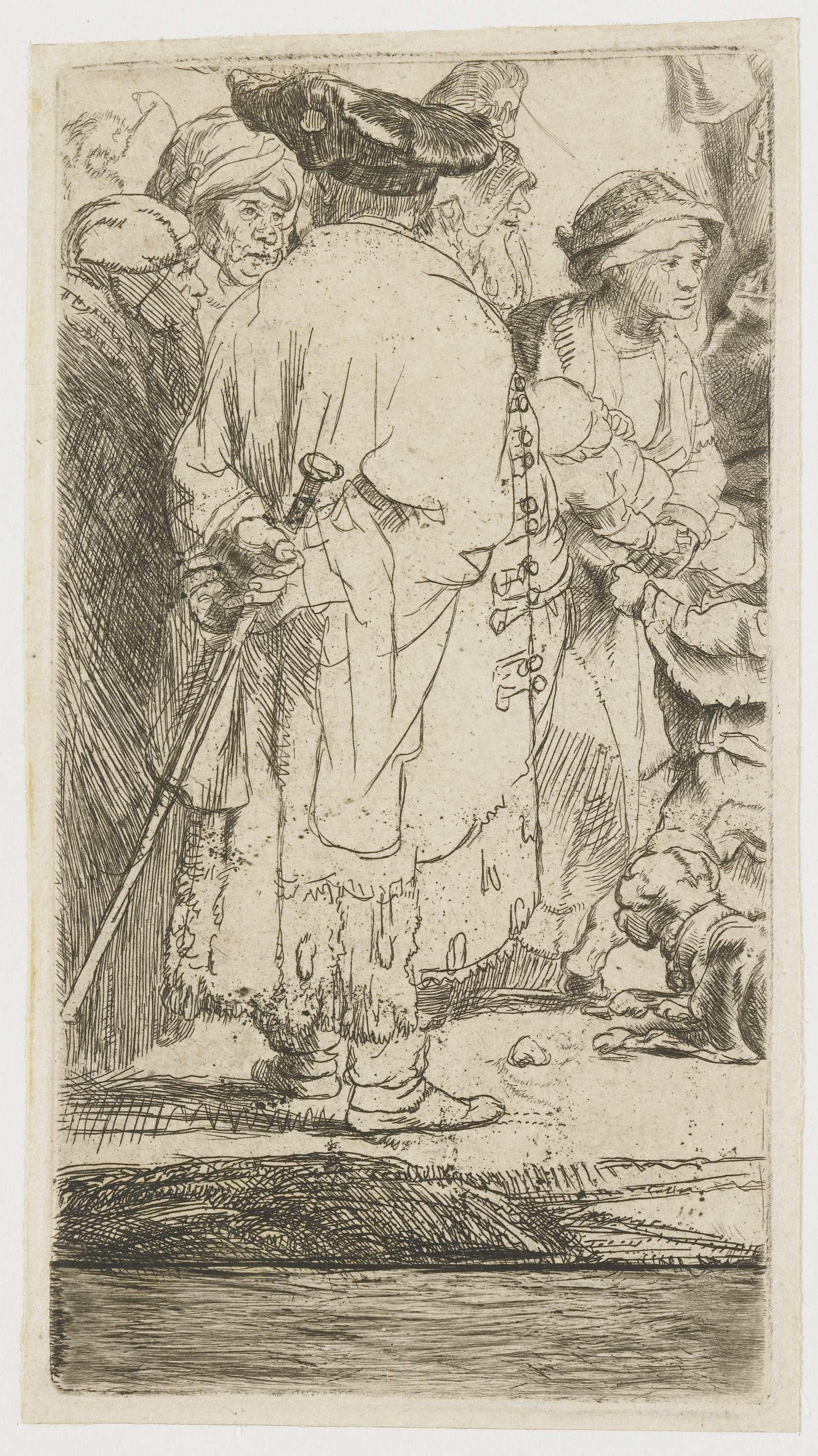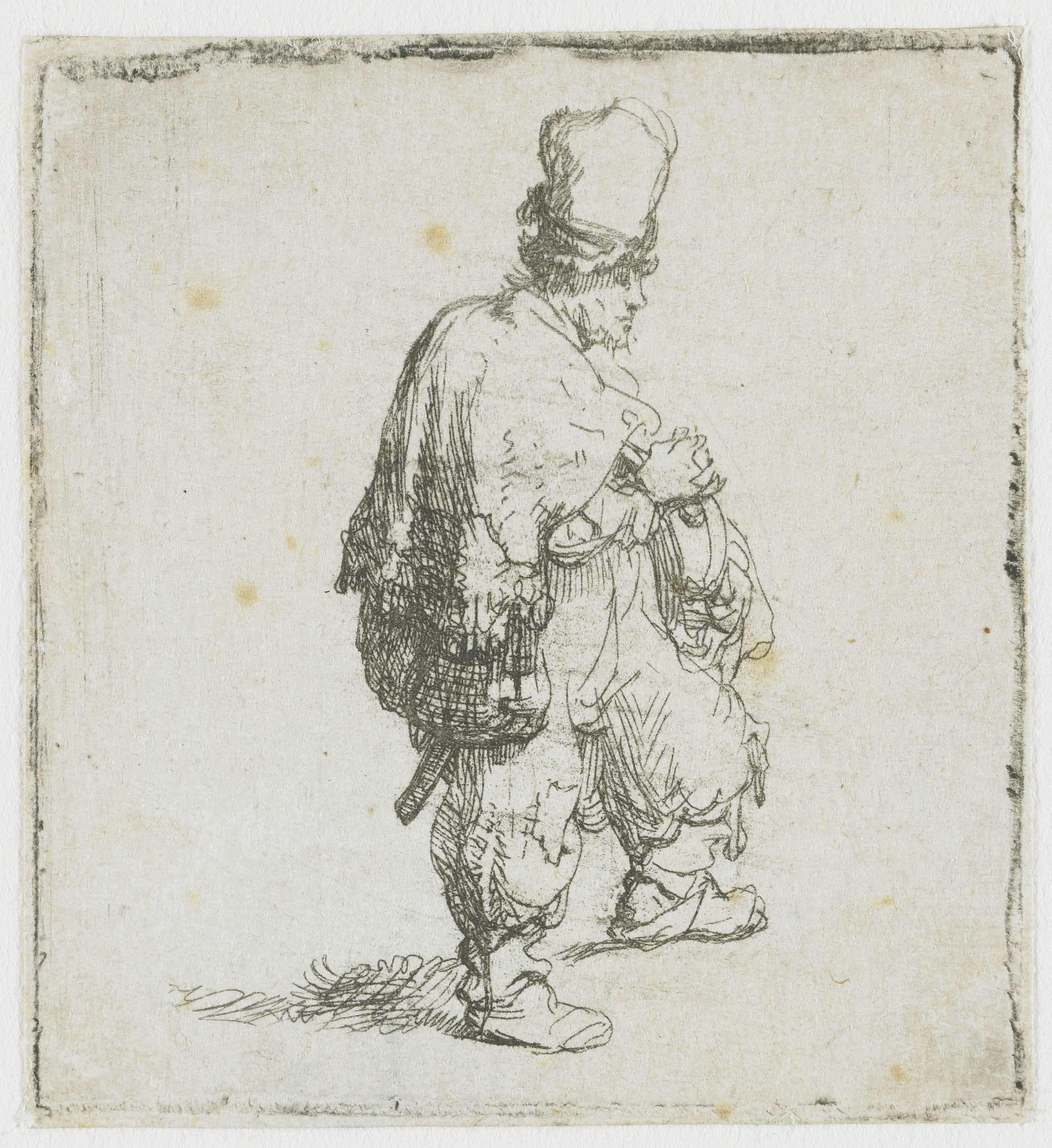
A standing hurdy-gurdy player — History & Analysis
What if silence could speak through light? In A Standing Hurdy-Gurdy Player, the interplay of illumination and shadow offers a haunting resonance, awakening a contemplative stillness that rivals even the most melodious tune. Each brushstroke invites the audience to listen to the unspoken dialogue between the musician and the observer. Look to the left at the way the soft, golden light dances across the hurdy-gurdy, emphasizing its intricate details and inviting you to explore its form. The rich browns and deep blacks envelop the figure, creating a warm yet solemn atmosphere.
The player’s confident posture and intense expression capture a moment of devotion, as if he is both a conduit of music and a solitary figure lost in thought. Notice how the light subtly highlights the folds of his garments, each crease revealing the weight of his existence and the depth of his artistry. Beneath the surface, emotional contrasts emerge: the joy of music lingers in the air, yet there is an undercurrent of loneliness in the player’s gaze. The hurdy-gurdy, an instrument of celebration, juxtaposes the isolation of the artist, a poignant reminder of the solitude that often accompanies the pursuit of creativity.
This duality invites the audience to reflect on their own experiences of connection and separation, echoing the bittersweet nature of existence. Rembrandt painted this work around 1631, during his early career in Leiden, where he was exploring themes of human emotion and realism. At this time, he was honing his distinctive style, drawing inspiration from both the Dutch Golden Age and his interactions with fellow artists. The piece captures a moment of profound reflection in a world increasingly influenced by the complexities of human experience.