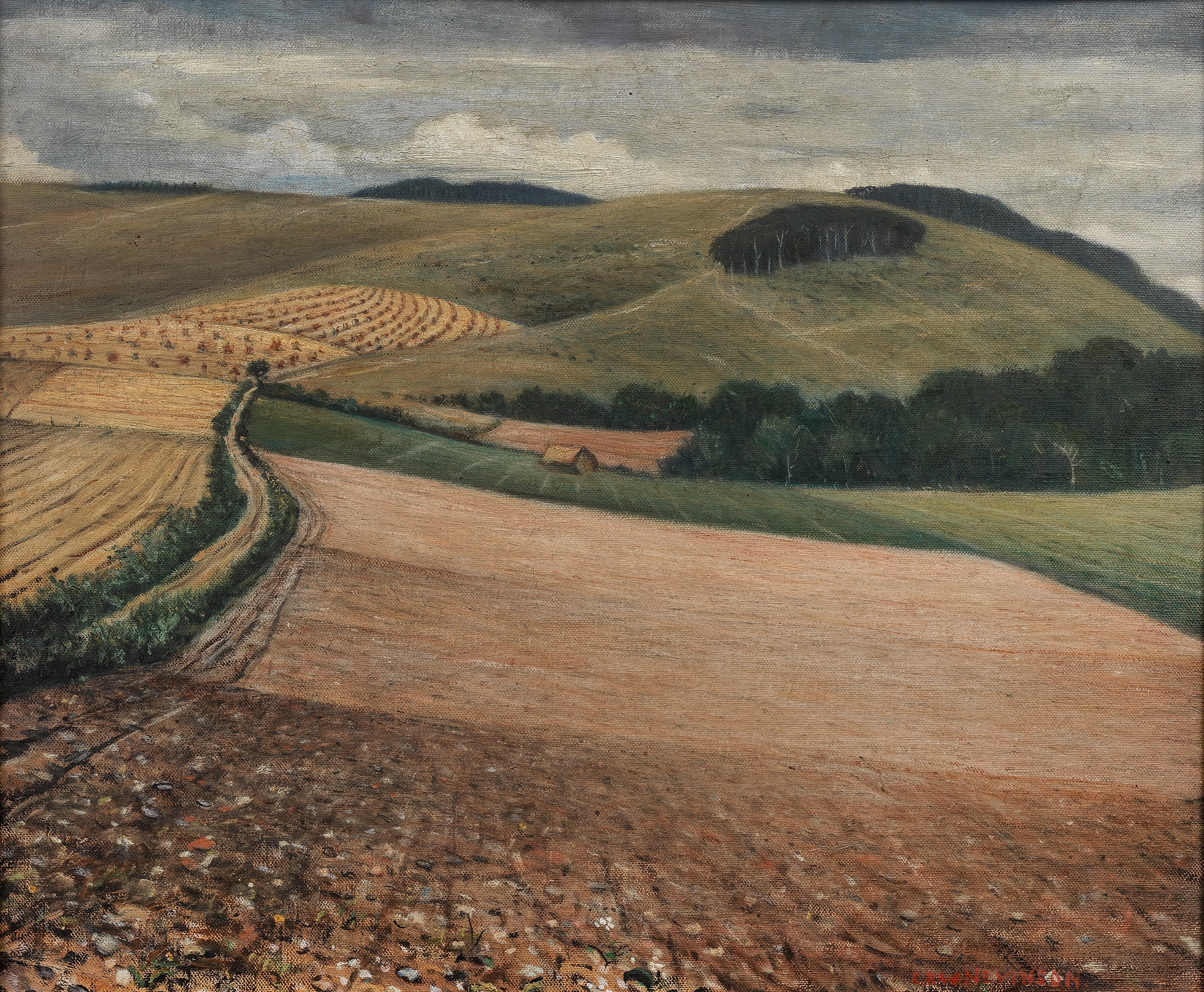
A Thames Landscape — History & Analysis
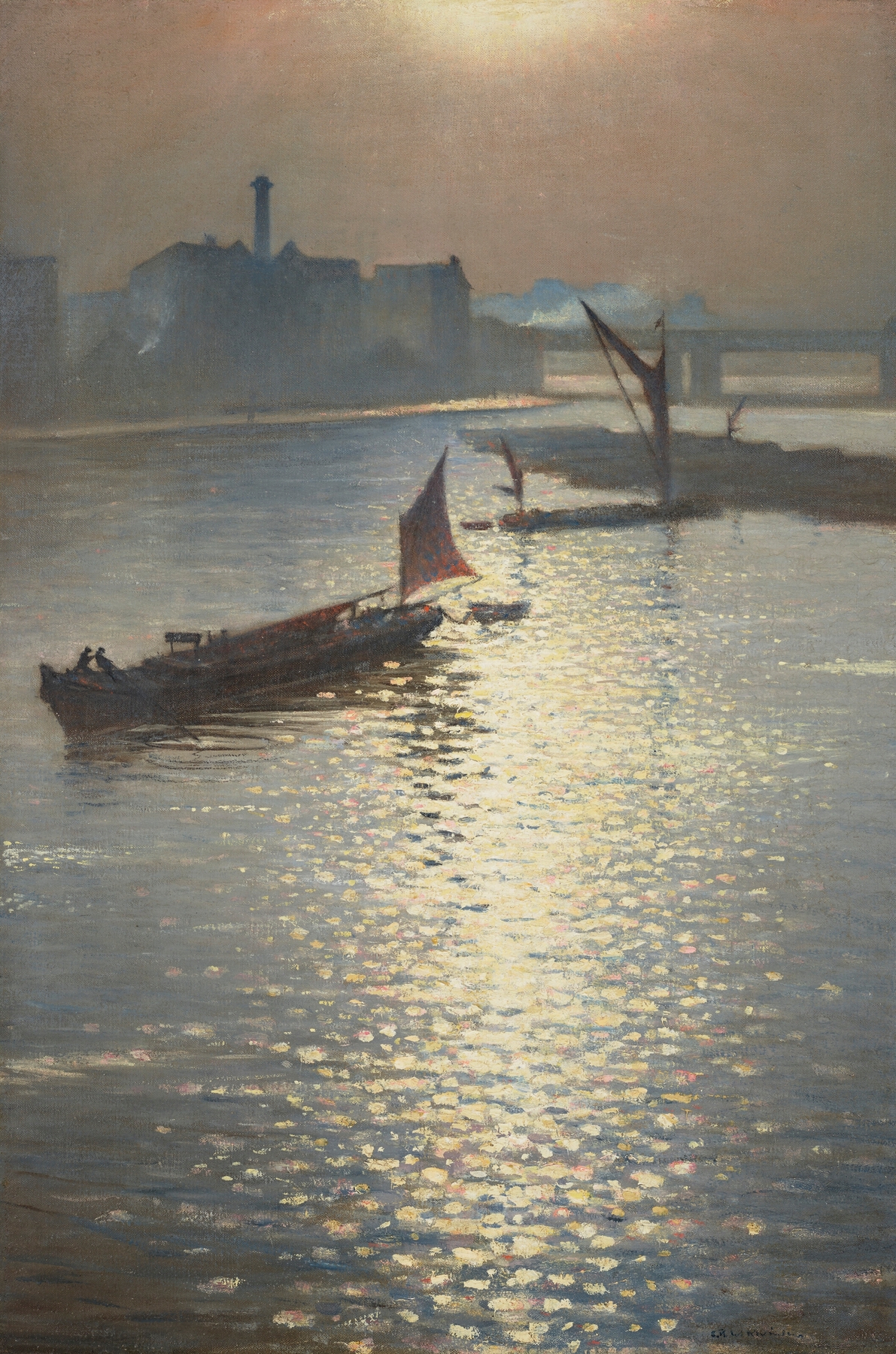
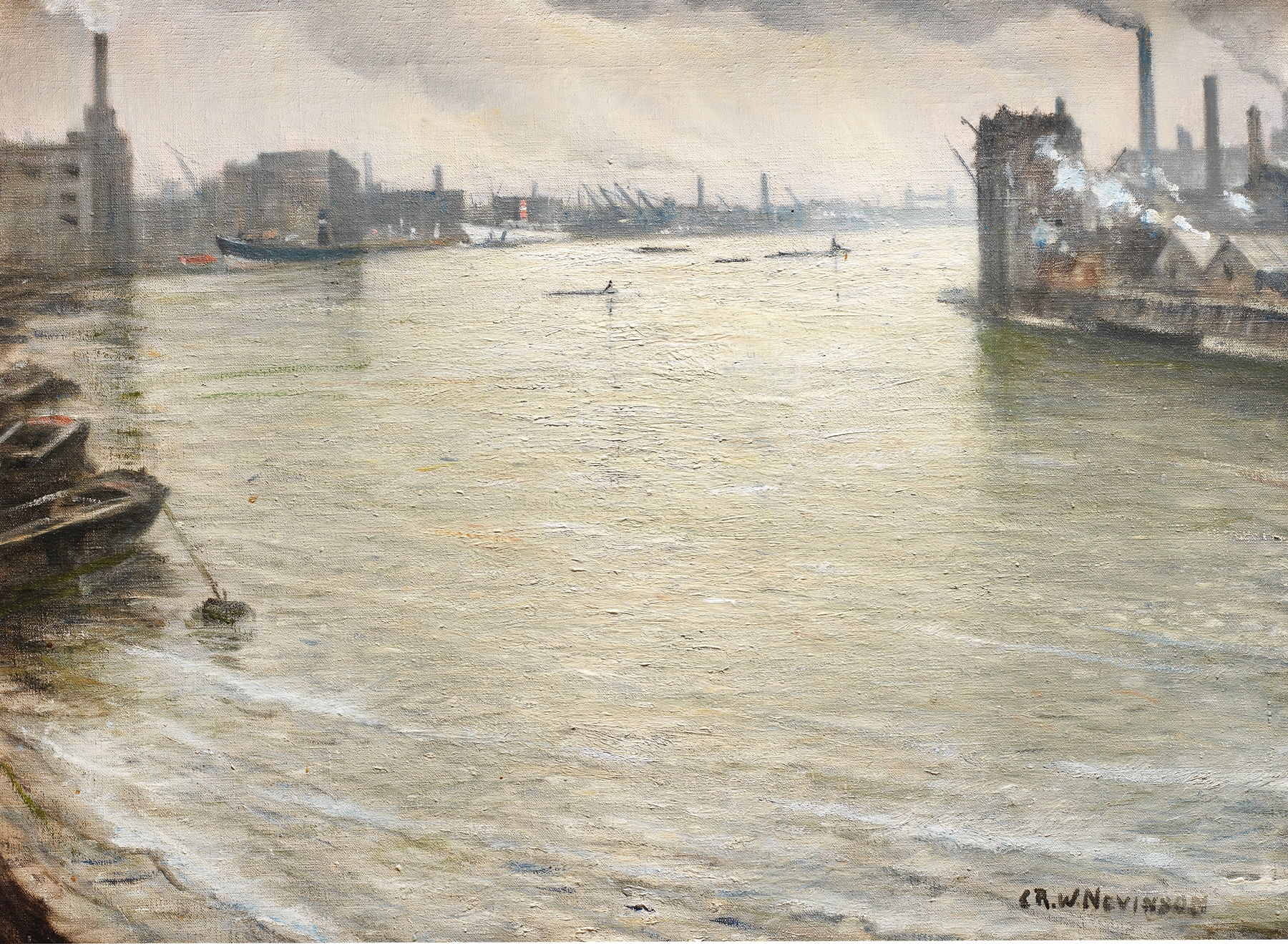
What secret hides in the quiet of the canvas? Beneath the tranquil surface of the river lies an echo of solitude that lingers long after the viewer's gaze has wandered away. Focus on the gentle ripples skimming across the water, where a muted palette of blues and grays sets the tone. The horizon stretches wide, creating a sense of both expanse and confinement. Notice how the mist envelops the distant trees; their ghostly silhouettes blend seamlessly into the sky, as if fading into memory.
The brushstrokes, deliberately loose and expressive, convey both motion and stillness, revealing a landscape caught in a moment between serenity and longing. In this work, emotional tension is palpable, born from the contrasts within. The vastness of the Thames suggests freedom, yet it speaks of isolation, painting a paradox of space filled with silence. Look closely at the lonely boat drifting on the water—its lone occupant resonates with the viewer’s own sentiments of solitude, a reminder of the fragility of human presence amidst nature's grandeur.
The way light is captured, soft yet haunting, amplifies the sense of introspective loneliness that permeates every corner of the scene. At the time this piece was created, Nevinson was deeply influenced by the shifting tides of modernist thought and the aftermath of World War I. Emerging in an era marked by disillusionment, he sought to explore the complexity of human emotion through landscapes. The evolving art world was beginning to challenge traditional forms, and in this nuanced portrayal of the Thames, the artist carved a profound commentary on the human experience in the face of vastness and loneliness.