A view of St Mark’s Square and the Campanile — History & Analysis
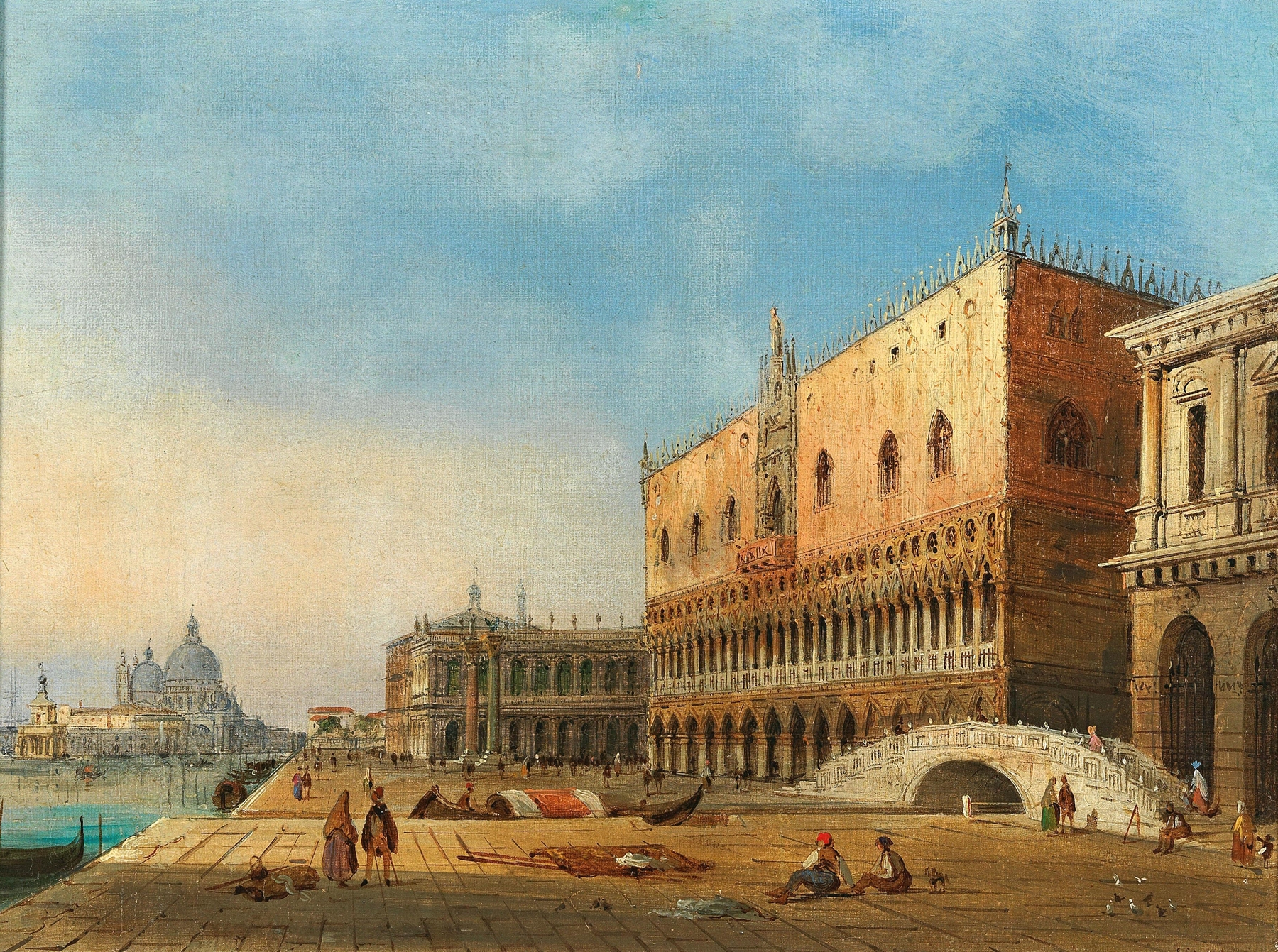
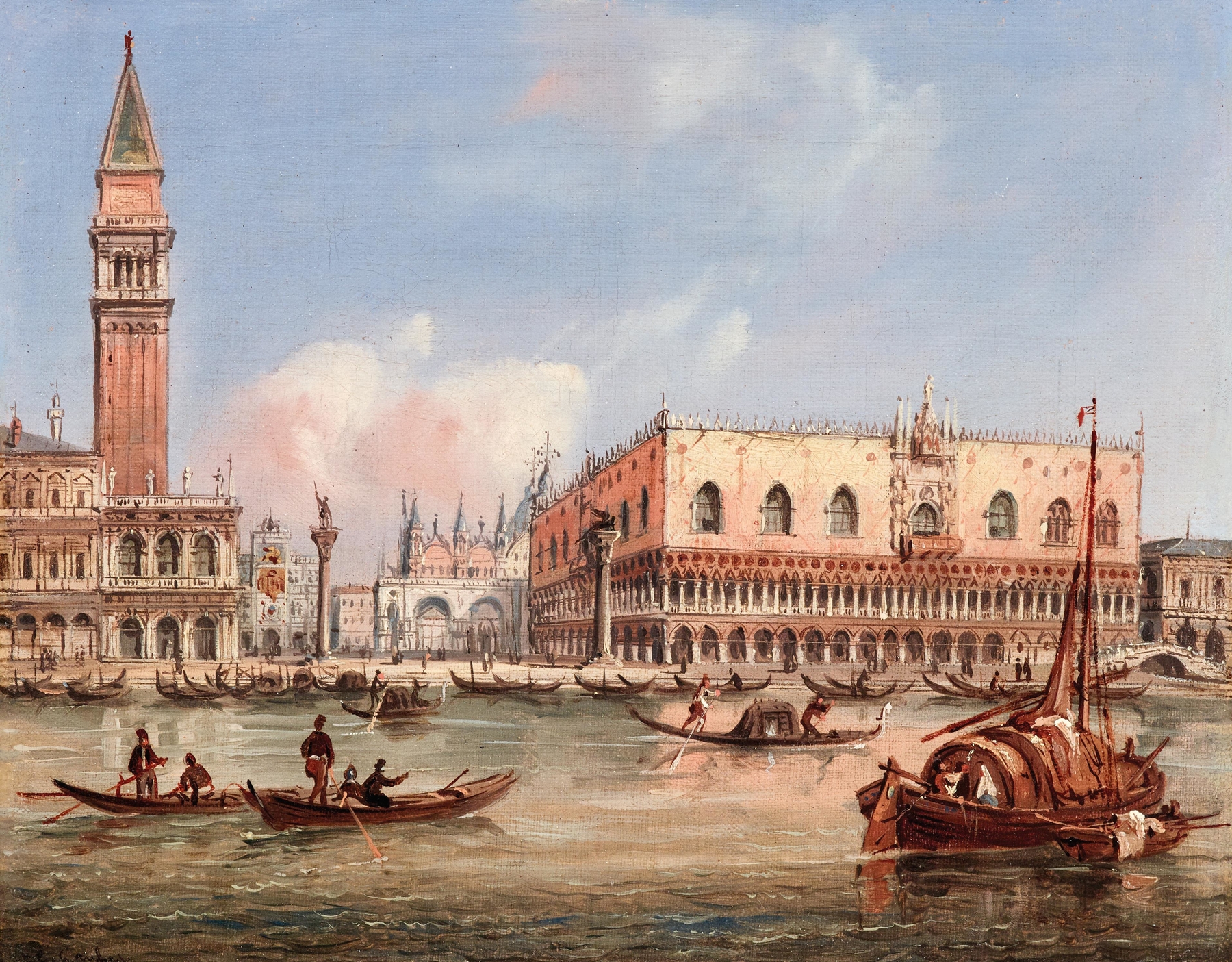
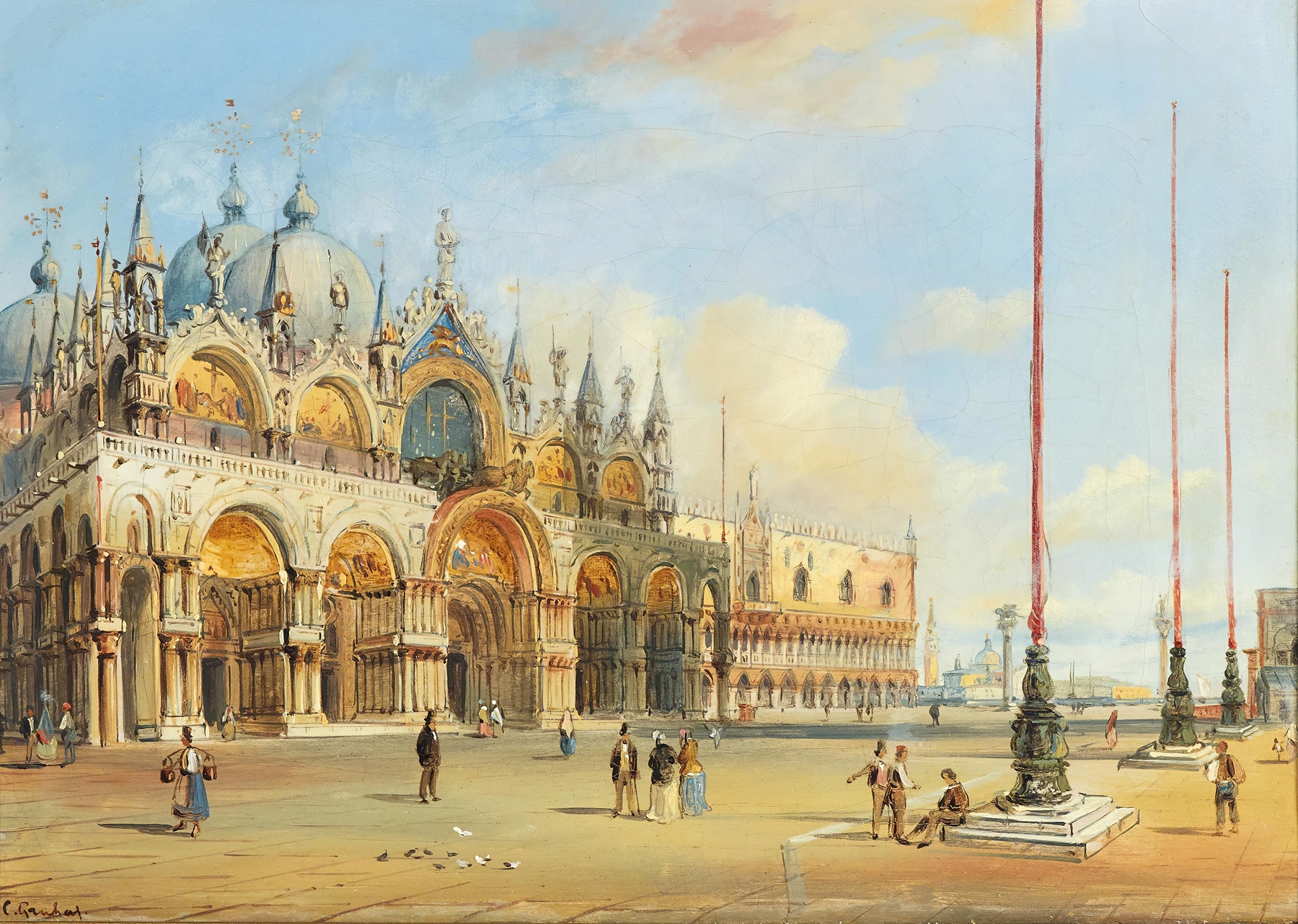
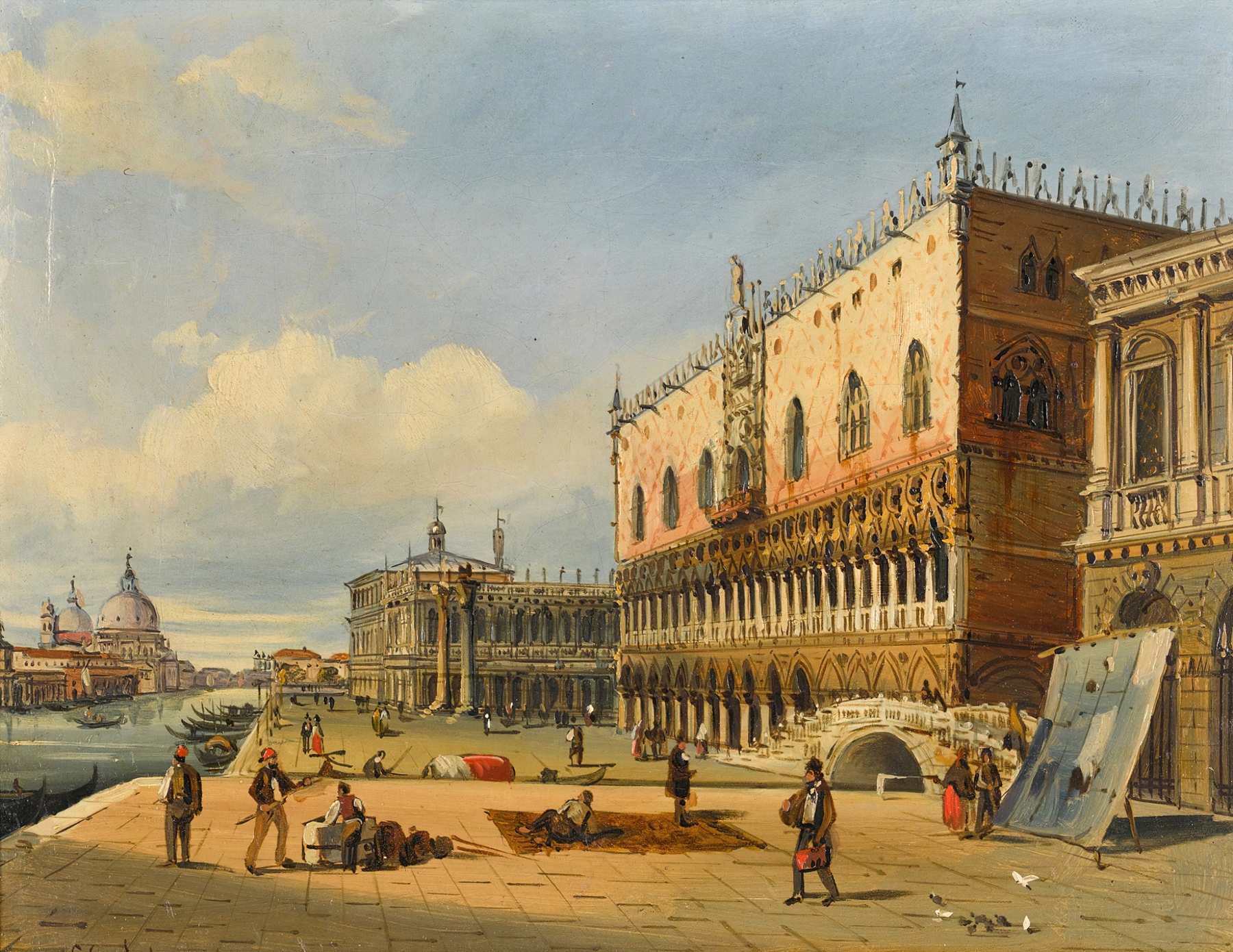
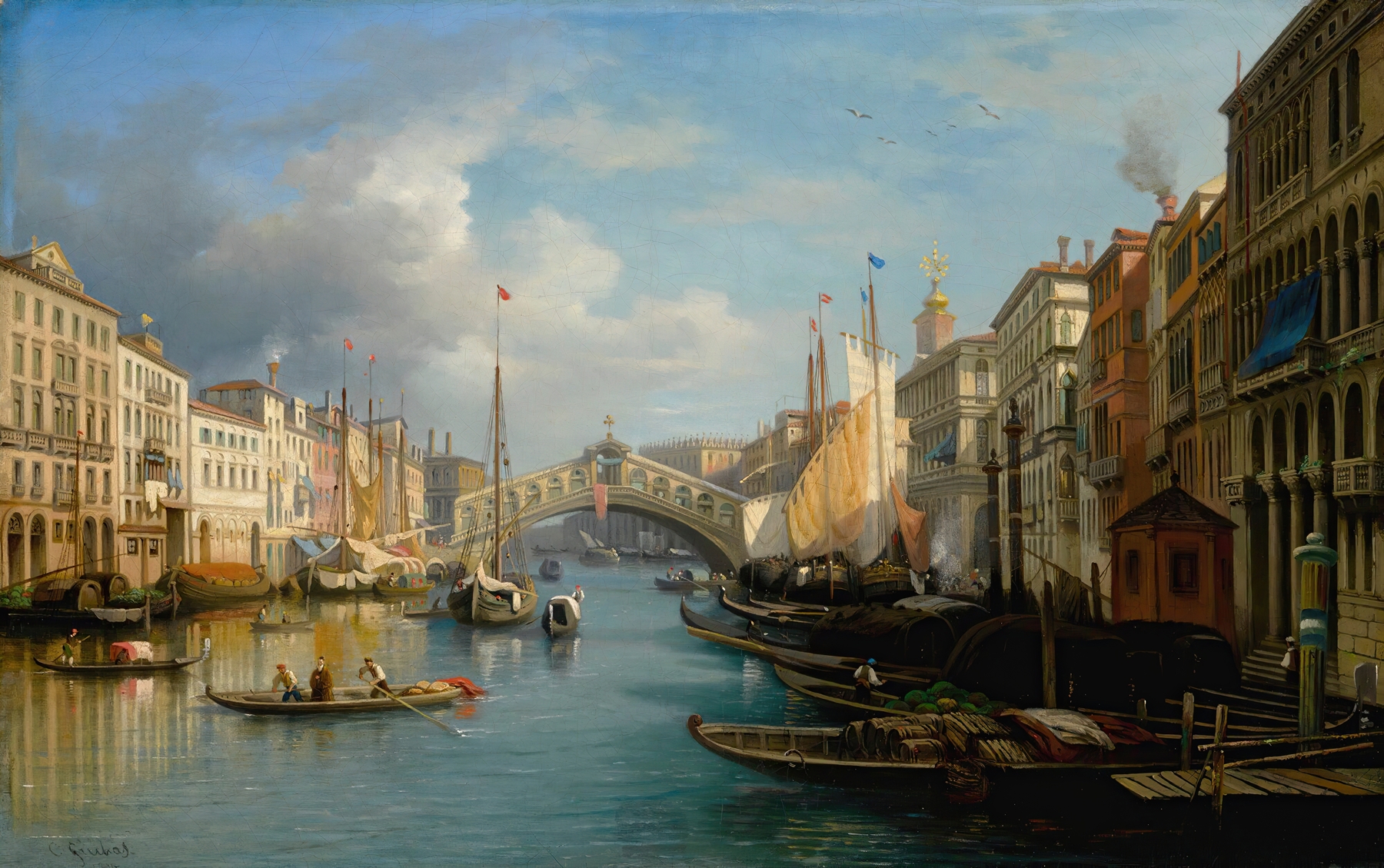
“Every silence here is a confession.” In the stillness of St. Mark’s Square, beneath the shadow of the Campanile, the weight of history lingers palpably, whispering secrets of revolution and resilience. Look to the left, where the grand architecture of the basilica stands in shimmering tones of gold and azure, inviting admiration. The painter's deft brushwork captures the interplay of light and shadow, illuminating intricate details while casting the figures in soft hues that evoke a dreamlike quality.
The cobblestone streets, worn yet steadfast, stretch invitingly towards the viewer, drawing them into the heart of this iconic landscape. Beneath the surface, a tension arises between the serene beauty of the scene and the underlying current of unrest. The absence of bustling crowds hints at a narrative of disruption, as if the square itself holds its breath in anticipation of change. The looming Campanile stands as a silent sentinel, witnessing both joyous gatherings and tumultuous upheavals, embodying the duality of celebration and sorrow that reverberates through time.
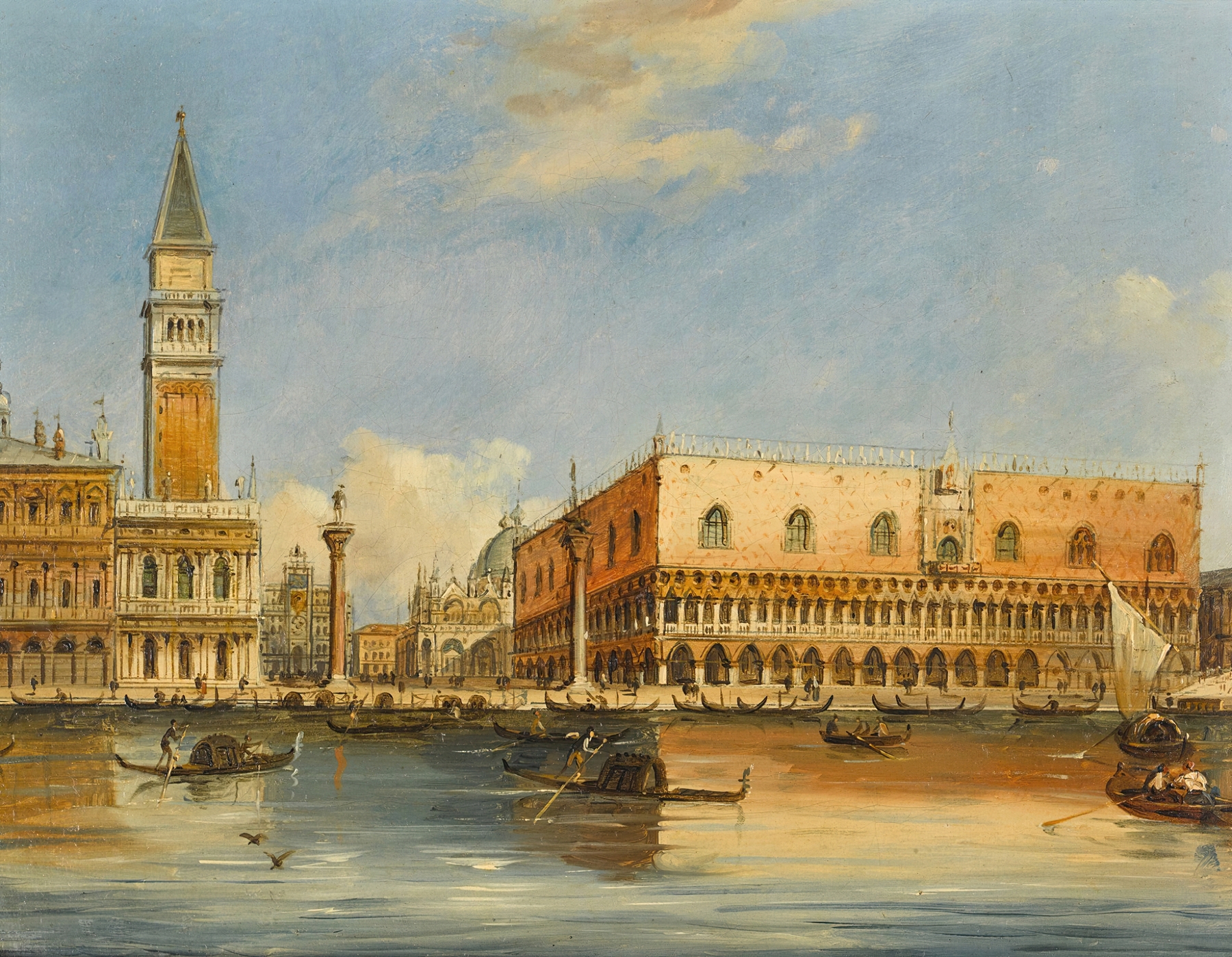
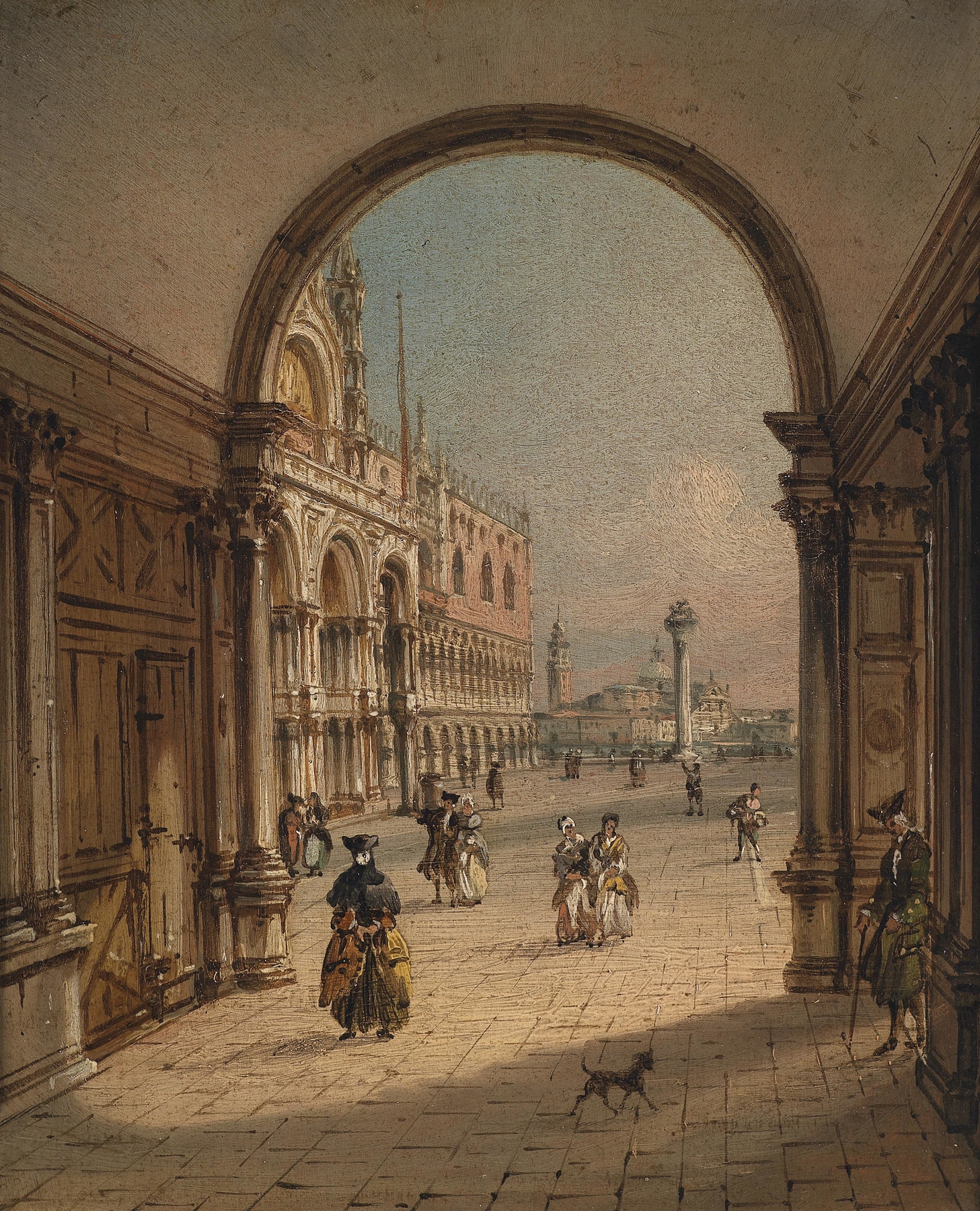
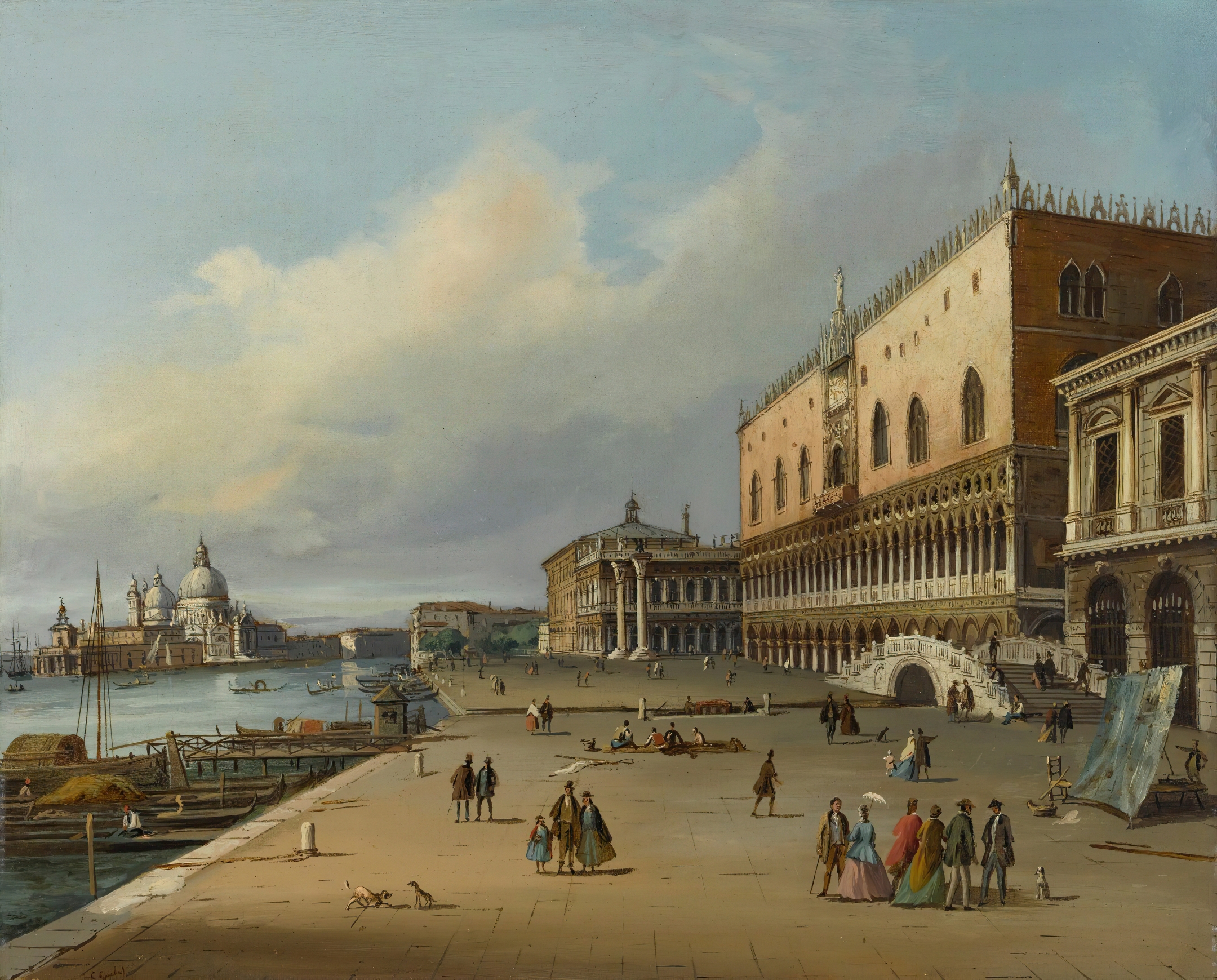
Carlo Grubacs created this work during a period rich with cultural and political shifts in 19th-century Italy. As the nation grappled with the push for unification and independence, artists like him sought to capture the essence of their homeland’s spirit. Painting from his studio in Venice, Grubacs not only preserved the picturesque beauty of St. Mark's Square but also reflected the silent yearnings of a people on the brink of transformation.