Venice, a view of the Grand Canal with Palazzo Cavalli-Franchetti and Palazzo Barbaro — History & Analysis
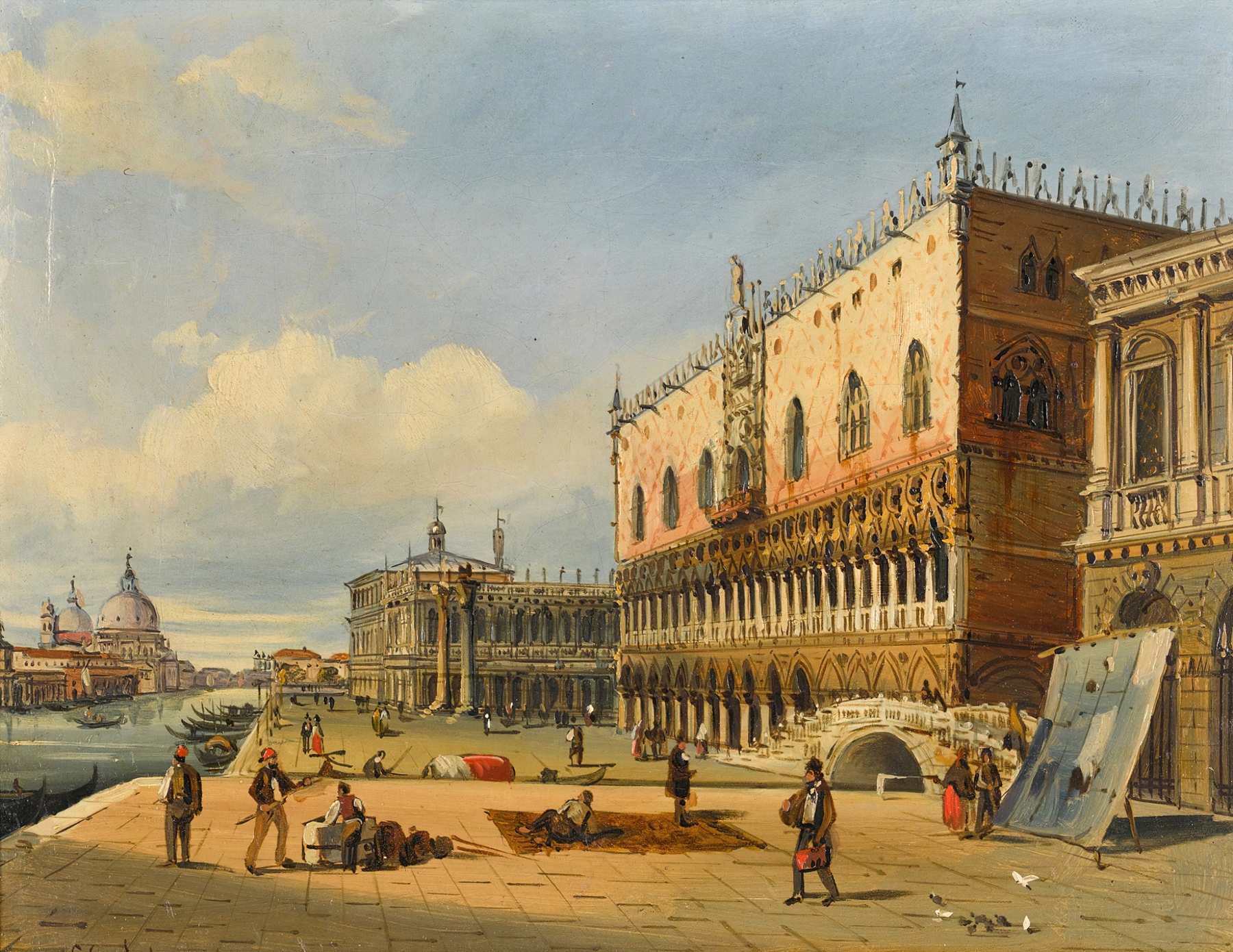
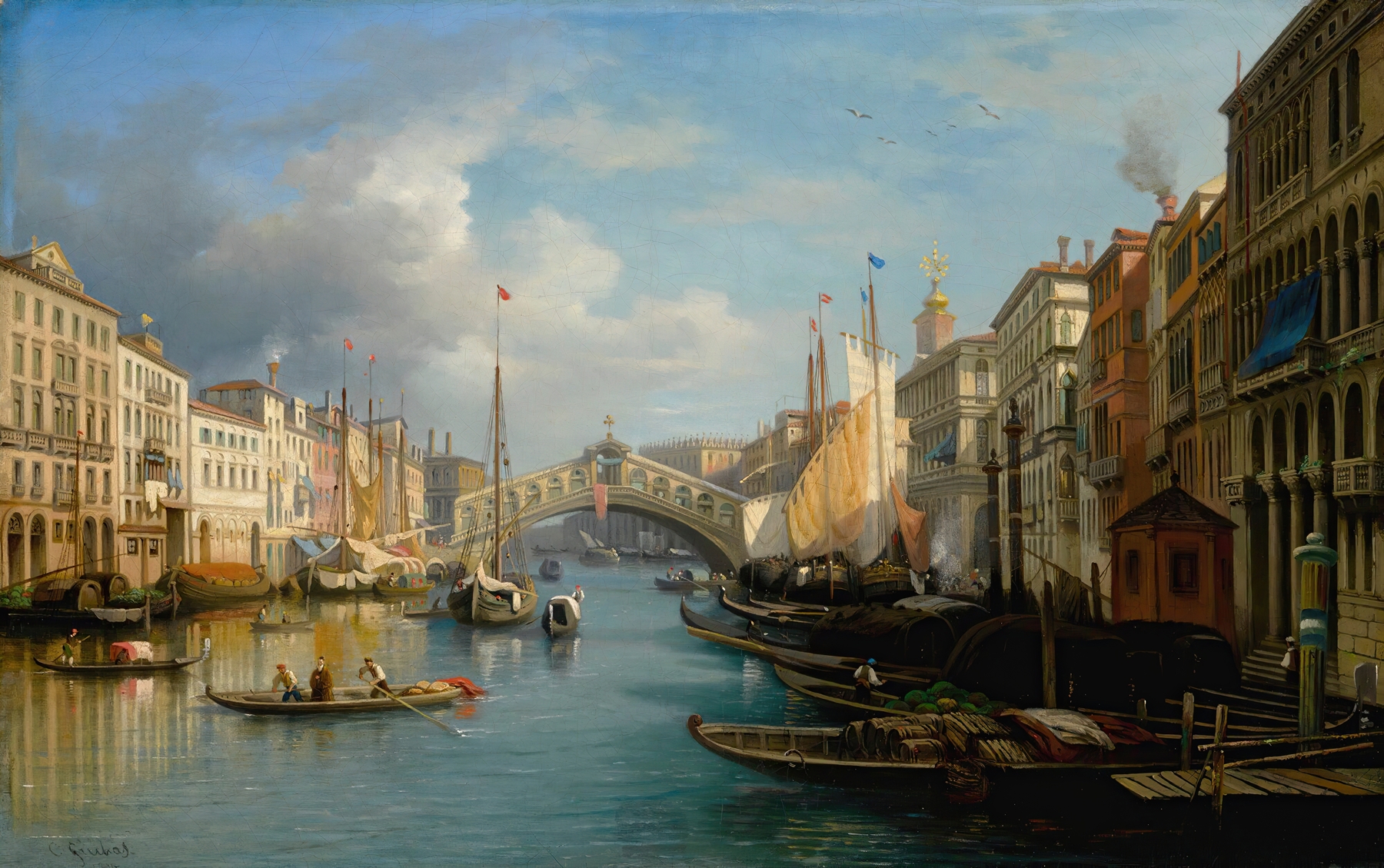
Could beauty survive in a century of chaos? As the Grand Canal flows languidly, its waters shimmer with hues of azure and gold, offering a momentary solace amid the tumult of time. Look to the center of the canvas where the imposing facades of Palazzo Cavalli-Franchetti and Palazzo Barbaro rise majestically, their intricate details captured with a delicate brushstroke that conveys both strength and fragility. Notice how the soft light bathes the structures in a warm glow, accentuating the ornate decorations that speak of Venice's rich history.
The gentle ripples in the canal reflect the buildings, creating a dance of color and form that draws you into the heart of the scene. The juxtaposition of the crumbling architecture against the vibrant water evokes a sense of resilience — a reminder of what once was, and what can still be. Even amidst the wear and tear, there is a palpable hope, as if the city’s spirit refuses to be extinguished. The quiet presence of gondolas, lightly grazing the surface, suggests both movement and stillness, reflecting the ebb and flow of life itself in a city steeped in memory.
During the late 19th century, while Grubacs painted this view, Venice was grappling with the effects of modernity, tourism, and political shifts. This period marked a transition for artists as they sought to capture the essence of the city while responding to the rapidly changing world around them. In this moment, Grubacs melded romantic nostalgia with an enduring celebration of Venice's beauty, inviting viewers to reflect on the fragility and hope that persist through chaos.