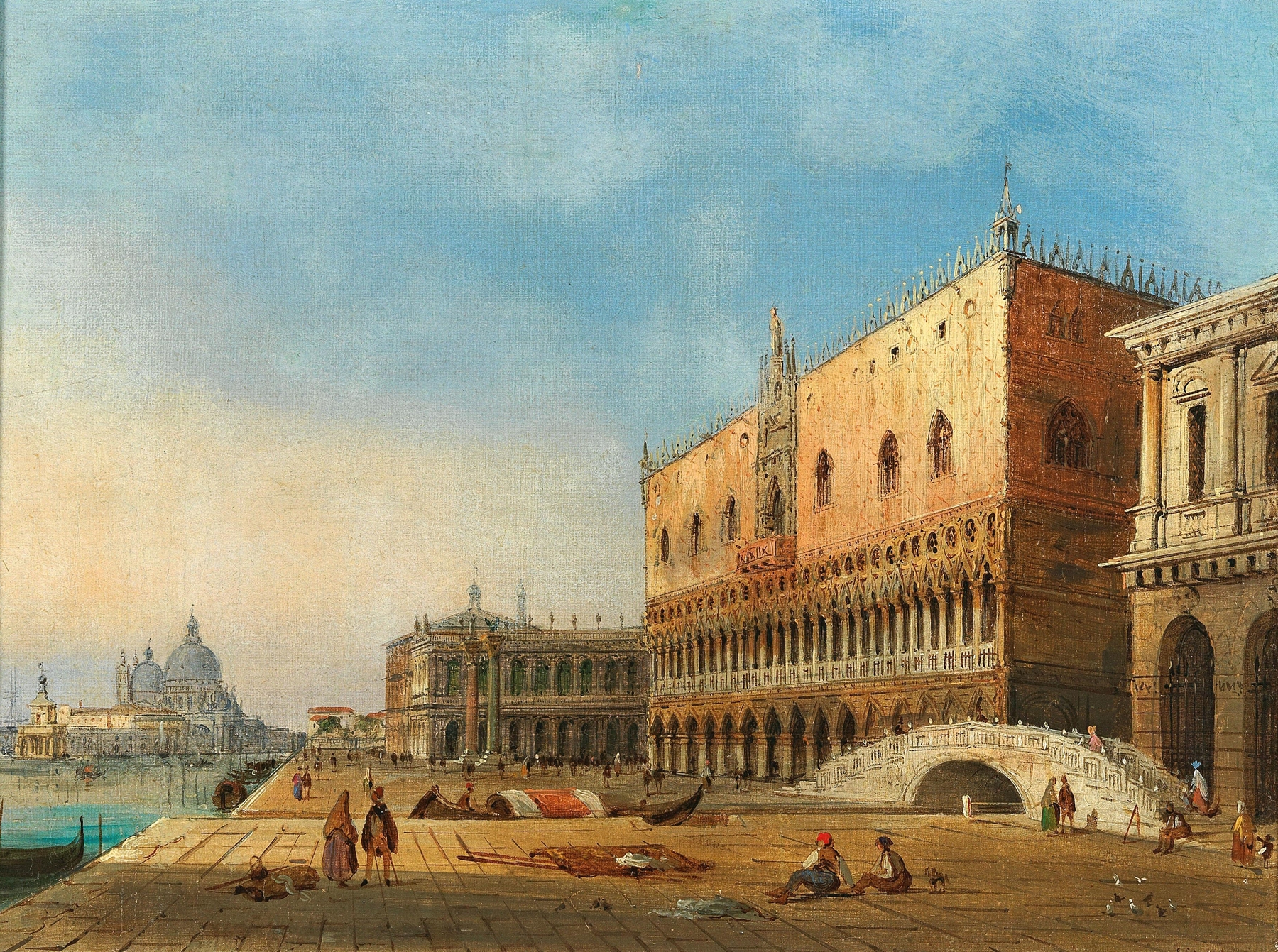
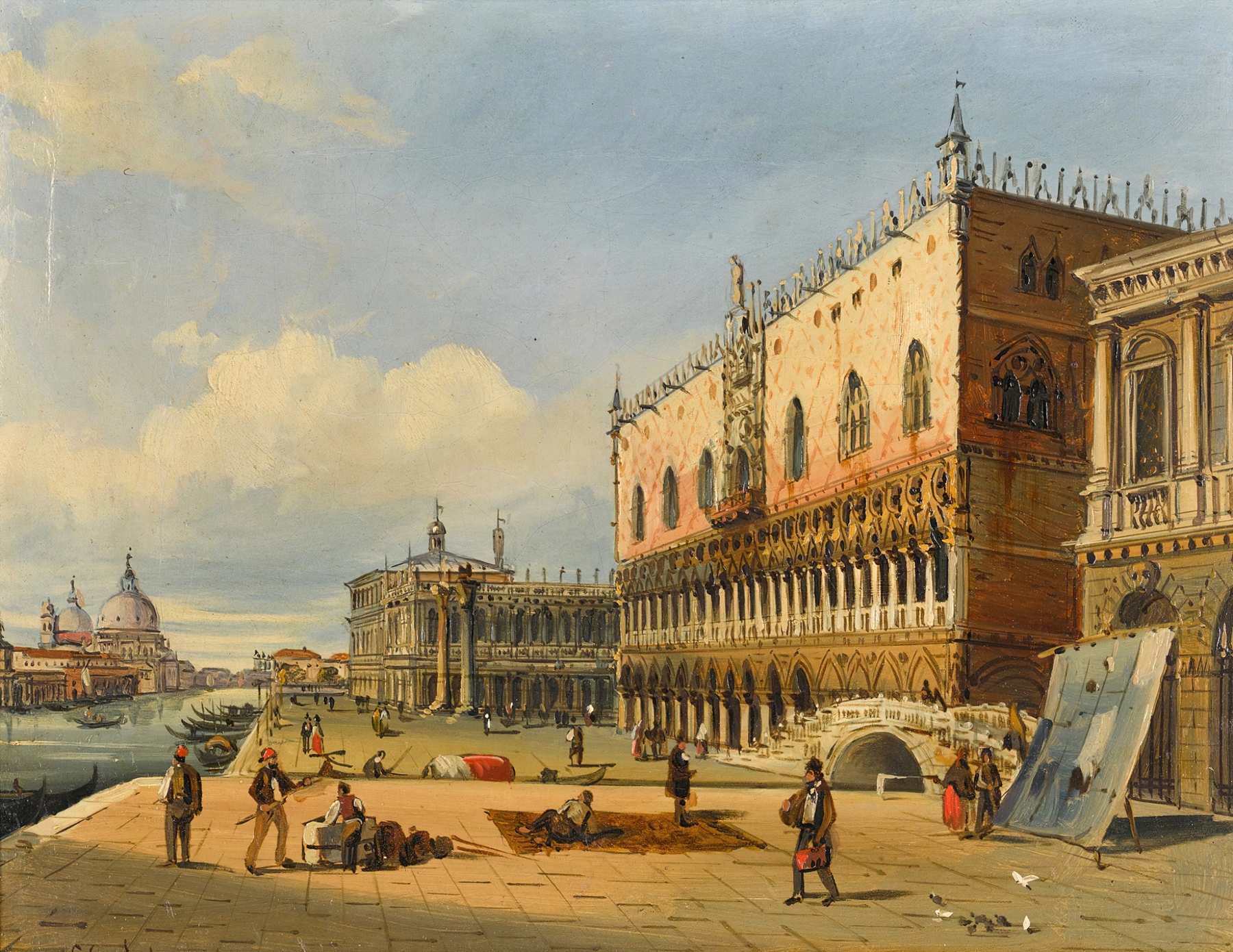
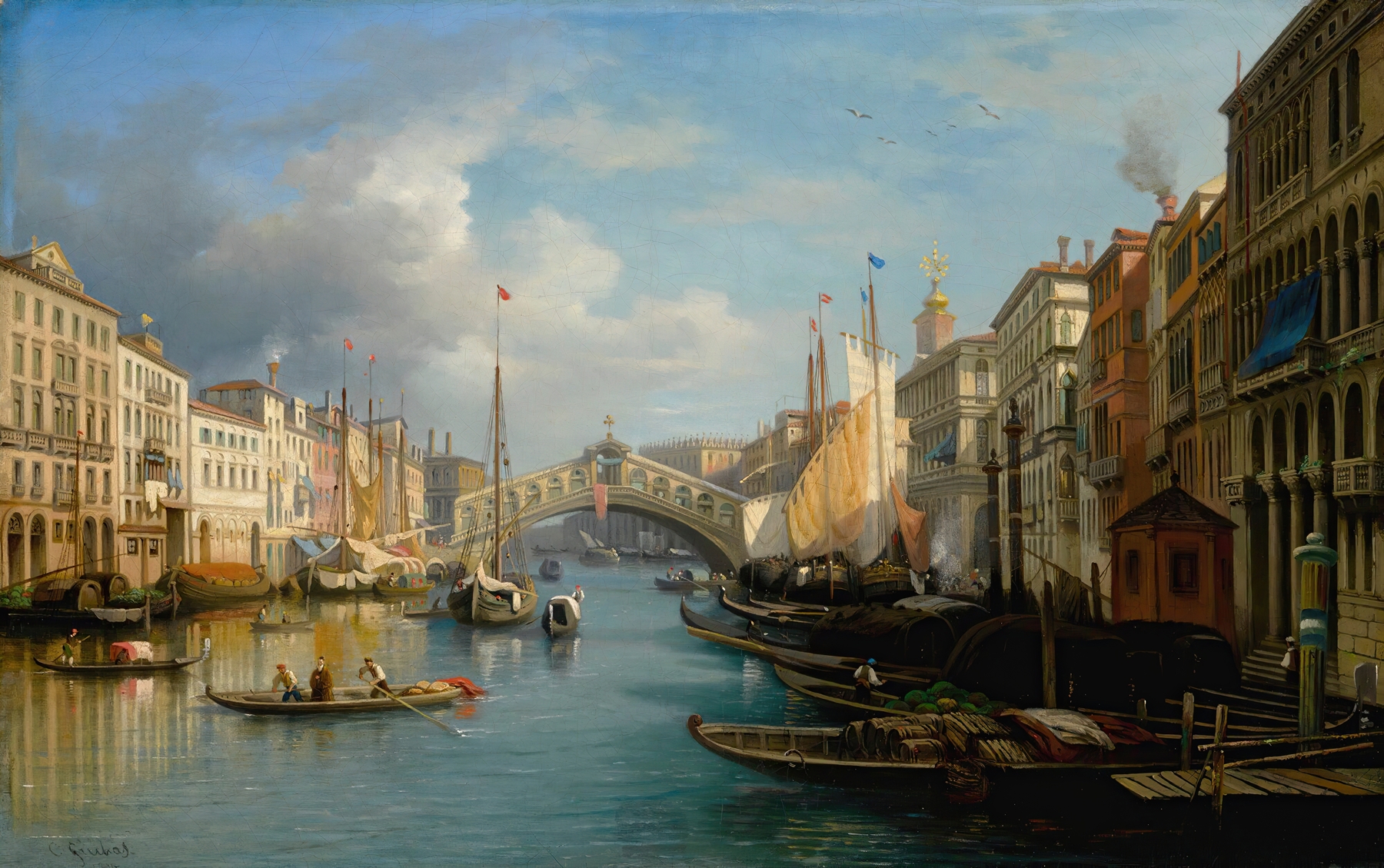
Venice, a view of the Piazzetta and the Doge’s Palace from the Bacino di San Marco — History & Analysis
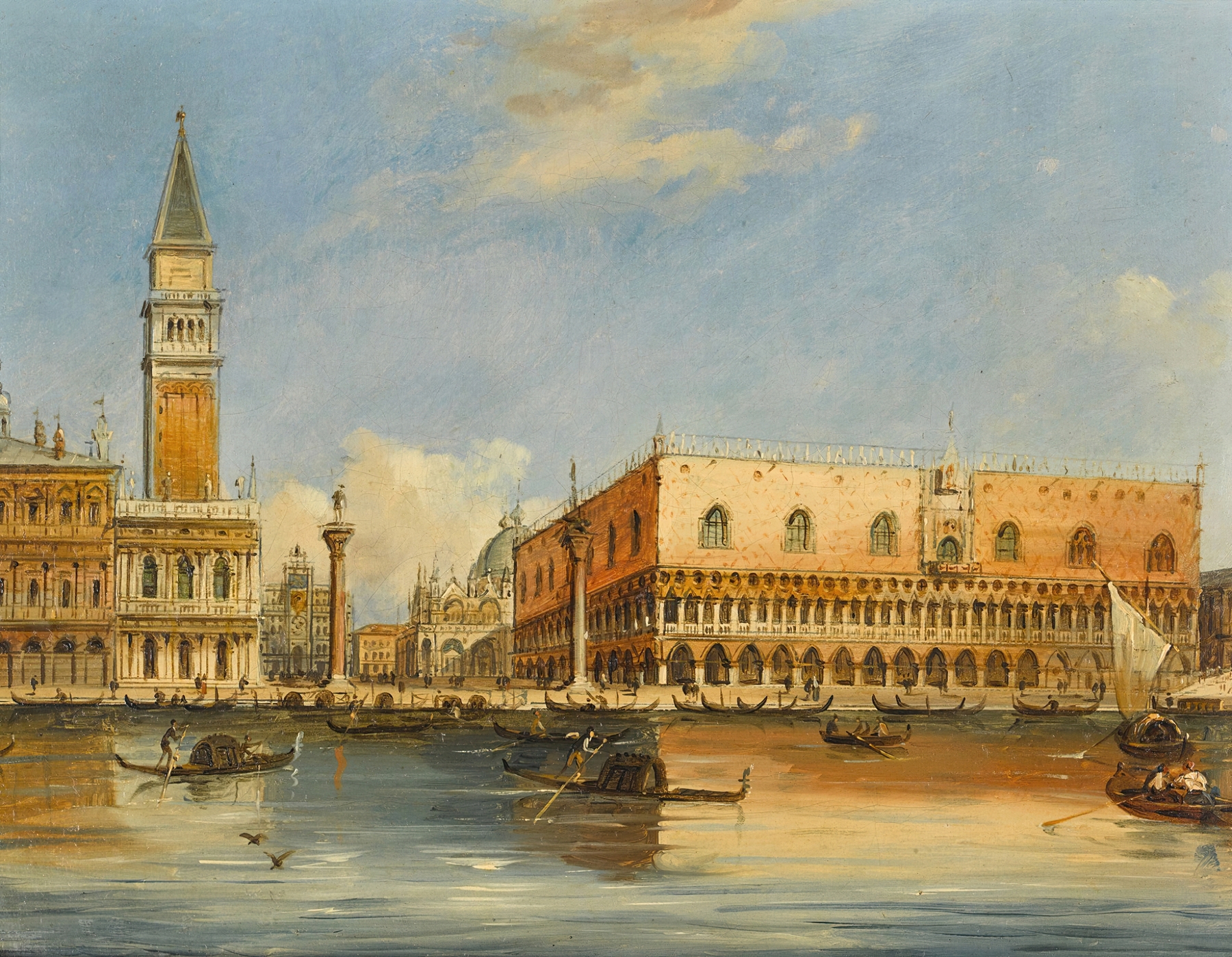
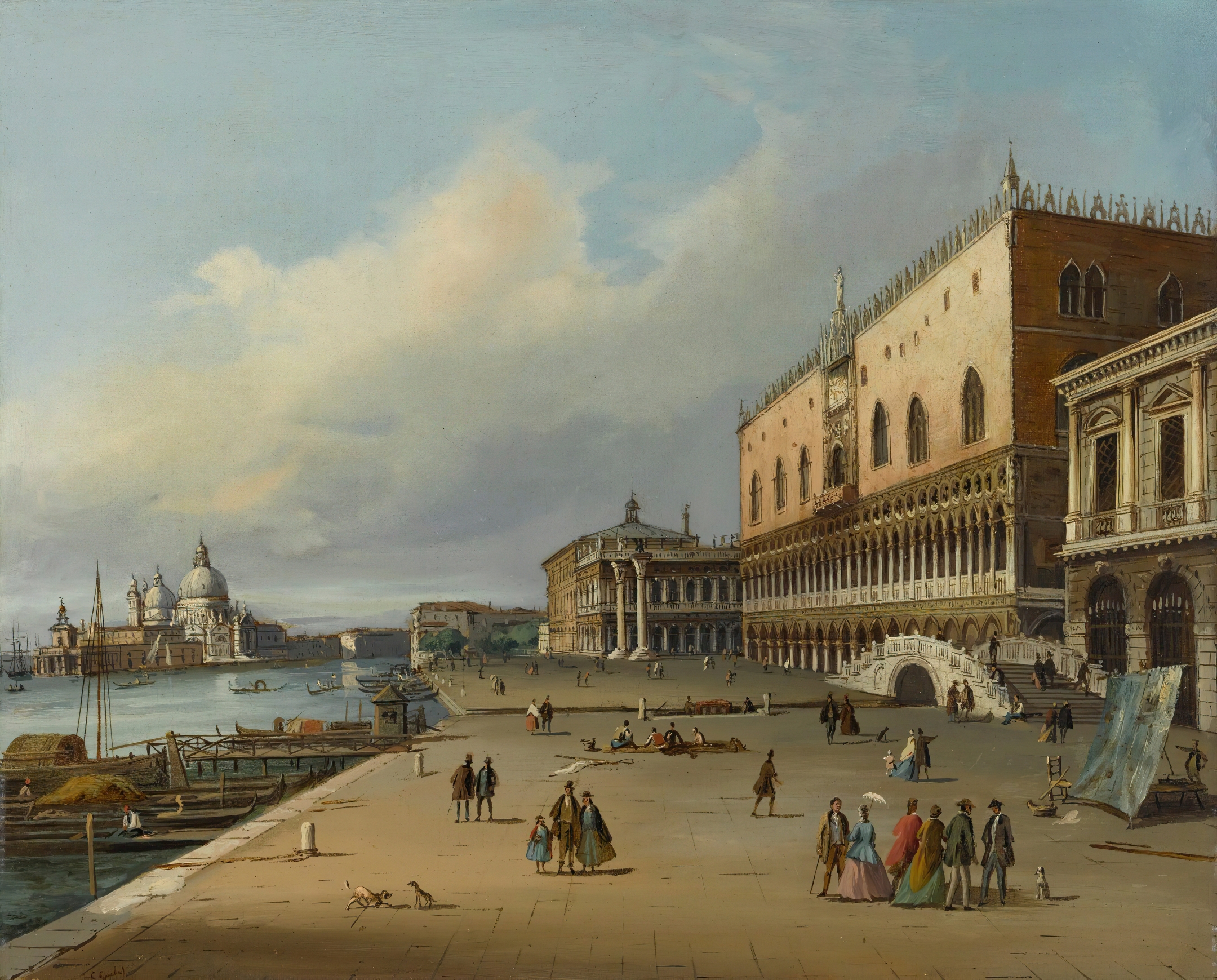
Could beauty survive in a century of chaos? This question lingers in the air as one gazes upon the tranquil yet haunting scene that unfolds in front of us, inviting reflection on loss and longing amid the splendor of Venice. Look to the right at the majestic arches of the Doge’s Palace, standing stoic against the shimmering surface of the Bacino di San Marco. The delicate interplay of light and shadow enhances the rich palette of muted earth tones and soft pastels, creating a sense of wistful nostalgia.
Grubacs captures not just a moment in time but a feeling, where the vibrant colors of the Venetian buildings contrast poignantly with the deep blue of the water, invoking a sense of both serenity and melancholy. Delve deeper into the artwork, and you may discern the underlying tensions at play. The tranquility of the scene masks the grief of a city facing decline; the once-great Venice, with its bustling trade routes and lively streets, appears almost deserted here. The soft clouds hovering above seem to mourn the past.
Each brushstroke holds the weight of history, reminding us that beauty coexists with sorrow, as if every captivating sight carries the echoes of what was lost. Grubacs painted this piece during a time when Venice was grappling with its fading glory, likely in the late 19th century, amidst the rise of modernity and the World Wars that would follow. Living in a city renowned for its artistic legacy, he witnessed a blend of historical splendor and emerging industrial chaos, reflecting the complexities and vulnerabilities of the world around him.