A View towards the Swedish Coast from the Ramparts of Kronborg Castle — History & Analysis
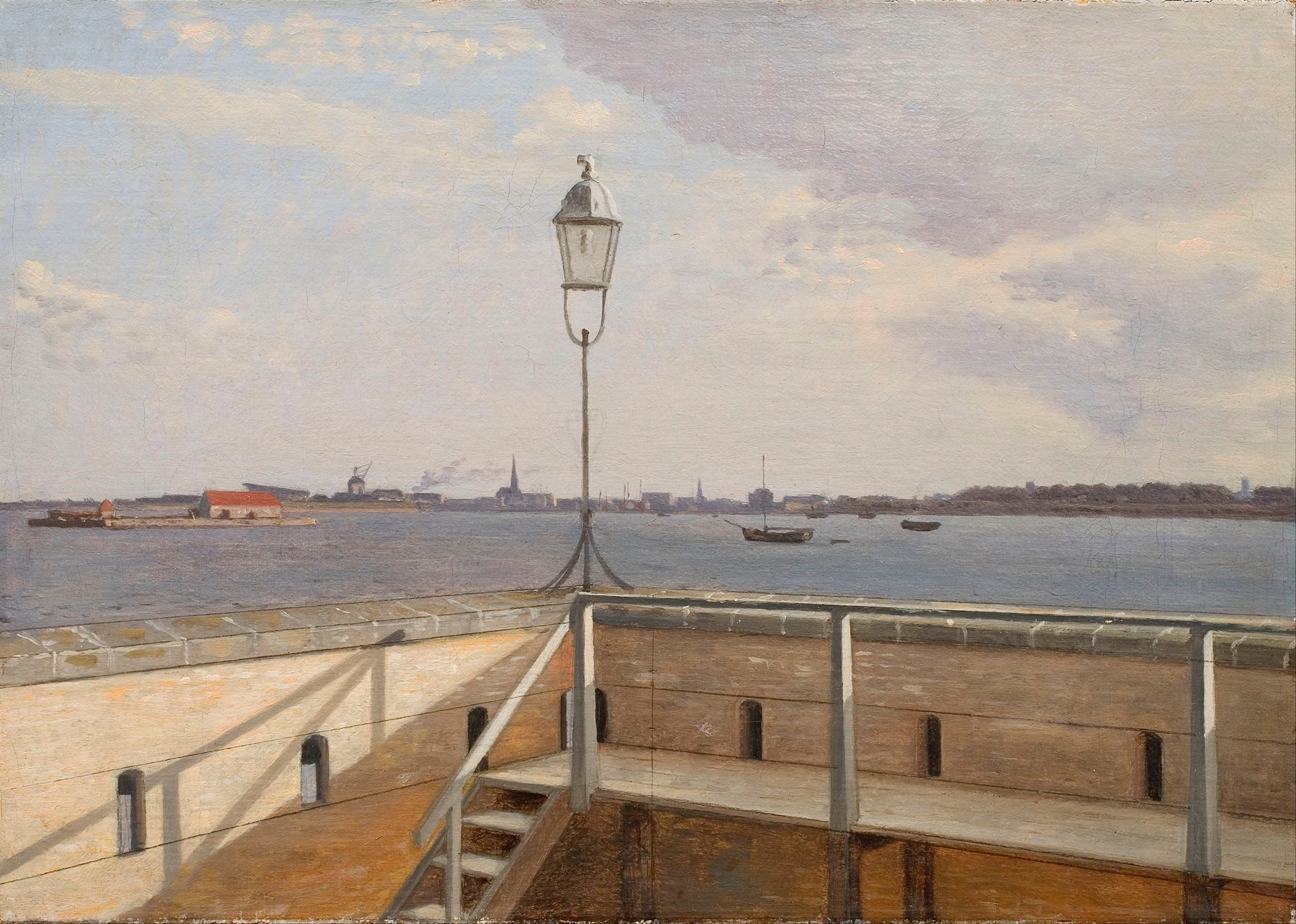
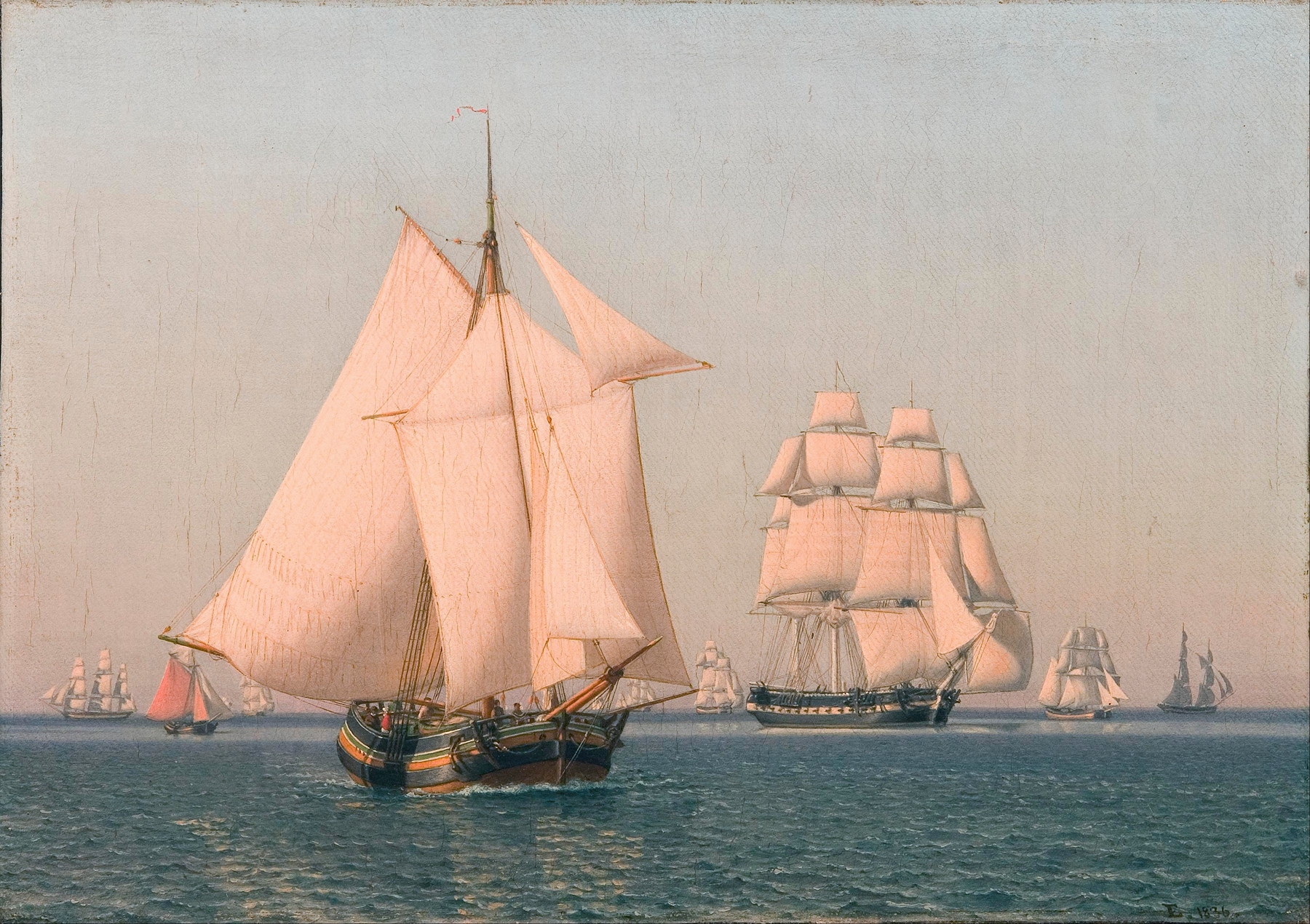
Who listens when art speaks of silence? In A View towards the Swedish Coast from the Ramparts of Kronborg Castle, the stillness of the moment invites contemplation and introspection, whispering secrets of distant shores and unseen narratives. Focus first on the horizon, where the gentle curves of the coastline blend seamlessly with the muted sky. The artist's deft brushwork captures a tranquil expanse, leading the eye across layers of color—from the soft blues of the water to the subtle greens of the land.
The fortress walls frame this serene vista, grounding the viewer in the architectural solidity while allowing the expansive view to breathe, evoking a sense of both protection and longing. As you absorb the scene, consider the emotional tension between the fortified castle and the vast, open sea—two worlds in delicate balance. The slight variations in light on the water suggest movement, a world alive beyond the stillness of the castle, while the solid ramparts stand as a testament to human strength against nature's vastness.
There’s a poignant revelation here: the fortress guards not just the land but the silence that envelops it, invoking feelings of solitude and connection. In 1829, during a period marked by Romantic ideals, the artist was exploring themes of nature and humanity's relationship to the sublime. Painted in Denmark, A View towards the Swedish Coast reflects a time when Eckersberg was emerging as a key figure in the Danish Golden Age of painting, seeking to bridge reality with emotional depth through a lens of serene contemplation.