A winter’s day in a sunlit street — History & Analysis
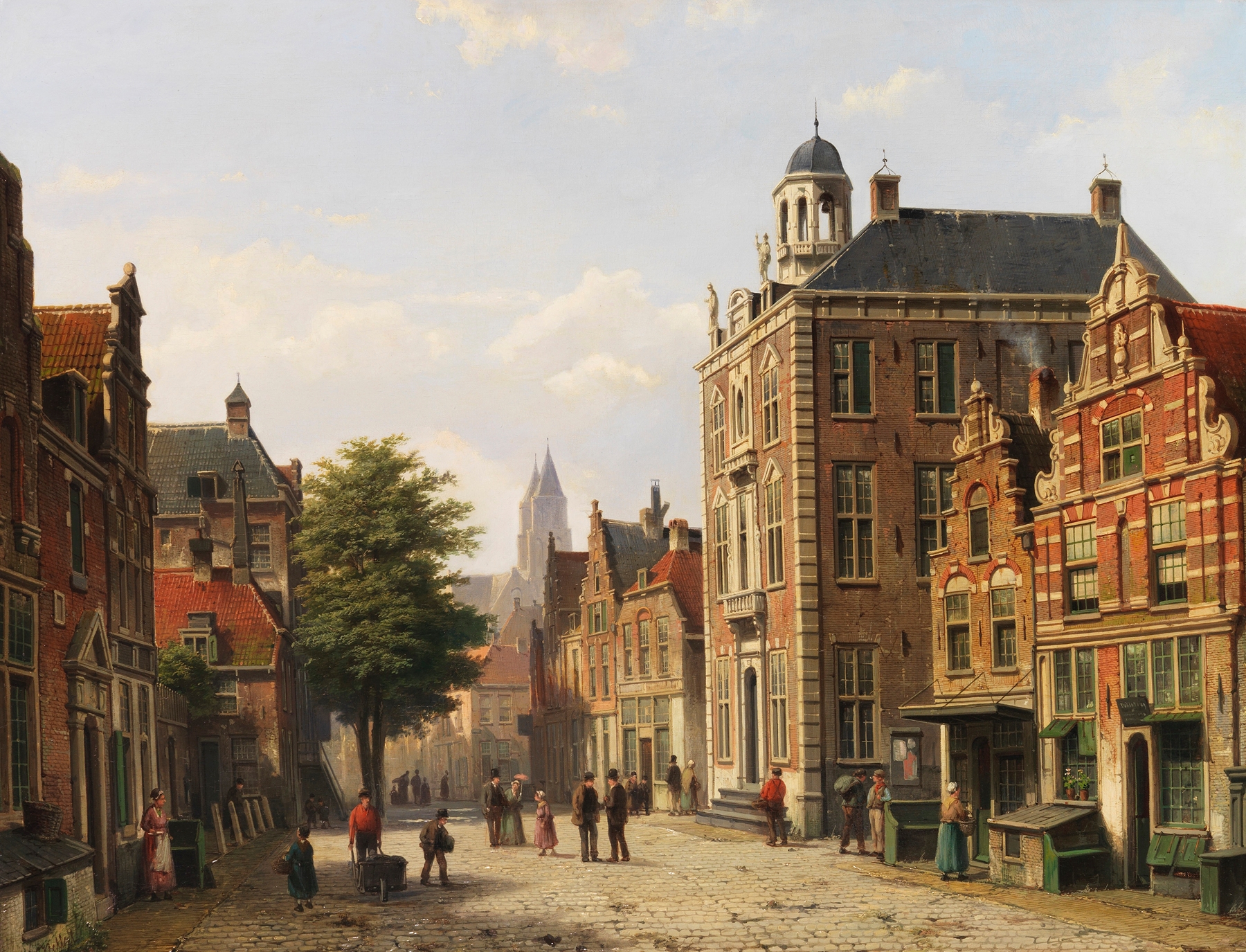
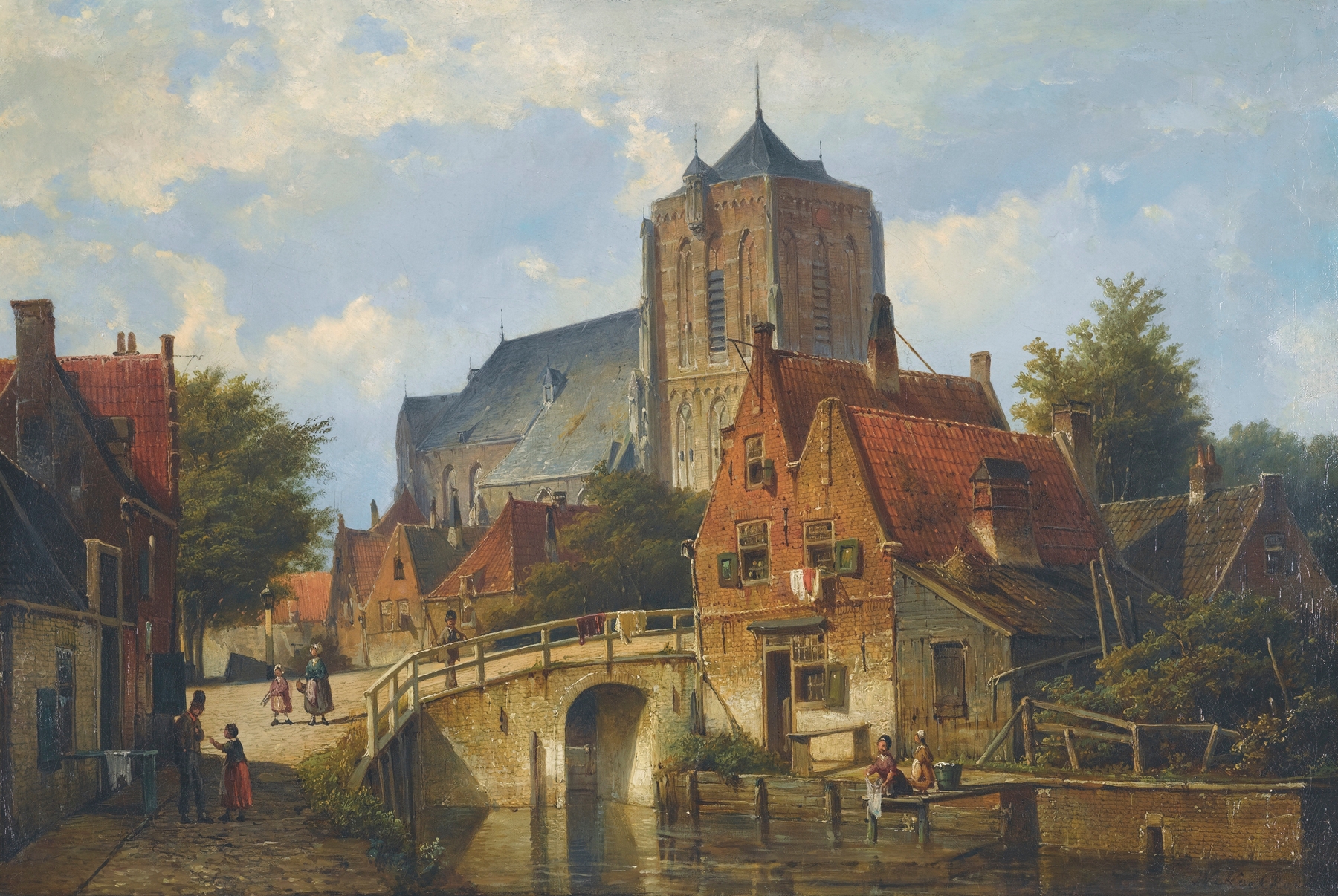
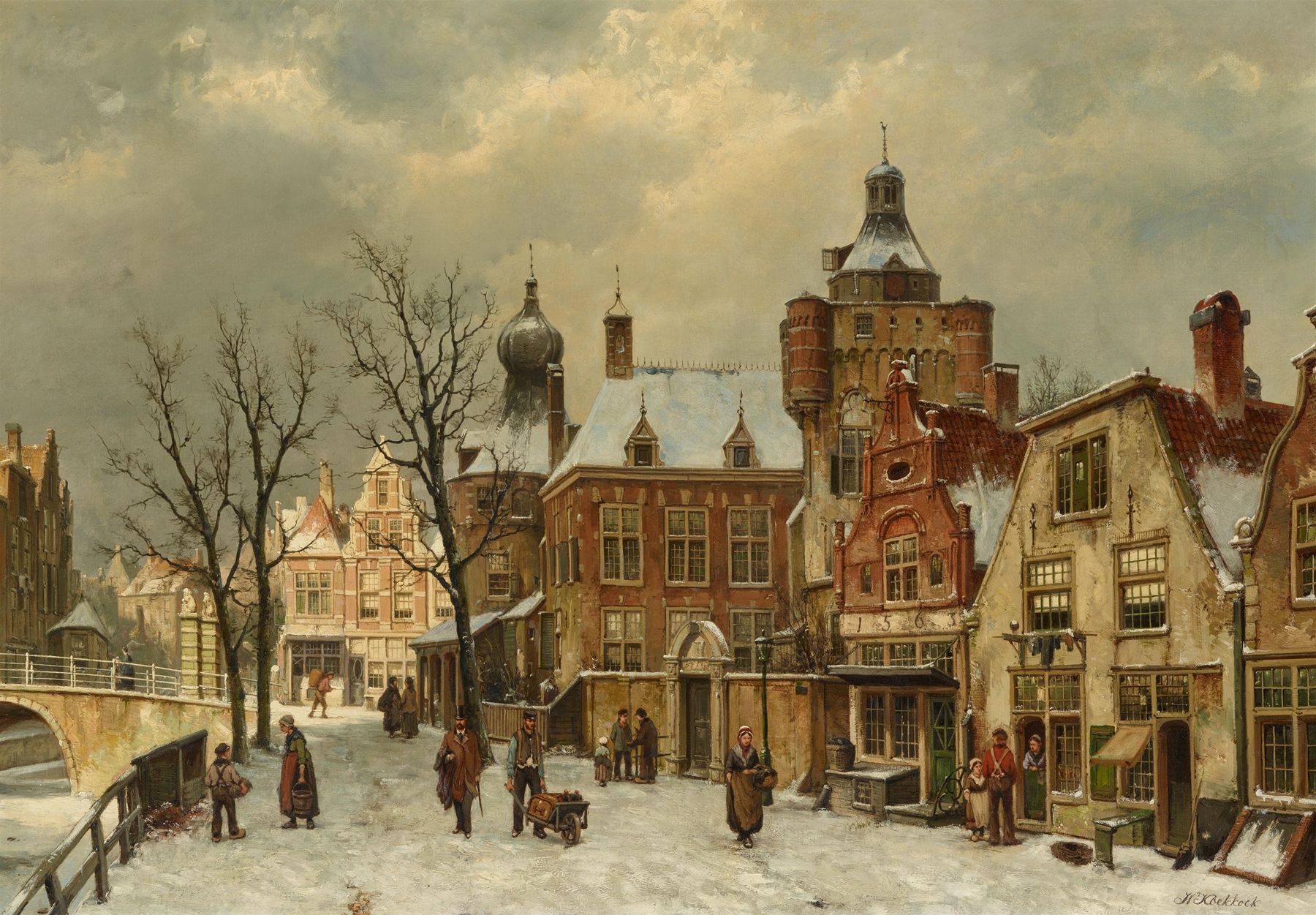
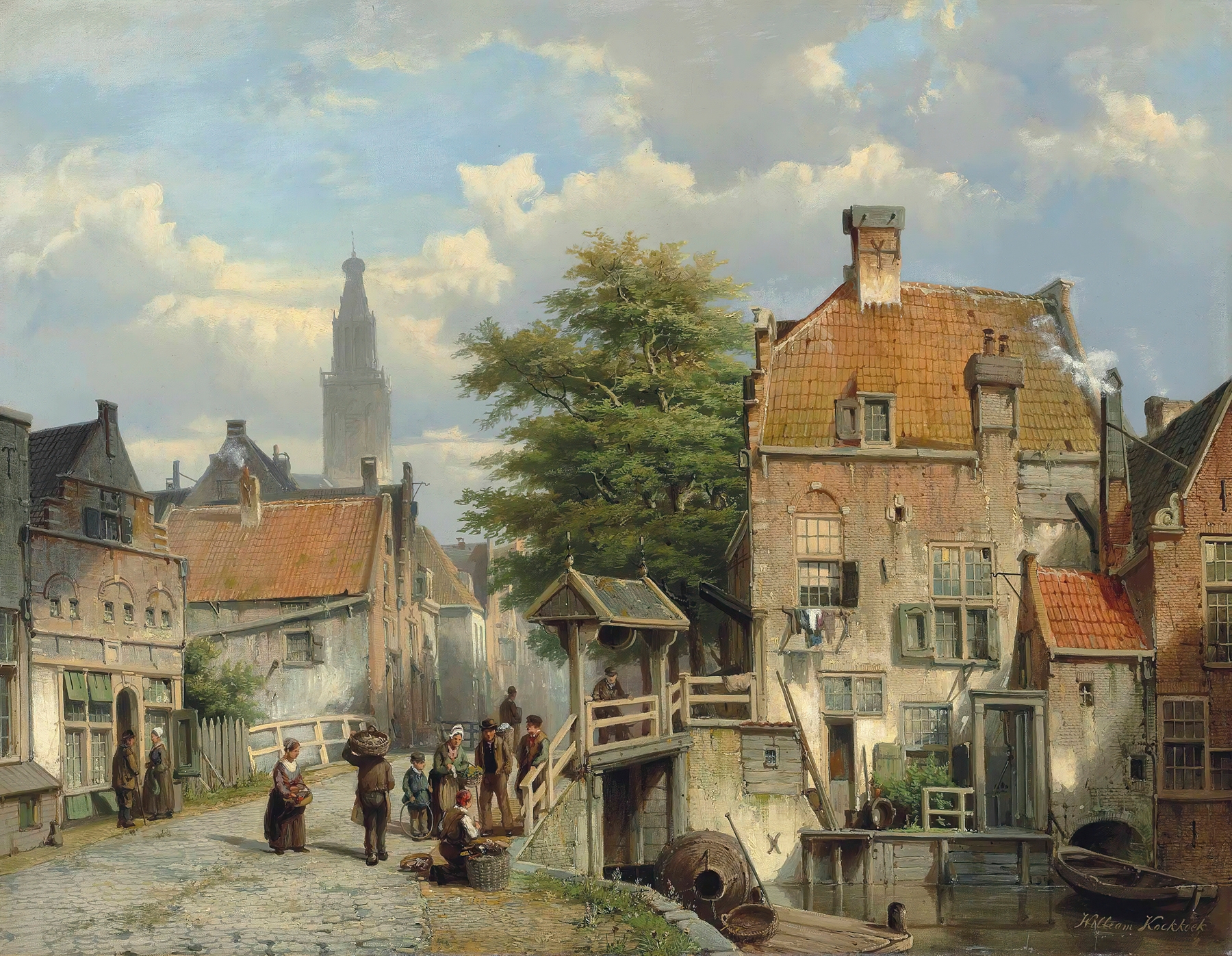
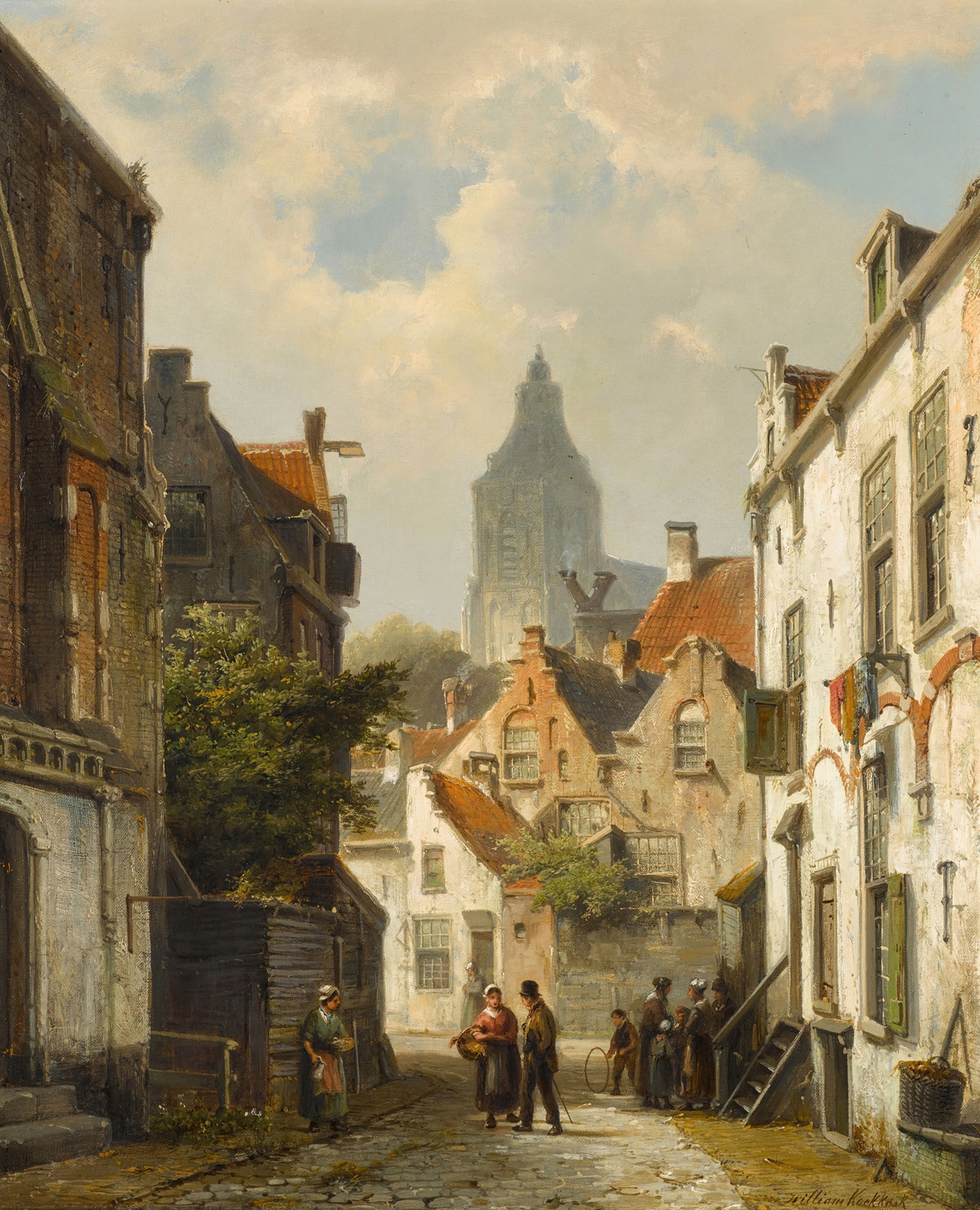
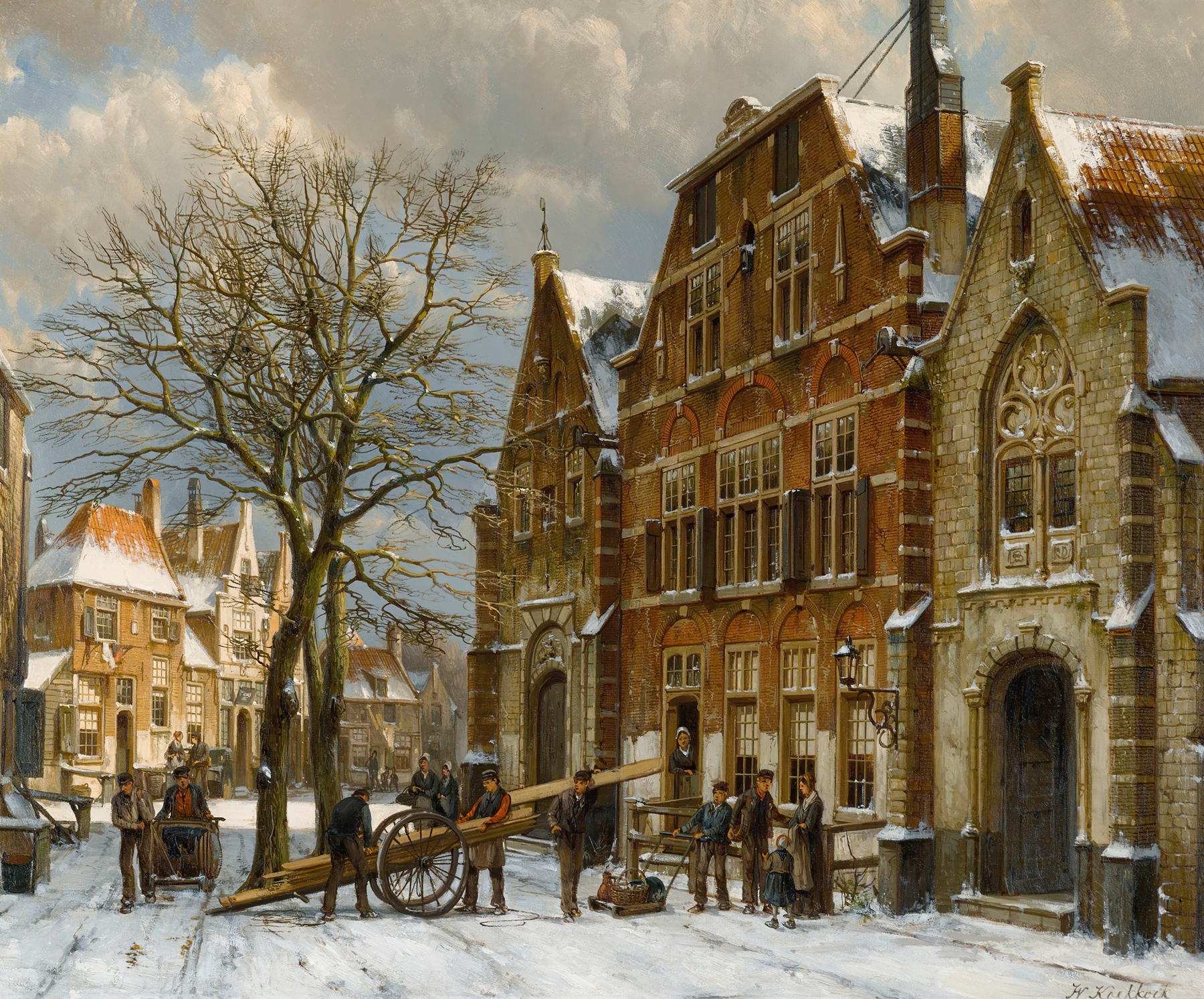
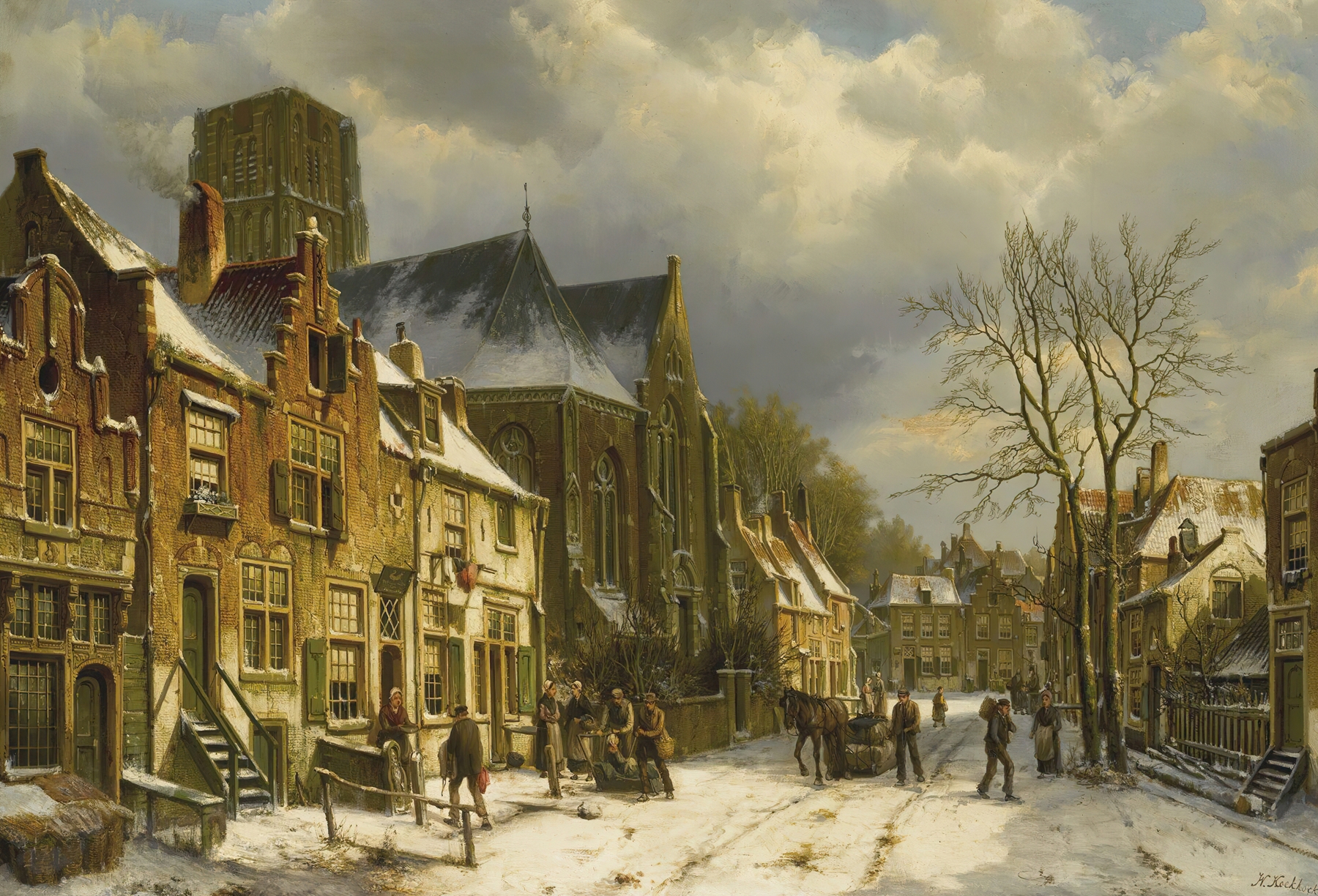
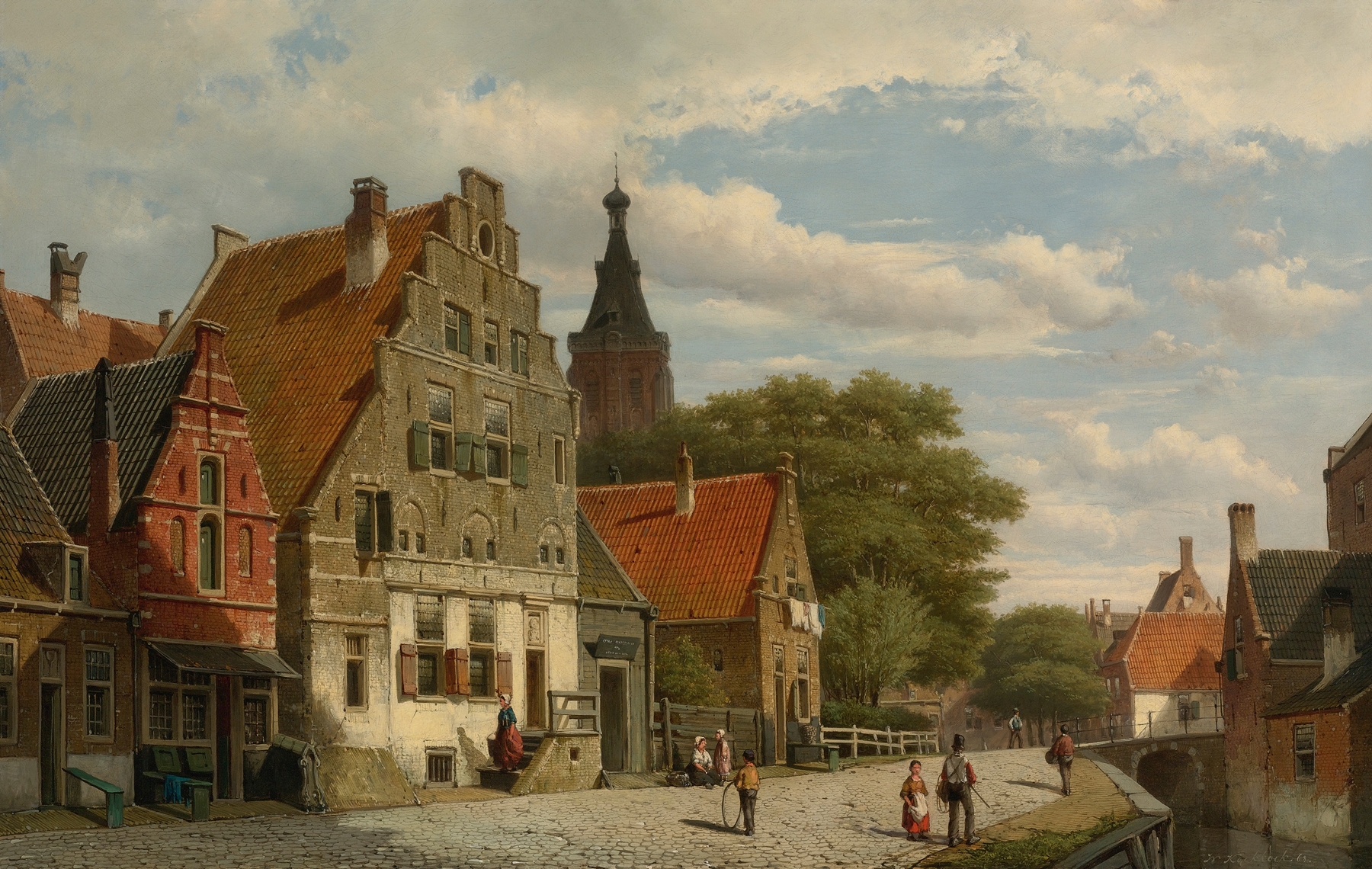
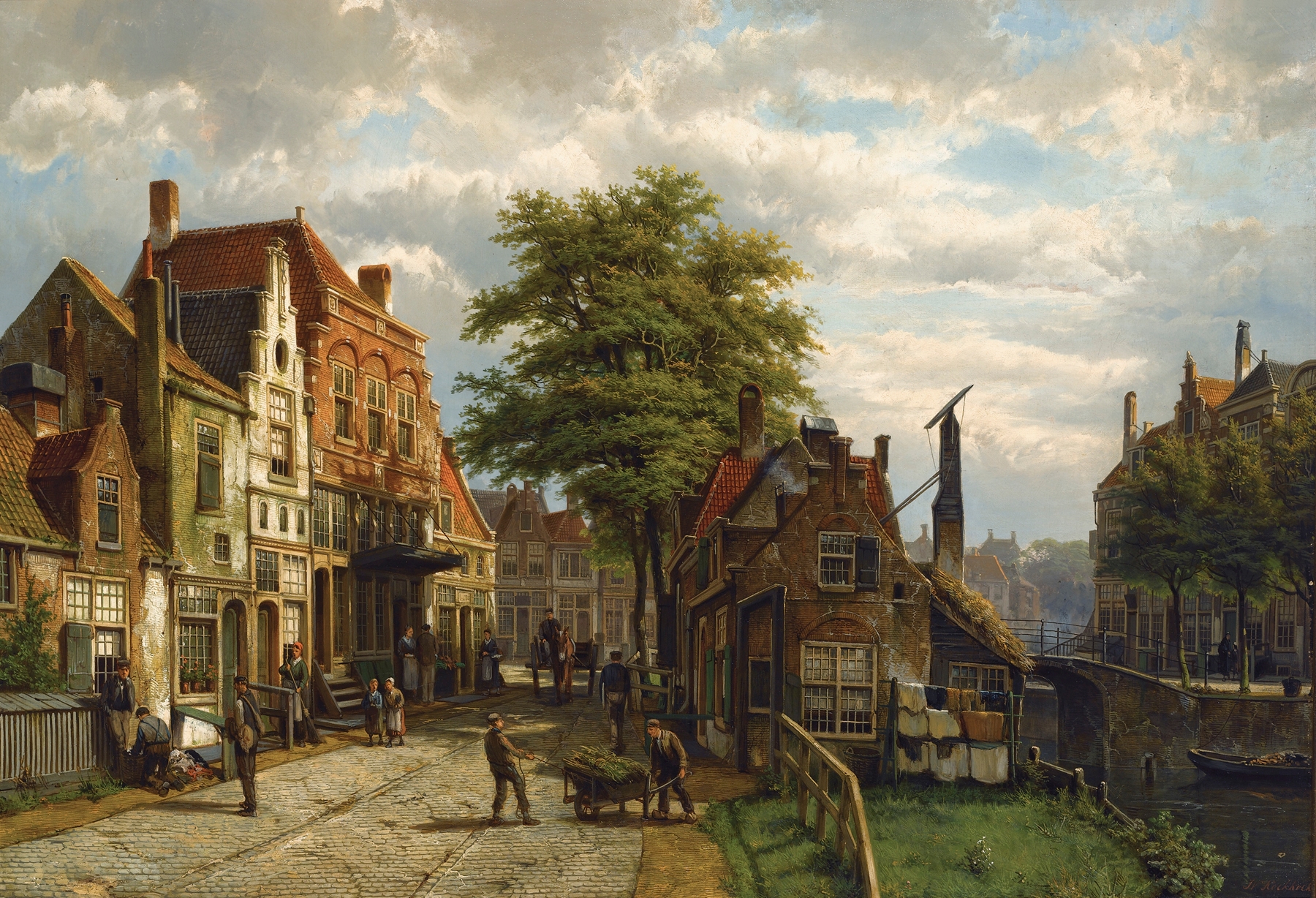
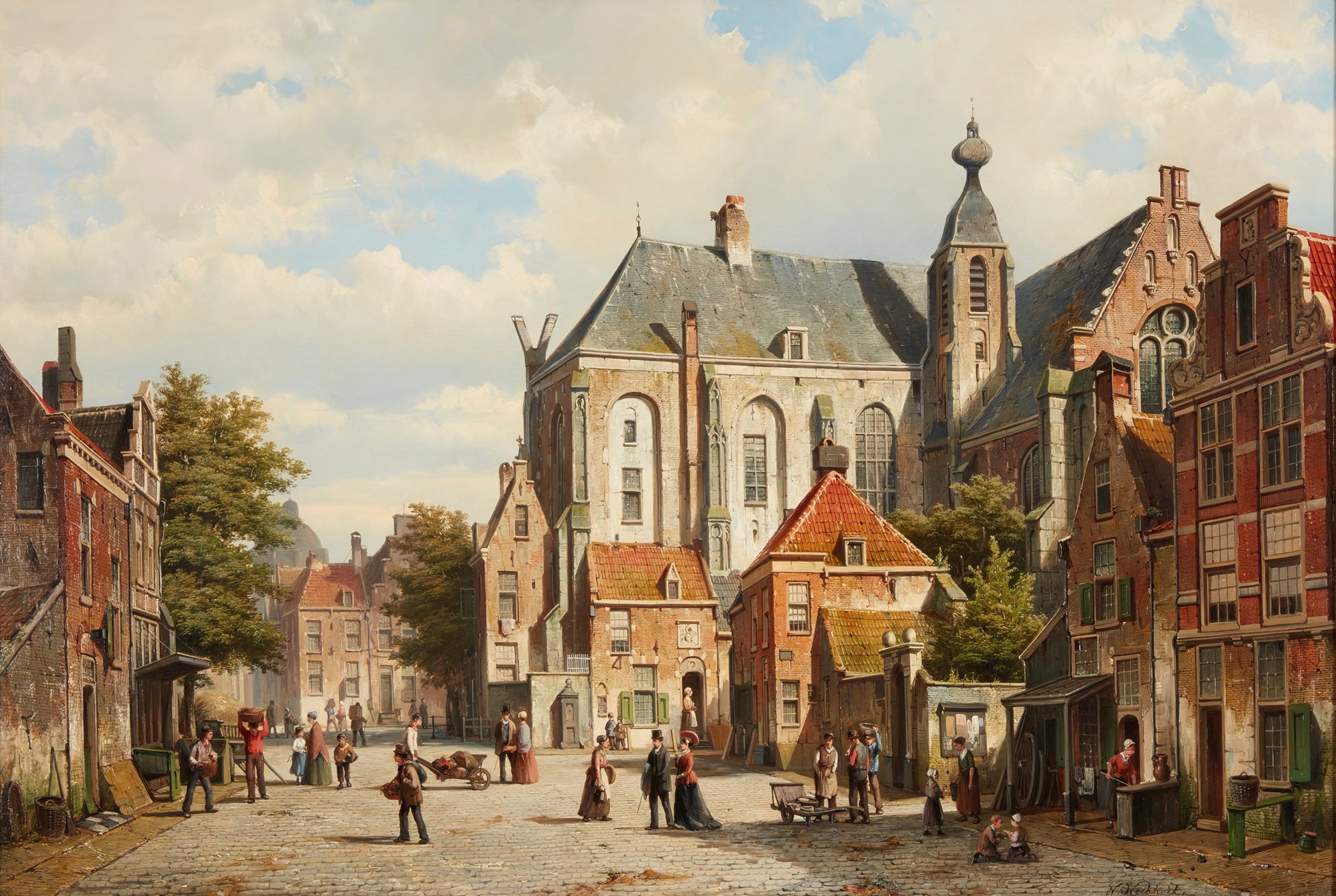
“Sometimes beauty is just pain, disguised in gold.” The soft embrace of light spills across the canvas, inviting us to explore the delicate interplay between warmth and chill. The scene is alive with the possibility of both joy and melancholy, urging us to reflect on the complexities woven into the fabric of life. Look to the left, where a gentle sunlight bathes the cobblestone street, illuminating the cottages and casting long shadows that stretch toward the horizon. The artist's brushwork reveals intricate details, from the outlines of the architecture to the serene expressions of the townsfolk.
Subtle pastels mingle with deeper hues, creating a harmonious balance that draws the eye across the canvas, guiding us through this picturesque winter setting. Yet, within this tranquil beauty lies a tension. The bright light contrasts sharply with the coldness of winter, suggesting a fleeting moment of warmth amidst an otherwise harsh existence. The figures, bundled in their winter garb, appear contemplative, as if caught in a daydream where warmth and cold coexist, hinting at the fragility of human emotion.
Each character’s expression tells a story of resilience, underscoring the importance of finding light even during the bleakest seasons. Willem Koekkoek painted this work during a time when the Romantic movement was influencing the art world, likely in the mid-19th century. He was known for his mastery in depicting everyday life, often focusing on the interplay between natural light and human experience. As he captured this winter's day, he was reflecting not only the beauty of the season but also the profound emotional depths that lie beneath the surface of everyday moments.