A wooded landscape with travellers crossing a ford — History & Analysis
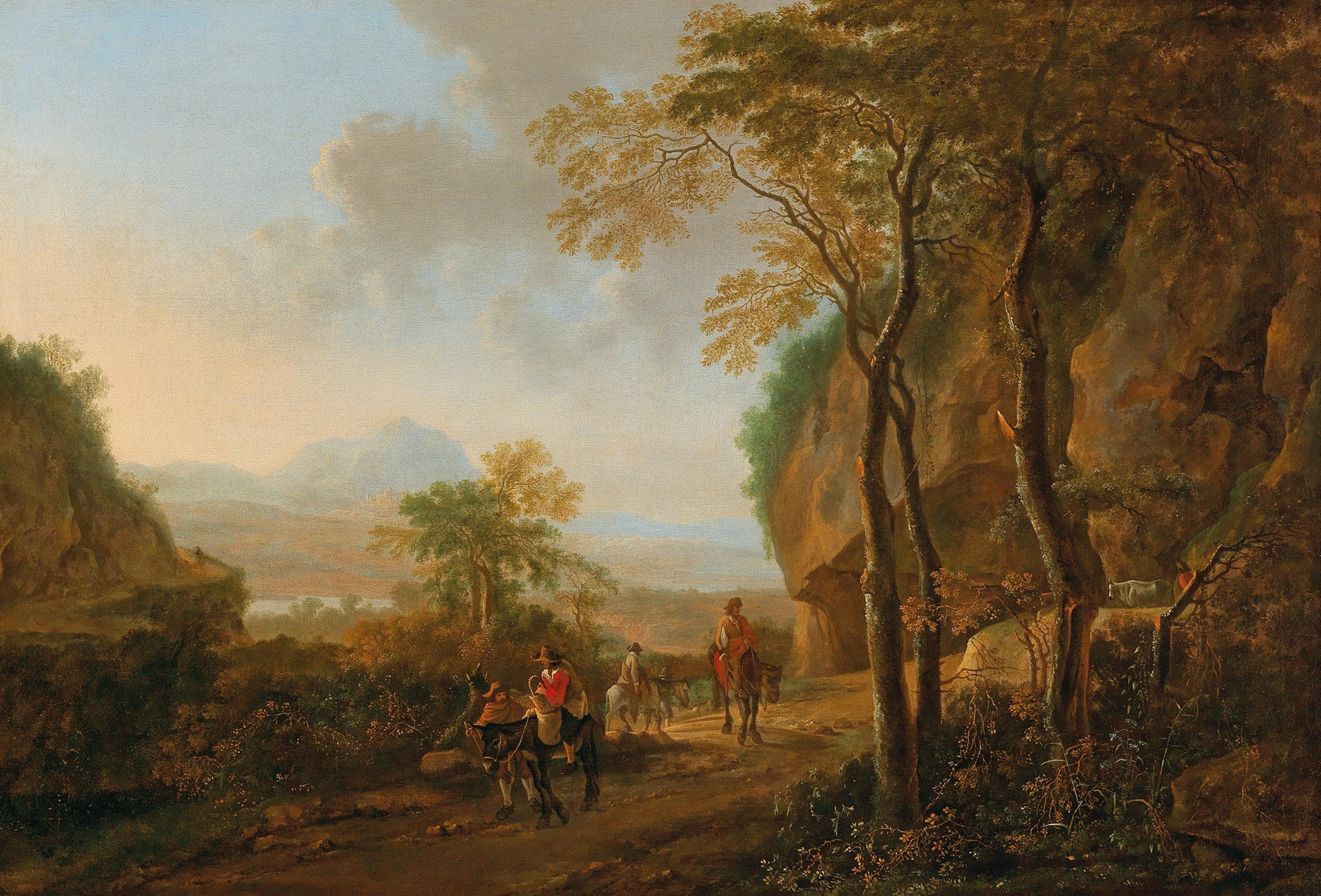
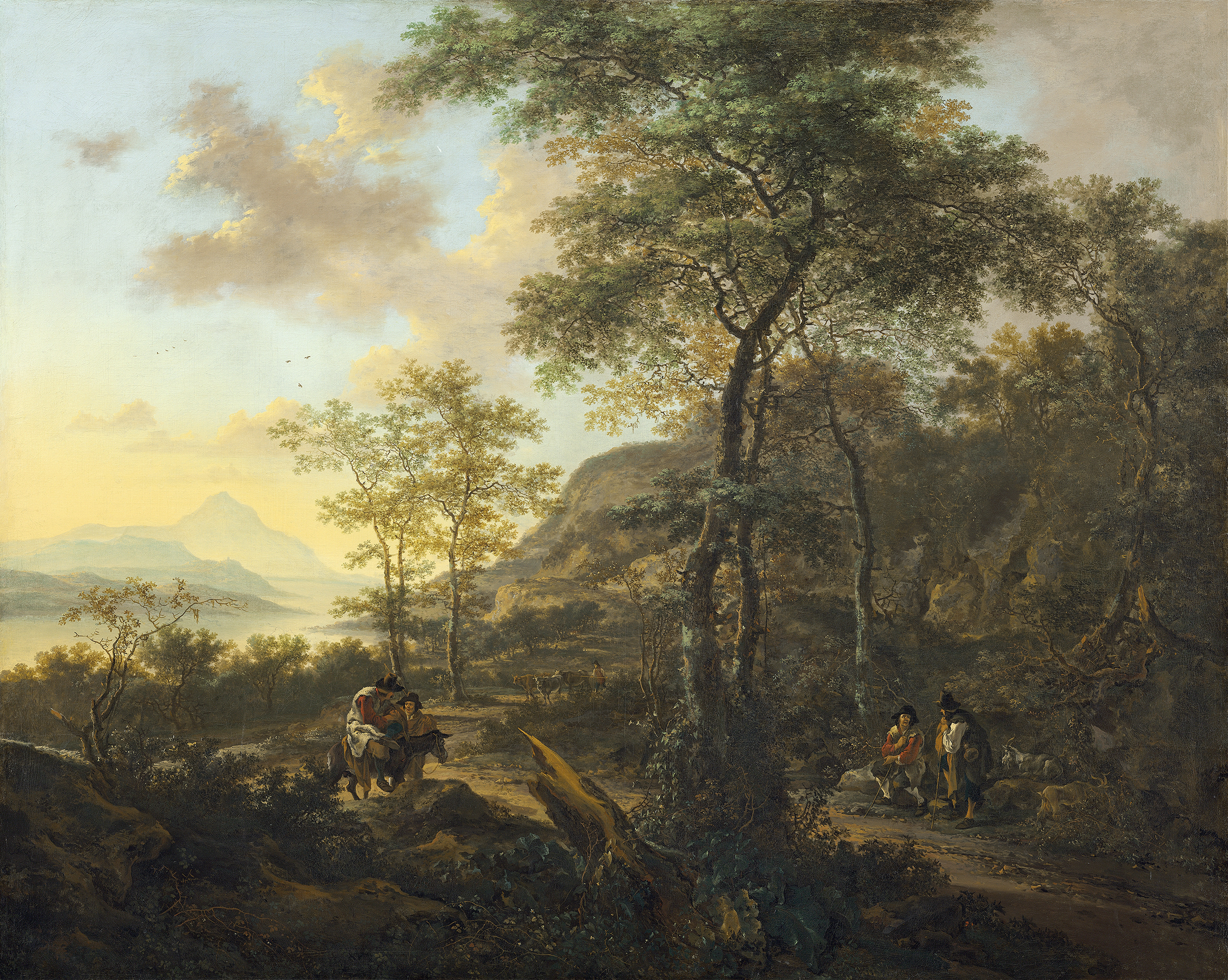
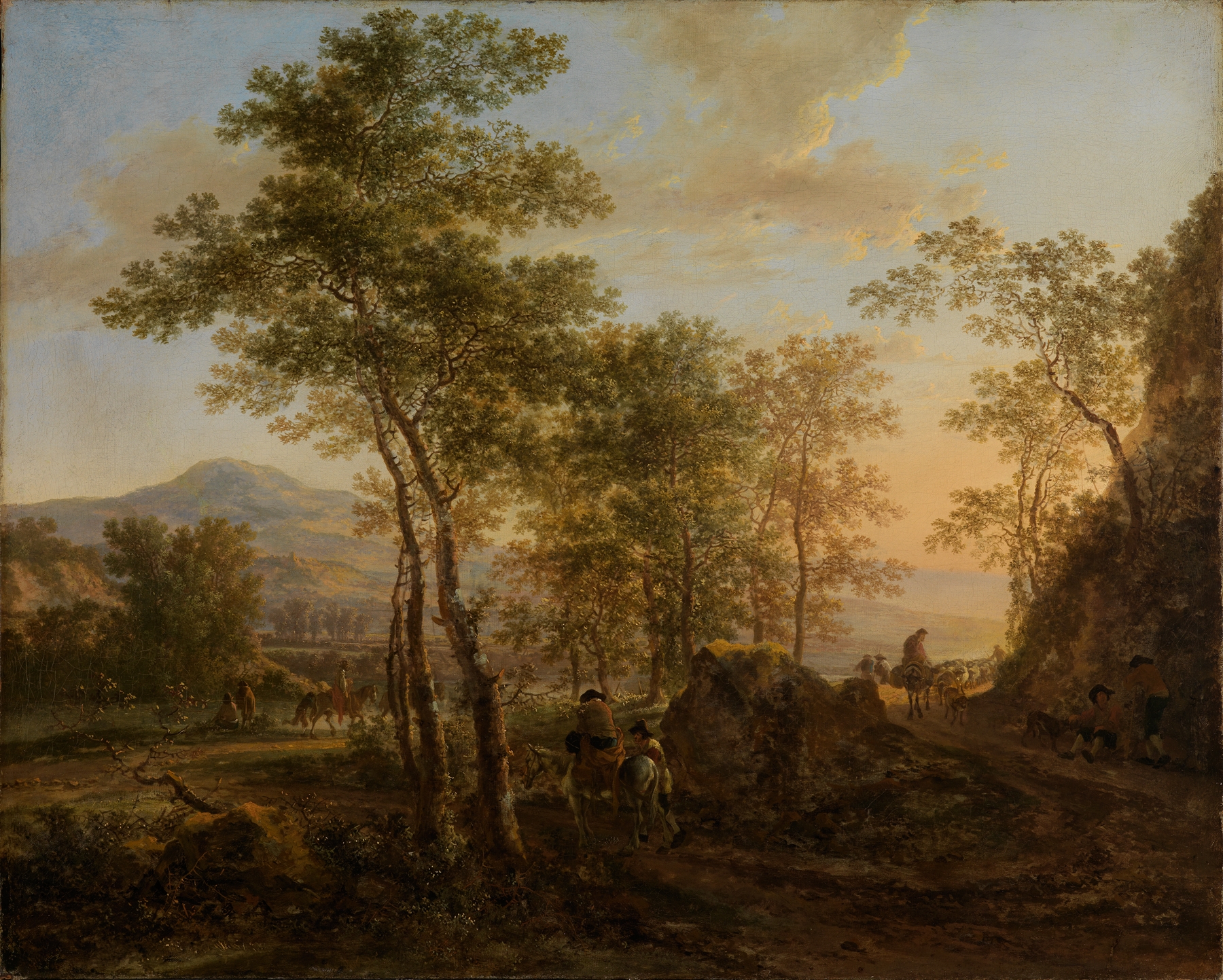
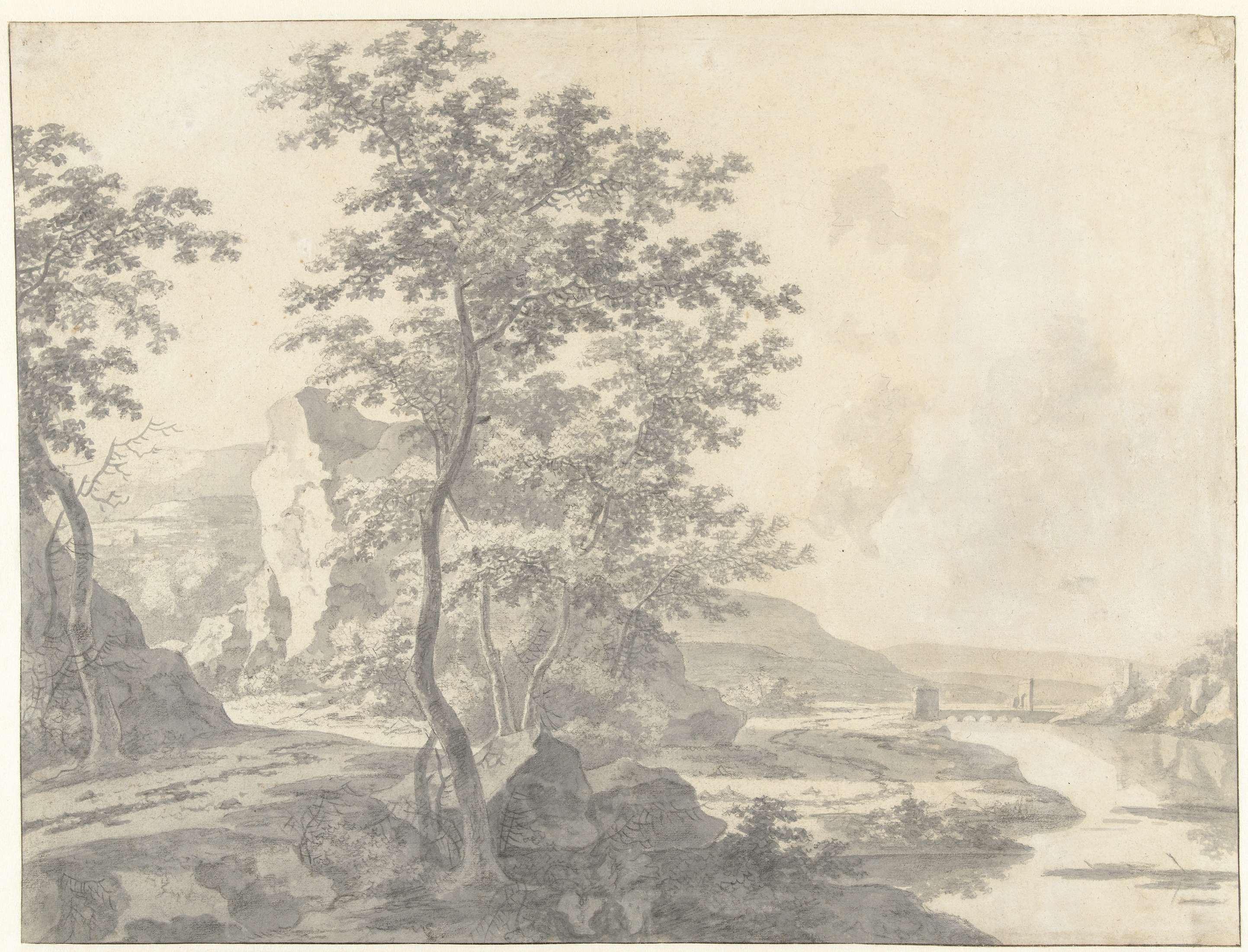
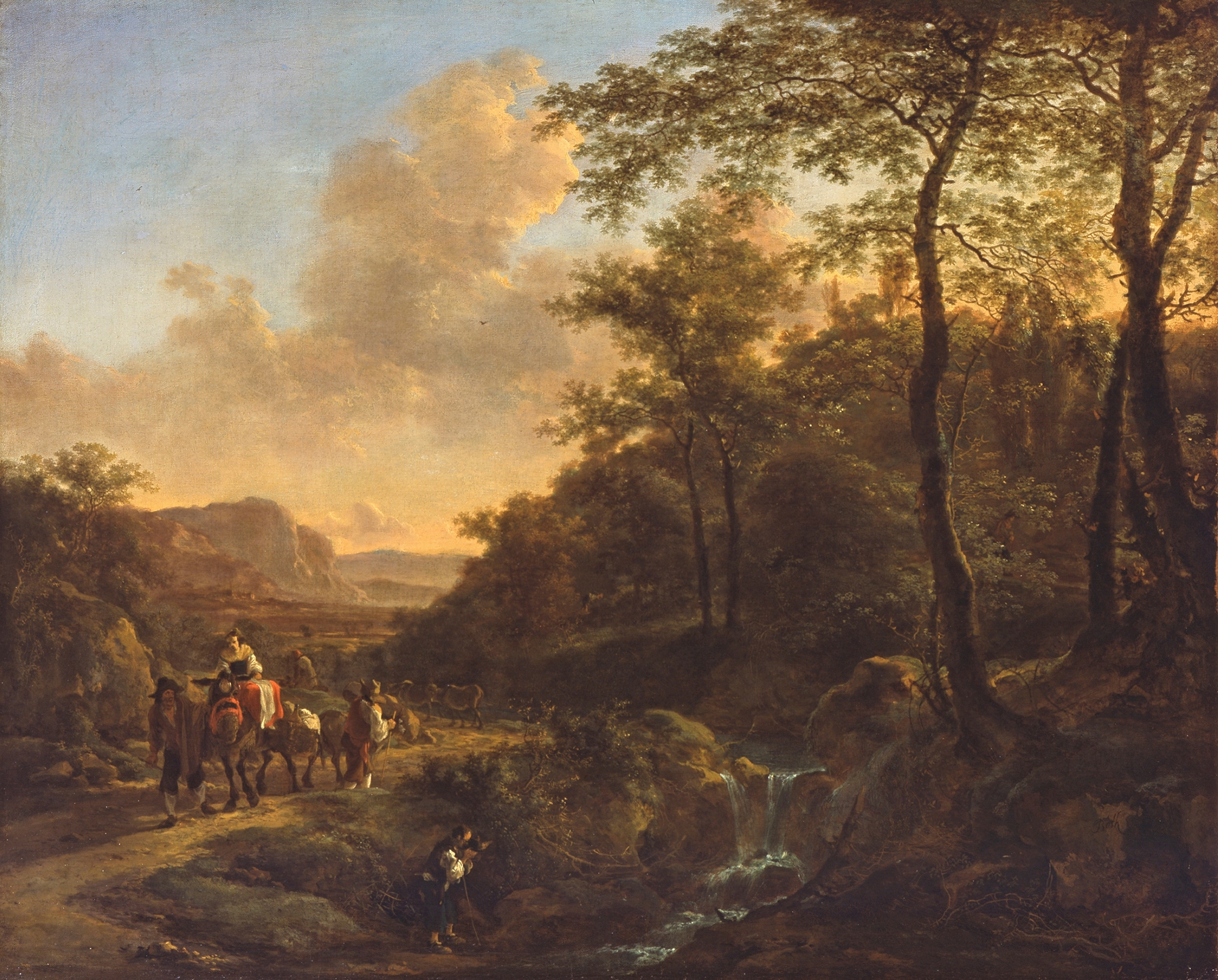
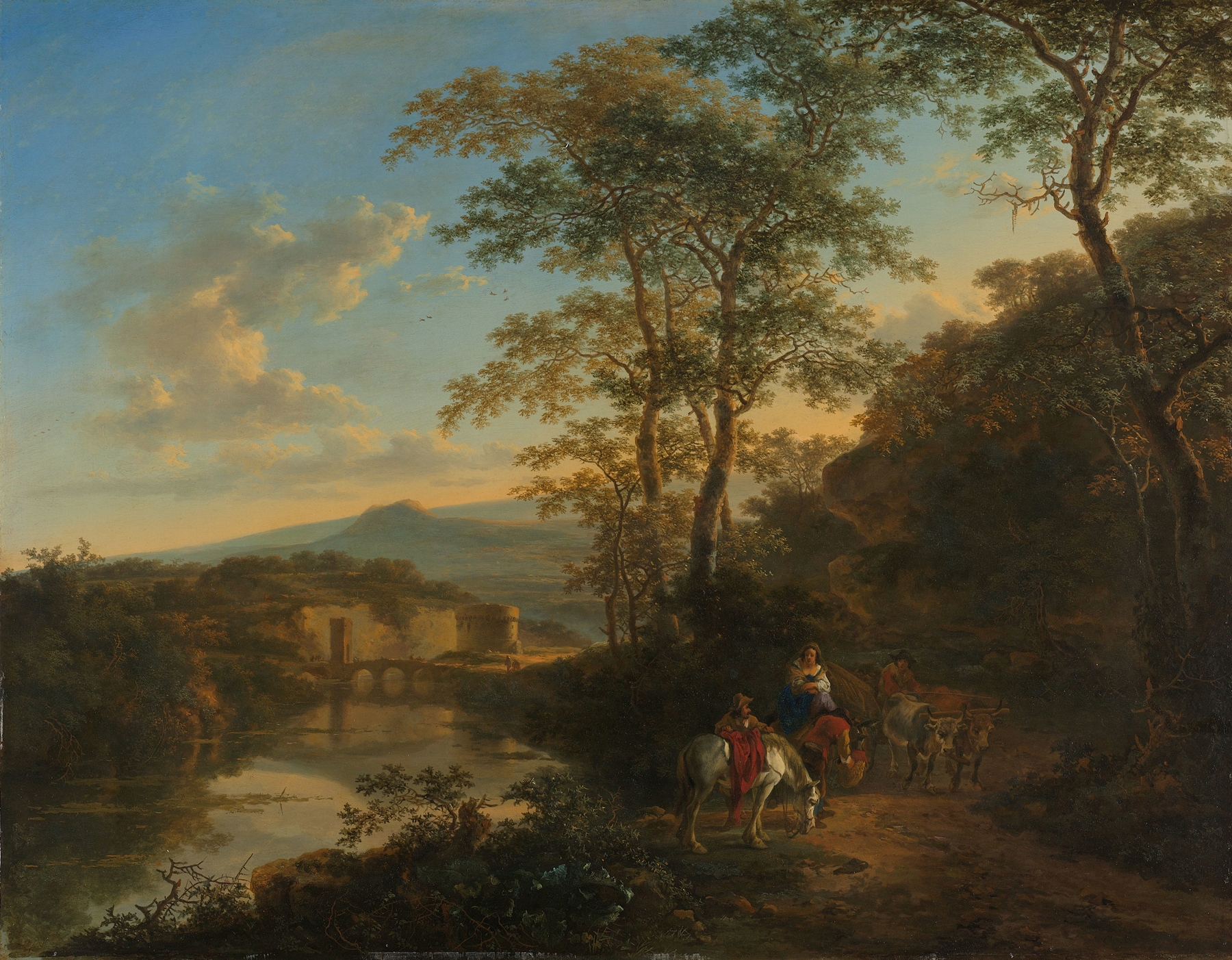
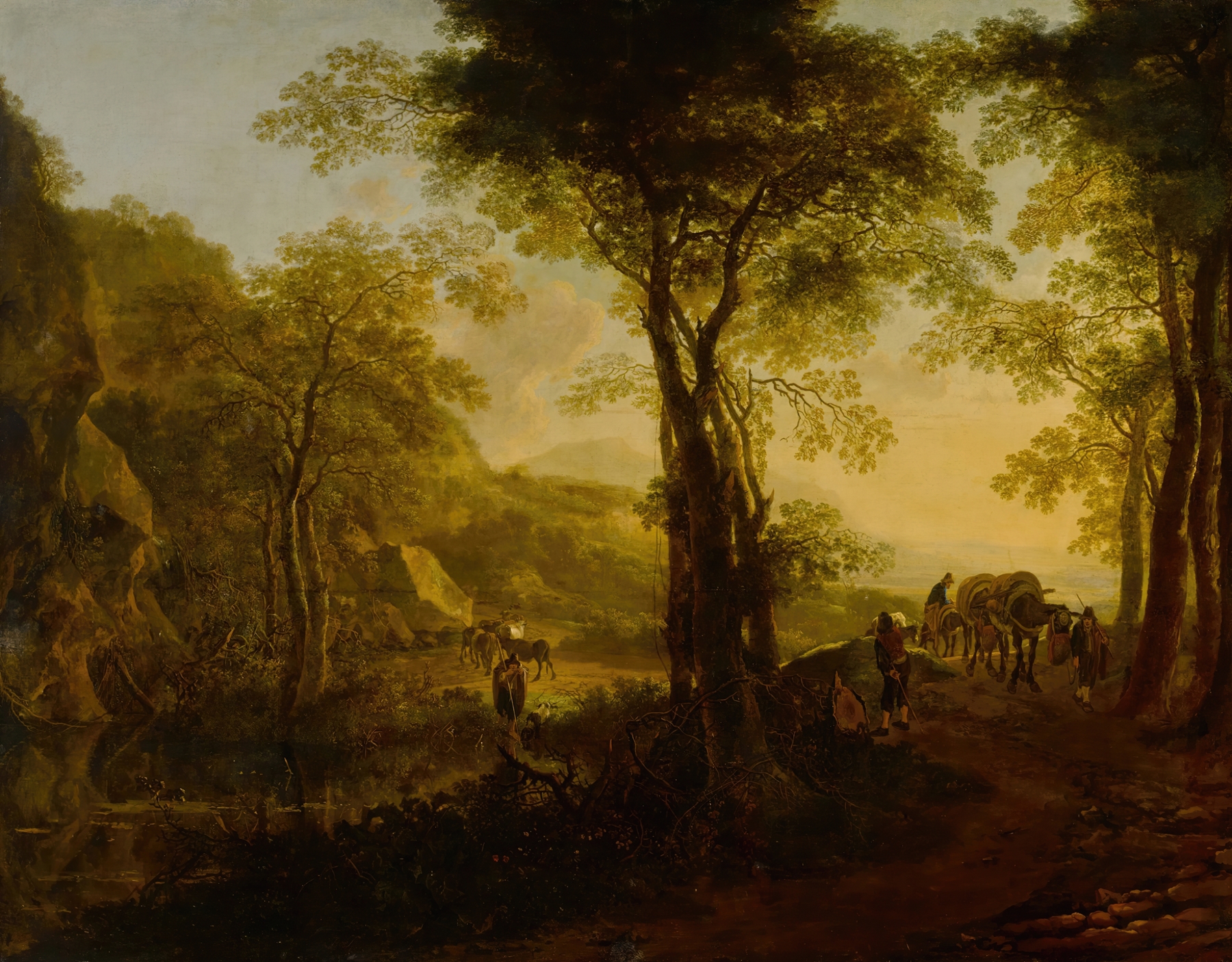
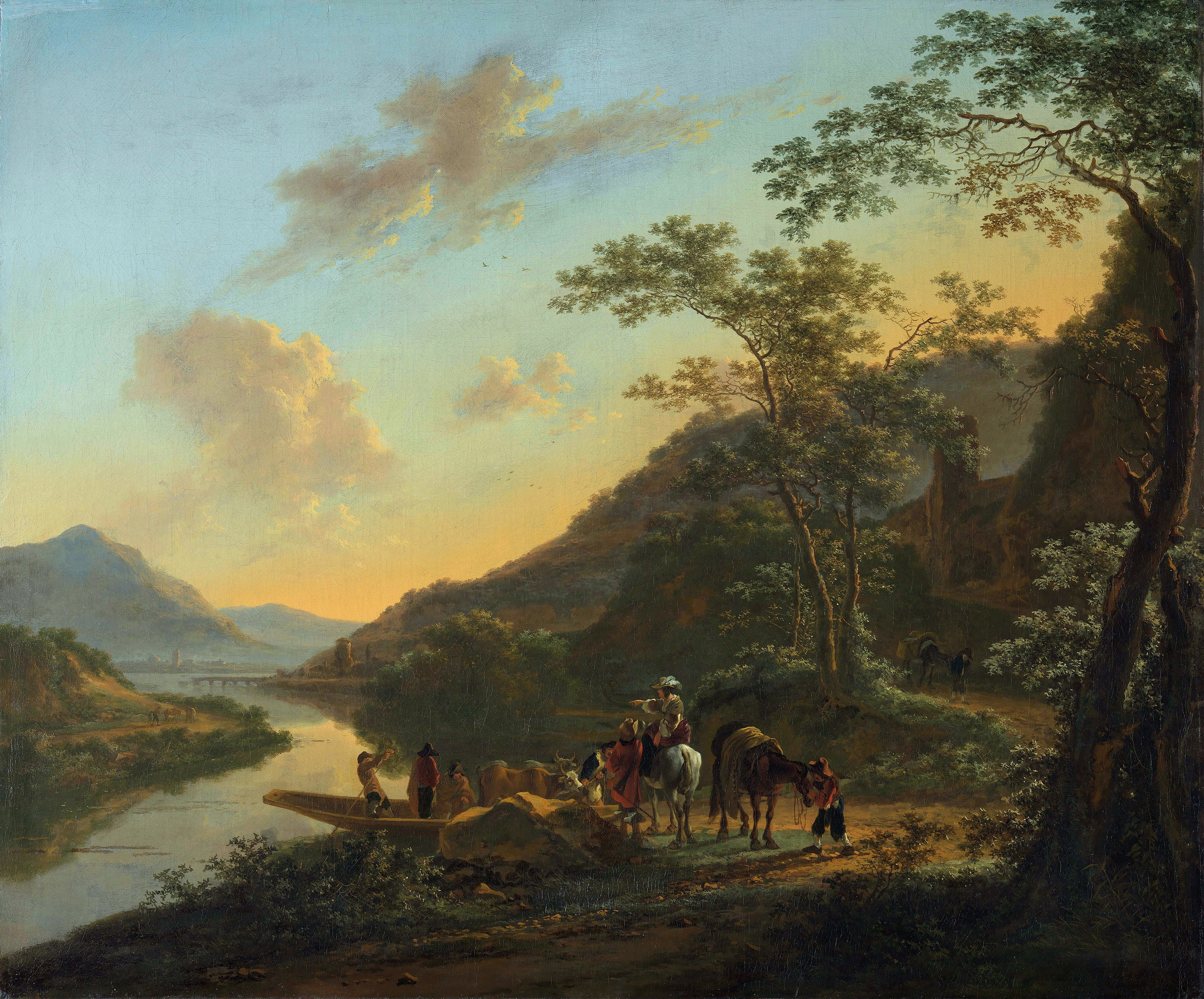
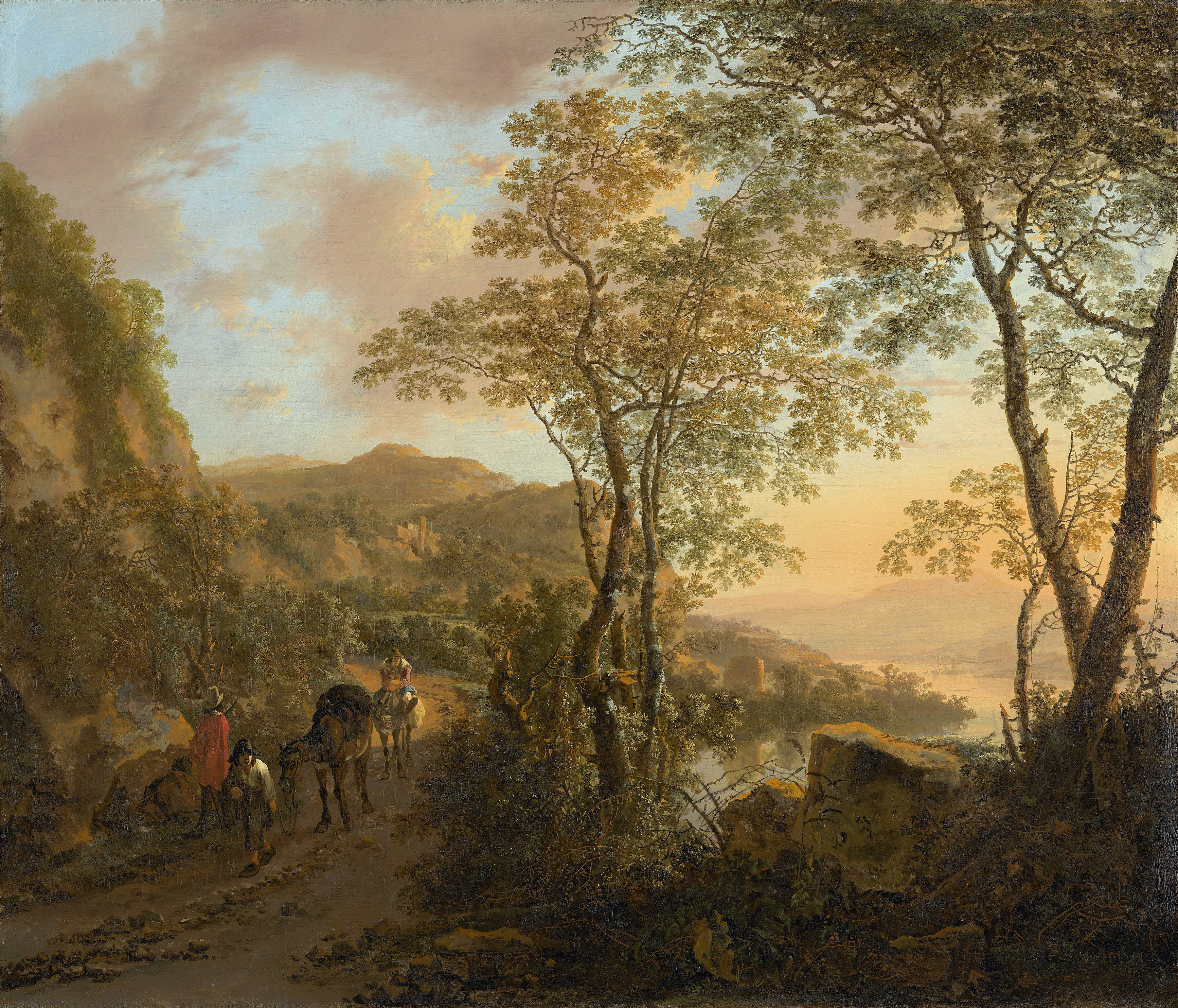
Where does light end, and longing begin? This question lingers in the air as the viewer encounters a wooded landscape that invites exploration and contemplation. Look to the left at the interplay of dappled sunlight as it filters through the dense canopy of trees, casting patches of warmth onto the cool earth below. The gentle curve of the ford draws the eye towards the center, where travelers wade through the shimmering water, their journey symbolizing the intersection of nature and human experience.
The soft greens and browns of the foliage, juxtaposed with the shimmering blues of the water, create a harmonious palette that evokes both serenity and nostalgia. Delve deeper into the details: notice the small ripples in the water, hinting at both the passage of time and the vitality of the landscape. The travelers, though small in the frame, embody a sense of determination and purpose, their fluid movements contrasting with the stillness of the surrounding vegetation. This tension between motion and tranquility captures a fleeting moment, inviting reflections on the journey of life itself.
The void between the figures and the expanse of nature suggests a yearning for connection and understanding, a theme that resonates deeply with the human spirit. Jan Both painted this work during the 17th century, a time when the Dutch landscape was increasingly celebrated in the art world. Working in Italy and later returning to his native Netherlands, Both was influenced by the Italianate style while also embracing the local natural beauty. This fusion of influences marked a significant shift in landscape painting, highlighting the profound relationship between humanity and the environment.