An Italianate Evening Landscape — History & Analysis
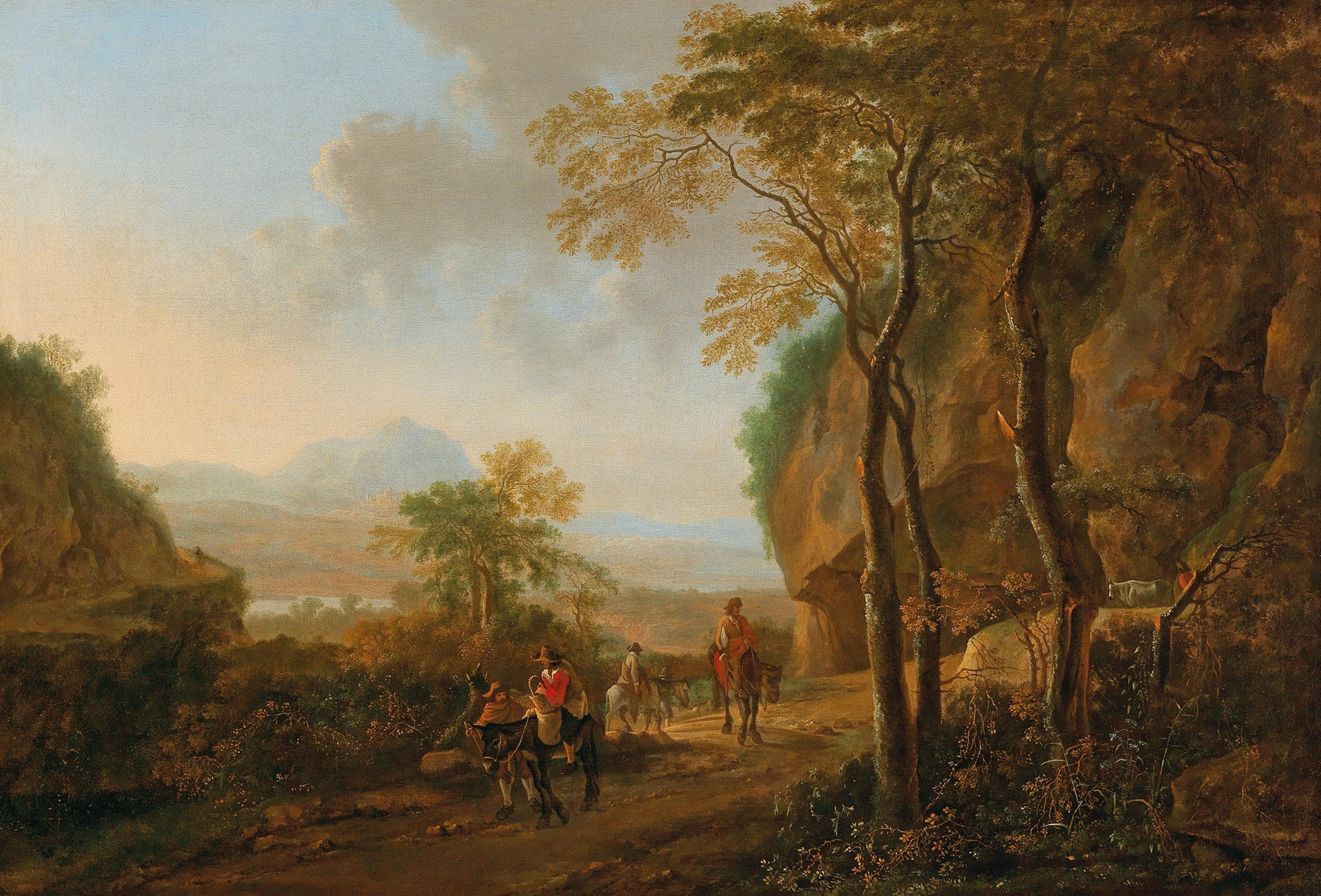
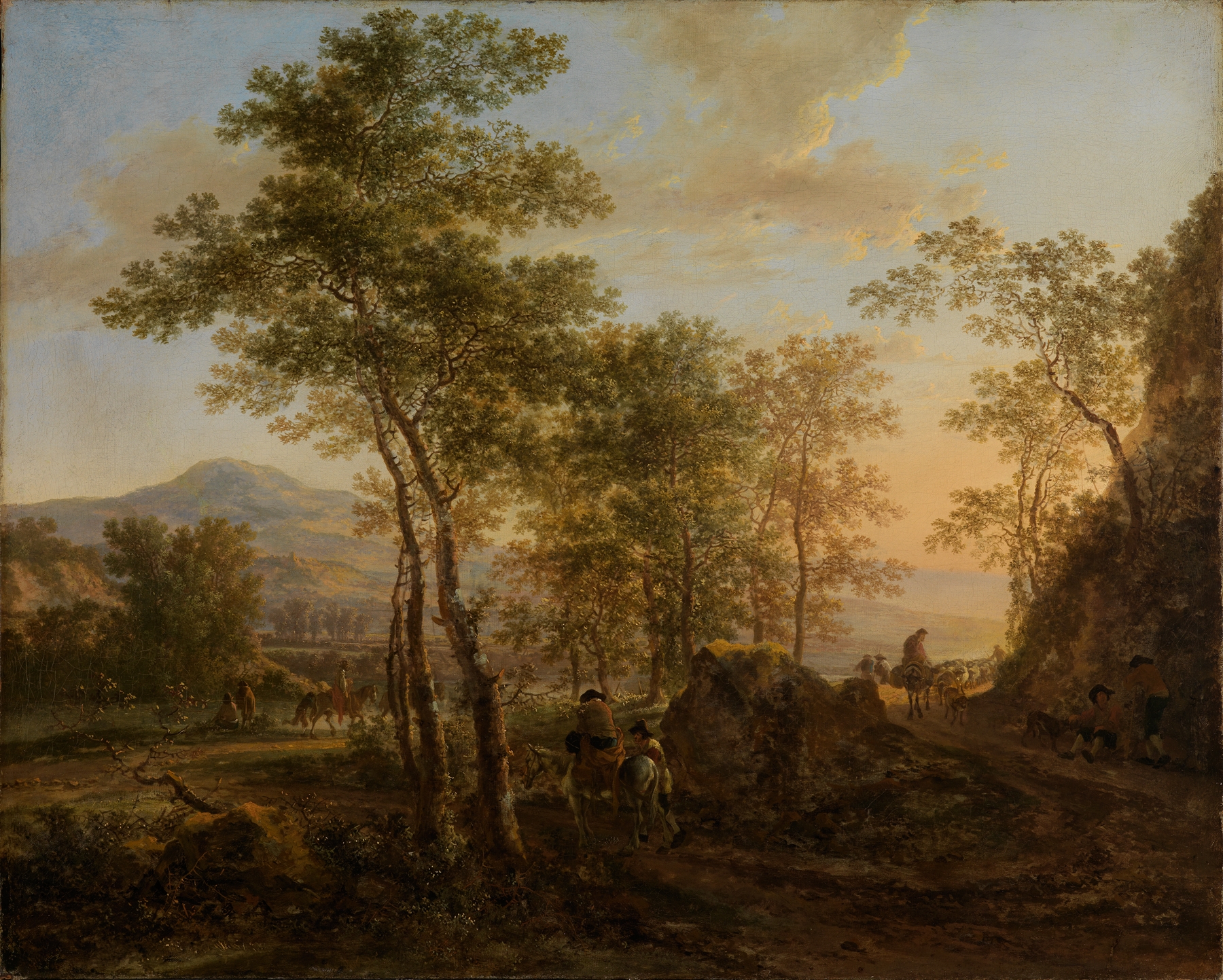
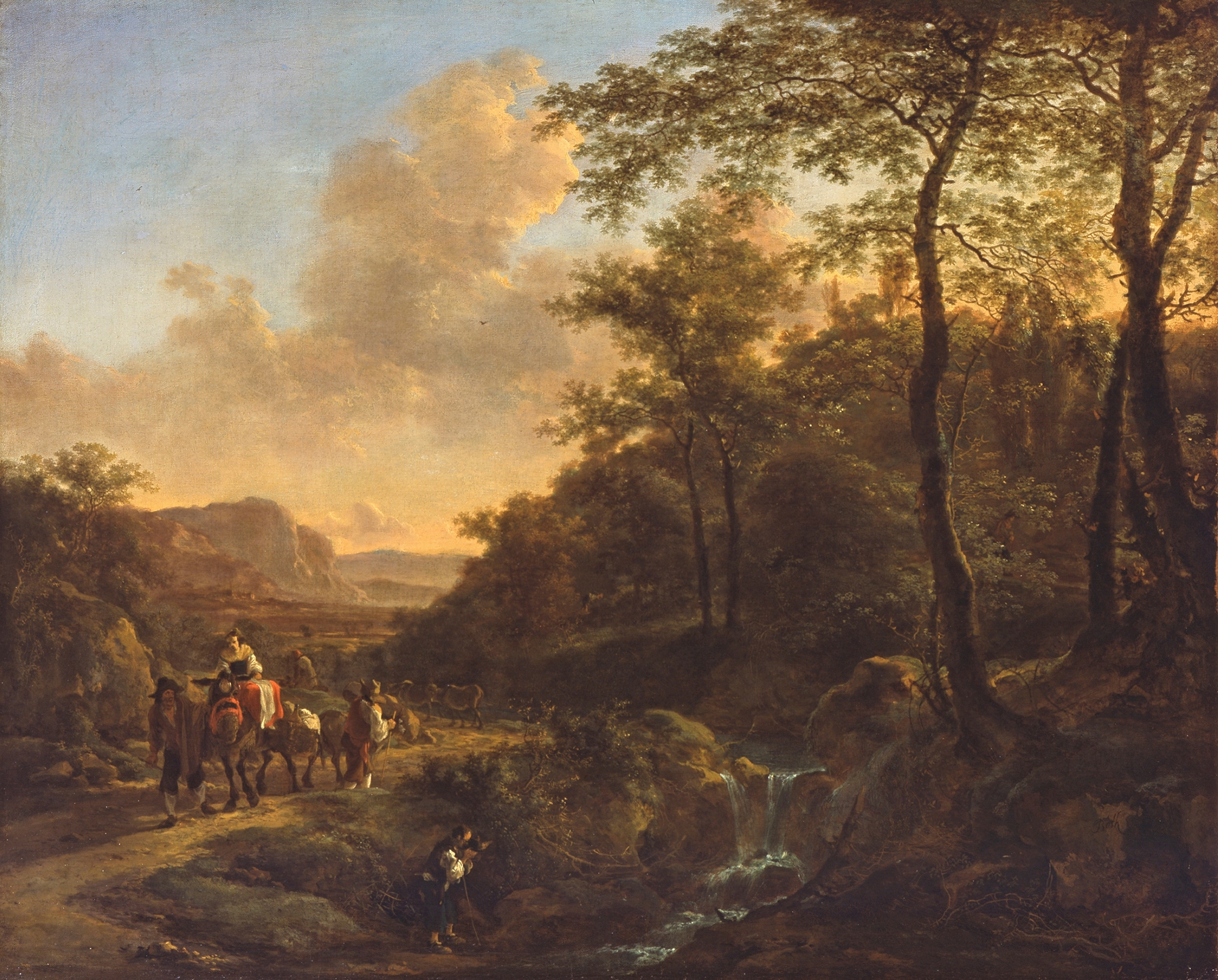
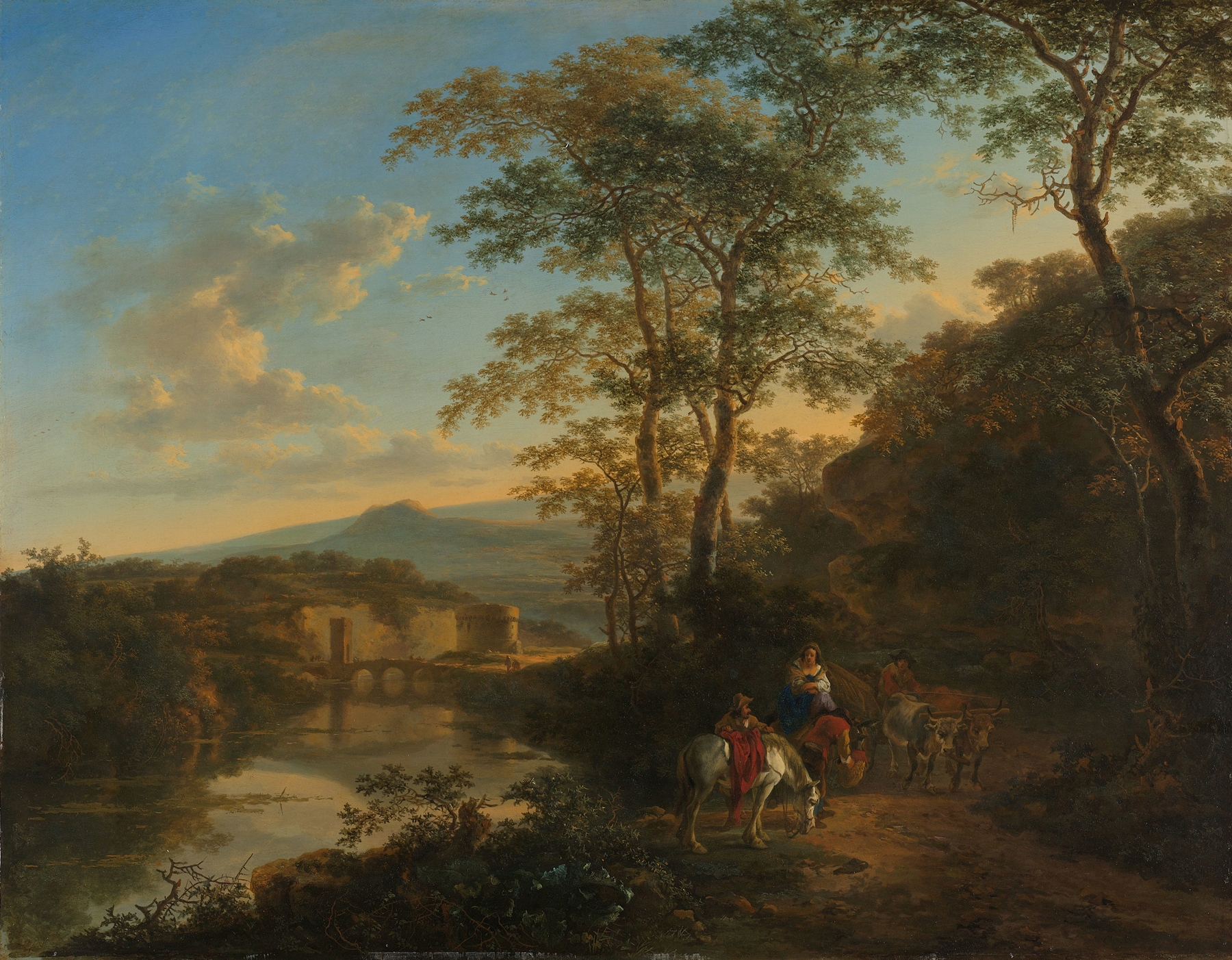
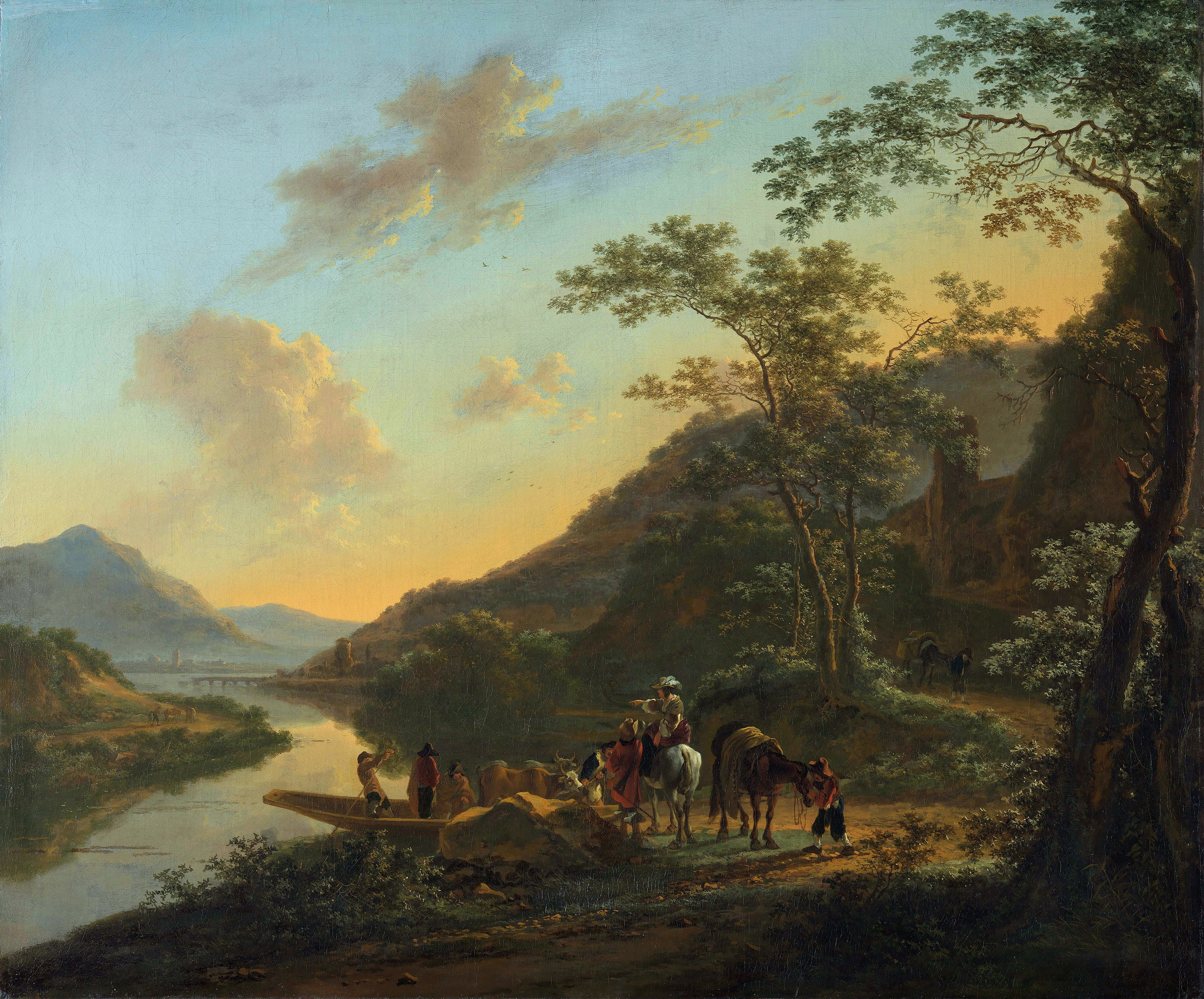
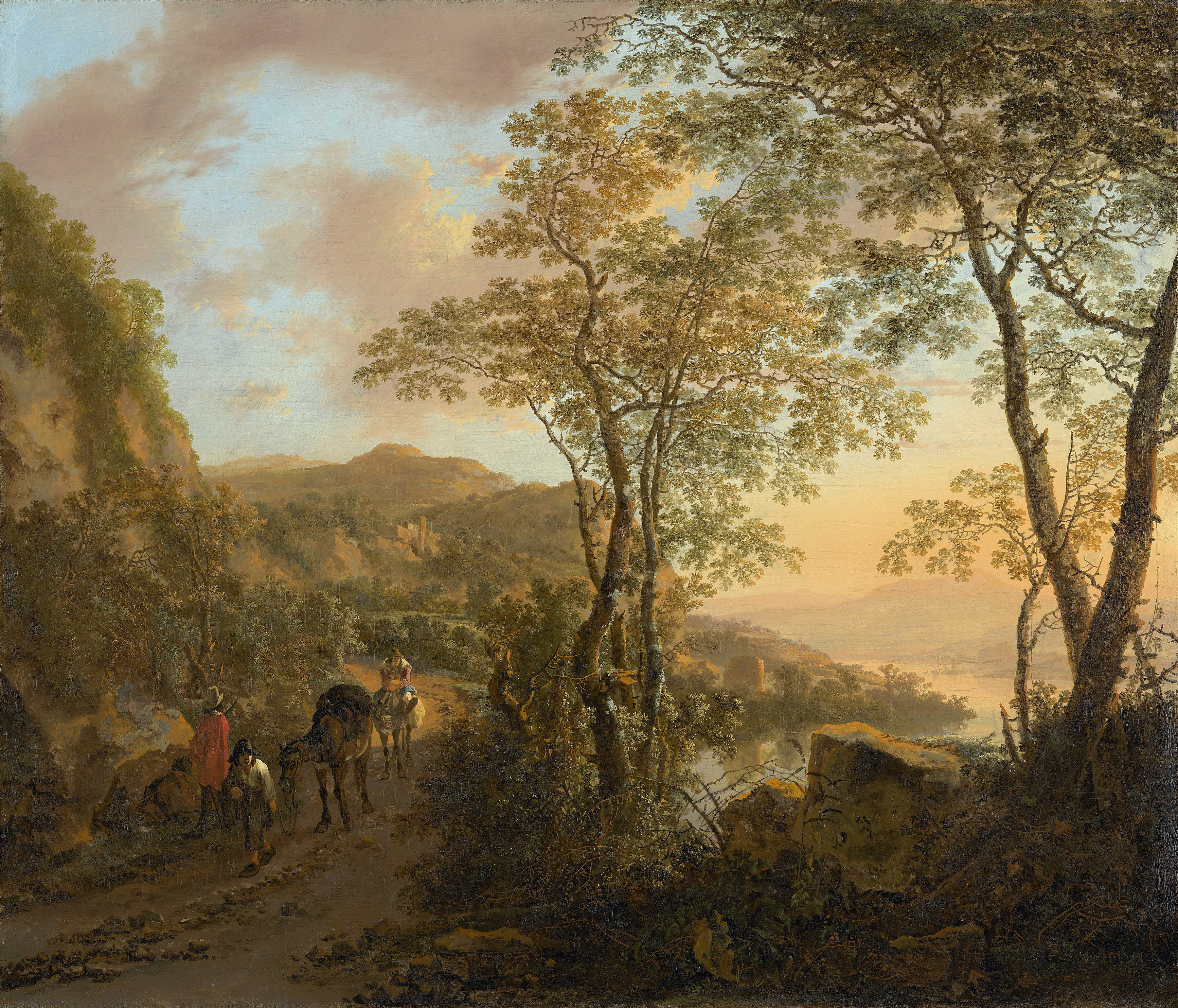
Did the painter know this moment would outlive them? In An Italianate Evening Landscape, the brush captures a fleeting serenity that transcends time, inviting us into its warm embrace. Focus your gaze on the soft, golden light that spills across the horizon, where day reluctantly gives way to twilight. Notice how the scattered clouds blush with hues of rose and amber, a masterful interplay of color that sets the mood for contemplation.
The gentle undulations of the hills draw your eye toward a distant, tranquil village, nestled comfortably among lush greenery, while the shimmering water reflects the evening’s fleeting beauty, beckoning you to linger. Within this idyllic scene, tension simmers beneath the surface. The juxtaposition of nature’s splendor against the stillness of human habitation suggests a harmonious coexistence, yet hints at the inevitable passage of time—reminding viewers of both the beauty and transience of life. The tranquil waters invite reflection, evoking thoughts of nostalgia and the longing for moments that can never be recaptured, while the looming mountains stand as timeless sentinels, witnessing the ephemeral joys of existence.
Jan Both painted this piece around 1650, during a period in his life marked by artistic maturation and exploration in the idyllic landscapes of Italy. At that time, both the Baroque movement and the burgeoning interest in naturalistic settings were reshaping the art world, influencing him to blend realism with romantic idealization. This work emerged as a poignant reflection of the cultural and artistic currents that defined his era, capturing the essence of serenity and timeless beauty in a world forever in flux.