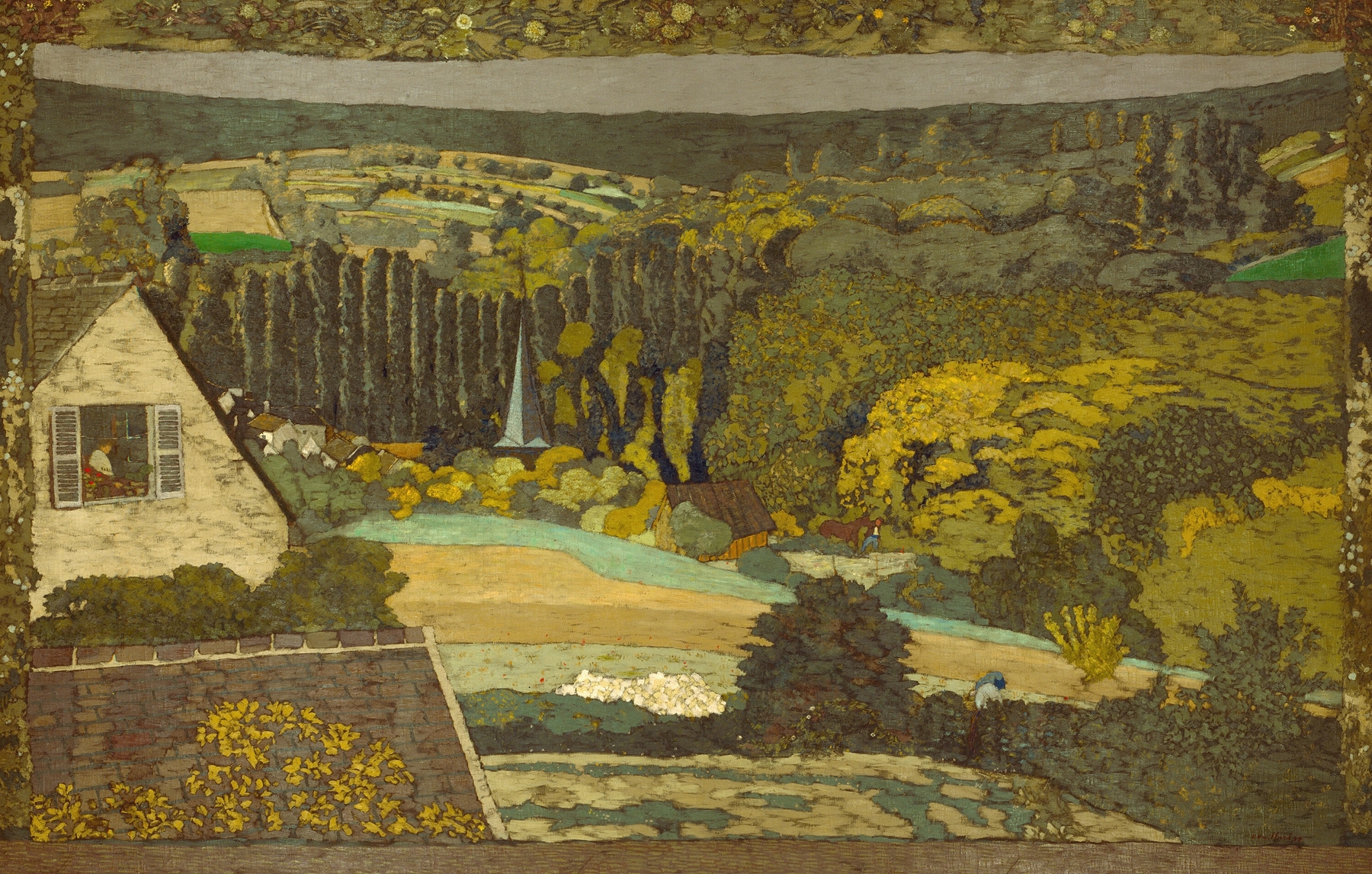
Across the Fields, plate three from Landscapes and Interiors — History & Analysis
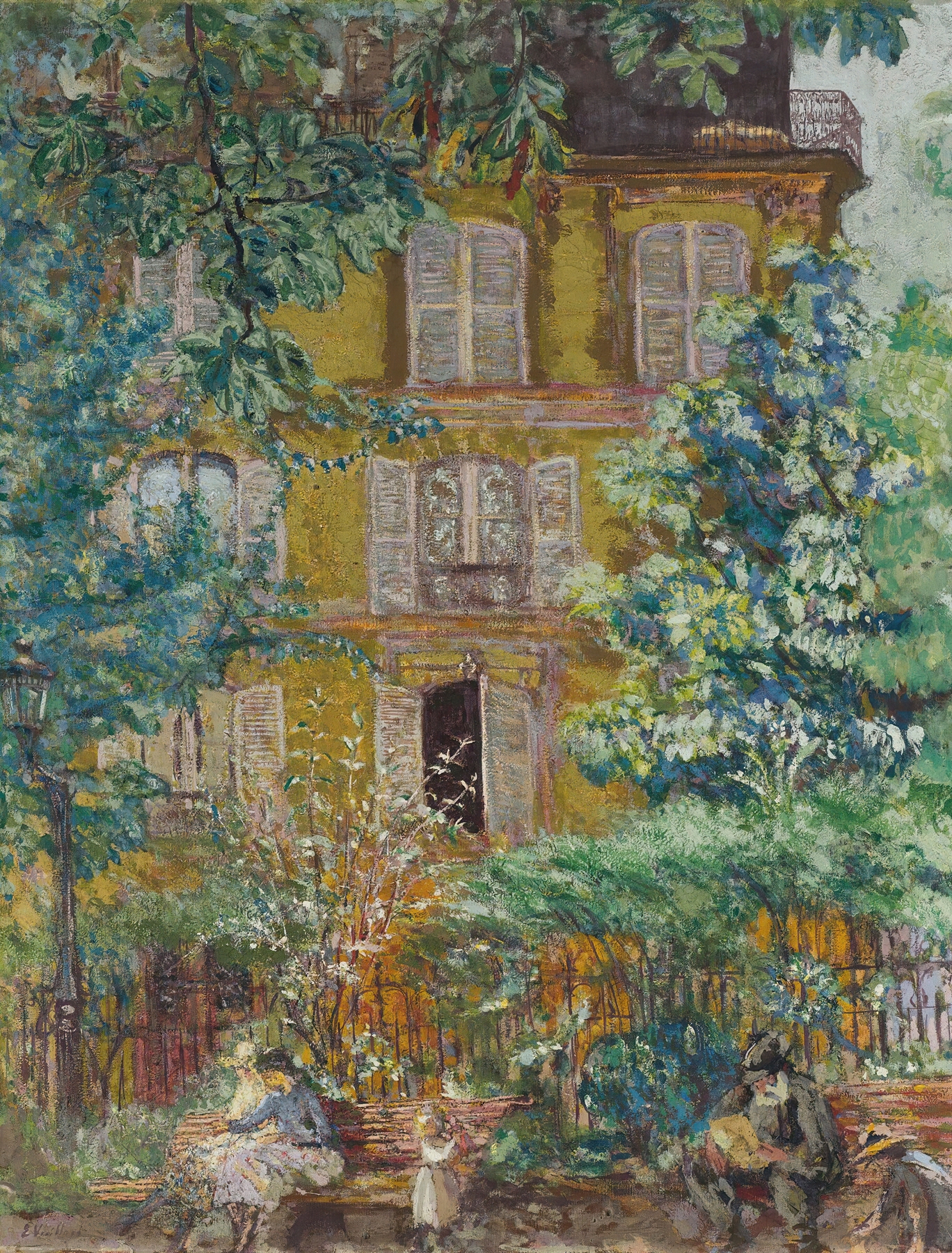
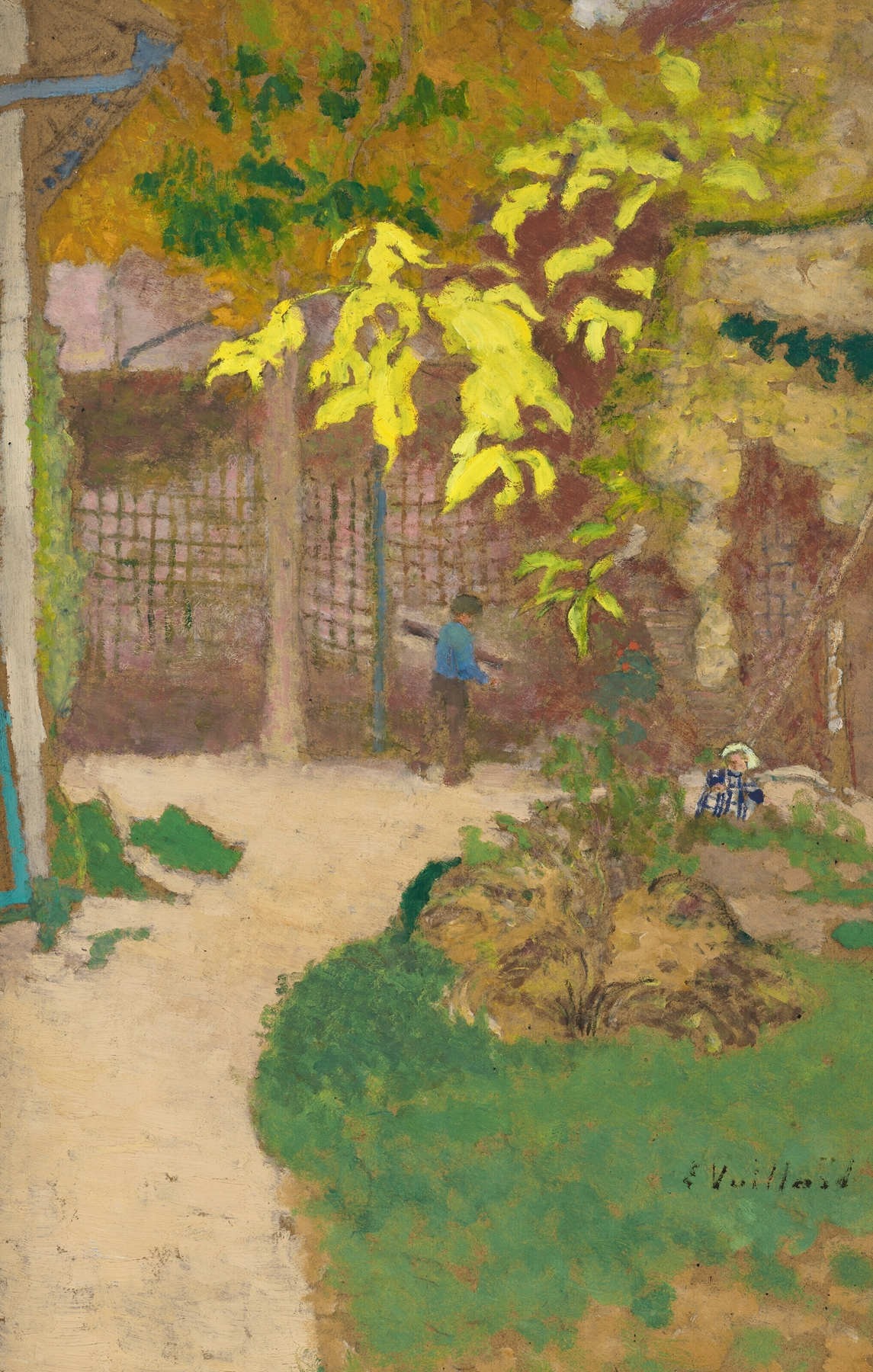
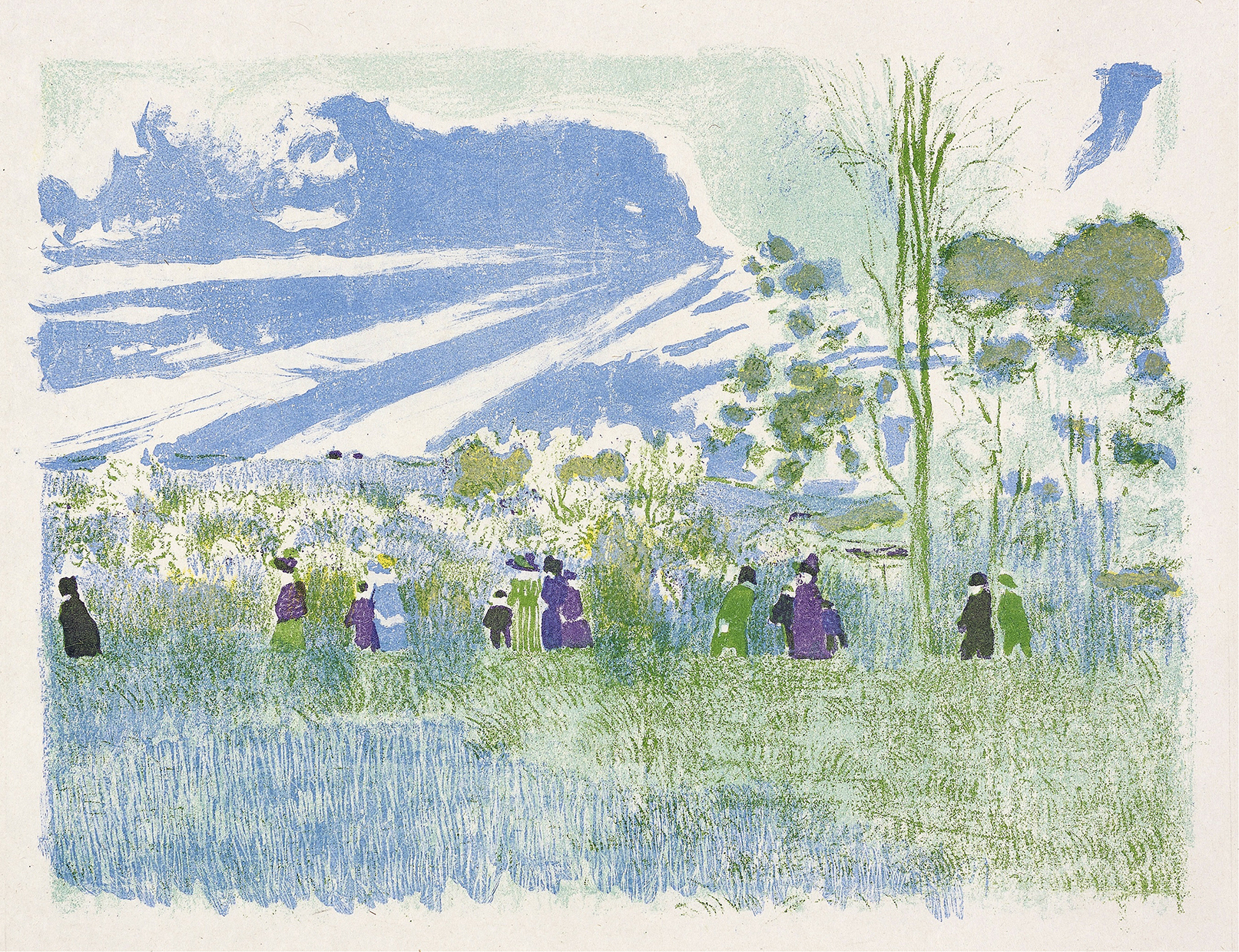
Can paint confess what words never could? In Across the Fields, a shimmering tapestry of domesticity and unease, Édouard Vuillard captures a moment that resonates with an undercurrent of fear and vulnerability. Look to the left at the delicate strokes that outline the figures, their bodies nestled within the lush, green expanse. The soft, warm hues contrast sharply with the looming, darker shadows that flicker around the edges, creating a palpable tension. Notice how the light dances across the fields, illuminating the textured surfaces of the fabric and the vibrant vegetation, yet simultaneously casting an air of uncertainty over the scene.
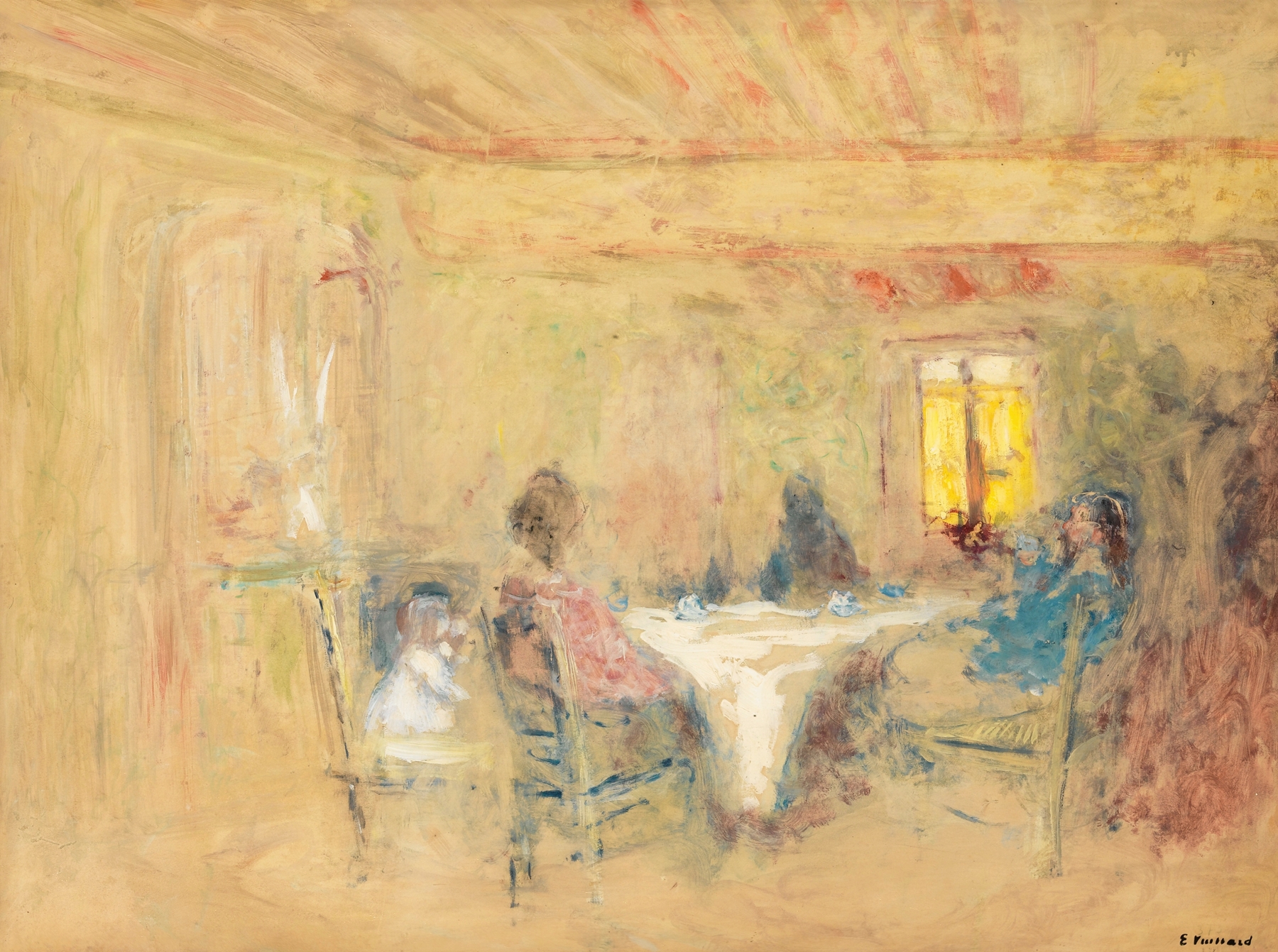
The composition draws the eye to a space that feels both inviting and isolating, as if the warmth of the sun doesn't quite reach the heart of the gathering. Within this serene landscape lies a complex emotional landscape, rich with hidden tensions. The figures, though seemingly engaged in casual conversation, display subtle gestures that hint at unspoken fears and anxieties, perhaps reflecting the societal changes of the time. The juxtaposition of intimacy and distance in their postures suggests a struggle between connection and isolation.
Every brushstroke conveys a sense of vulnerability, revealing the underlying fragility of human relationships within the context of an ever-approaching modernity. Painted in 1899, this work emerged during a transformative period for Vuillard, who was heavily influenced by the Nabis movement's emphasis on color and emotion. Living in Paris, he was deeply connected to the evolving art scene, which grappled with the implications of a rapidly industrializing world. In the midst of such change, Across the Fields serves not only as a reflection of personal sentiments but also as a broader commentary on the fears that lingered within the hearts of society.