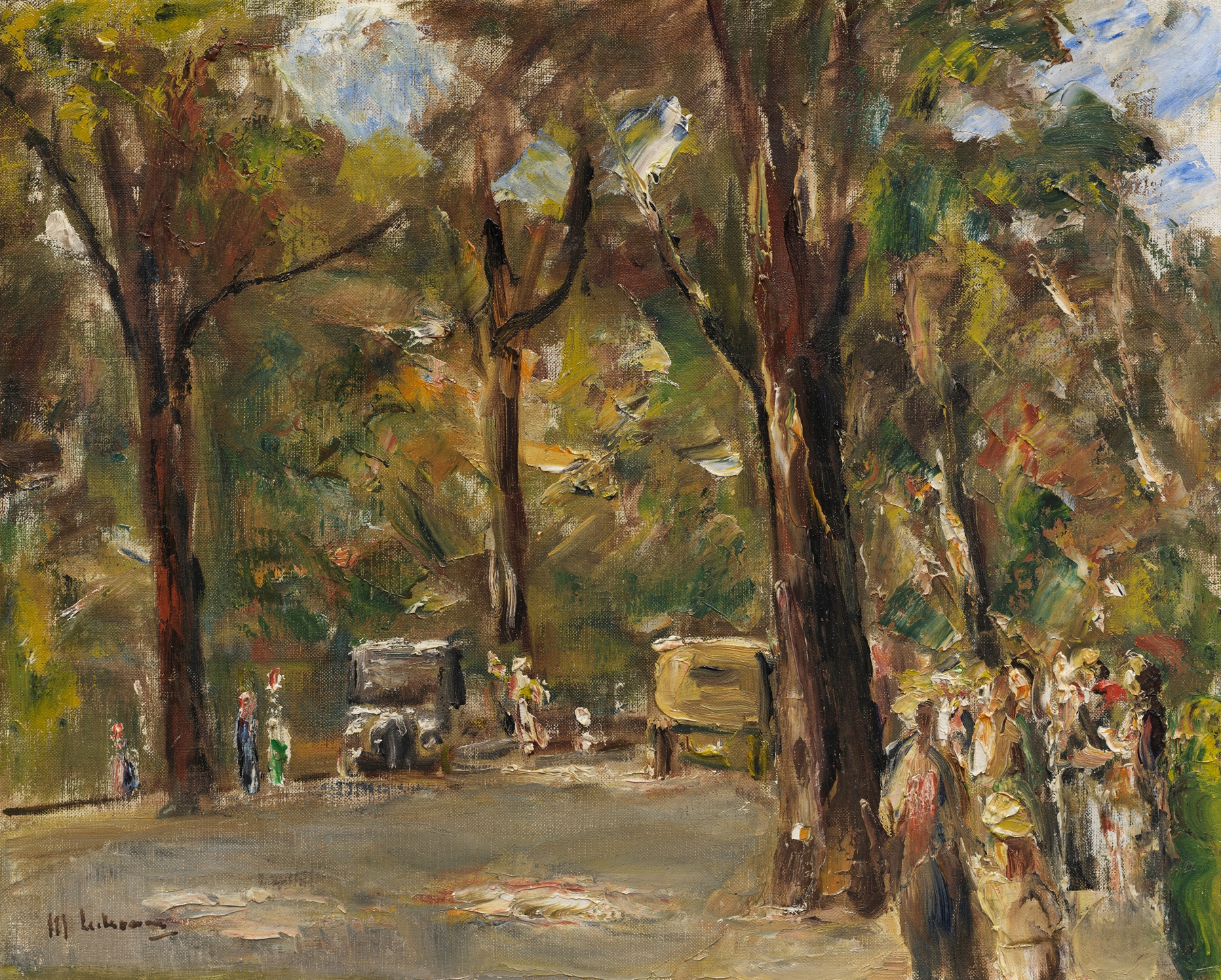
Allee (wohl in Haarlem) — History & Analysis
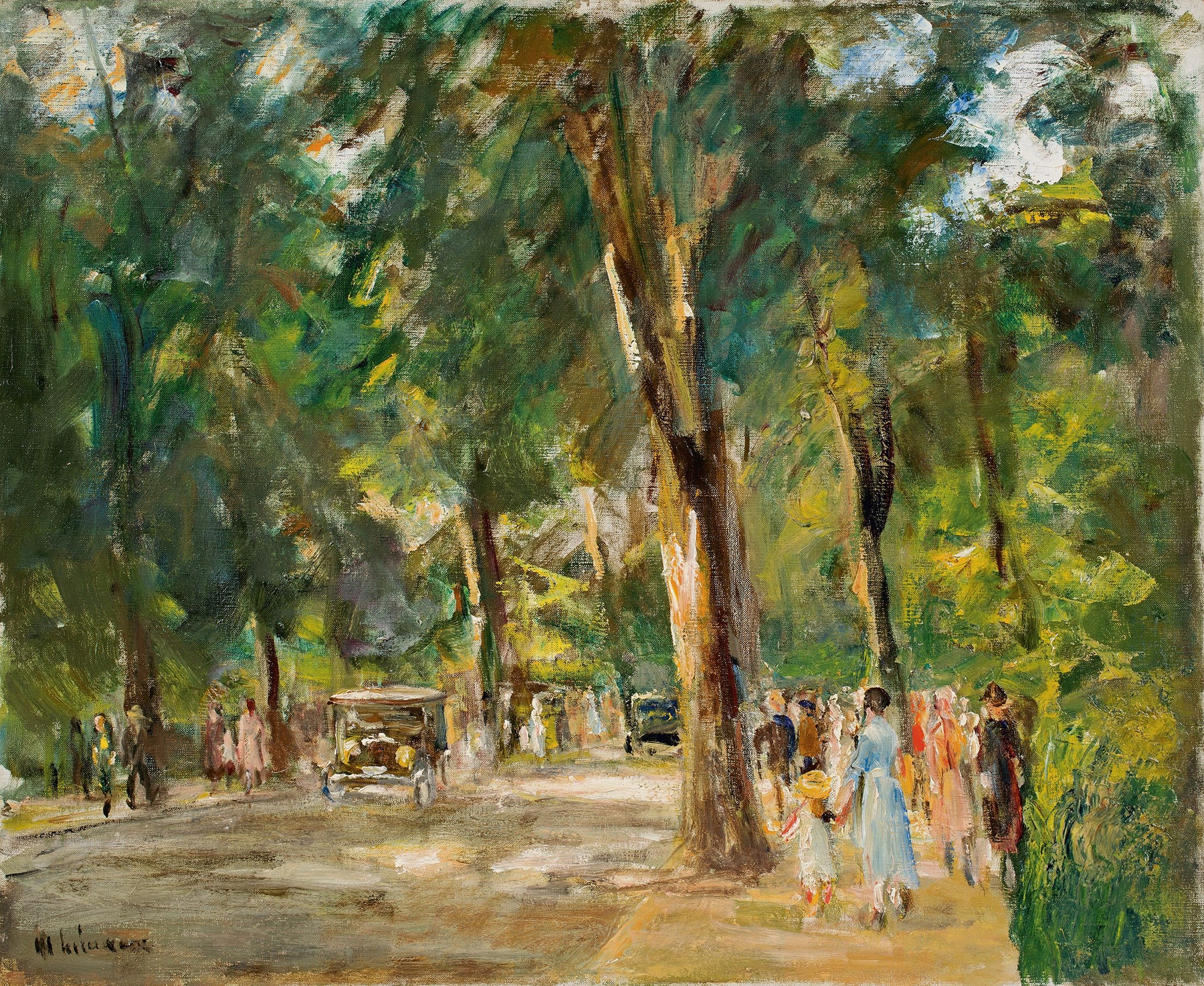
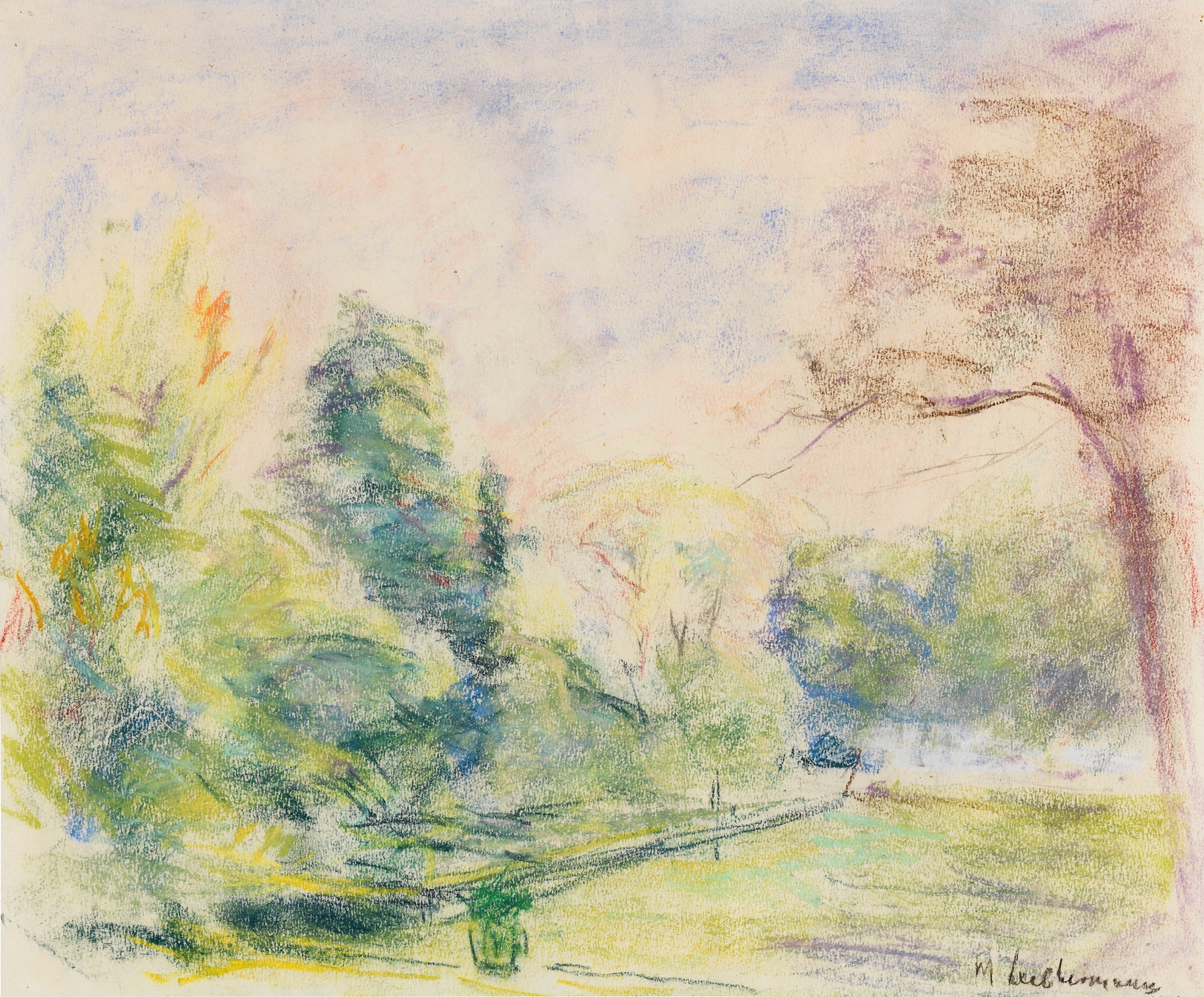
“Under the brush, chaos becomes grace.” In the delicate interplay of light and shadow, we find a world where nature breathes and thrives, inviting the viewer into a serene landscape. Look to the center of the composition, where a sun-dappled path stretches invitingly through the trees. The brushwork is loose yet intentional, creating a vibrant tapestry of greens and golds that seem to shimmer under the soft glow of sunlight. Notice how the artist employs a palette that blends deep verdant hues with the gentle warmth of autumn, suggesting a moment in time that feels both ephemeral and eternal.
Each stroke conveys the rustle of leaves and the whisper of a breeze, drawing you deeper into this tranquil scene. Yet, amidst the pastoral beauty, there lies an underlying tension between the wildness of nature and the serene order of the path. The figures, small and fleeting, suggest a human presence that feels almost incidental to the vastness of the landscape. This contrast captures the essence of life’s journey — a momentary walk through beauty amidst the chaos of the natural world, where light unifies and illuminates the hidden complexities within each scene.
Max Liebermann painted Allee (wohl in Haarlem) in 1907, during a period when the Impressionist movement was flourishing across Europe. Living in Germany, he was deeply influenced by the light and style of his French contemporaries, while simultaneously seeking to express his own connection to the Dutch landscape. This work reflects a personal exploration, as well as the broader artistic evolution of the time, capturing the beauty of everyday life through a lens of vibrant luminosity.