Allee mit Spaziergängern und Automobilen — History & Analysis
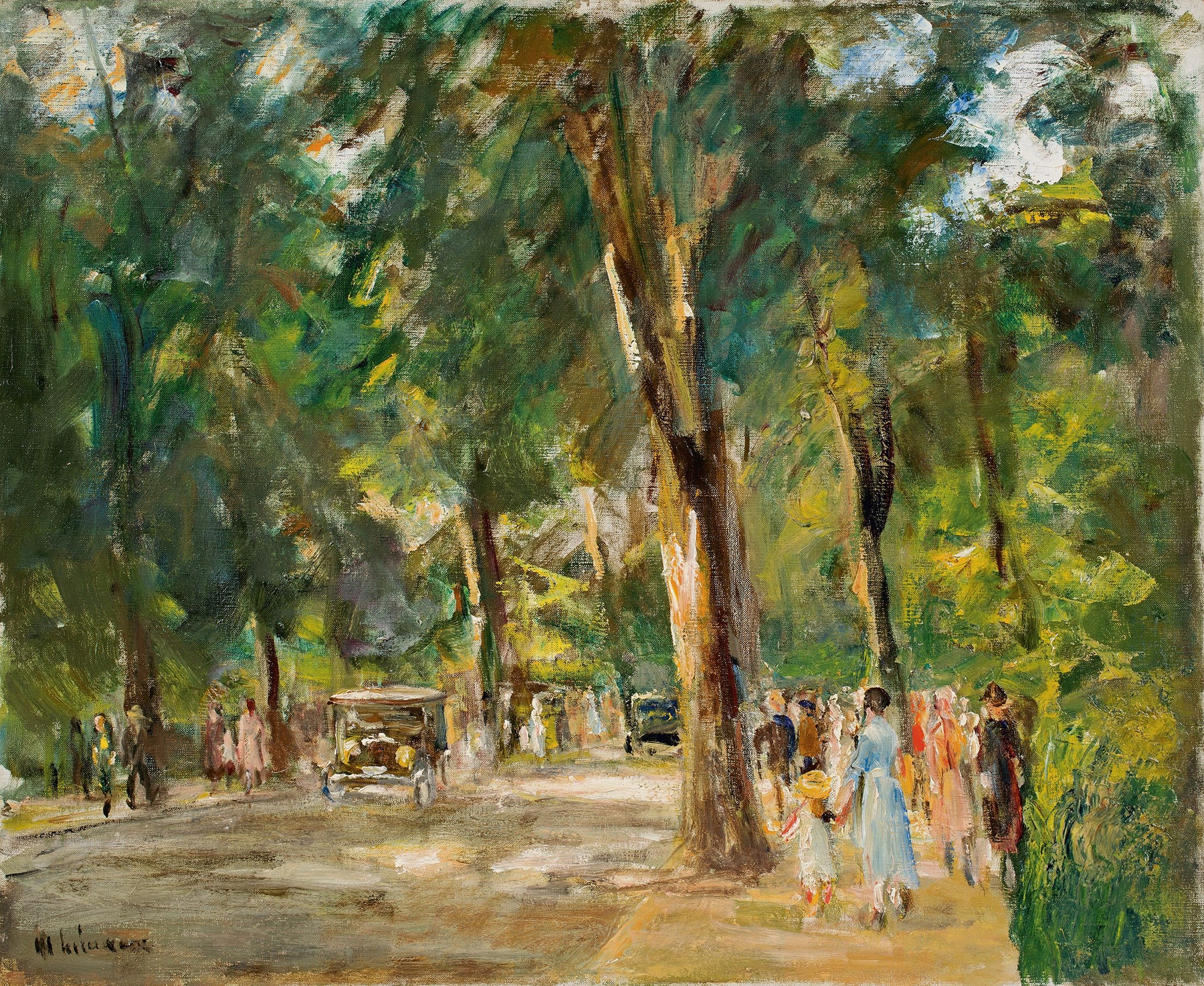
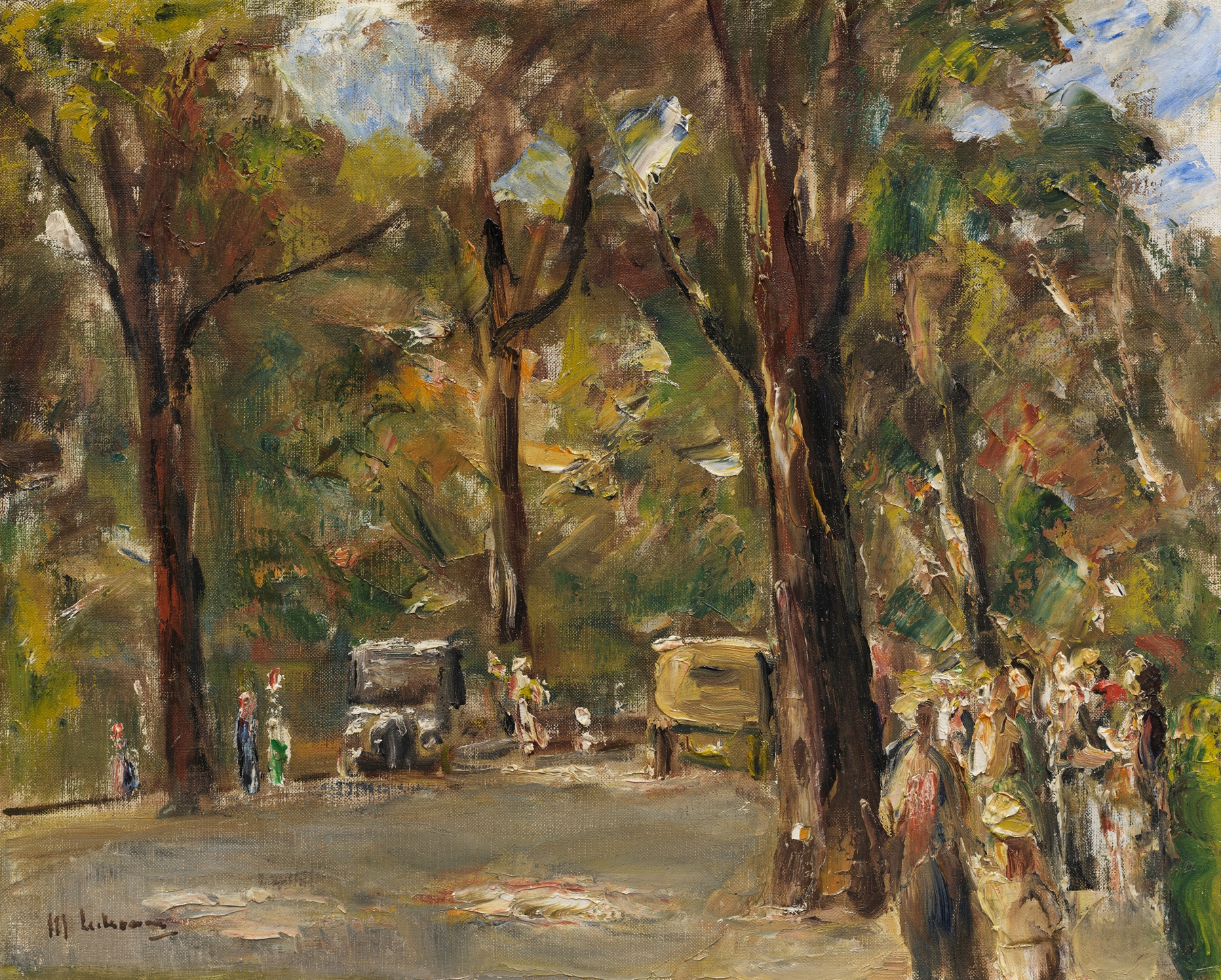
“Every brushstroke is a heartbeat remembered.” In this intimate moment captured on canvas, we find ourselves longing for connection, evoking the deep desires that intertwine our lives — a theme as old as art itself. Look to the left at the vibrant greens of the tree-lined avenue, where dappled sunlight spills through the leaves, inviting a sense of warmth and serenity. The figures, elegantly dressed, meander along, while a sleek automobile silently glides past, hinting at the modernity of the era. Liebermann’s adept use of light and shadow heightens the vibrancy of the scene, creating a dance between nature and technology that speaks to the viewer's yearning for both solace and adventure. Delve deeper into the brushstrokes that define each individual; their gestures convey a symphony of emotions. The contrast between the leisure of the pedestrians and the sleek urgency of the automobile captures the tension between tradition and progress. Each face tells a story of desire — perhaps for love, companionship, or simply the joy of existence itself. The juxtaposition of human warmth against the cold steel of the car hints at a society caught between nostalgia and the allure of modernity. In 1924, Liebermann painted this work during a time of significant transition in Europe, post-World War I. Living in Berlin, he witnessed the vibrant cultural movements of the Weimar Republic, a period characterized by experimentation and change in art. This backdrop influenced his exploration of contemporary life, as the artist sought to reflect the shifting dynamics of society through his intimate portrayal of everyday scenes.