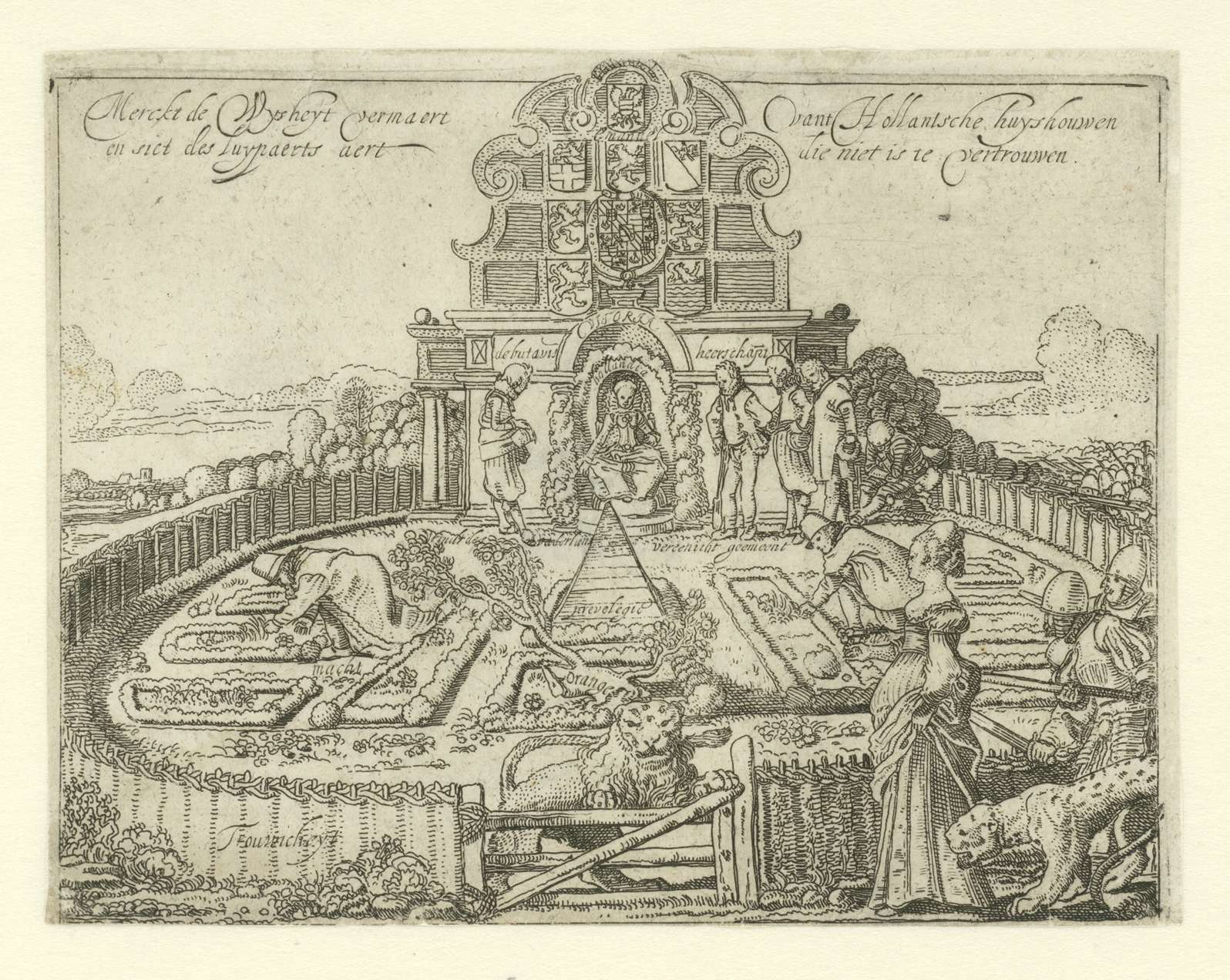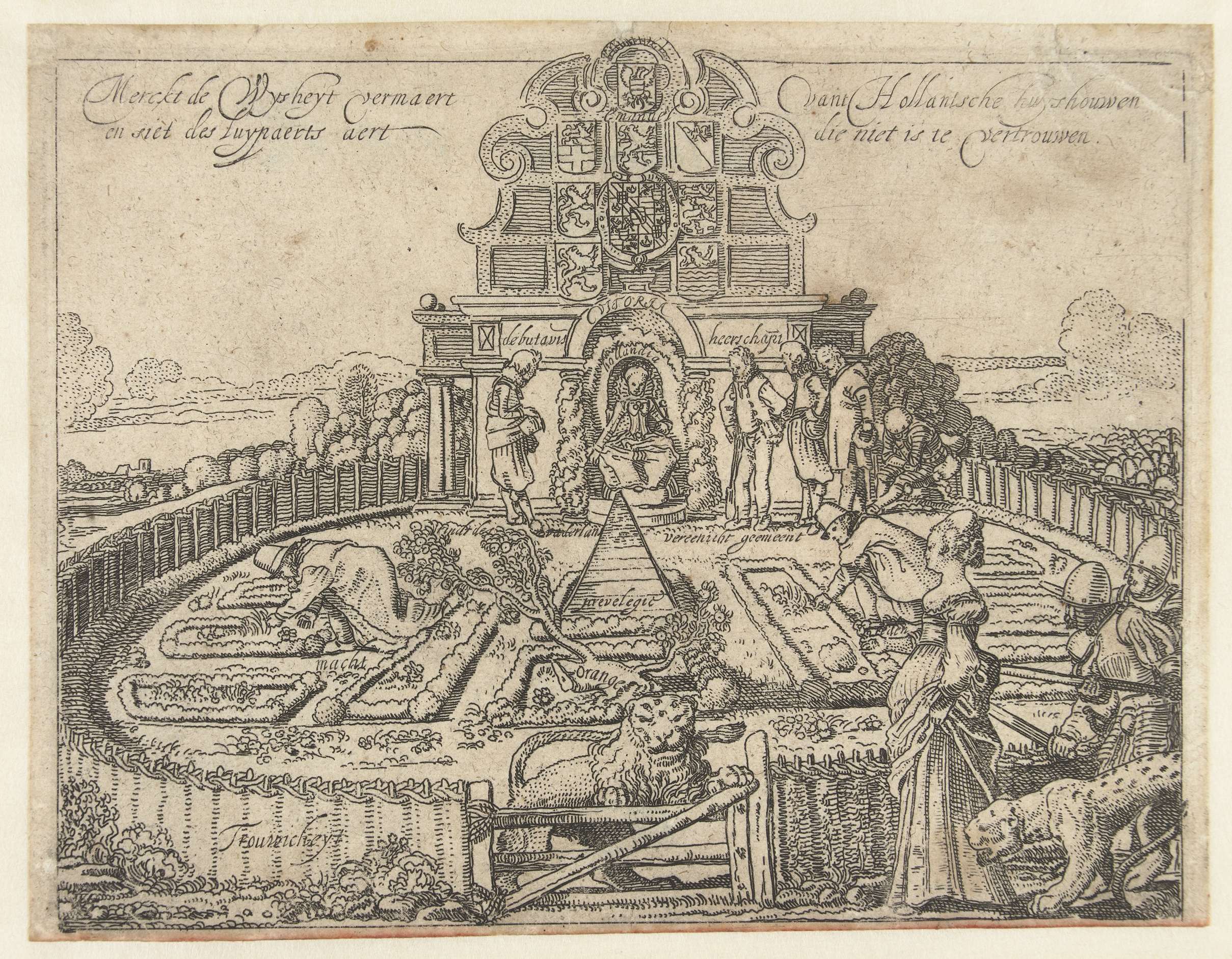
Allegorie op de onbetrouwbaarheid van Spanje en de vrijheid en welstand van de Zeven Provinciën: de Hollandse Tuin — History & Analysis
Did the painter know this moment would outlive them? In the stillness of Allegorie op de onbetrouwbaarheid van Spanje en de vrijheid en welstand van de Zeven Provinciën: de Hollandse Tuin, silence speaks volumes, revealing the complexities of trust and freedom through a lush, serene landscape. Focus on the vibrant hues that breathe life into the canvas; notice how the verdant greens of the garden contrast sharply with the somber browns of the distant structures. The composition draws your gaze inward, where figures engage in quiet conversation amidst blossoming flora.
The light, cascading gently from the upper left, transforms the scene into a haven. Each brushstroke delicately entwines the notion of prosperity, capturing the essence of the Seven Provinces in a moment seemingly frozen in time. Beneath the surface, tension simmers quietly—a delicate balance between the promise of freedom and the shadows of past betrayals. The figures, though absorbed in their world, embody a collective anxiety about the lurking uncertainties of power and allegiance.
The garden, a symbol of prosperity, hints at the fragility of this peace, juxtaposed against the looming threat of Spanish influence that hangs over the provinces like a specter of doubt. Willem Pietersz Buytewech painted this work in 1615, a time when the Dutch Republic was consolidating its independence after decades of conflict with Spain. His choice to capture this allegorical scene reflects both the hopes and fears of a nation on the cusp of defining its identity in the tumultuous landscape of early modern Europe. Amidst a renaissance of Dutch painting, he found a unique voice blending realism with symbolic depth, a testament to the era's shifting values.