Kain doodt Abel — History & Analysis
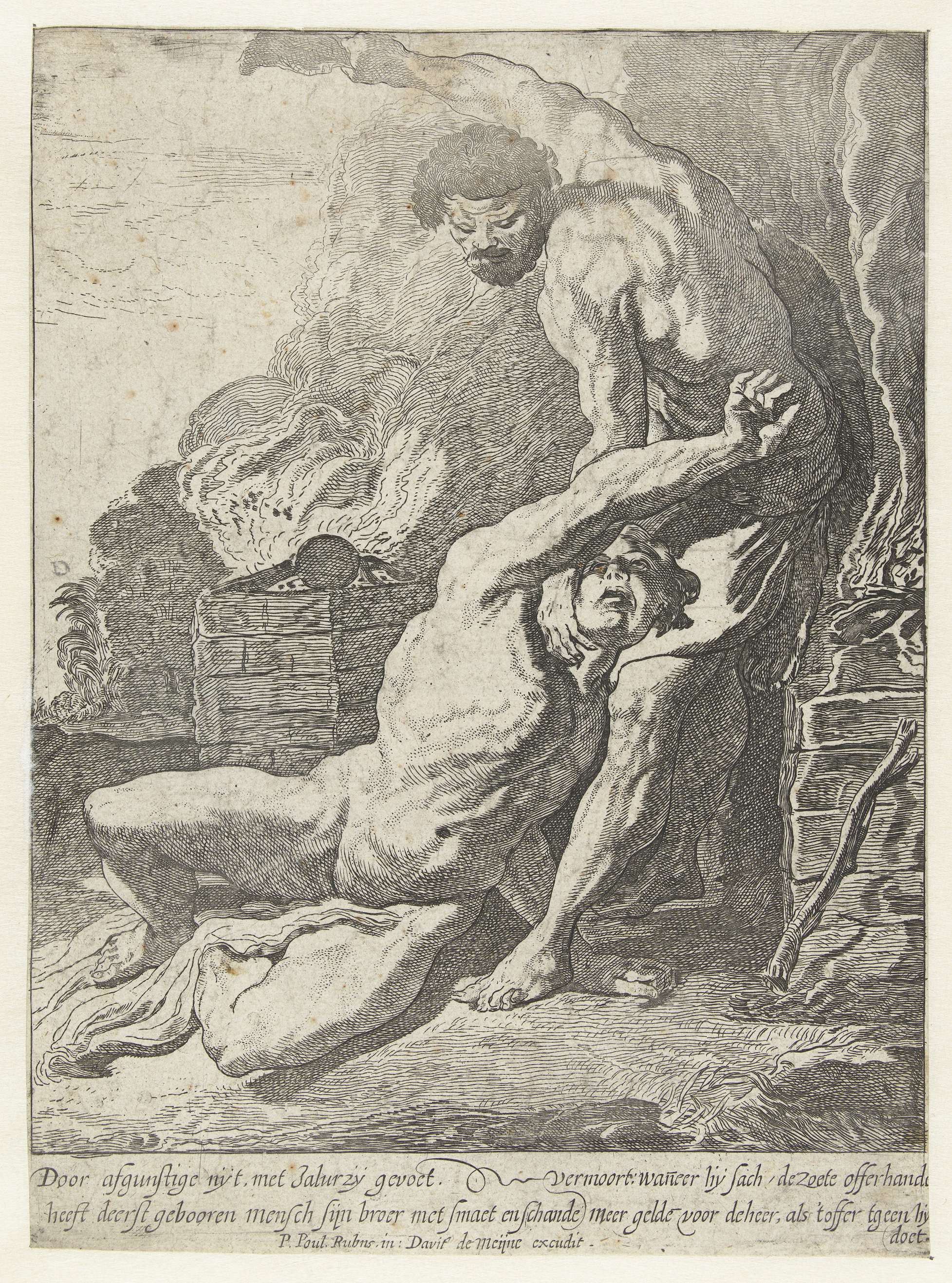
Where does light end, and longing begin? The delicate interplay between illumination and shadow invites us to explore the depths of loss and betrayal. Look to the left at the stark contrast between the figures of Cain and Abel, where the former's anguished expression is caught in a moment of violent realization. The artist employs a muted palette of earthy tones, emphasizing the somber nature of the scene. Notice how the light falls upon Abel's lifeless body, creating a stark halo of illumination that accentuates his vulnerability amid the darkness enveloping Cain.
Each brushstroke narrates a dialogue of despair, drawing the viewer's eye toward the emotional climax of the composition. As you immerse yourself in the painting, consider the symbolism inherent in the figures' gestures. Cain, clutching a weapon, reveals not only the act of fratricide but also an internal struggle, hinting at remorse and the weight of guilt. Meanwhile, the ethereal glow surrounding Abel may represent innocence lost, a fleeting moment of purity extinguished by human frailty.
The tension between light and dark serves as a poignant reminder of the duality of human nature—capable of both creation and destruction. Willem Pietersz Buytewech painted this profound work between 1612 and 1613, during a period marked by the burgeoning Dutch baroque movement. Emerging from the background of societal and artistic transformation, he sought to convey complex narratives through his art. As an artist navigating these changing landscapes, Buytewech infused his work with a deep emotional resonance, reflecting both personal and collective experiences of loss and morality in a time of introspection.