Man met een zwaan en kruik en een fluitspeler — History & Analysis
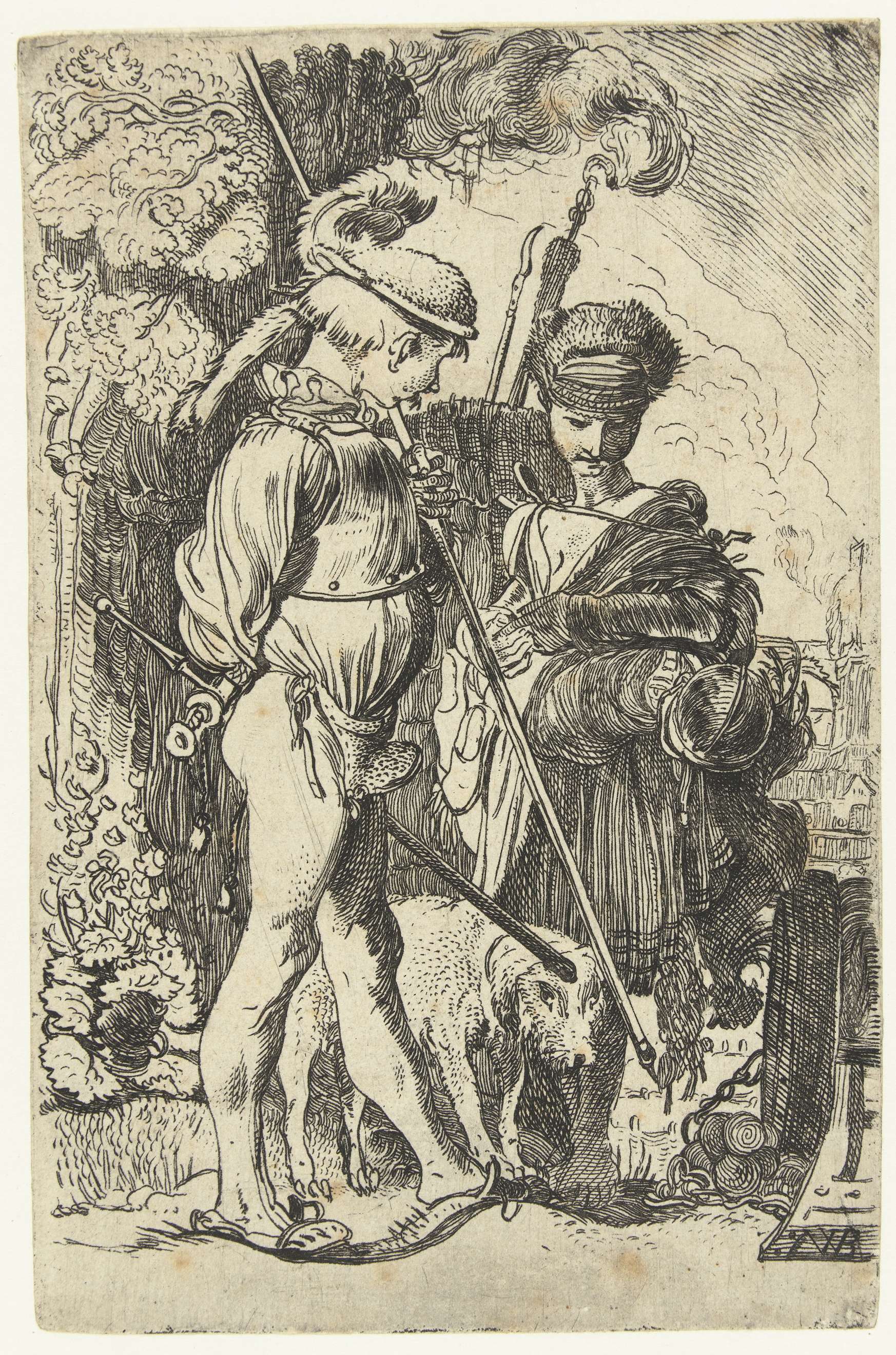
Is this a mirror — or a memory? In Man met een zwaan en kruik en een fluitspeler, the viewer is drawn into a world where the boundaries between the everyday and the enchanting blur, evoking a sense of awe that resonates through time. Look to the left, where a man stands confidently, his gaze fixed intently on the viewer. In his right hand, he cradles a swan, its elegant neck arched as if caught in mid-song. The vibrant colors of his garments contrast with the earthy tones of the background, creating a striking focal point.
Notice how the light illuminates the swan's plumage, adding an ethereal quality to this moment, while the flutist to the right, shrouded in shadow, provides a haunting melody that seems almost otherworldly. Within this composition lies a delicate dance of symbolism. The swan, often associated with beauty and transformation, reflects the man's role as both participant and observer in an elusive, fleeting moment. The juxtaposition of the flutist’s quiet concentration against the man's lively presence creates a tension that invites contemplation — are they in harmony, or is there a discord simmering beneath the surface?
Elements like the krug or jug, often used to symbolize abundance, further enrich the narrative, hinting at the layers of life that intertwine in this singular scene. Willem Pietersz Buytewech painted this captivating piece in 1606, during a time when Dutch art was flourishing with genre scenes that captured the essence of everyday life. Living in the vibrant city of Haarlem, he was influenced by the burgeoning interest in realism and detail that defined the period. In this moment, he not only reflects the social landscape of his time but also weaves a narrative that transcends the ordinary, inviting viewers into a deeper exploration of life’s mysteries.