Kain doodt Abel — History & Analysis
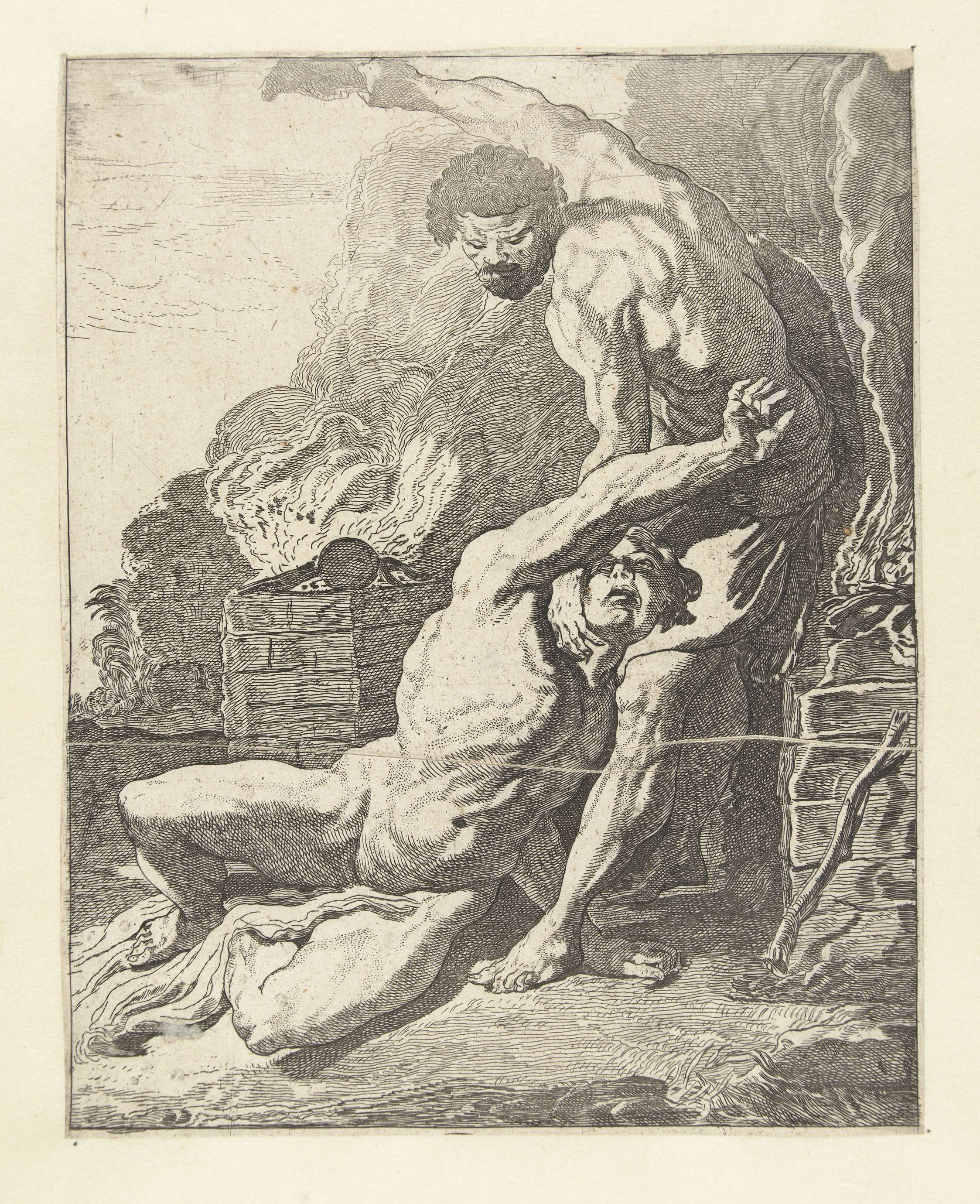
Can paint confess what words never could? In the gripping moment captured, the raw tension of betrayal and inevitability is palpable, echoing across the centuries. Look to the center of the canvas where the figures of Cain and Abel are locked in a tragic embrace. The stark contrast between their expressions—Cain’s wrathful countenance and Abel’s serene demeanor—draws the viewer in, creating a compelling narrative of conflict. Notice how the muted earthy tones of the background heighten the emotional intensity, with a soft light illuminating the figures, suggesting divine presence or judgment.
The delicate brushwork reveals the artist's commitment to realism, with every fold of fabric and subtle nuance of skin breathing life into this biblical tale. Hidden within the apparent simplicity of the scene lies a complex web of meanings. The positioning of Abel’s body, slightly turned away, evokes innocence and vulnerability, while Cain's outstretched hand hints at the violent moment about to unfold. The juxtaposition of light and shadow intensifies the foreboding atmosphere, symbolizing the eternal struggle between good and evil.
Each detail—be it the landscape or the expressions—serves as a reminder of the painful nature of sibling rivalry and the consequences of unchecked jealousy. Willem Pietersz Buytewech painted this striking work between 1612 and 1613 in the Netherlands, amidst a flourishing period of Dutch realism. The country was experiencing a cultural blossoming, where artists like Buytewech began exploring more personal and emotional themes, moving away from purely religious iconography. This painting reflects not only a pivotal moment in Buytewech’s artistic development but also a broader shift in the art world, embracing narrative depth and psychological complexity.