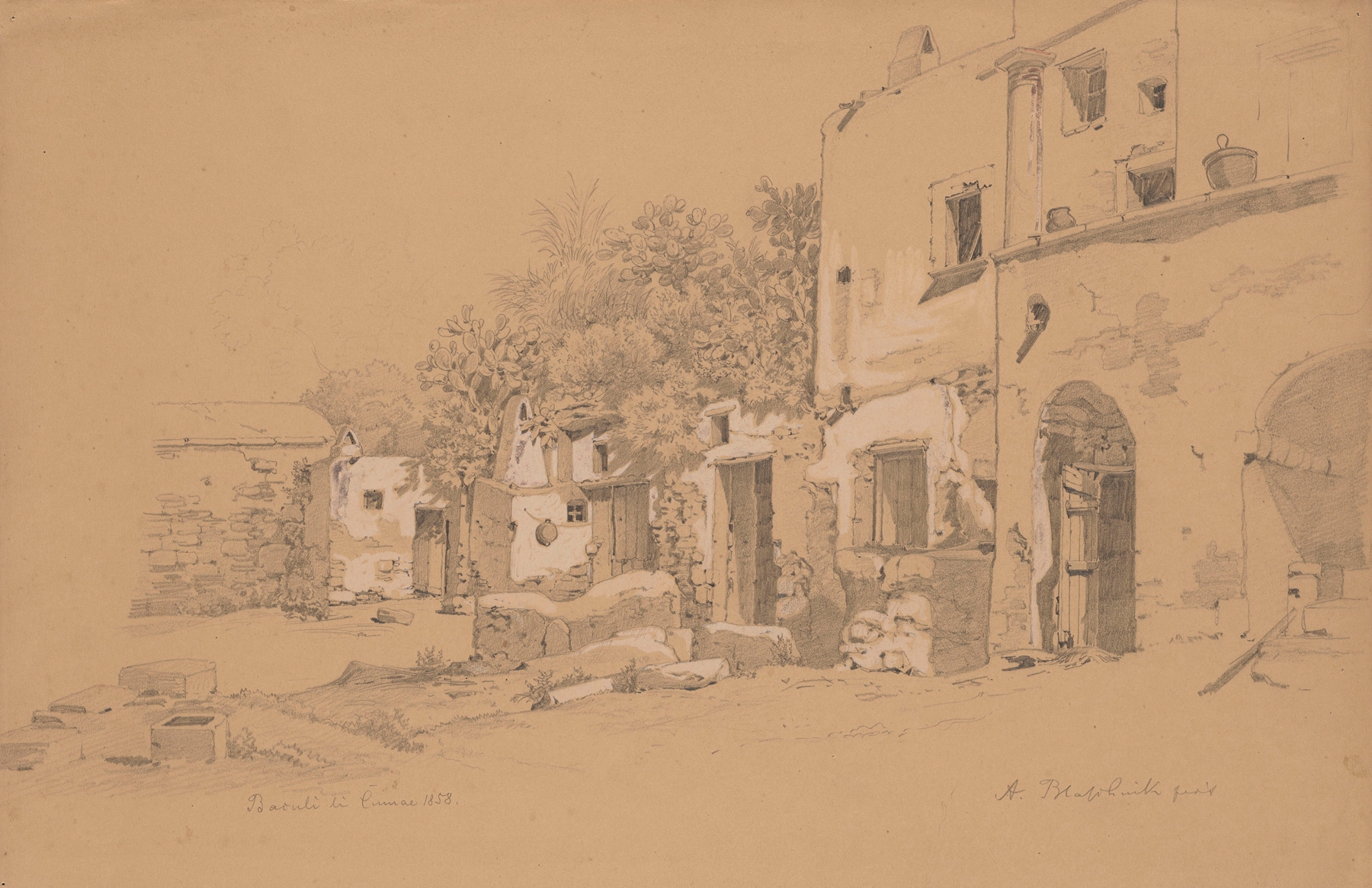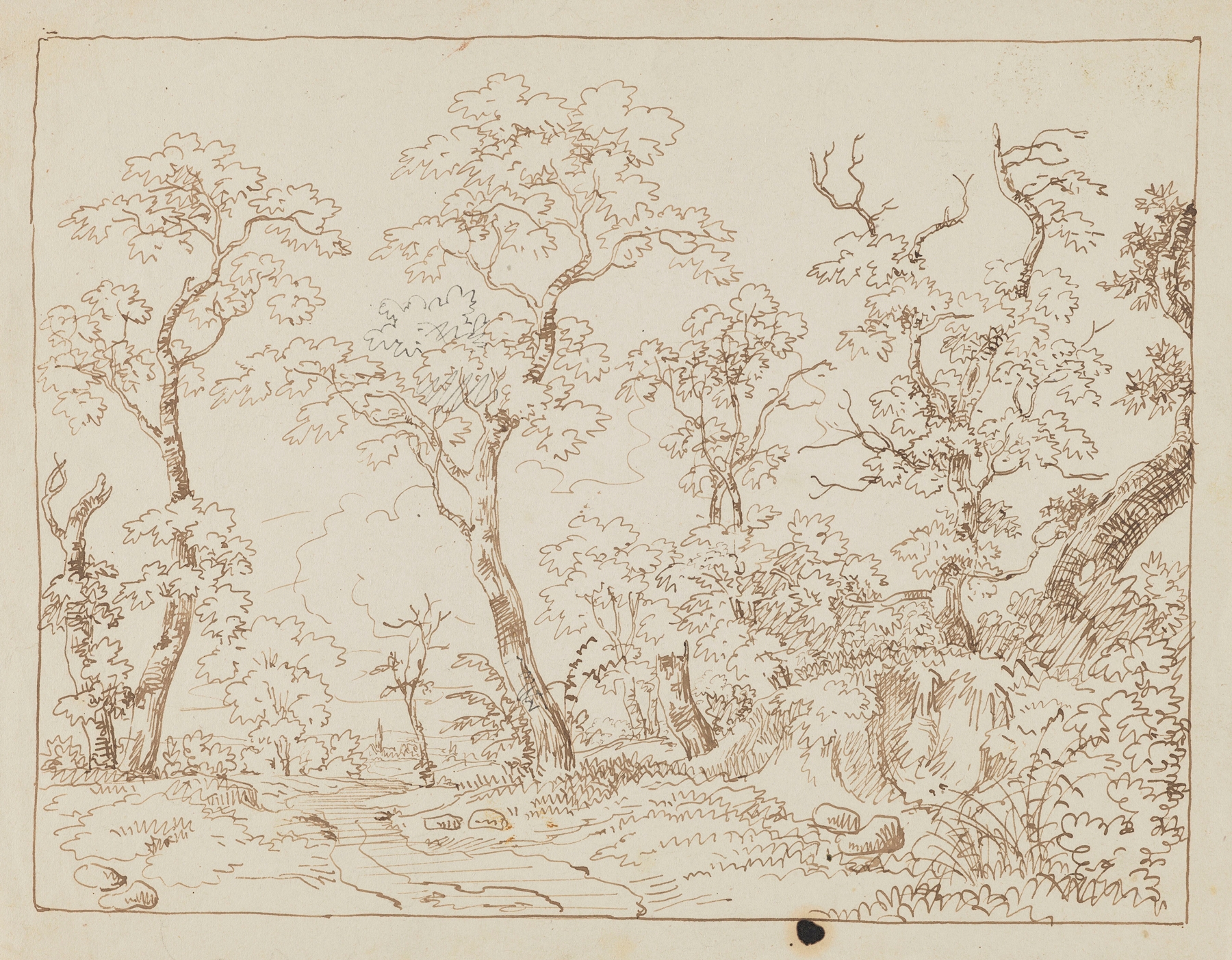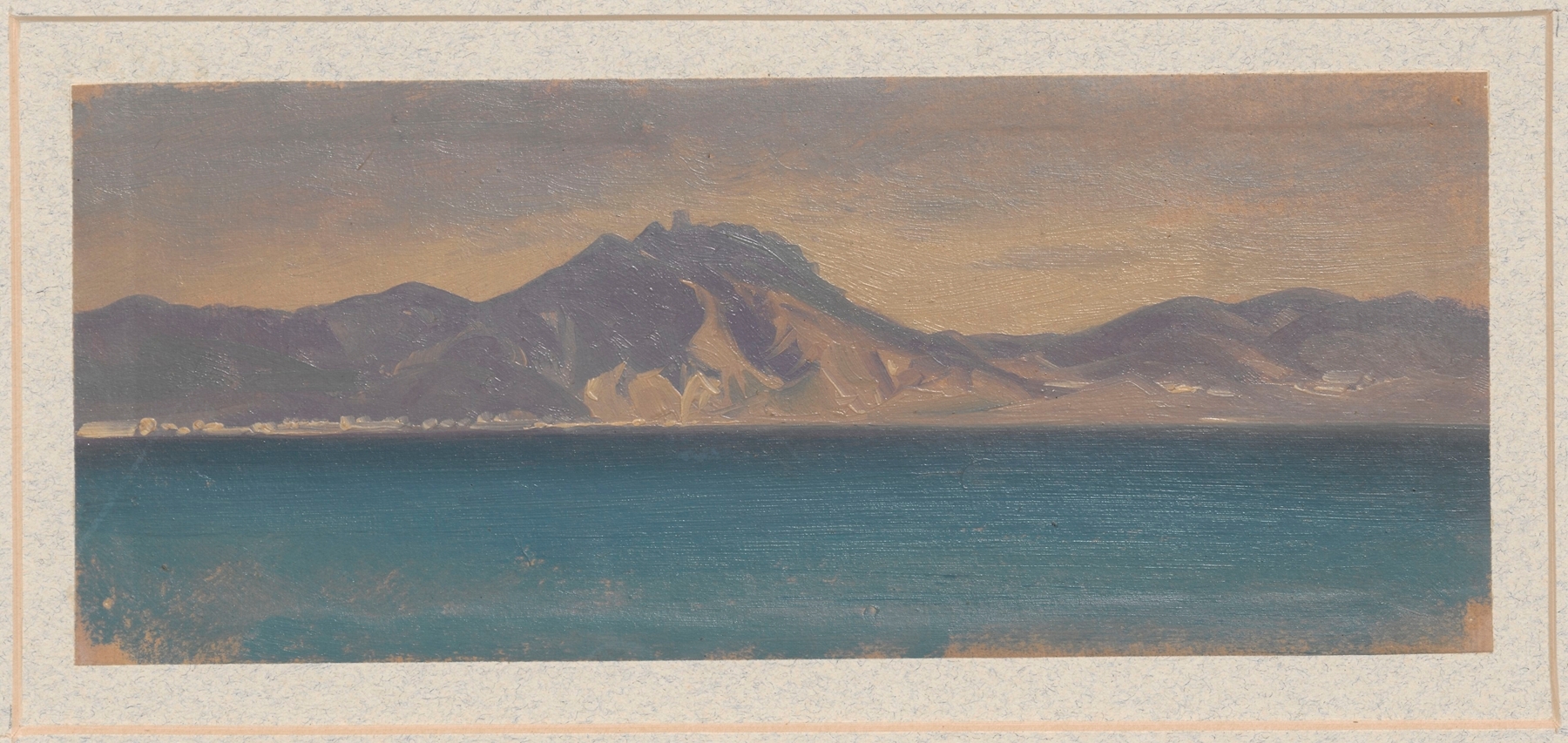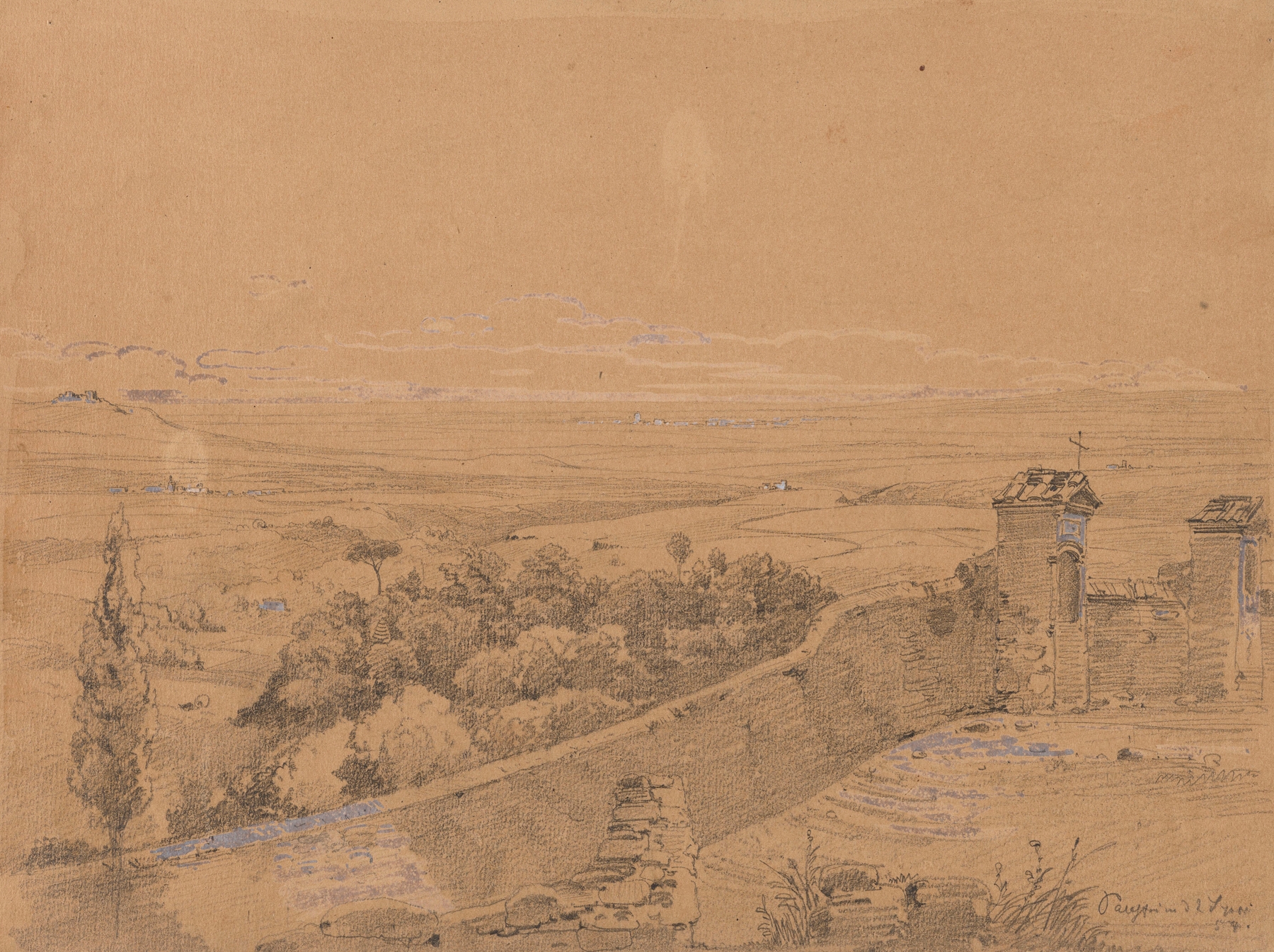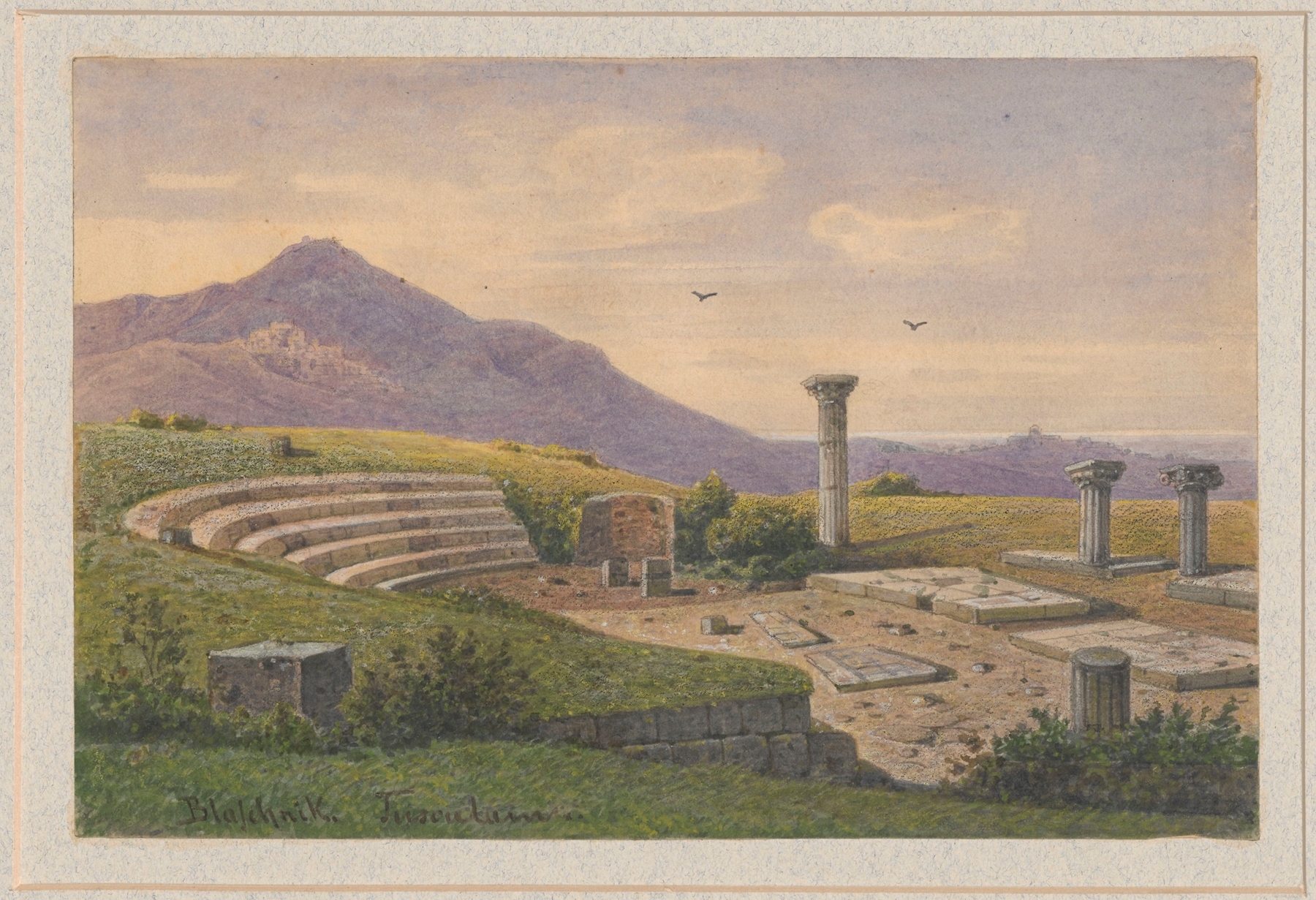
“Art reveals the soul when the world turns away.” In *Amphitheatre in Tusculum*, a quiet awakening occurs, inviting the viewer to witness a moment where history breathes through the canvas. The painting draws us into a space where time seems suspended, urging contemplation of the past amidst the grandeur of ancient architecture. Look to the center, where the amphitheater stands resolute against a backdrop of lush greenery and a gentle sky. Notice the earthy tones that dominate the structure, intermingling with vivid greens that breathe life into the scene. The artist employs a delicate interplay of light and shadow, highlighting the arches while softening the undulating hills surrounding them. Each brushstroke conveys a sense of permanence, yet also invites an awareness of the transience of human achievement. Hidden within the careful composition lies a tension between nature and man-made structures. The amphitheater, a symbol of civilization, cradles the whispers of countless stories, yet it simultaneously succumbs to the embrace of nature—encroaching foliage hints at the slow reclamation of the earth. The soft blending of colors embodies the duality of time: the brilliance of human ingenuity juxtaposed with the inevitable passage of time, reminding us that even the grandest creations are not immune to decay. Arthur Blaschnik painted this work between 1853 and 1860, during a period marked by artistic exploration and a fascination with classical architecture. Living in a time of Romanticism, he sought to capture not just beauty but also the emotional resonance of historical sites. This painting reflects both his personal journey and the broader currents within the art world, as artists began to embrace nature as an integral part of their narrative.