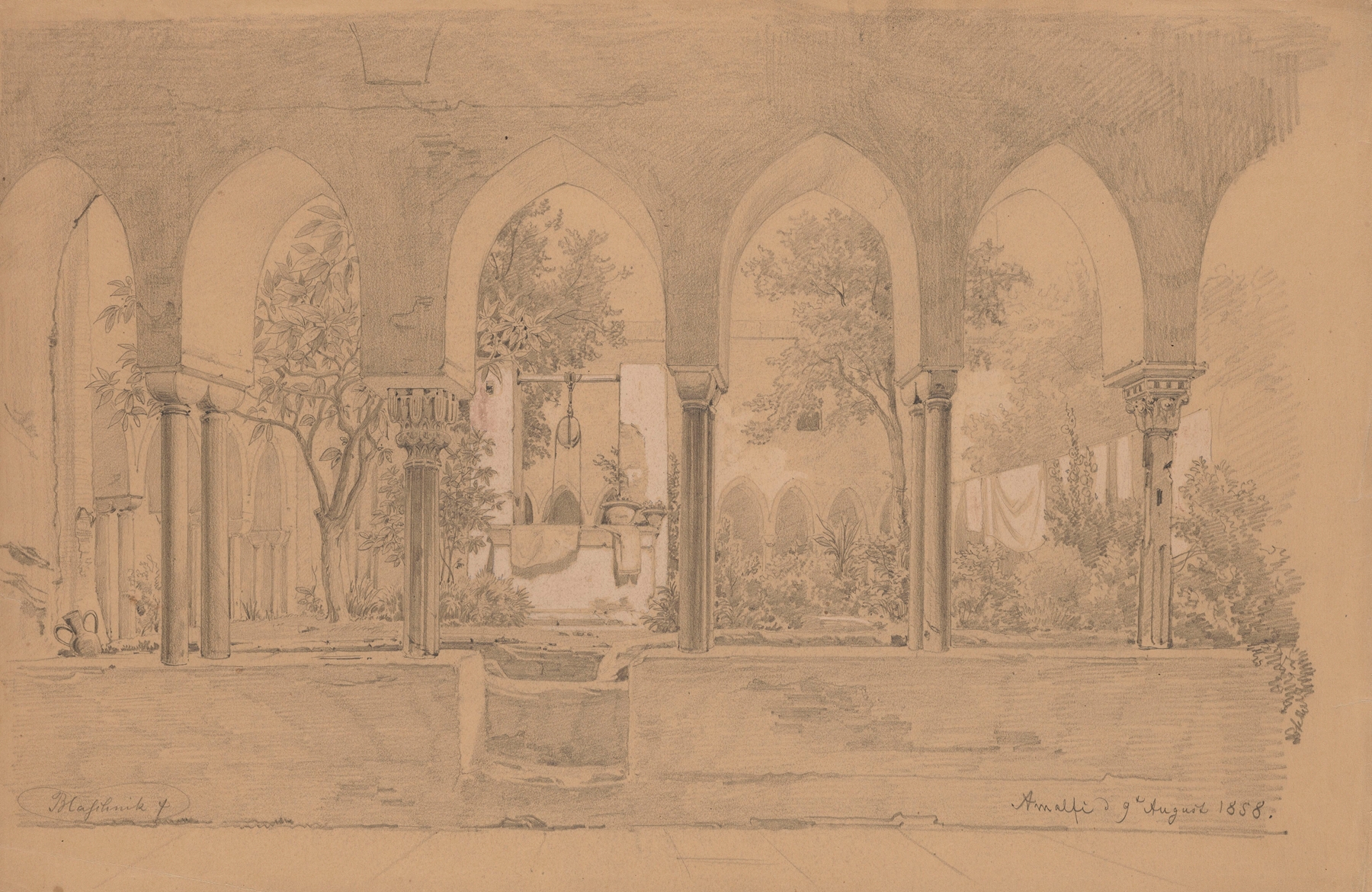
Cloister with Arcade Gallery in Amalfi — History & Analysis
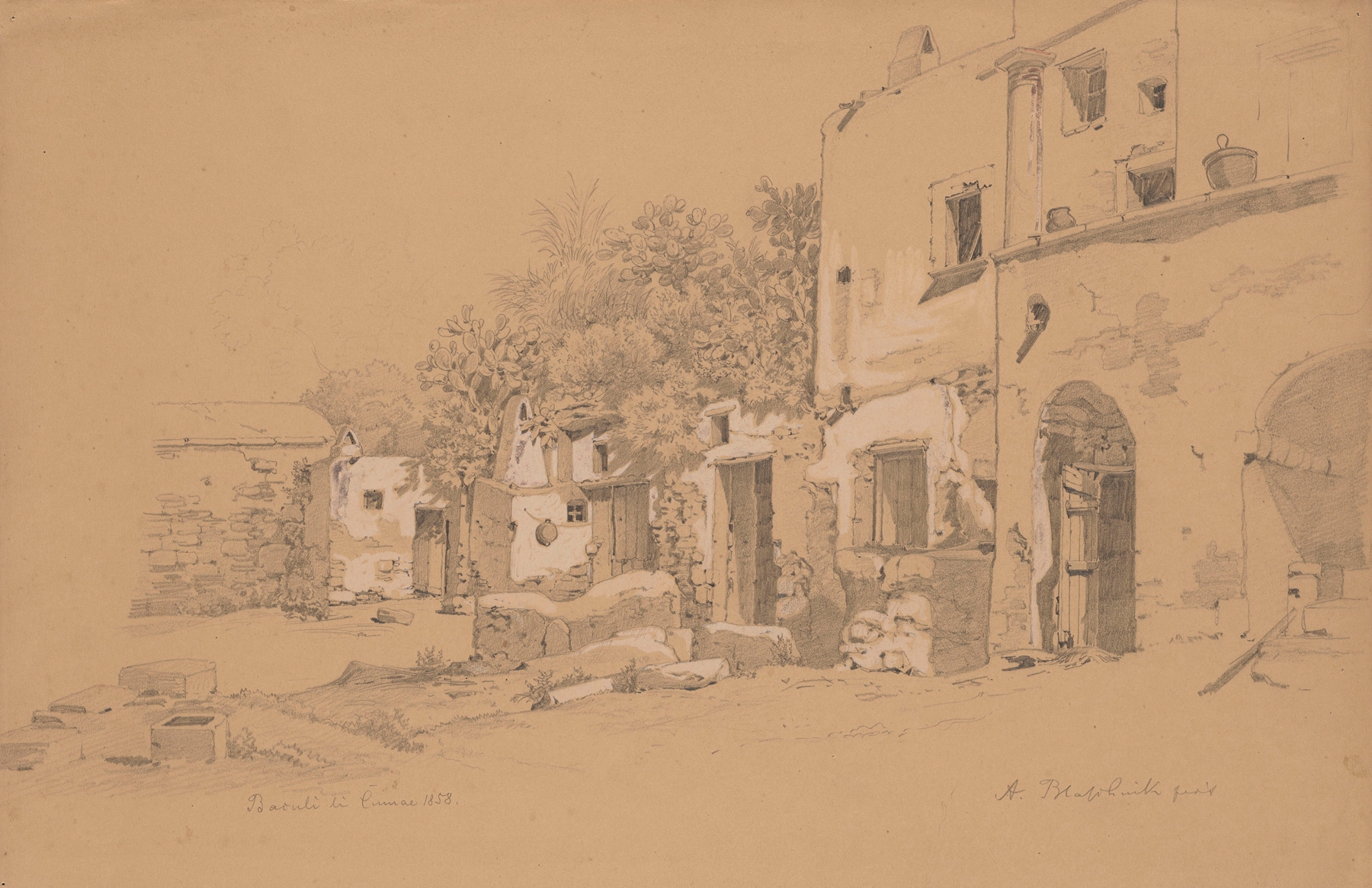
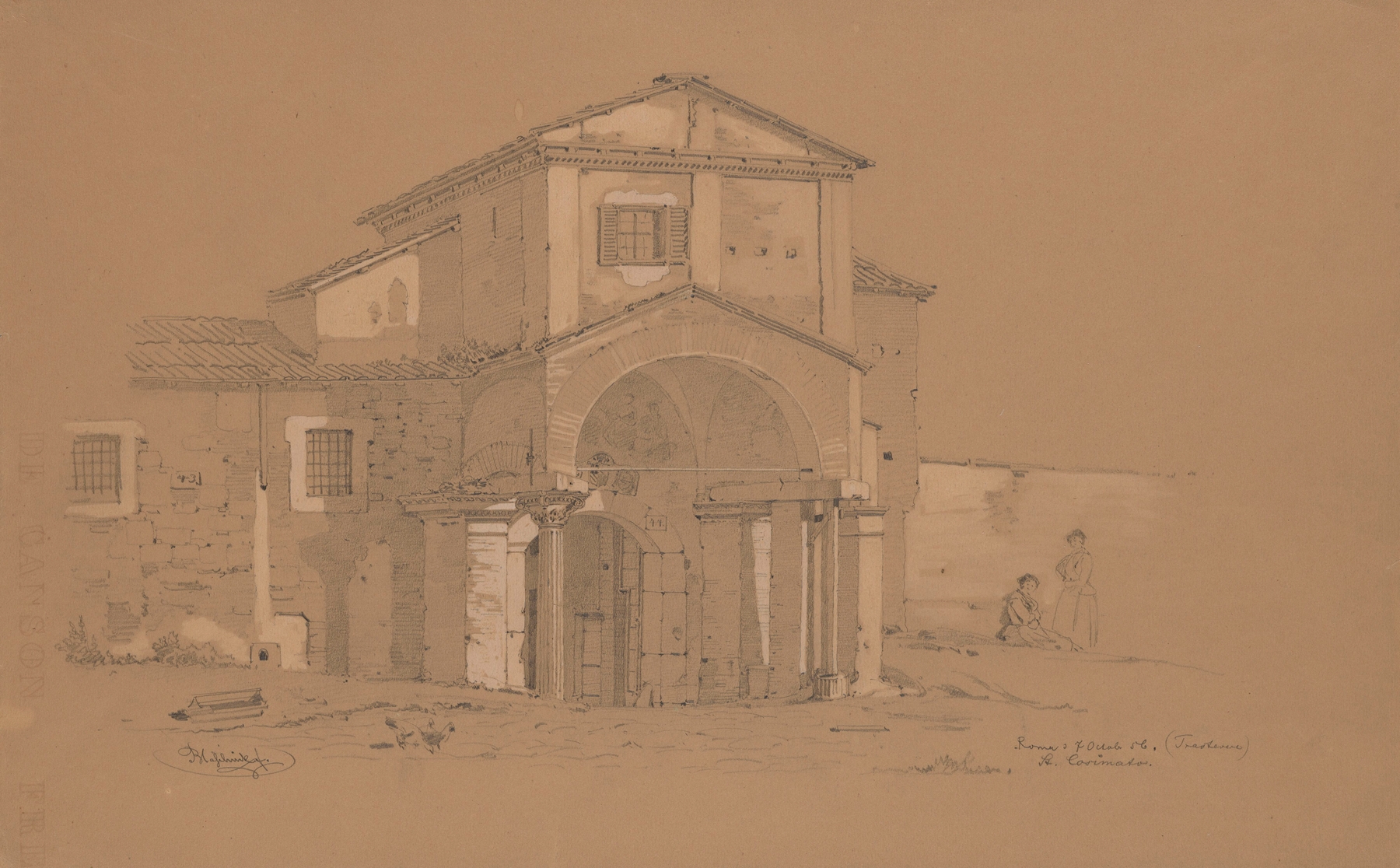
“To paint is to remember what time wants us to forget.” In the delicate interplay of memory and reality, we find ourselves ensnared by the charm of an illusion. Look to the foreground, where the graceful arches of the arcade invite you into a world suspended between the past and the present. Notice how the sunlight filters through, casting gentle shadows that dance across the stone floor, instilling a sense of warmth and serenity. The muted earth tones—rich ochres and soft browns—harmoniously blend, creating an atmosphere that feels both timeless and ephemeral. Each detail, from the intricately designed pillars to the textured walls, beckons the viewer to explore further. Yet, beneath the surface beauty lies an intricate dance of contrasts. The stillness of the cloister speaks of peace, while the architectural elements evoke a sense of fragmentation, as if the gallery is caught in an eternal moment of reflection. The juxtaposition of light and shadow hints at the passing of time—what is illuminated draws us in, while what remains obscured urges us to ponder the mysteries lurking just beyond our perception. This dichotomy embodies an emotional tension, revealing the fragile nature of memory itself. In 1858, Arthur Blaschnik painted this work during a period marked by the rise of romanticism in art, reflecting the era’s fascination with landscapes and architecture. Living in a time when artists were increasingly seeking to capture the essence of place, he found inspiration in the serene beauty of Amalfi, a coastal town in Italy. The nuances of light and structure demonstrate his commitment to realism while inviting viewers to contemplate deeper themes of nostalgia and the passage of time.