An Amsterdam Canal House Garden — History & Analysis
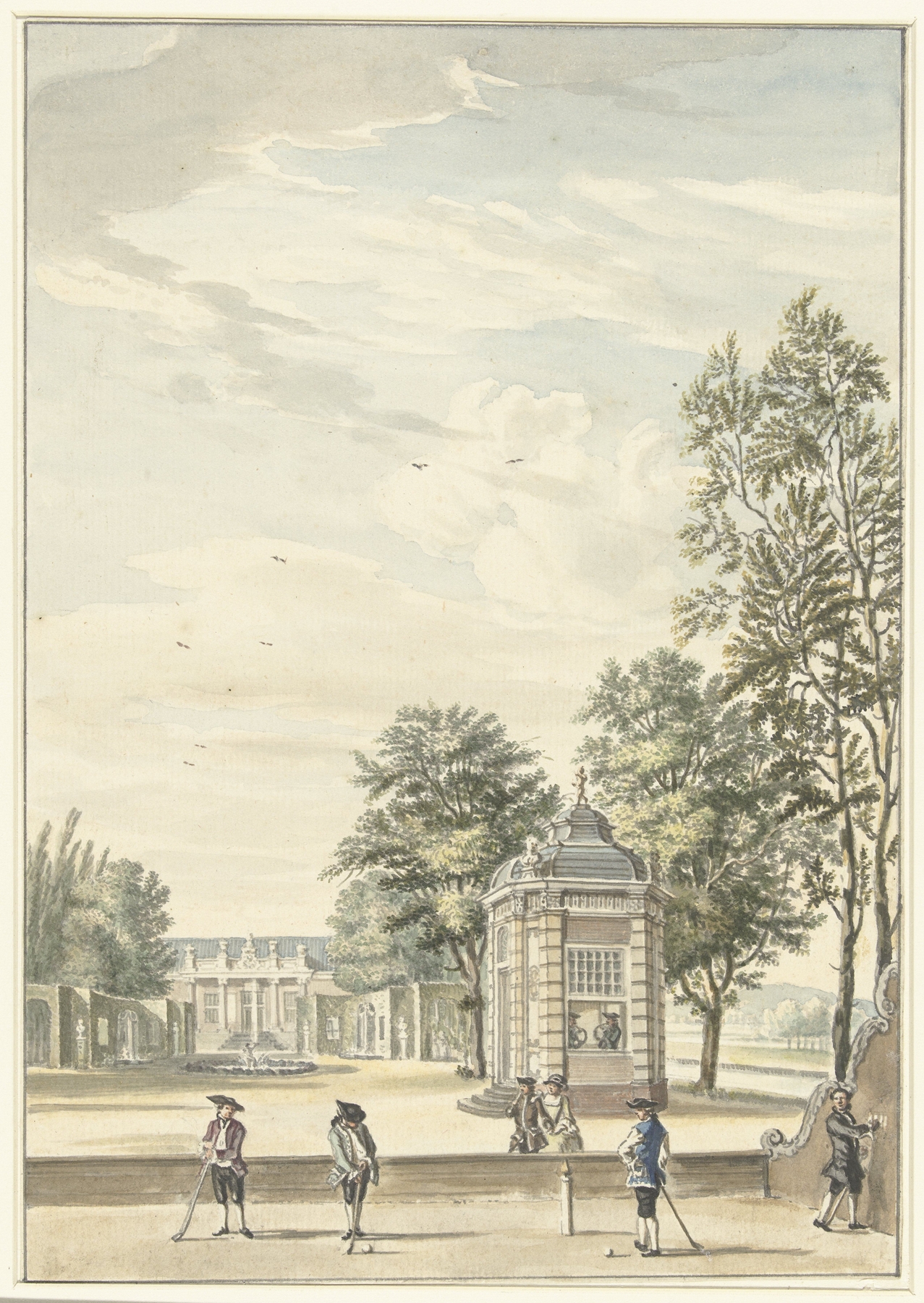
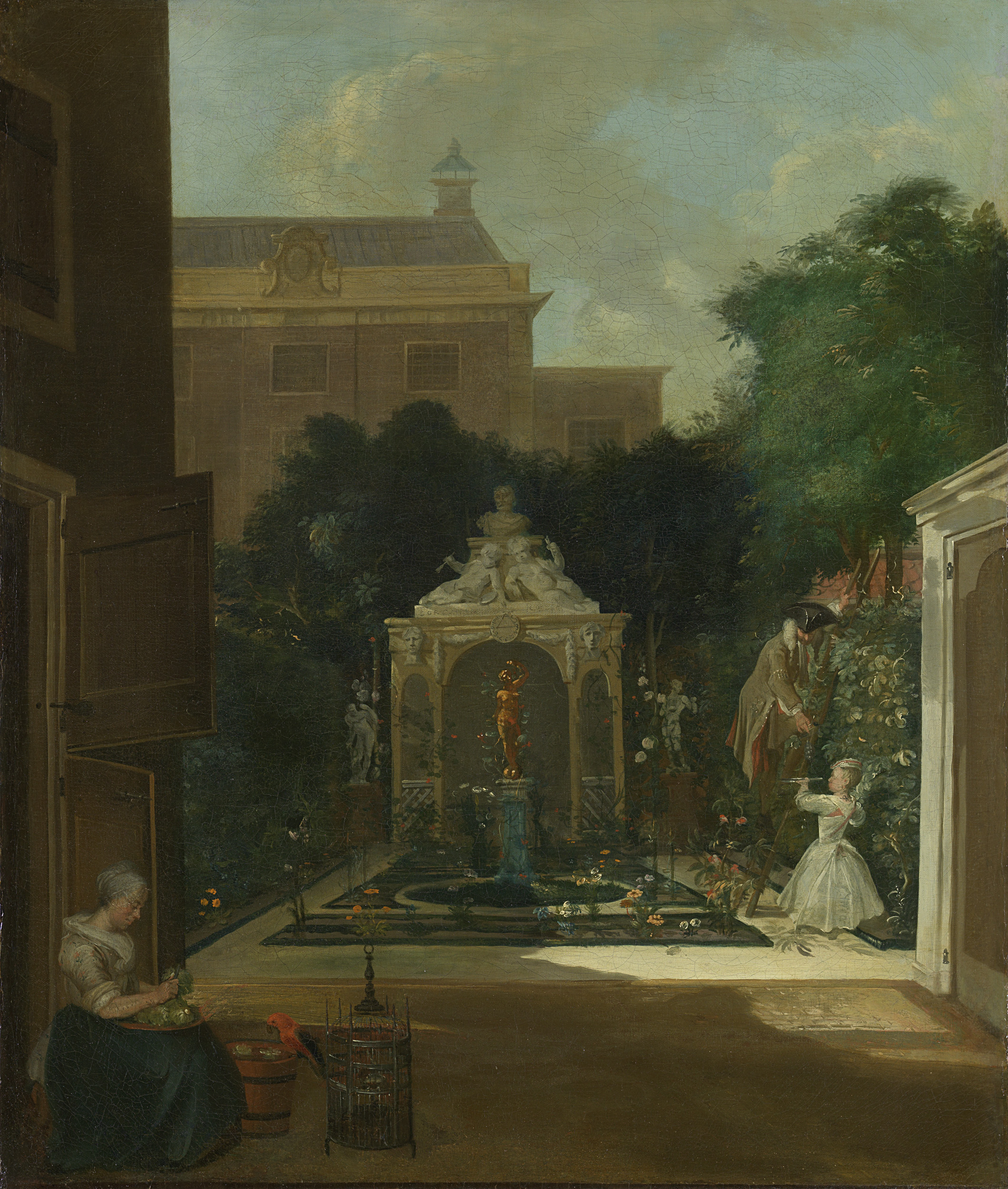
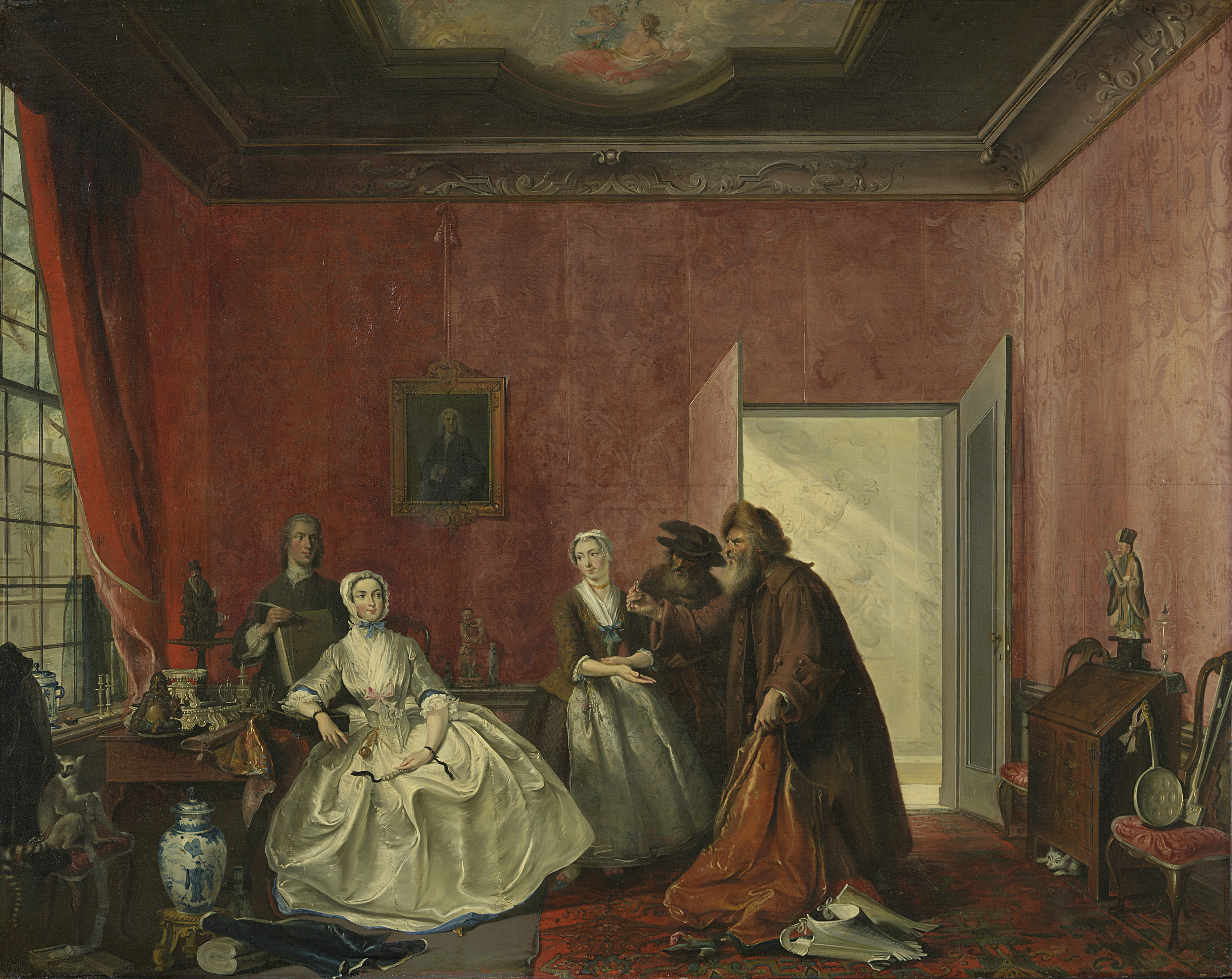
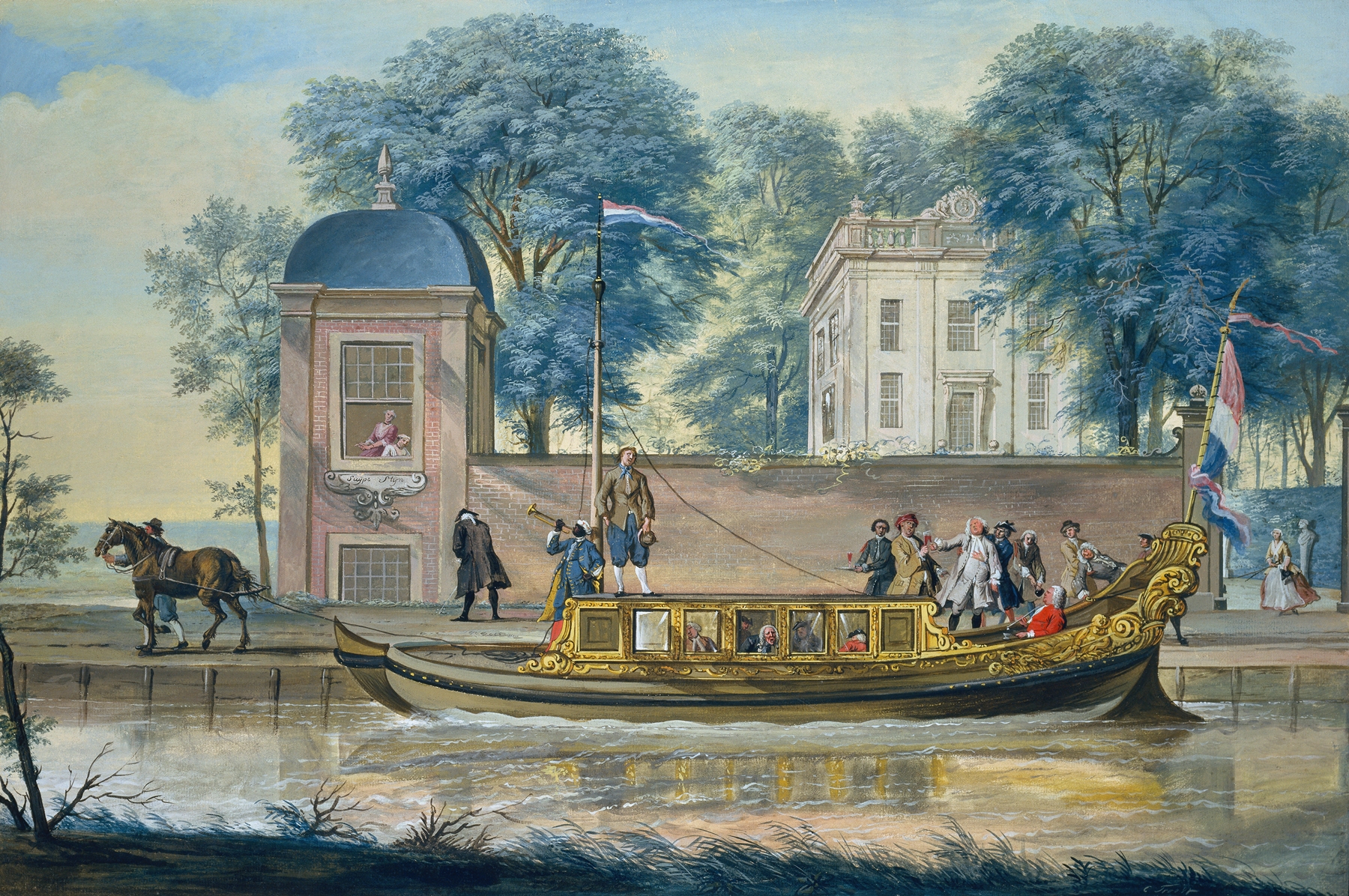
In a sun-drenched moment, a vibrant garden unfolds along the banks of a serene Amsterdam canal. Shimmering reflections dance on the water as soft petals flutter in a gentle breeze. A young couple, engrossed in quiet conversation, leans against a wrought-iron railing, their silhouettes framed by lush greenery and blossoms in riotous color. Look to the left at the blooming flowers, their hues ranging from deep crimson to radiant yellow, saturating the scene with life.
The garden's geometry is meticulously maintained, with a path leading the eye toward the tranquil canal, where light breaks into fragments across the surface. Notice how the artist employs a delicate balance of brushwork, skillfully blending vibrant pigments that breathe warmth into the tranquil setting, creating a landscape steeped in both elegance and intimacy. The contrast between the couple’s leisurely demeanor and the vibrant activity of the flowers suggests the passage of time and the fleeting nature of love. Hidden within the lush foliage are whispers of secrets shared, dreams nurtured, and the unspoken bond that ties the pair to this perfect spot.
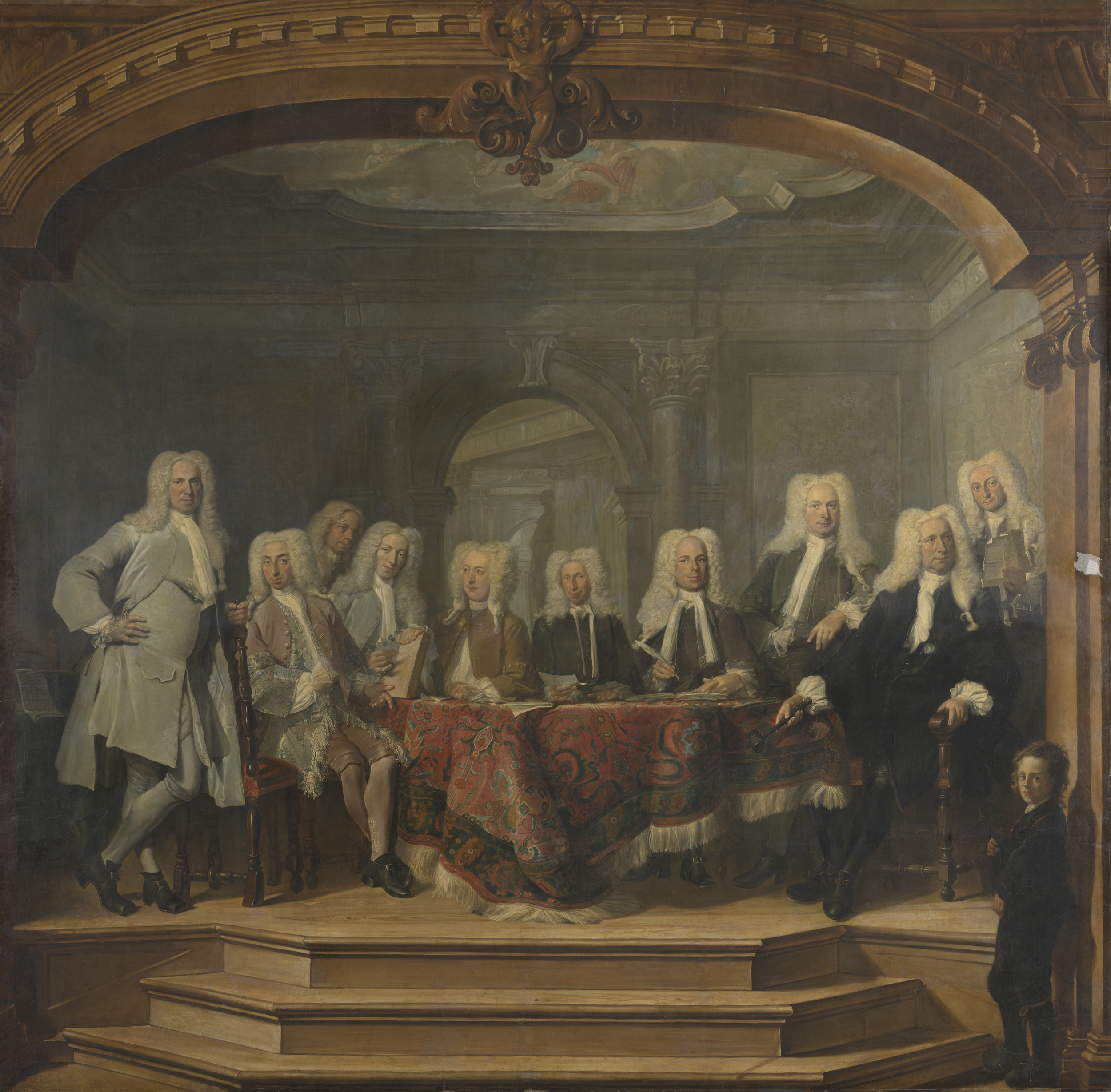
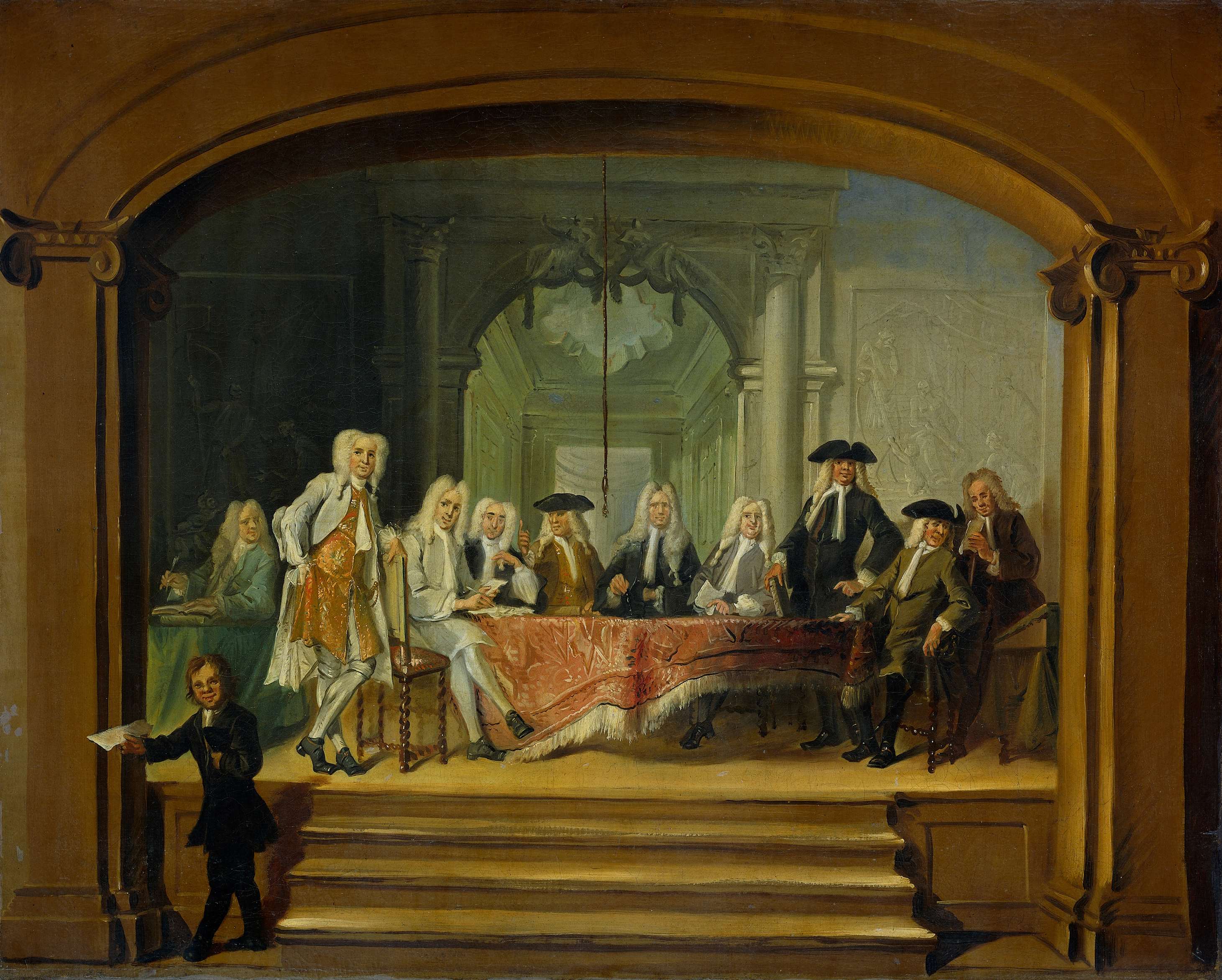
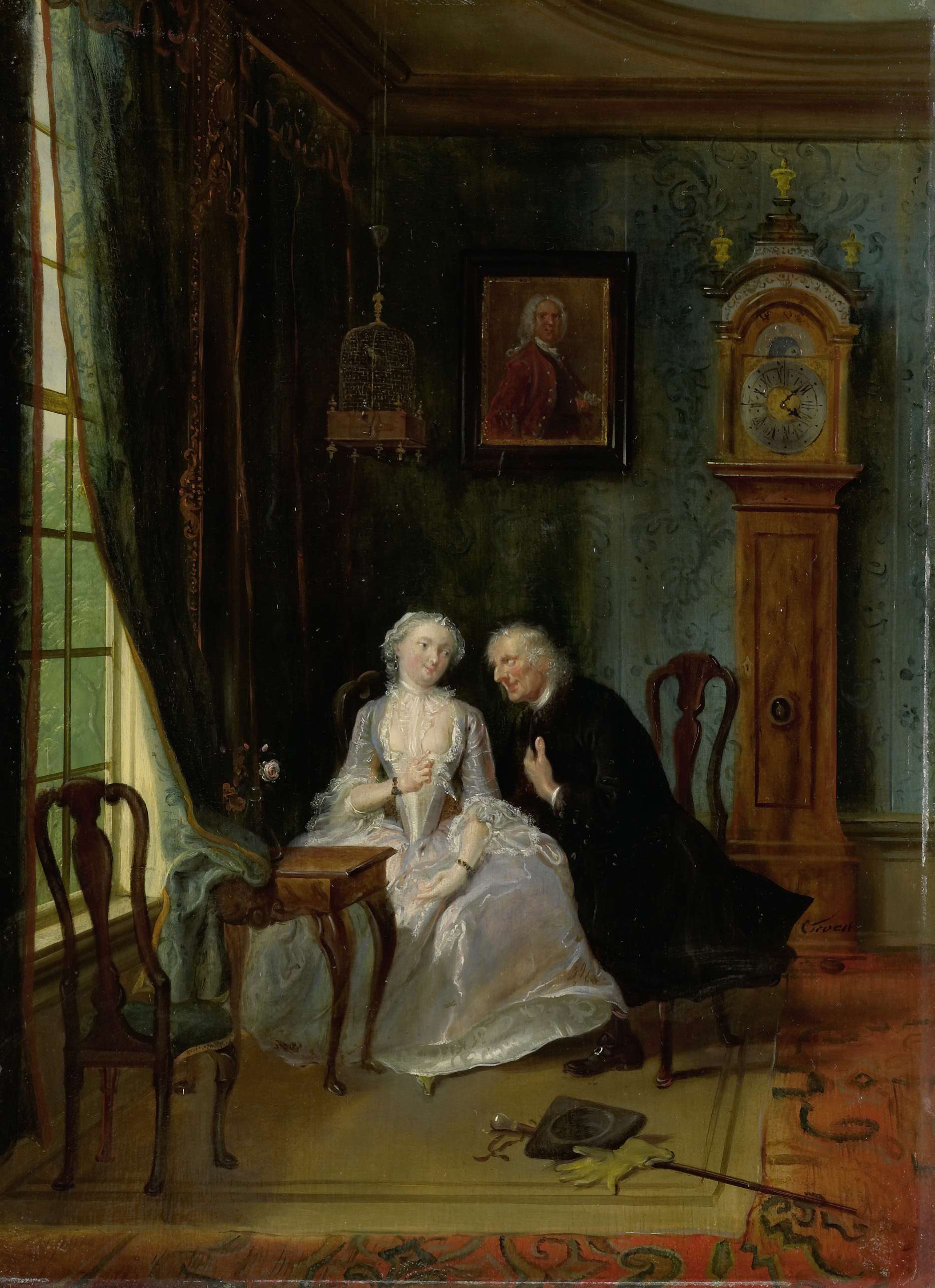
Each stroke captures not only the beauty of the landscape but also the subtleties of human connection against the backdrop of nature’s splendor. Cornelis Troost painted this scene in the early 1740s, a time when the Netherlands was experiencing economic prosperity, fostering indulgent artistic expression. Living and working in Amsterdam, Troost was influenced by the burgeoning genre of landscape painting, infusing his works with a keen observation of daily life and a vibrant palette, marrying nature and human experience in remarkable harmony.