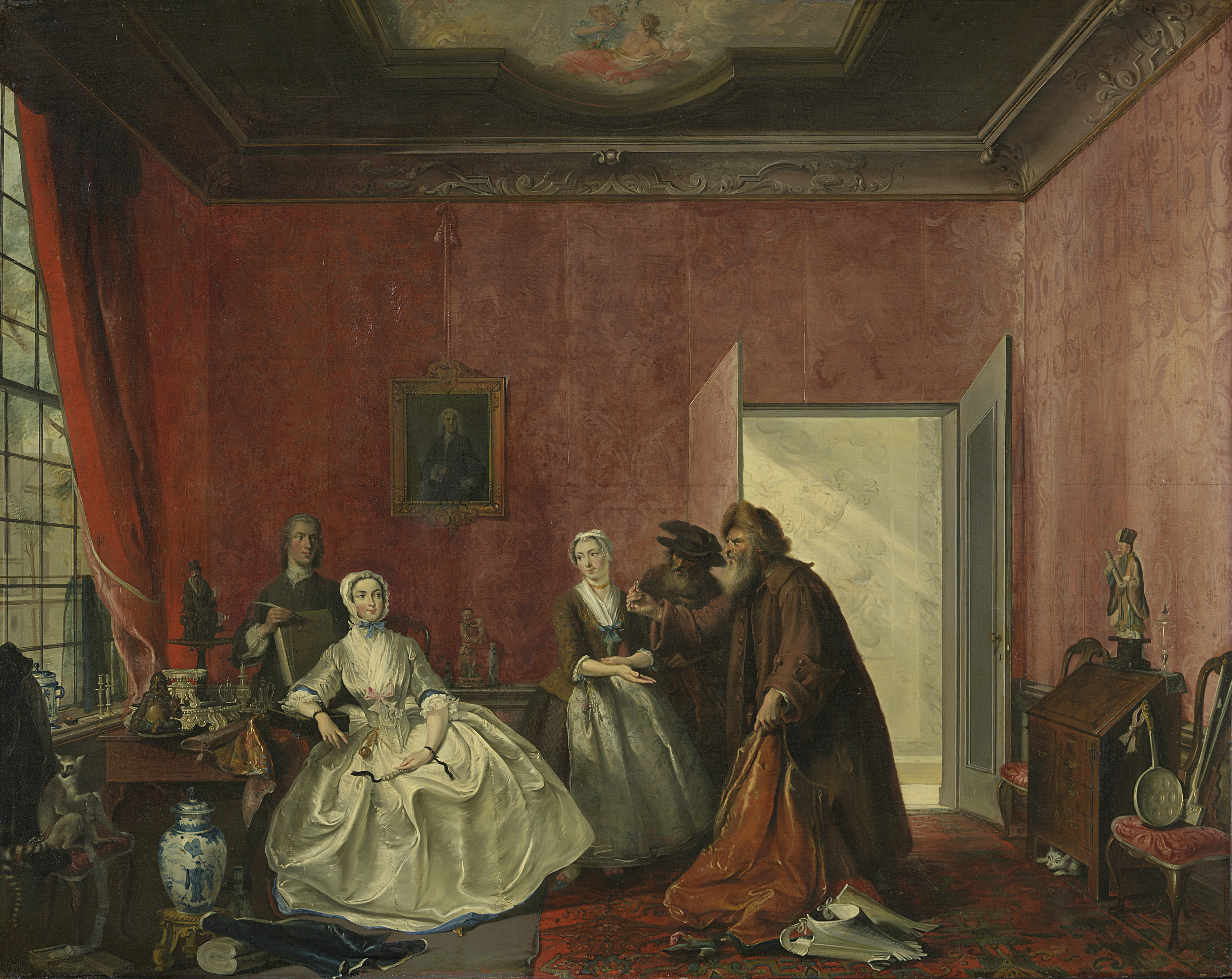
"Unseemly Love, perhaps a scene of the Widower Joost with Lucia, 2nd scene from the play ""De wanhebbelijke liefde"" by CJ van der Lijn " — History & Analysis
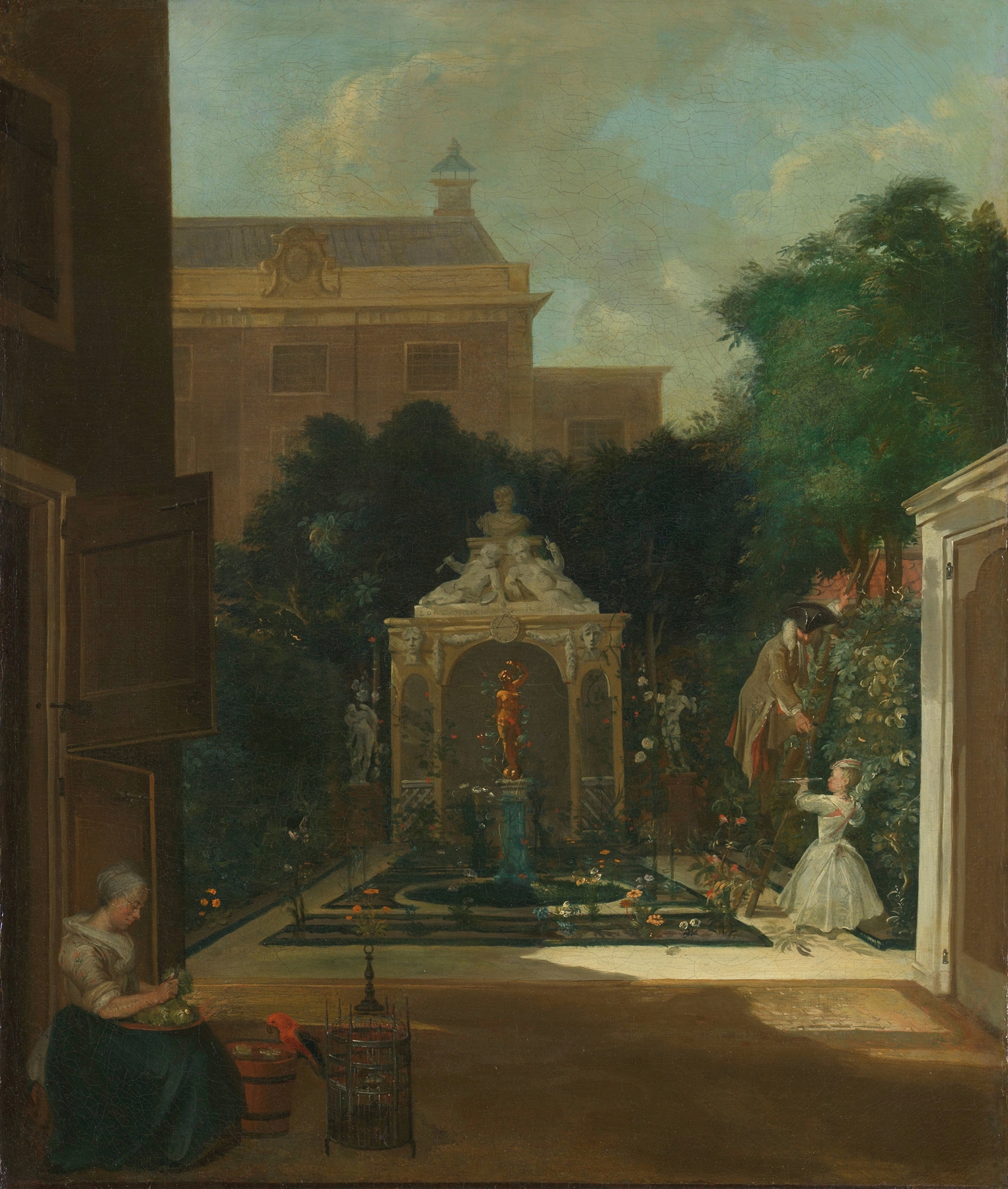
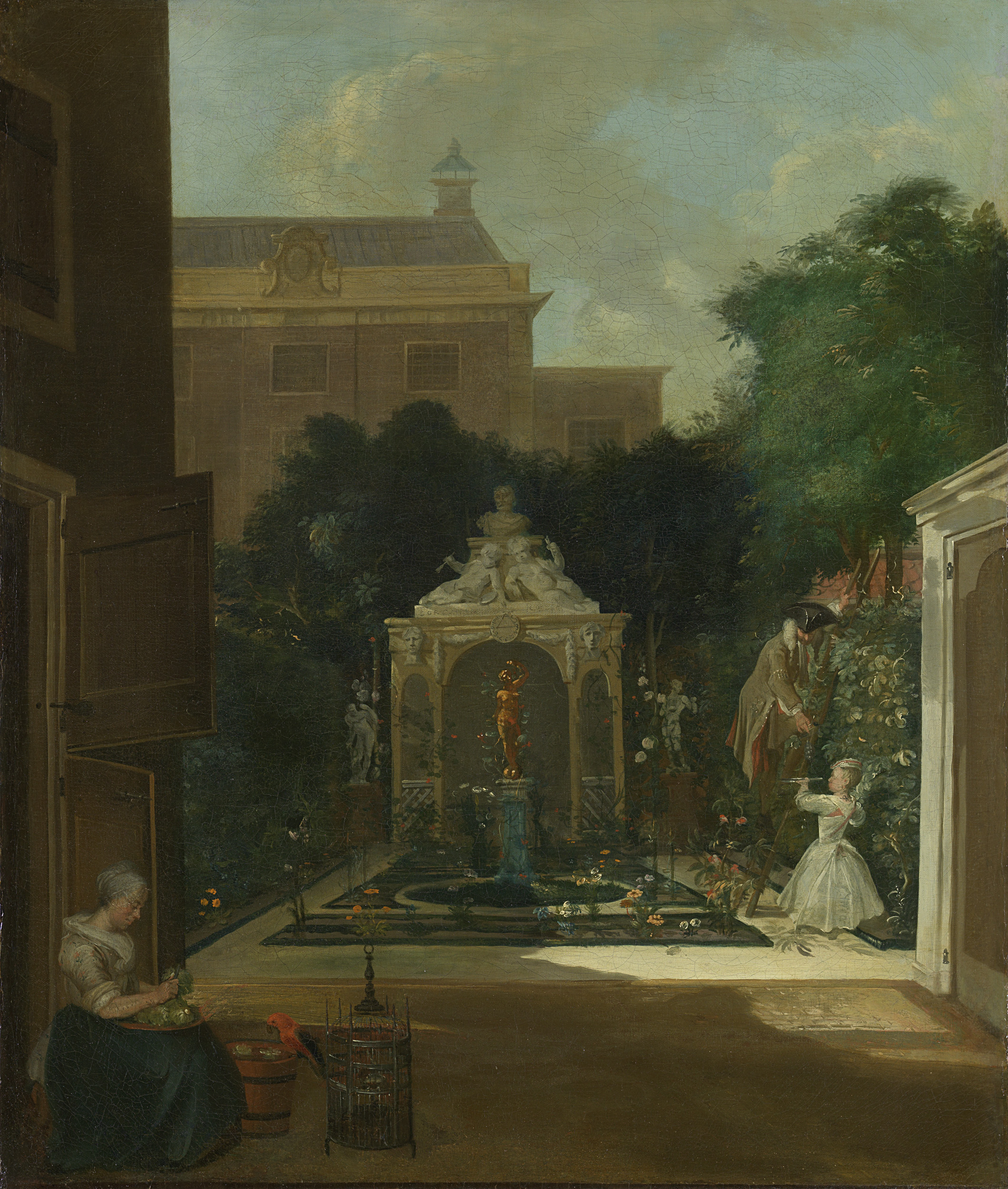
Art reveals the soul when the world turns away. In the quietude of a tender moment, emotional truths intertwine with the divine, exposing the layers of humanity that often lie hidden in plain sight. Look to the left at the figure of the widower, Joost, whose furrowed brow and yearning gaze reflect a poignant blend of loss and longing. The luminous light creeping through the window bathes him in a soft glow, casting ethereal shadows that dance around his figure.
Notice how the rich, warm tones of his clothing contrast with the cooler hues surrounding Lucia, suggesting a chasm between their worlds—one steeped in memory and the other in hopeful possibility. The tension builds as you observe the delicate positioning of their hands, almost brushing against one another yet painfully distant. This suggestive gesture speaks volumes about their relationship, hinting at desires unfulfilled and emotions unspoken. The backdrop, an array of muted colors, encapsulates the somber reality of life’s fragility, underscoring the juxtaposition of divine love and earthly sorrow.
Each brushstroke reveals the artist's intent to convey not just a scene, but a profound commentary on love's complexity. Cornelis Troost painted this significant work between 1720 and 1750 during a period marked by the rise of Dutch theatrical art. He was deeply influenced by the burgeoning interest in the drama of human emotion, capturing moments of intimacy with a clarity that resonated widely. This piece, rooted in the context of the play De wanhebbelijke liefde, reflects an era seeking to explore the depths of the human condition through art and storytelling.