An Italianate landscape with a hunting company — History & Analysis
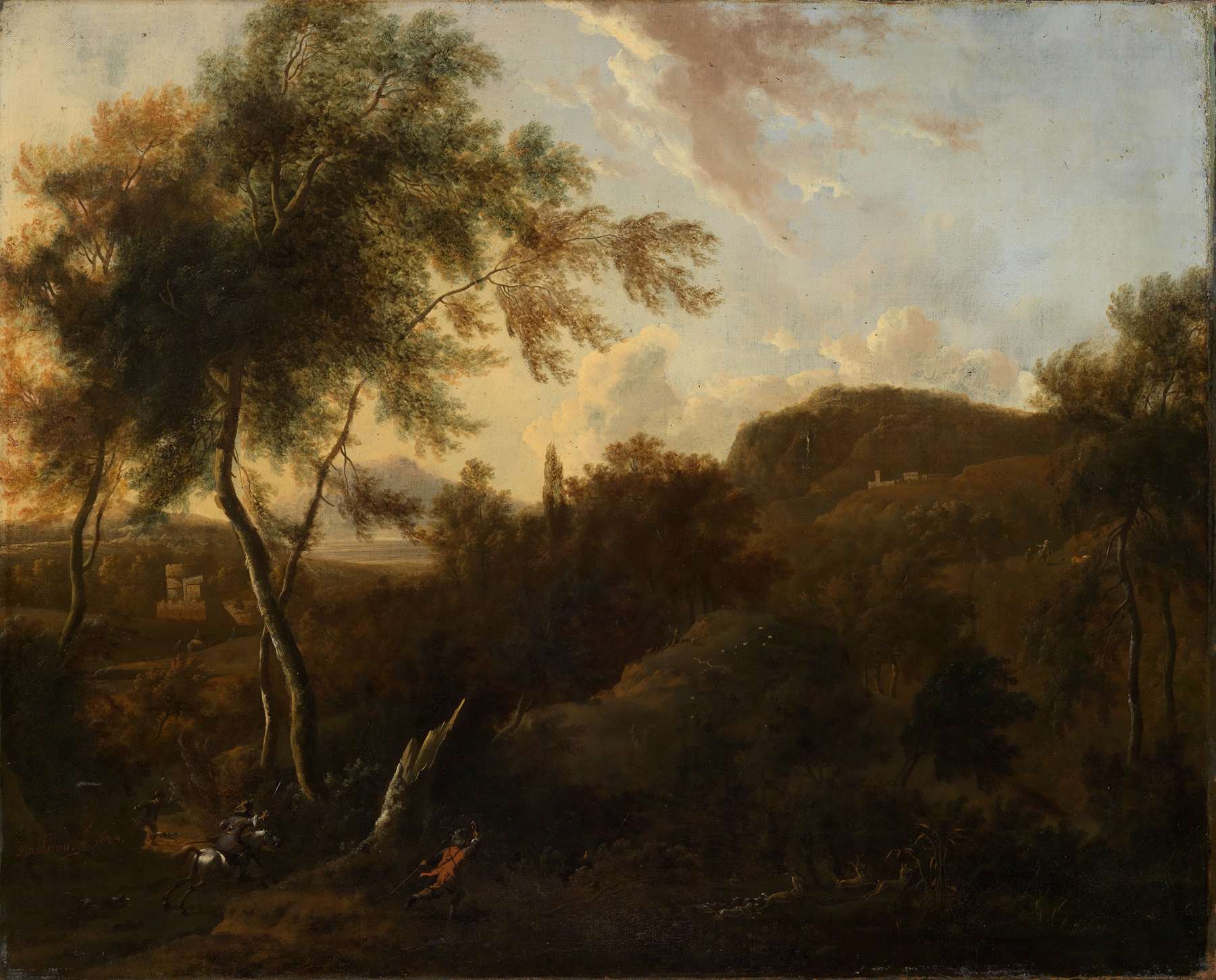
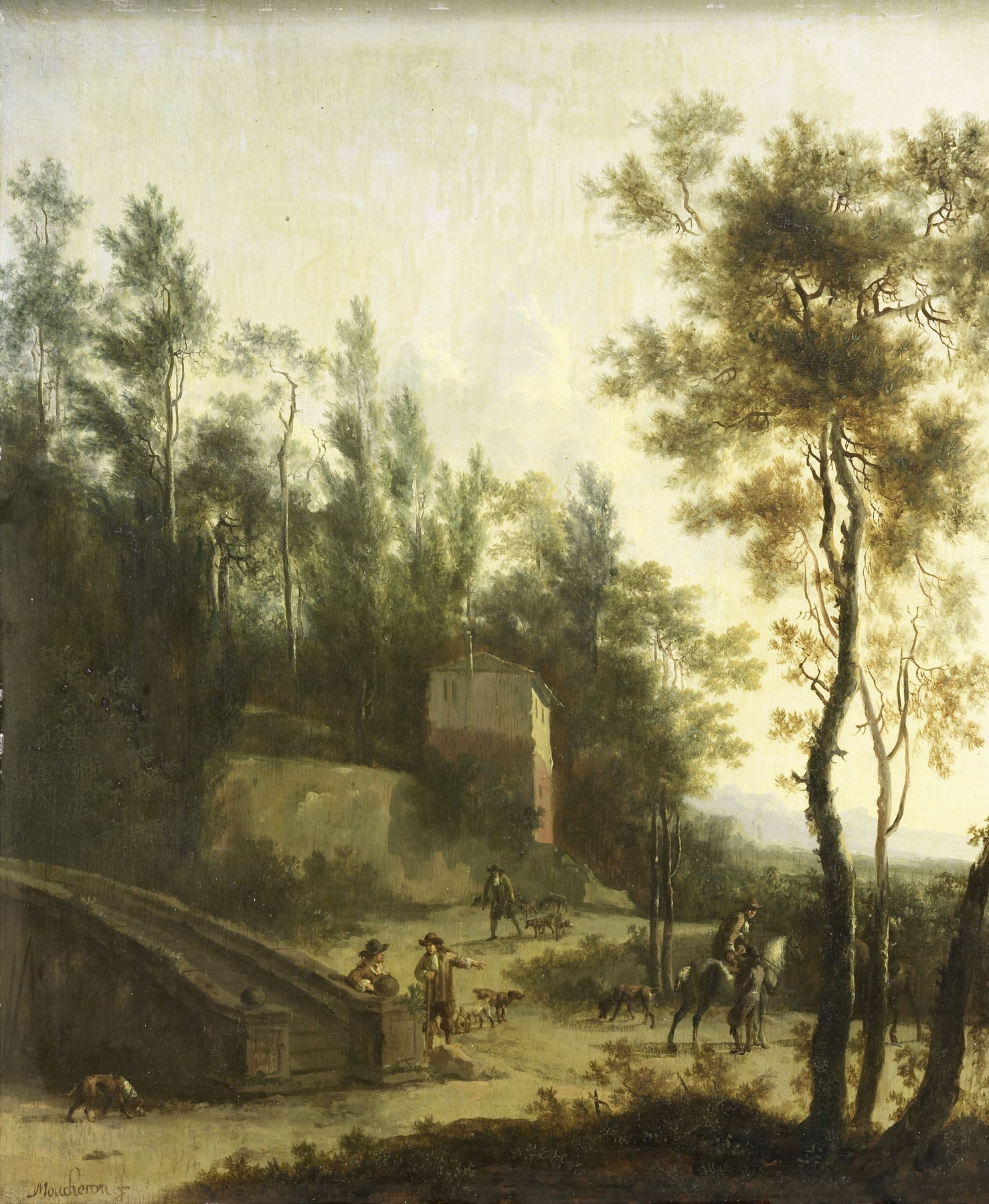
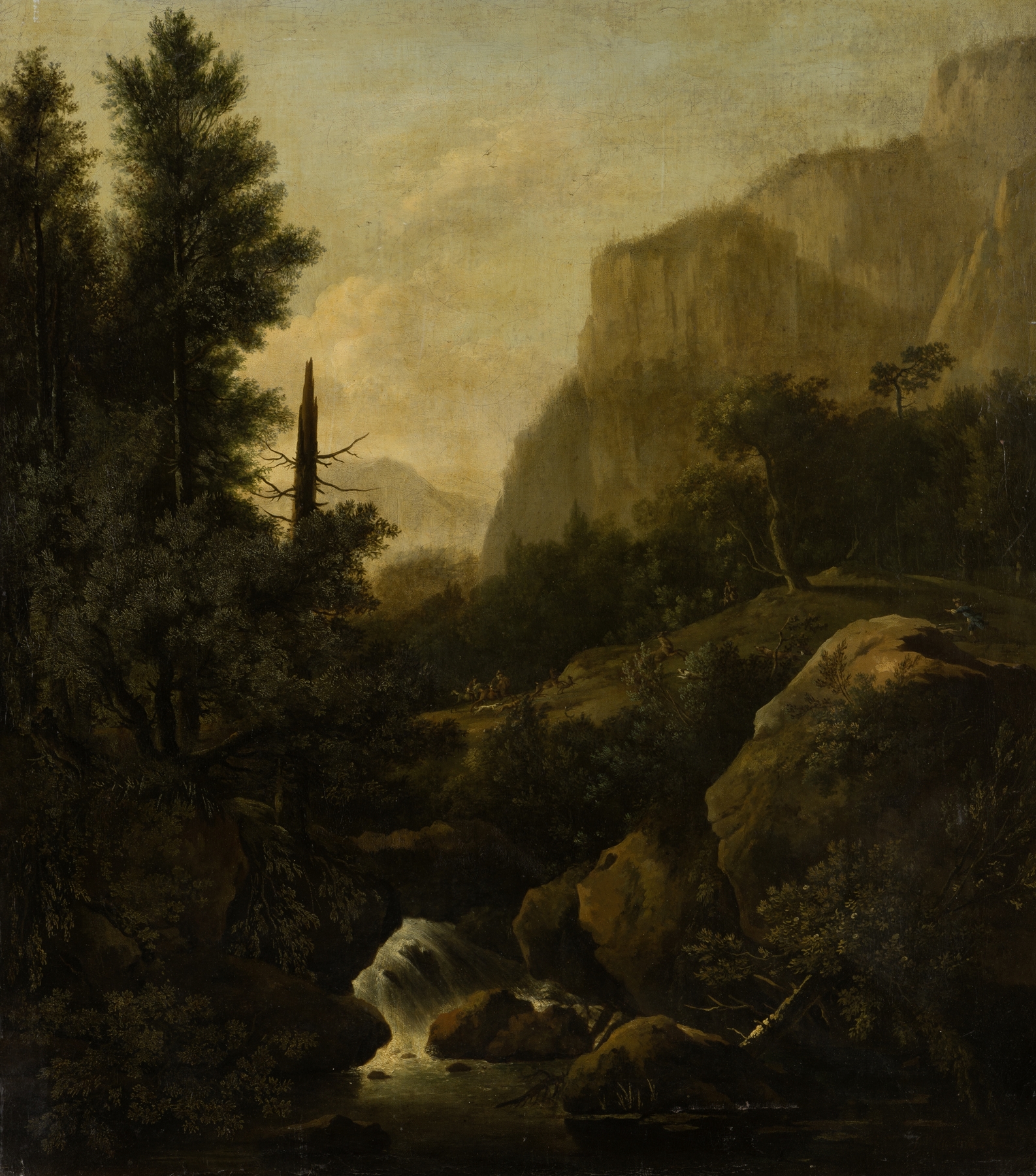
Can paint confess what words never could? In An Italianate landscape with a hunting company, a world unfolds where nature and humanity intertwine, inviting contemplation of faith’s presence in the untamed beauty of the wilderness. Look to the left at the gentle curve of the hills, bathed in a warm golden light that dances across the verdant landscape. The composition draws the eye toward the hunting party, situated centrally, their figures animated yet harmonious with the surroundings.
Notice how the vibrant greens are punctuated by earthy browns and dappled shadows, a palette that evokes both serenity and vitality, suggesting a profound connection between the hunters and the landscape they traverse. In this pastoral scene, contrasts emerge: the stillness of the serene backdrop juxtaposed with the lively activity of the hunters evokes a sense of fleeting moments, where ambition and the quiet power of nature coexist. Each figure seems to embody a different aspect of humanity's relationship with the wild—some engage with the thrill of the hunt, while others appear contemplative, perhaps reflecting the weight of their choices.
This tension between action and reflection reveals an underlying narrative about our quests for purpose and the faith we place in our pursuits. Created during a period when landscapes were becoming increasingly popular, this work reflects the artist's exploration of the Italianate style that captivated many of his contemporaries. Painted amidst the cultural shifts of the late 17th century in the Netherlands, he sought to capture the idealized beauty of nature while integrating human experience within it, a testament to the evolving dialogue between art and life.