Asahi (Sunrise) — History & Analysis
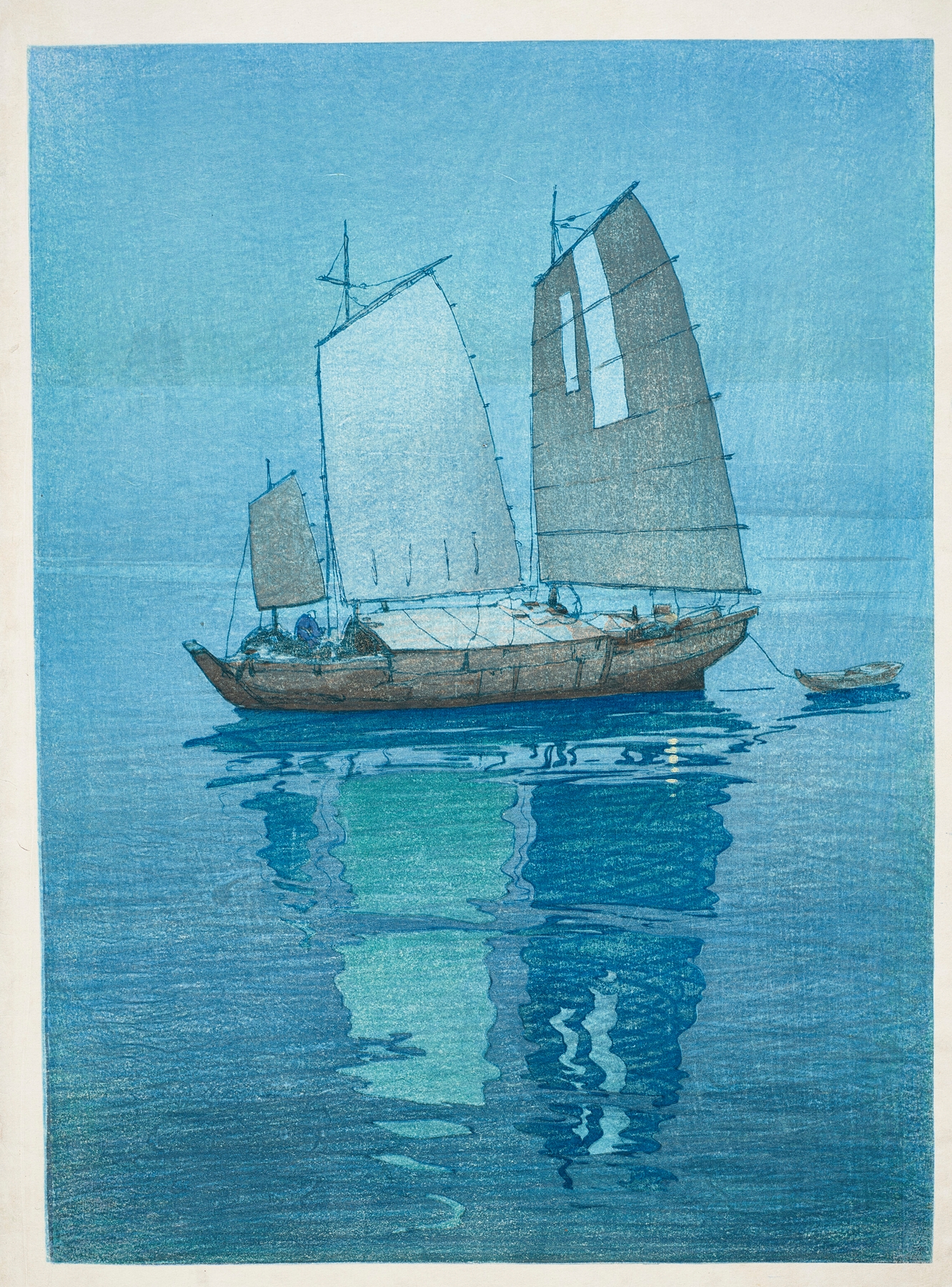
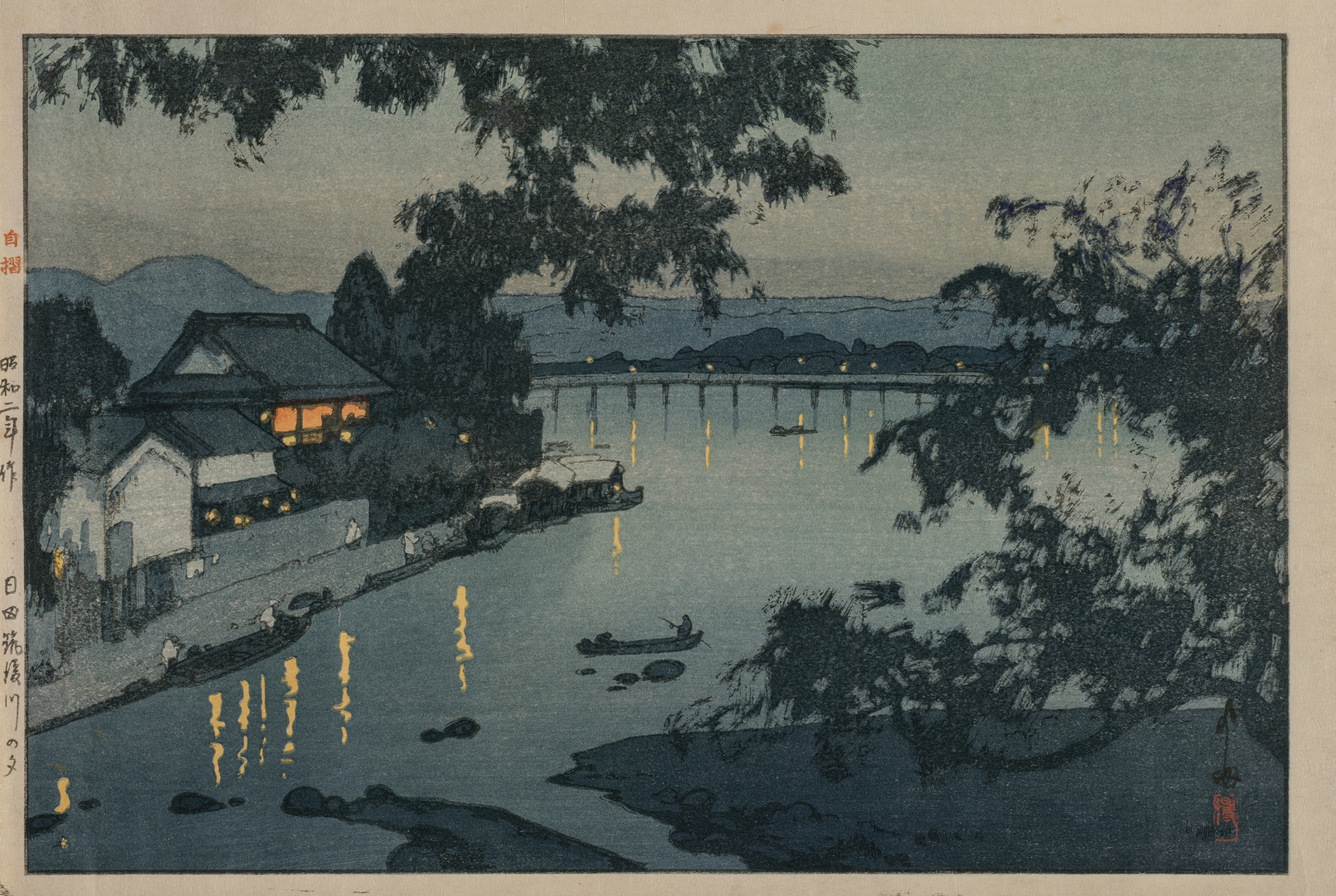
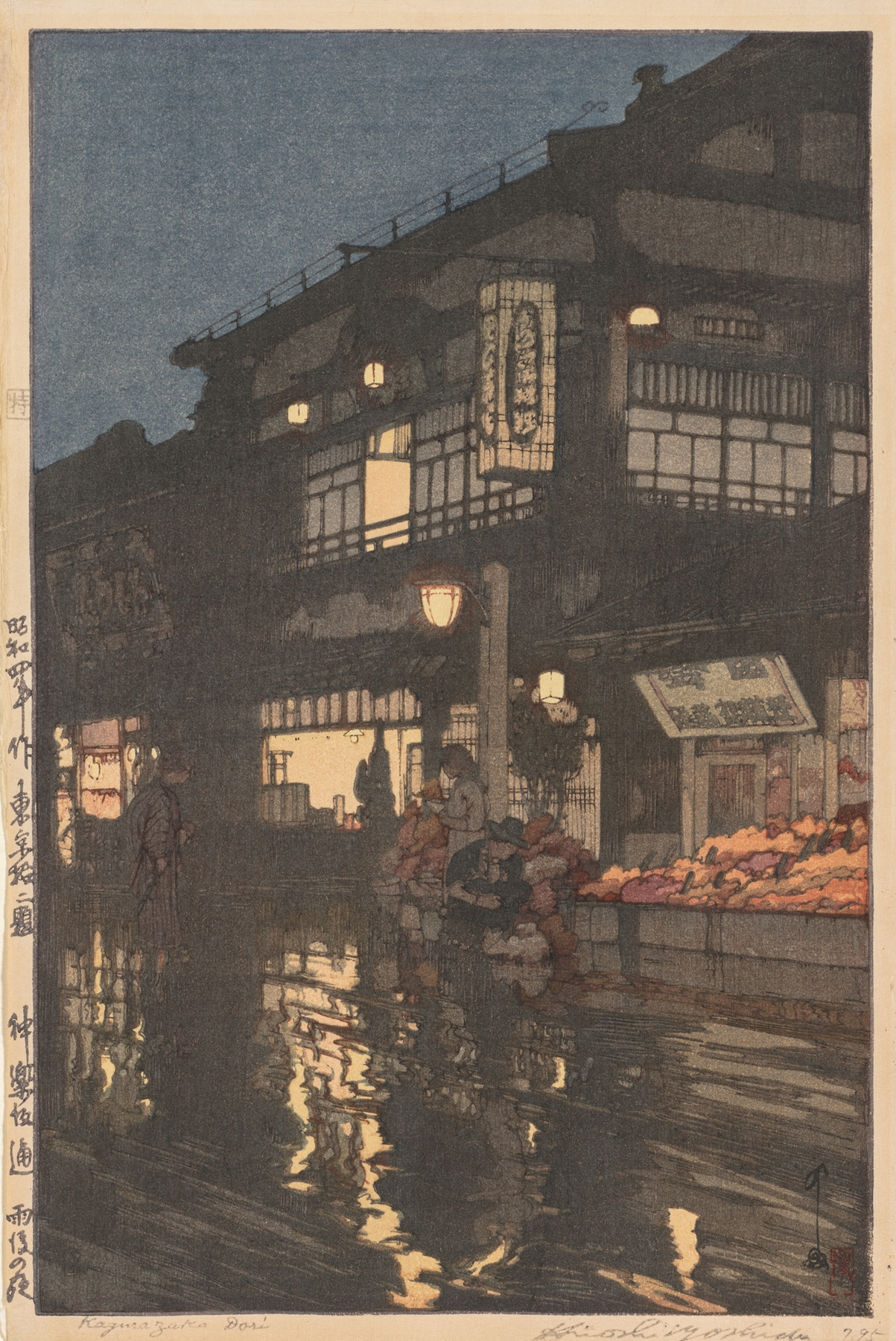
Can beauty exist without sorrow? In Asahi, light dances across the surface of tranquil waters, illuminating the delicate interplay between dawn and the remnants of night. This moment captures the fleeting transition, a liminal space where shadows linger even as warmth begins to embrace the landscape. Look to the horizon, where the sun emerges like a promise, casting a golden glow that spills over the mountainside.
The soft blues and warm oranges blend seamlessly, creating a harmonious gradient that draws the eye. Notice how Hiroshi employs meticulous brushwork to render the subtle ripples in the water, reflecting the awakening sky, while the silhouetted trees stand as steadfast sentinels of this serene tableau. Within this composition lies a profound tension between light and dark, hope and melancholy. The soft illumination symbolizes renewal, yet the dusky tones remind us of what must be left behind.
Each brushstroke seems to whisper the stories of those who have witnessed countless sunrises and sunsets, encapsulating the bittersweet nature of existence where every beginning carries a hint of the past. In 1926, Yoshida Hiroshi painted Asahi during a prominent period of Japanese art, marked by a fascination with the natural world and the influence of Western techniques. Living in a time of cultural transformation, he sought to capture the beauty of his homeland while celebrating the ephemeral moments of life. This work stands as both a testament to his skill and a reflection of the complex emotions intertwined with the dawn of a new day.