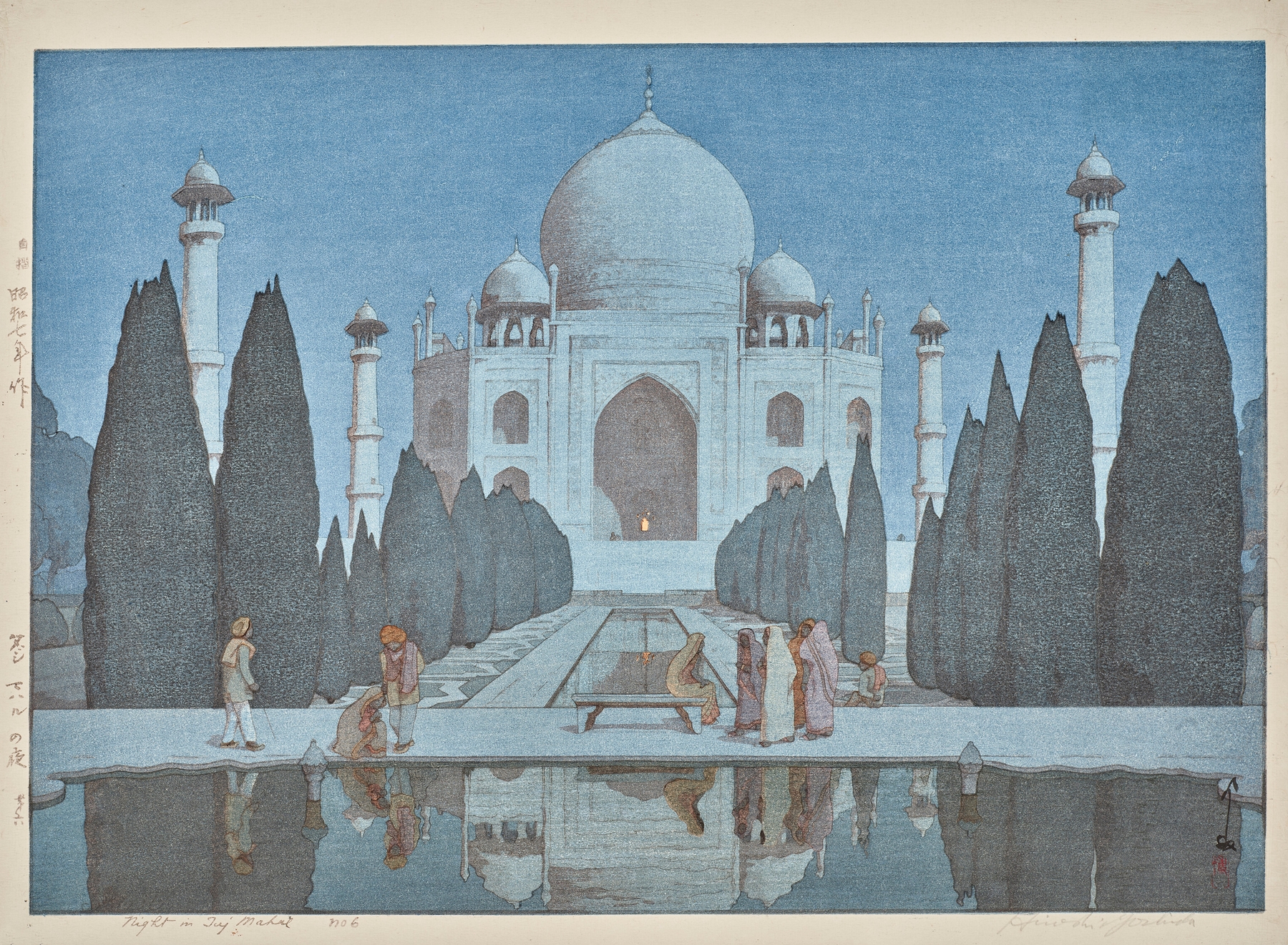
Taji Maharu no yoru, dai roku (Taj Mahal at night, no. 6) — History & Analysis
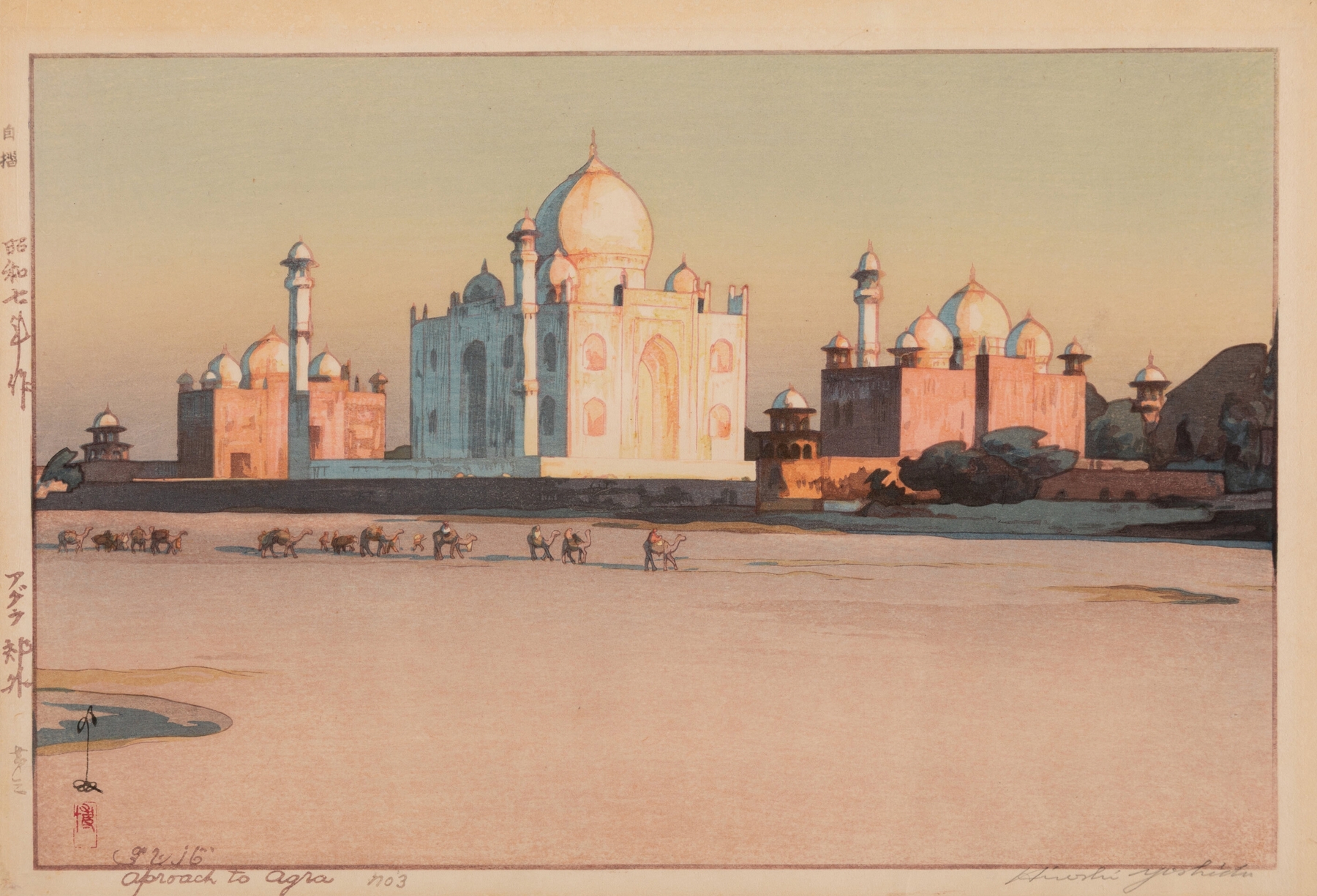
Where does light end, and longing begin? In the quiet embrace of night, the Taj Mahal stands as a beacon of memory and reverie, its luminous contours whispering stories of the past. Look toward the soft glow that envelops the marble dome, inviting the viewer to trace the outlines where shadows dance with light. The deep indigo sky serves as a canvas, enhancing the monument’s ethereal shimmer, while the surrounding reflections ripple gently in the serene waters below. Notice how Hiroshi employs subtle gradations of color—delicate blues and silvery whites—to evoke a haunting nostalgia that encapsulates both beauty and melancholy. The contrast between the stark stillness of the night and the vibrant history of the Taj Mahal resonates deeply. Each stroke of light suggests a longing for moments lost, while the stillness of the surrounding landscape amplifies a sense of solitude. Here, the grandeur of the structure intertwines with the echoes of love and loss, creating a poignant connection between the viewer’s heart and the echoes of time itself. In 1932, while creating *Taji Maharu no yoru, dai roku*, Hiroshi sought to capture the essence of the Taj Mahal far beyond its architectural splendor. Living in a rapidly modernizing Japan, he was immersed in the tension between tradition and progress, and his artwork reflects a deep desire to memorialize beauty in a world increasingly defined by change. This piece embodies not just a visual marvel, but a heartfelt response to the impermanence of life and an homage to enduring love.