Asalto a la segunda columna brasileña a Curupaytí — History & Analysis
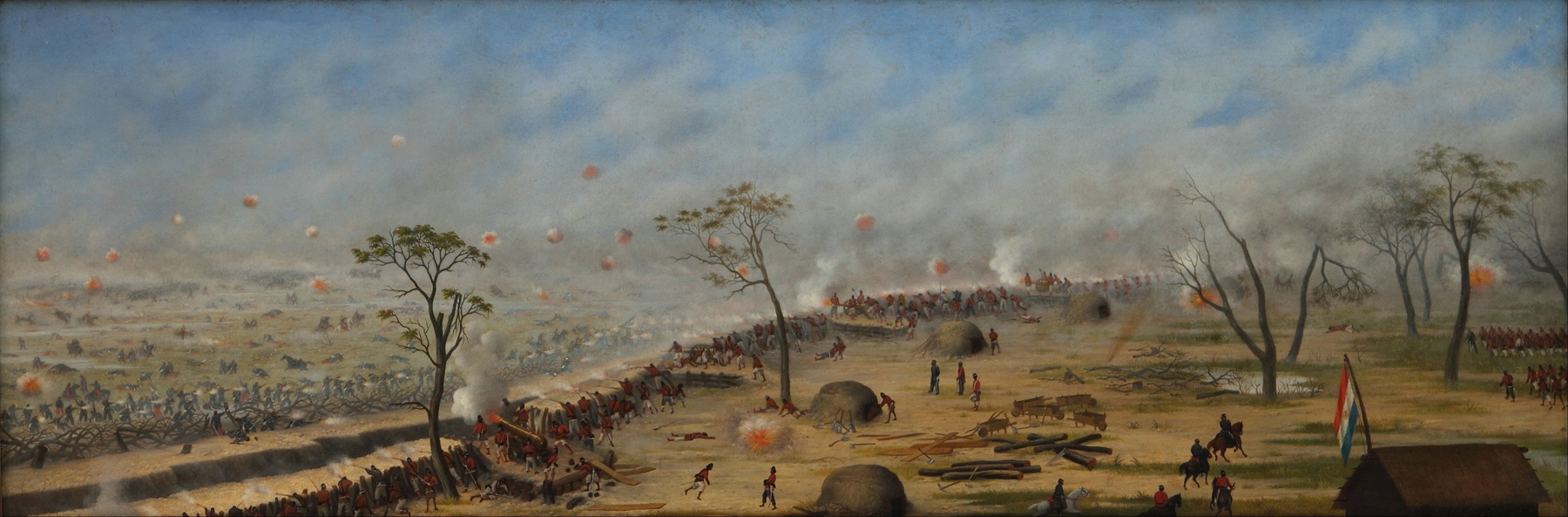
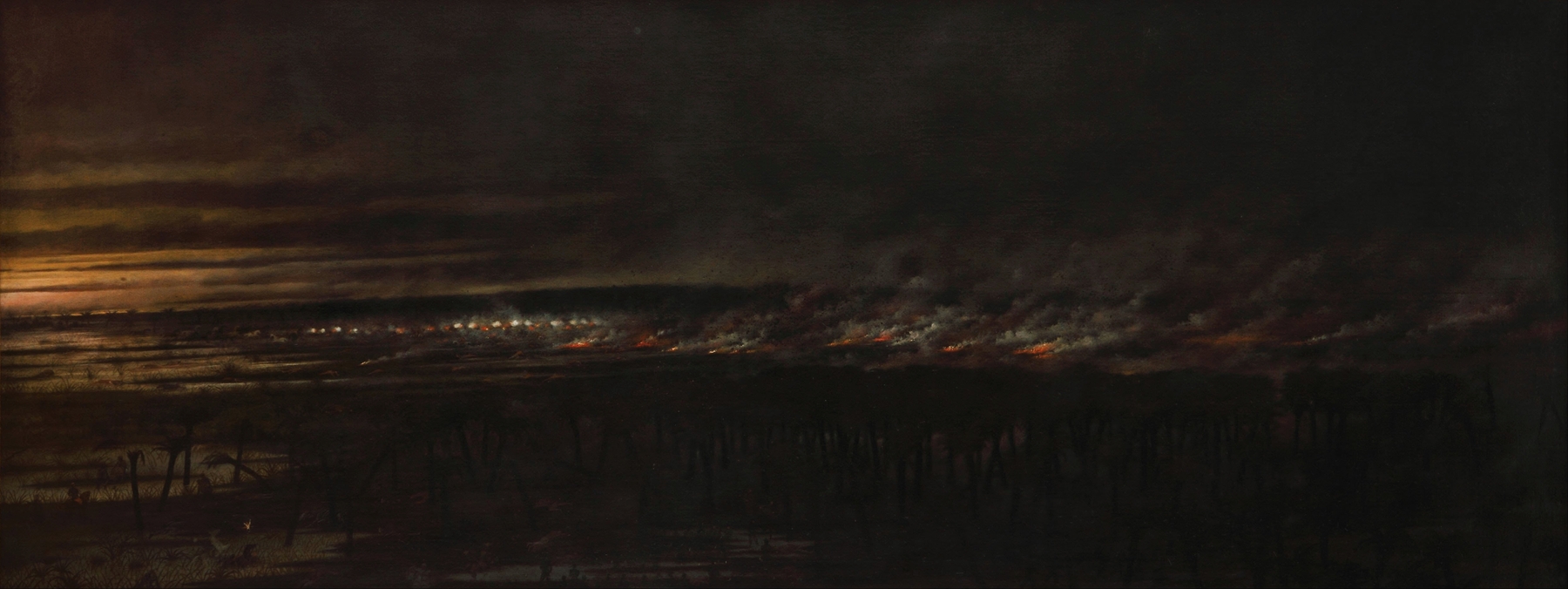
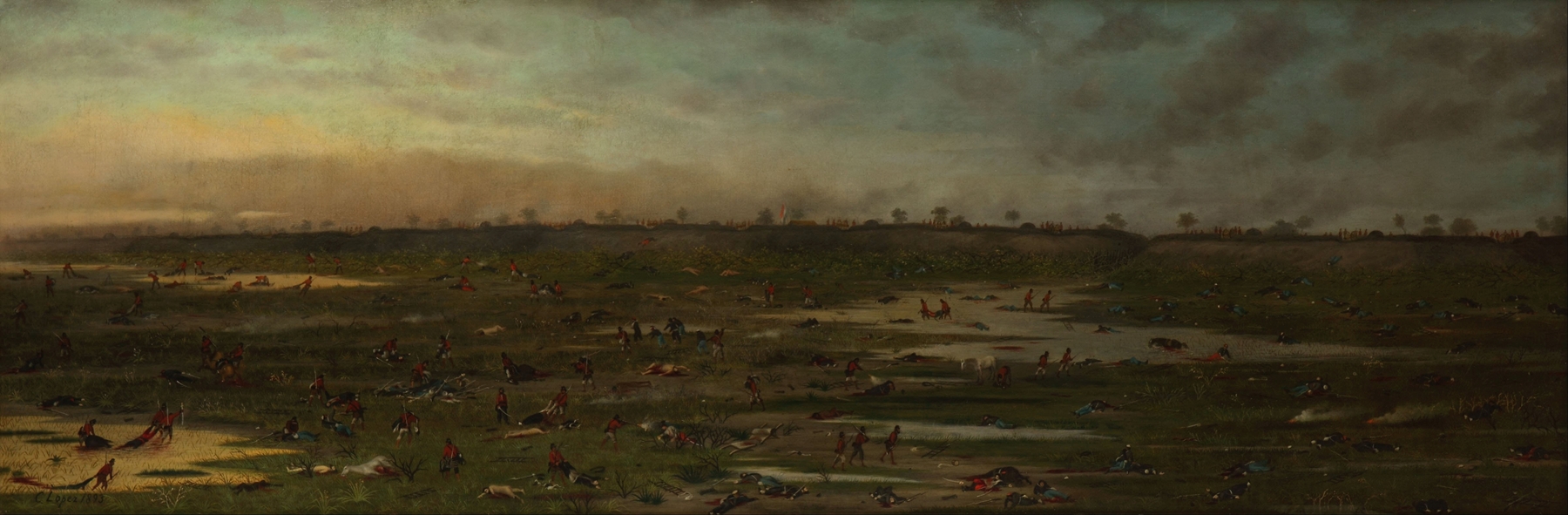
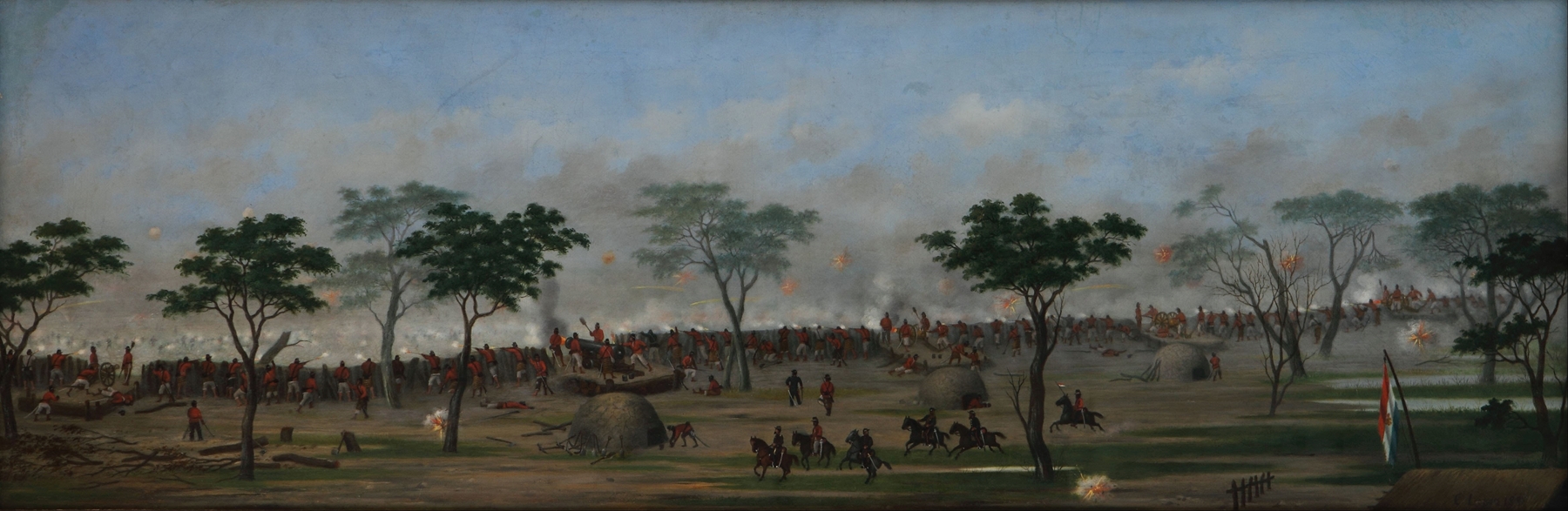
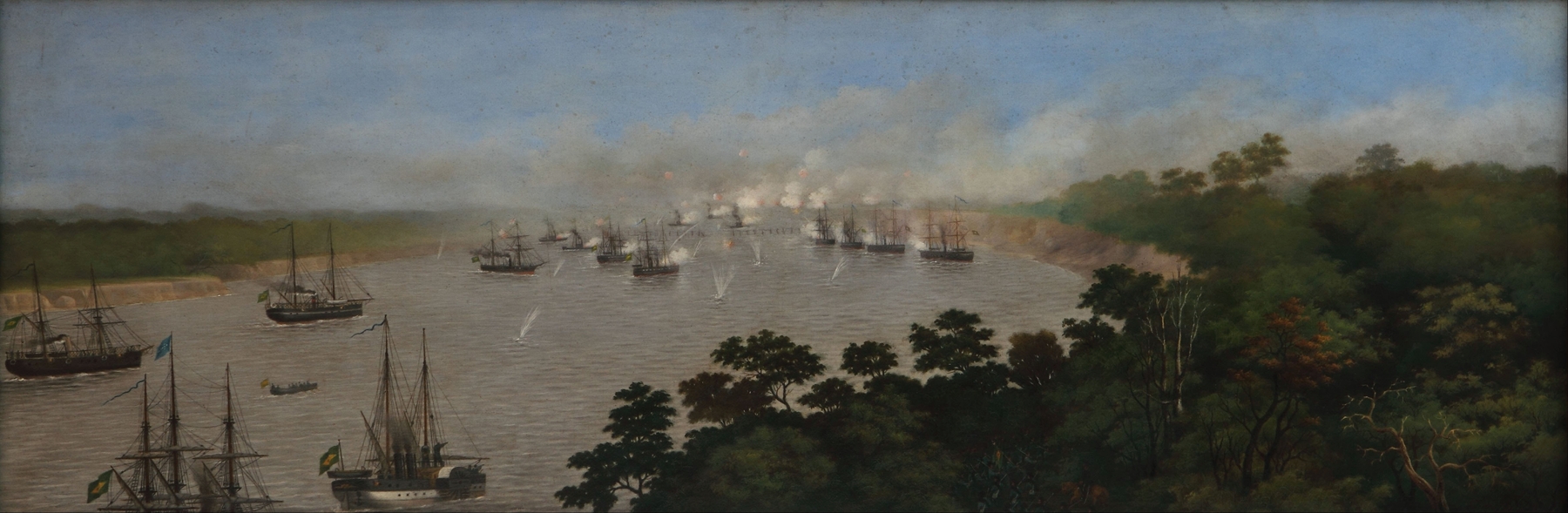
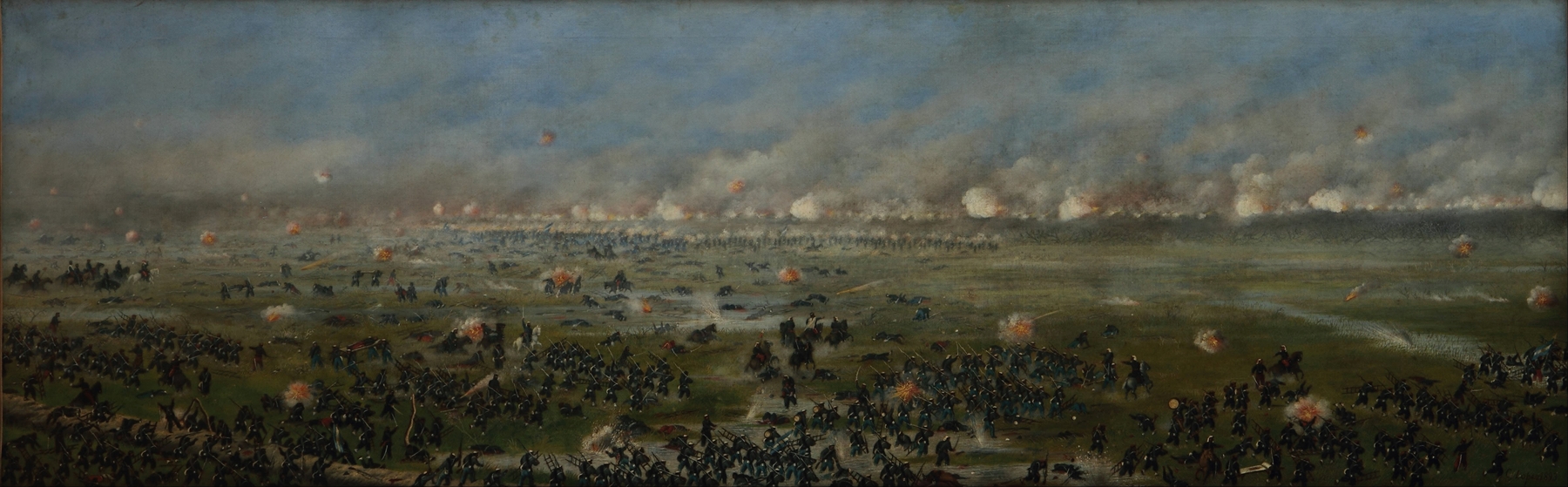
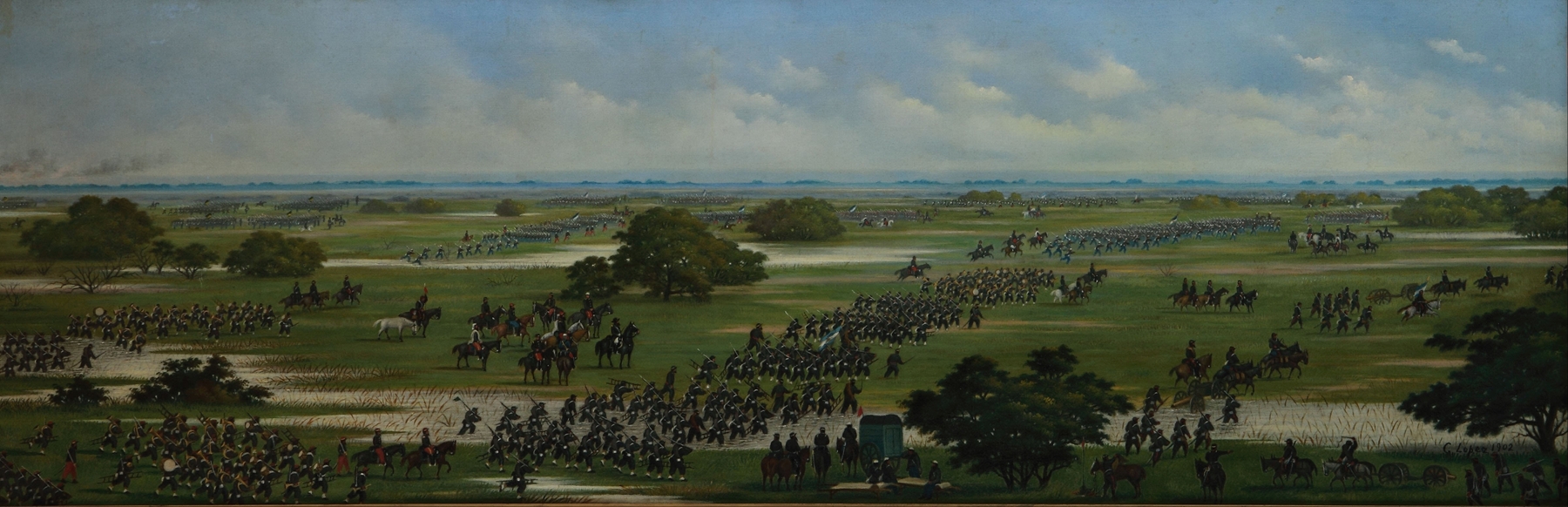
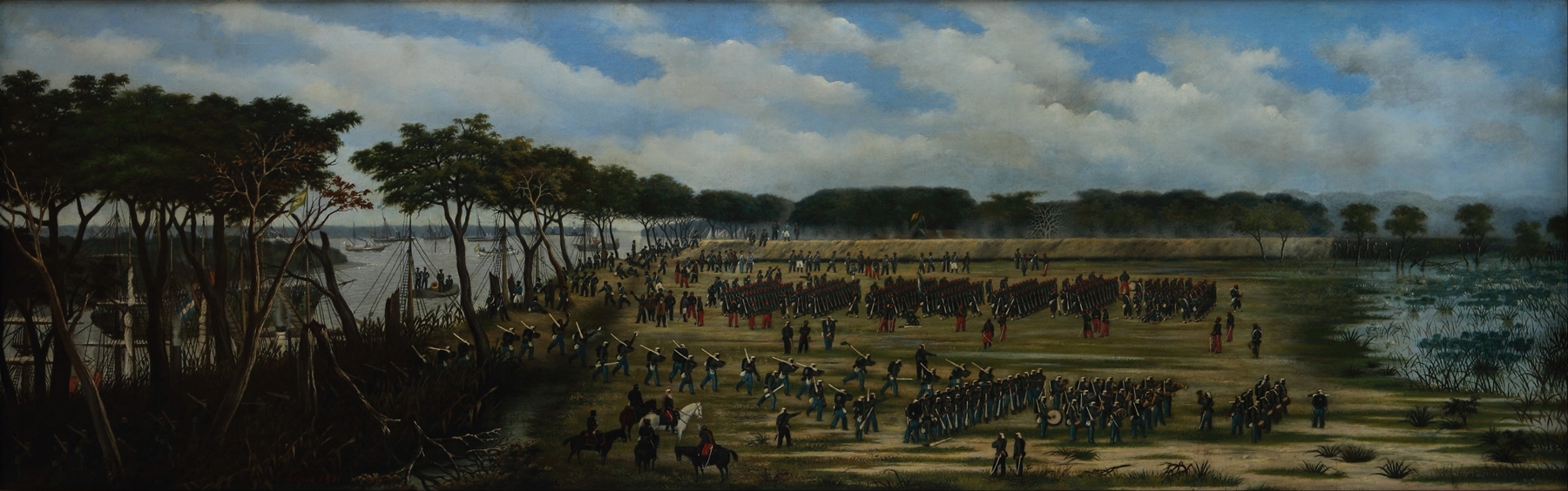
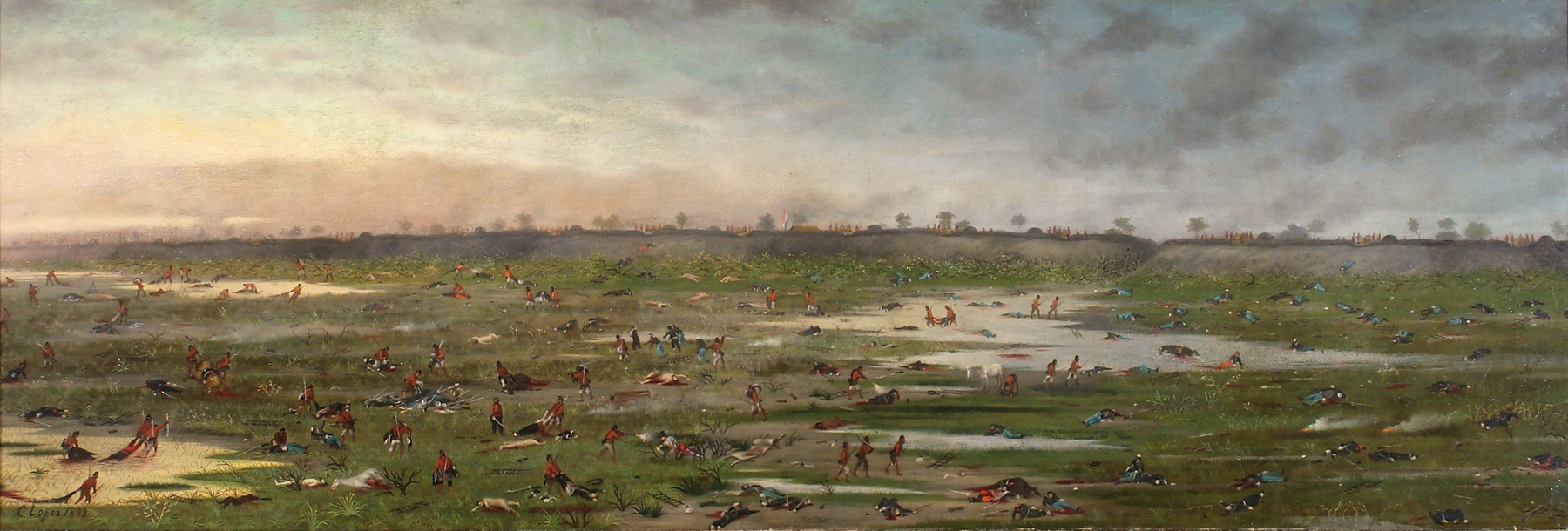
What secret hides in the quiet of the canvas? The stillness of Asalto a la segunda columna brasileña a Curupaytí resonates with the weight of history, inviting us to reflect on the legacy of conflict and resilience. Look to the center, where a soldier stands poised amid a chaotic battlefield. His figure, bathed in warm ochres and deep greens, draws the eye with its tension—the rigid stance starkly contrasting the tumultuous backdrop.
Notice how the light falls upon the soldier’s uniform, illuminating the creases that tell tales of fatigue and valor. The swirling clouds of smoke and distant explosions create a visceral atmosphere, capturing the essence of war's chaos while the soldier's quiet determination remains central to the composition. Yet, beyond the surface, the painting encapsulates the dichotomy of bravery and vulnerability. The soldier’s gaze, though focused forward, hints at a deeper anguish, embodying the conflict experienced by many.
The juxtaposition of natural beauty—a serene horizon—against the horrors of battle speaks to the trauma of warfare. This tension between hope and despair creates a rich emotional landscape, inviting viewers to ponder the cost of courage and the legacies that linger long after the smoke clears. In 1894, Cándido Lopez created this poignant piece during a tumultuous period in Argentine history, reflecting his own experiences as a soldier in the Paraguayan War. Painted in the midst of this personal and national turmoil, Lopez sought to document the brutality of conflict, infusing his work with both a sense of duty and a profound introspection about the nature of sacrifice and memory in art.