Trinchera de Curupaytí — History & Analysis
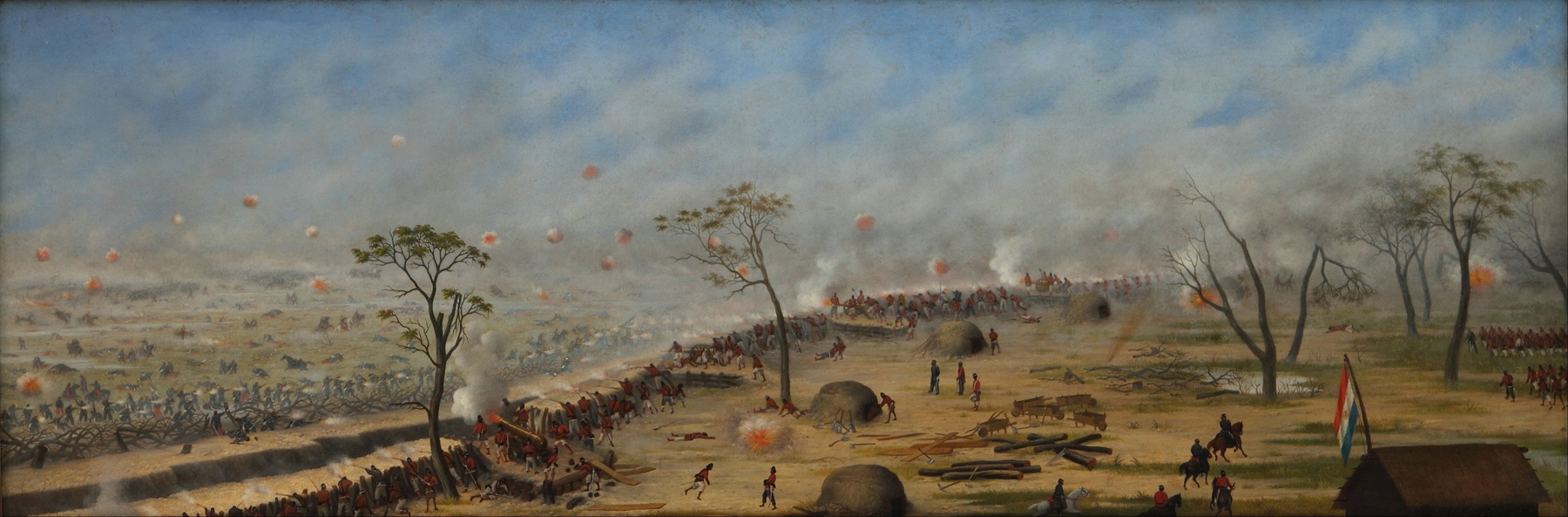
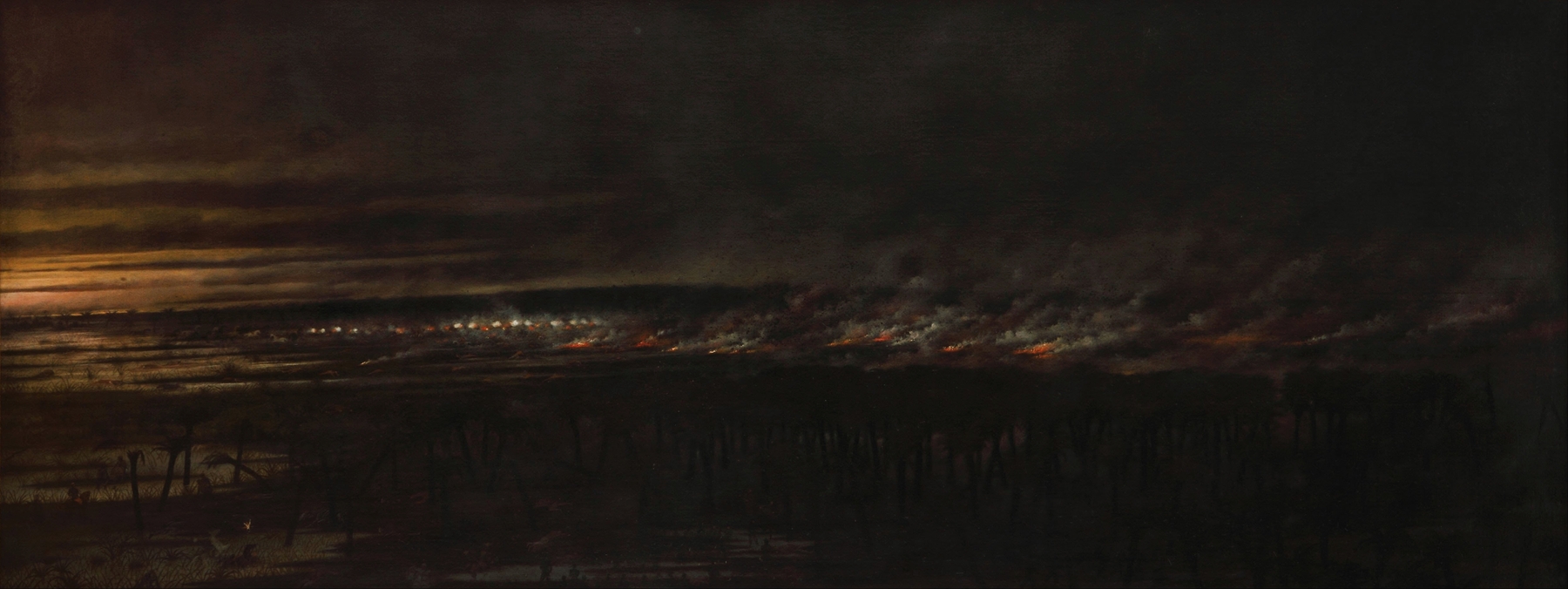
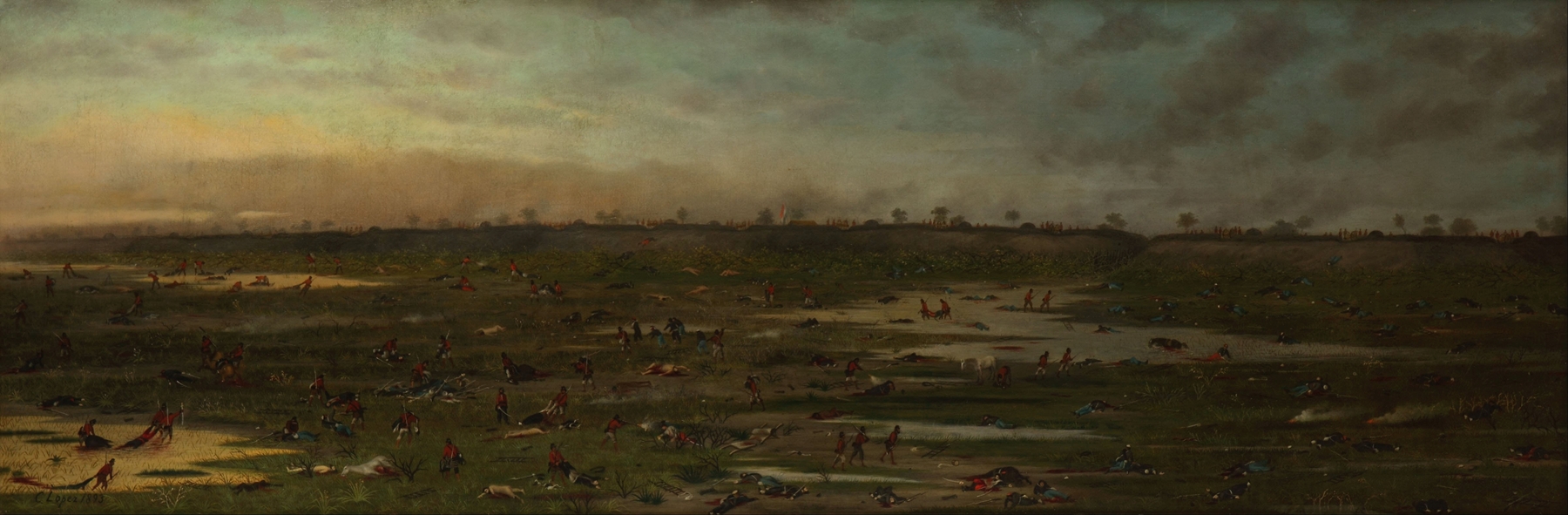
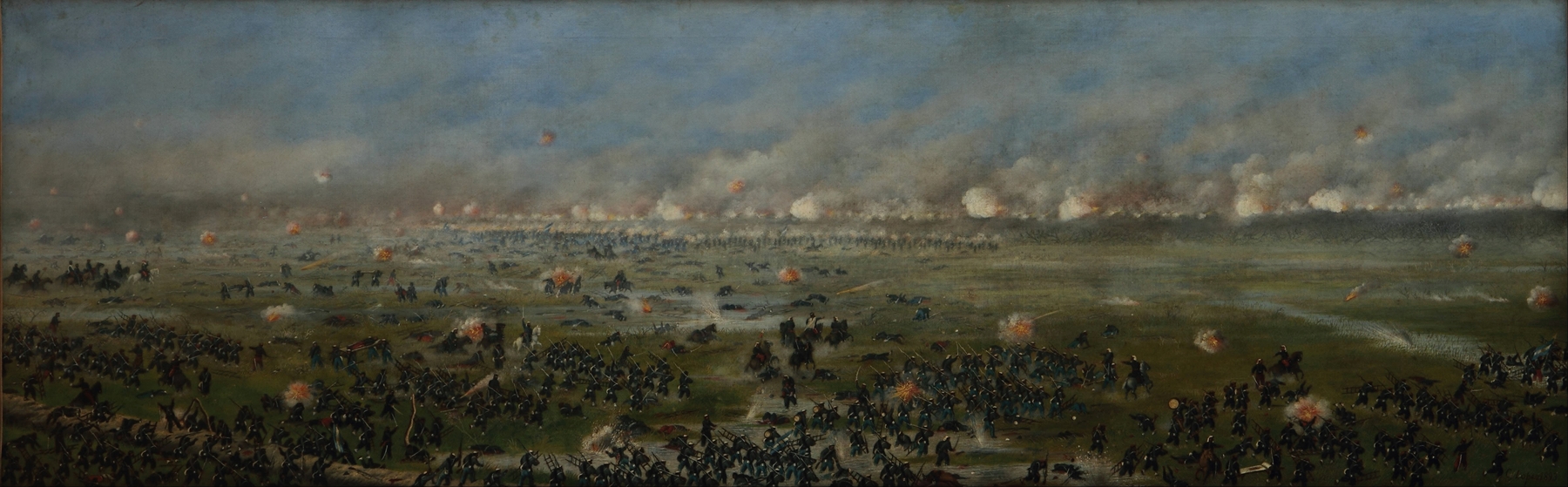
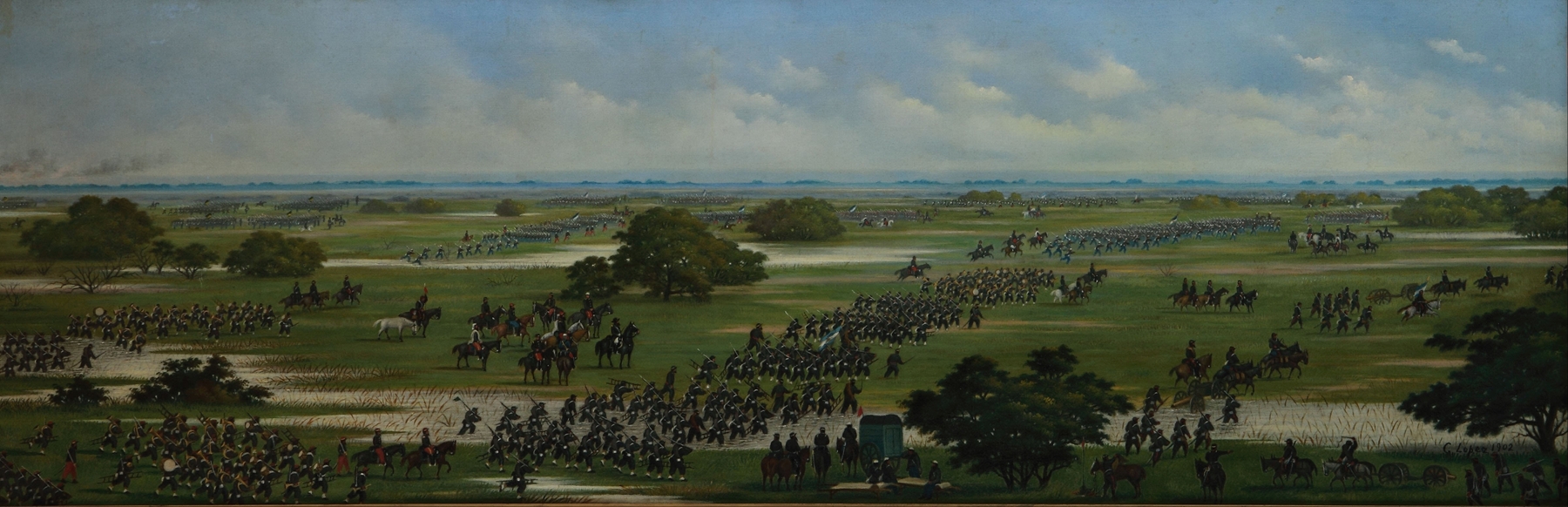
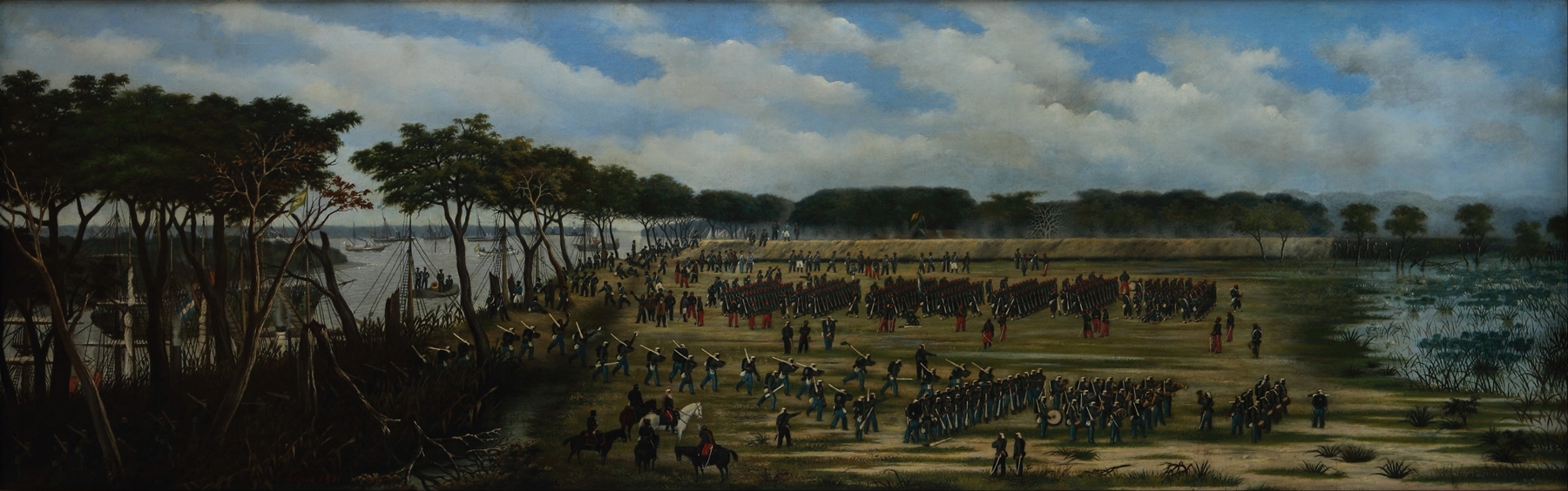
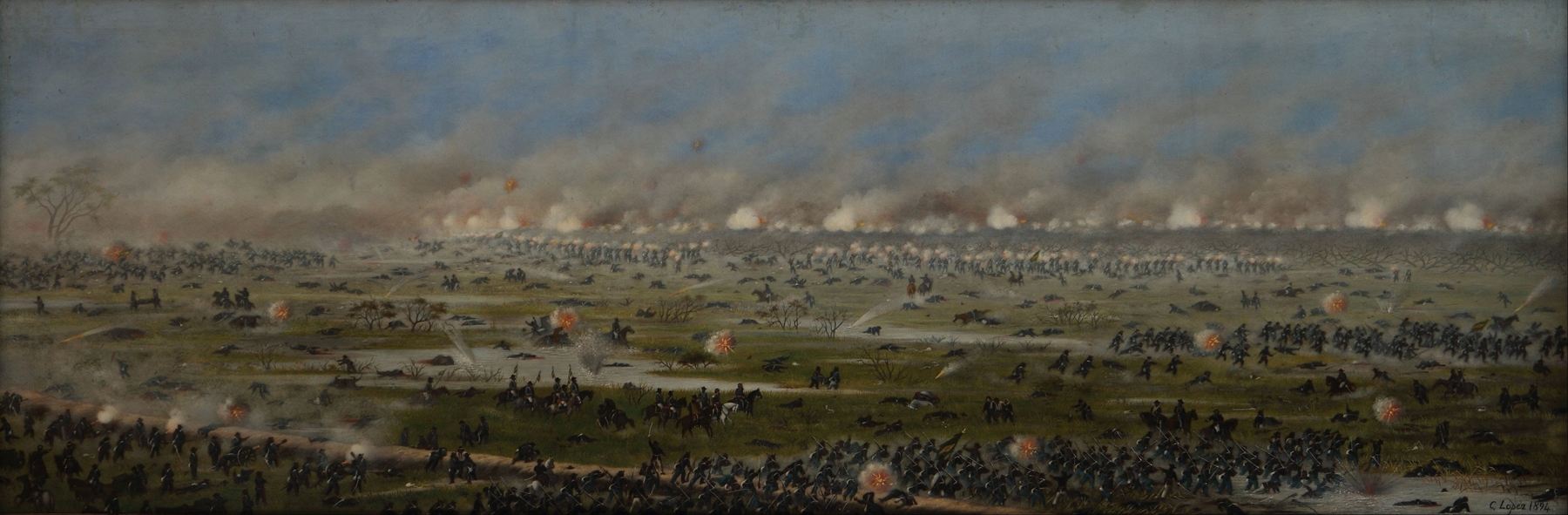
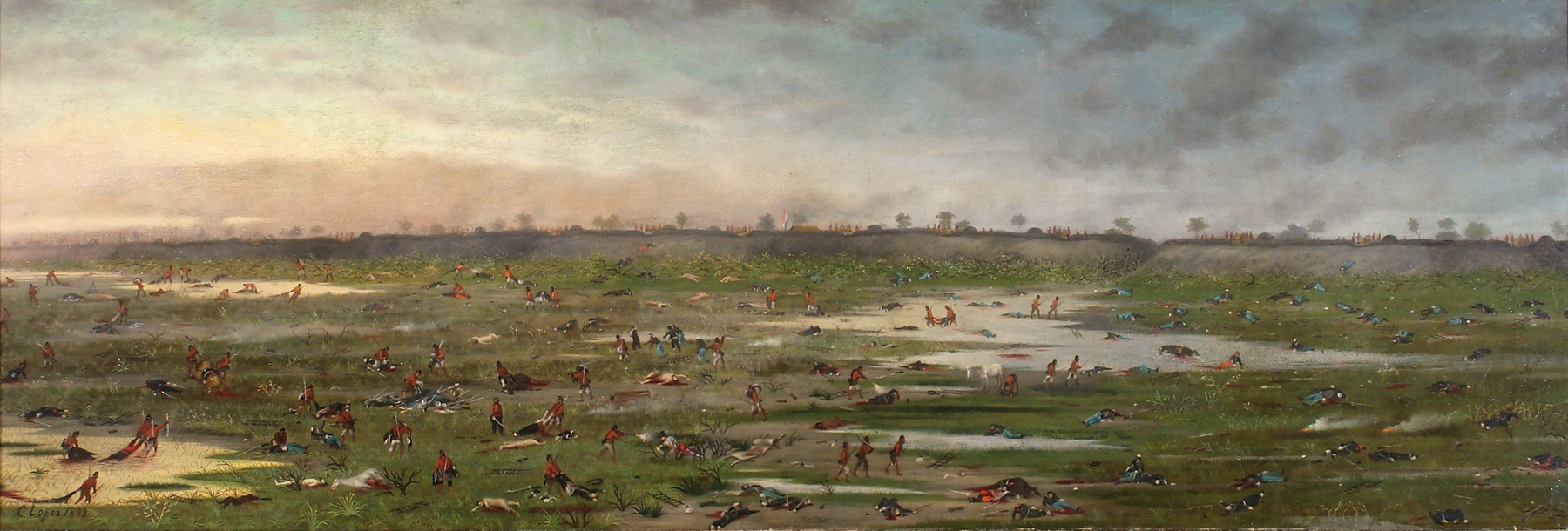
When did color learn to lie? In Trinchera de Curupaytí, chaos unfolds within a vivid landscape, where the turmoil of war and the beauty of nature exist in a painful dialogue. Focus first on the bold, swirling brushstrokes that depict frenetic movement, drawing your eyes to the foreground where soldiers grapple with their surroundings. Notice how the vibrant greens and browns of the earth clash with the striking blues of the sky, creating an unsettling yet picturesque contrast.
The dramatic light illuminating the scene accentuates the figures, casting long shadows that evoke the heavy weight of their reality amid the chaos. Delve deeper into the emotional turbulence captured in the painting. The juxtaposition of the soldiers’ grim determination against the serene beauty of the landscape reflects a stark tension between hope and despair. Observe the scattered fragments of color that seem to blur the line between the elegiac and the horrific, suggesting that even in turmoil, nature remains indifferent, moving forward while humanity grapples with its own destruction.
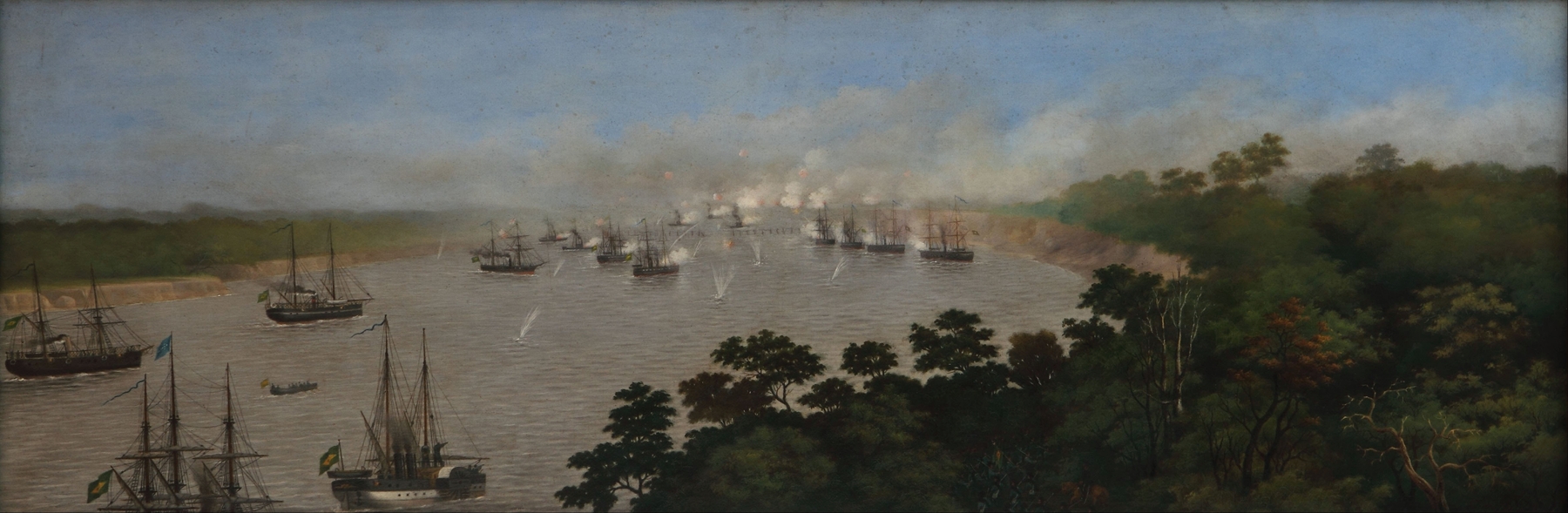
Cándido Lopez painted Trinchera de Curupaytí in 1899, during a time when he was profoundly affected by his experiences as a soldier in the Argentine War of the Triple Alliance. This period in his life coincided with a broader artistic movement that sought to depict the unfiltered realities of existence. As an artist, Lopez was driven by the desire to convey the visceral impact of conflict and chaos, which led him to use color not merely as an aesthetic choice but as a means to explore deeper truths about humanity's struggles.